
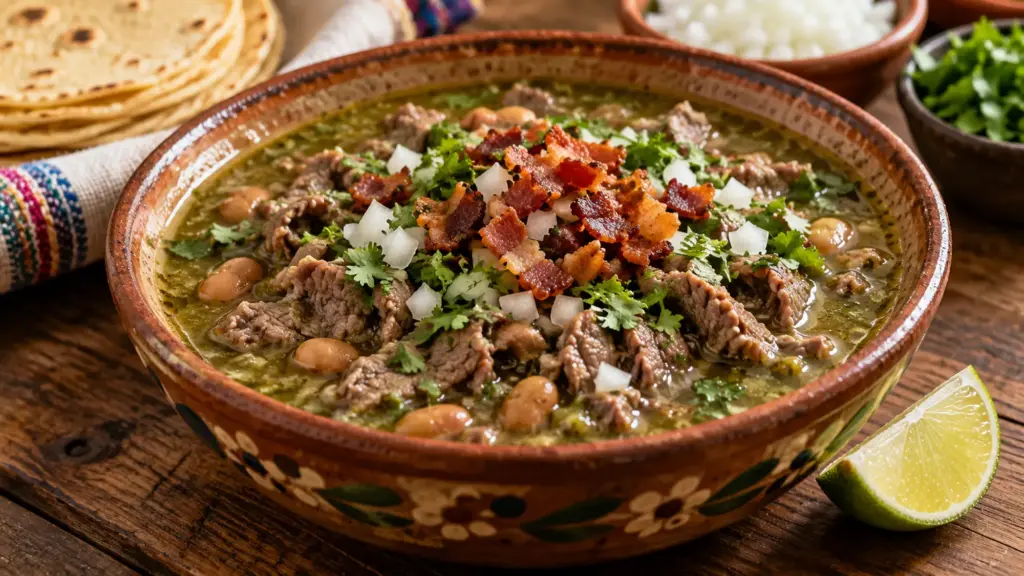
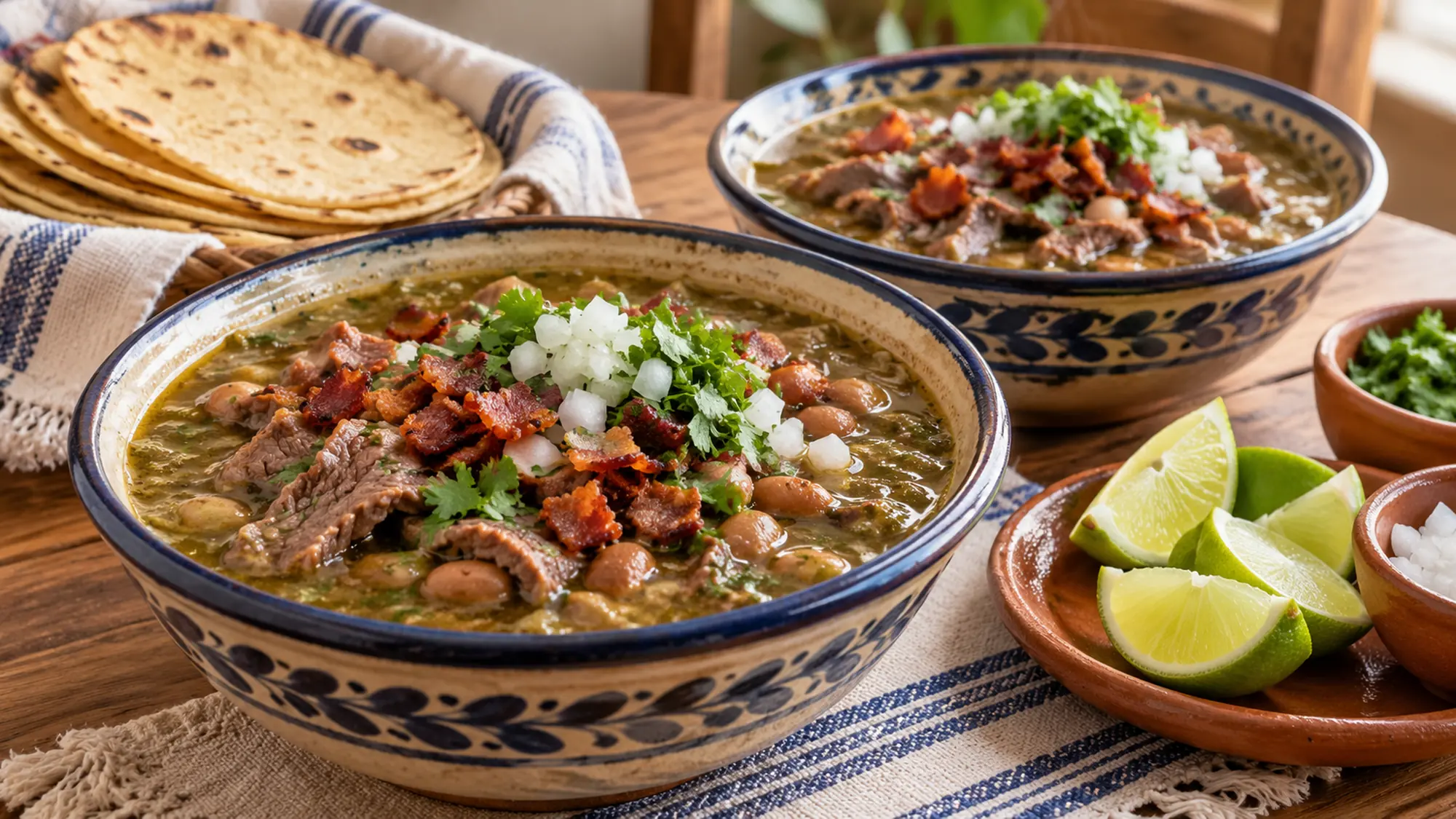
A bowl of carne en su jugo should give you something different in each spoonful: tender beef, creamy beans, tart green broth and a little crisp bacon. The name means meat in its juice, and this version keeps that idea in view. Thinly sliced sirloin releases its juices before a tomatillo sauce joins the pot.
Carne en su jugo gets its balance from beef juices, tangy tomatillos and pinto beans. Keep the bacon crisp until serving, slice the beef thinly across the grain, and simmer gently rather than boiling it hard.
This is a home-style approach to the Jalisco dish, with a modest amount of bacon and canned beans for convenience. I’d spend the extra minute checking the direction of the beef’s grain before slicing; short fibers matter more than perfectly matching pieces. The beans make it substantial, but the broth should still be loose enough for a spoon.
Serving suggestions for carne en su jugo
Use deep bowls and keep the toppings separate until everyone is ready to eat. The contrast between hot broth and fresh onion is part of the appeal, while bacon loses its crispness quickly once submerged. Warm corn tortillas alongside the bowl are useful for scooping up the last beans without changing the broth itself.
- Start with the beans: divide them between bowls, then ladle the meat and broth over them for consistent portions.
- Finish individually: offer finely chopped onion, cilantro and lime wedges so each person controls the sharpness.
- Round out the meal: choose a simple salad or sliced cucumber rather than another rich topping.
For a different dinner with a fruit-forward pan sauce, the site’s apricot chicken recipe offers another main-dish option. If dessert is planned, a small portion of apple crumble can follow; the stew does not need extra richness to feel complete.
Add the fresh toppings at the table, and save the crisp bacon for the moment the bowls are served.
Variations and ingredient choices
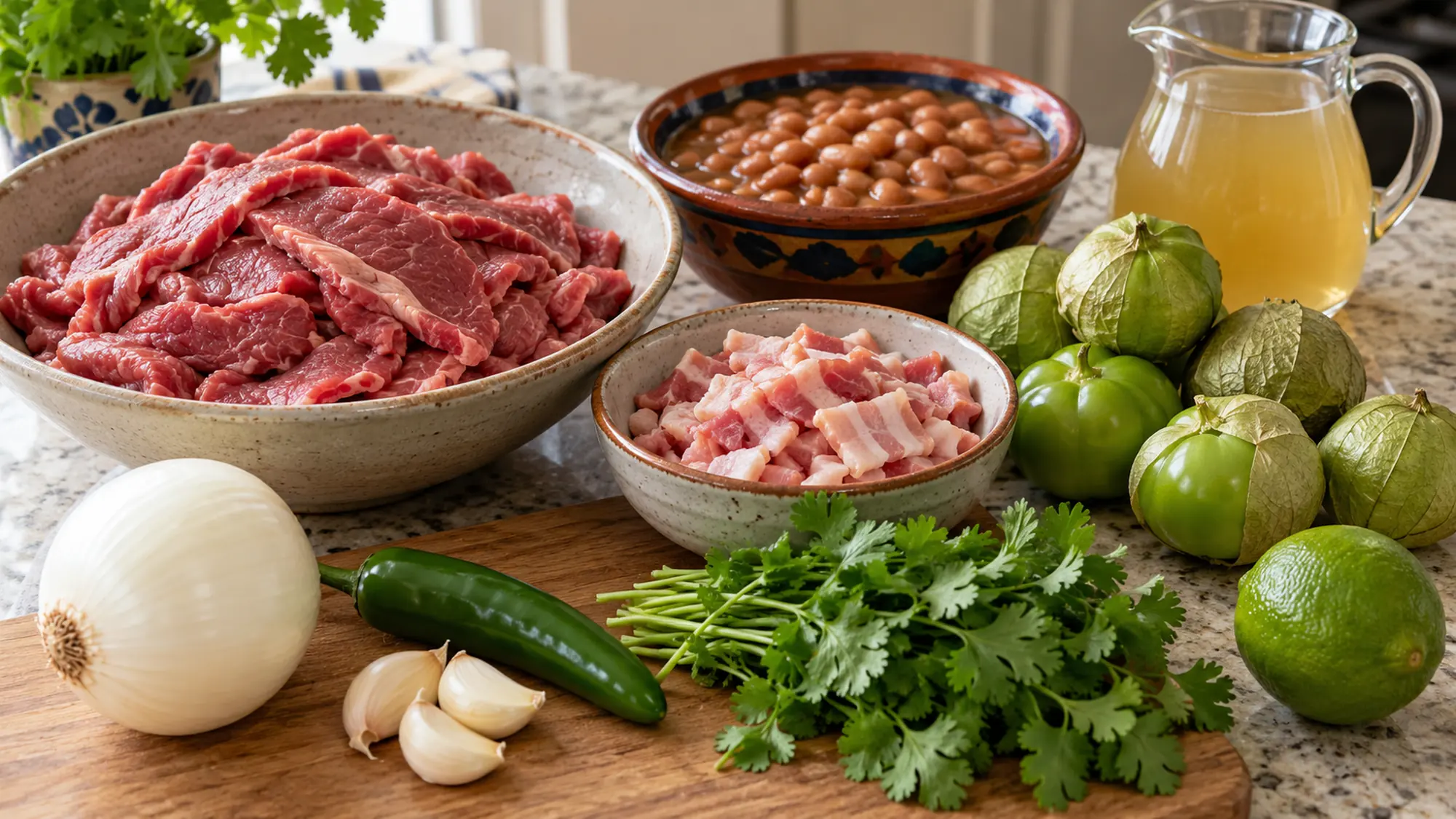
Tomatillos have papery husks and a sticky surface underneath; remove the husks and rinse the fruit before cooking. They supply a tartness that green tomatoes do not reproduce exactly. I’d keep them in this version rather than trying to repair a tomato substitution with a large squeeze of lime.
| Ingredient choice | Effect in the bowl | What to watch |
|---|---|---|
| Sirloin, sliced across grain | Short, tender strips | Do not substitute thick stew cubes on the same timing |
| Canned pinto beans | Quick, creamy addition | Drain and rinse; warm without crushing |
| Home-cooked pinto beans | More control over seasoning | Use fully cooked beans, not dried beans |
| One seeded serrano | Gentler heat | Chiles vary; taste sauce before adding more |
- More heat: leave the serrano seeds in or pass sliced chile at the table instead of making the entire pot hotter.
- Less bacon: use half the amount and a teaspoon of oil if needed; the broth will have less smoky richness.
- Make ahead: cool the stew and bacon separately. Reheat the stew thoroughly and add fresh toppings after reheating.
Preserve the tomatillo-beef balance when making small changes, and give thicker cuts a different cooking plan.
Health benefits and practical nutrition
Beef contributes protein and iron, while beans broaden the meal beyond meat alone. The NIH iron fact sheet identifies lean meat and several legumes as food sources of iron. That is a useful nutritional role, not a promise that a bowl treats fatigue or any deficiency.
- Watch sodium: bacon, broth and canned beans all contribute; choose low-sodium broth and rinse canned beans before seasoning.
- Keep portions consistent: the card’s estimate is for one of six bowls, without optional tortillas or avocado.
- Handle leftovers promptly: divide the stew into shallow containers and refrigerate within two hours.
Follow FDA safe food-handling guidance when cooling and reheating: keep the refrigerator at 40°F (4°C) or below, and reheat leftovers to 165°F (74°C). Bring the broth to a boil when reheating, then check the food’s temperature. Use refrigerated leftovers within three to four days; freeze extra portions rather than stretching that window.
Think of this as a substantial mixed meal: protein and beans, with bacon and broth that still deserve attention when seasoning.
Bottom Line
Thin beef slices, gently cooked tomatillos and a last-minute bacon topping make carne en su jugo satisfying without a long ingredient list. Keep the broth lively, the beans intact and the toppings fresh.
Carne en su Jugo Recipe

Ingredients
- 1 1/2 pounds beef sirloin 680 g, sliced across the grain 1/8 inch thick, then cut into short pieces
- 4 ounces bacon 113 g, chopped
- 1 pound tomatillos 454 g, husks removed and fruit rinsed
- 1 serrano chile stemmed; seeds removed for milder heat
- 1 medium white onion about 150 g, finely chopped, divided
- 2 garlic cloves peeled
- 3/4 cup chopped cilantro divided
- 3 cups low-sodium beef broth 720 ml
- 3 cups cooked pinto beans about 510 g drained; canned beans rinsed
- 1/4 teaspoon fine salt plus more only if needed
- 1/4 teaspoon ground black pepper
- 1 lime cut into 6 wedges
Equipment
- 1 Dutch oven
- 1 Medium saucepan
- 1 Blender
- 1 Knife and cutting board
Instructions
- Put tomatillos and serrano in a saucepan with enough water to cover. Simmer for 8–10 minutes, until the tomatillos soften and turn olive green. Drain. Blend with garlic, half the onion, 1/2 cup cilantro and 1/2 cup of the measured broth. Vent the blender lid safely for hot ingredients.
- Cook the bacon in a Dutch oven over medium heat until crisp, about 7–10 minutes. Transfer to a clean bowl with a slotted spoon. Leave about 1 tablespoon fat in the pot; spoon out excess into a heatproof container.
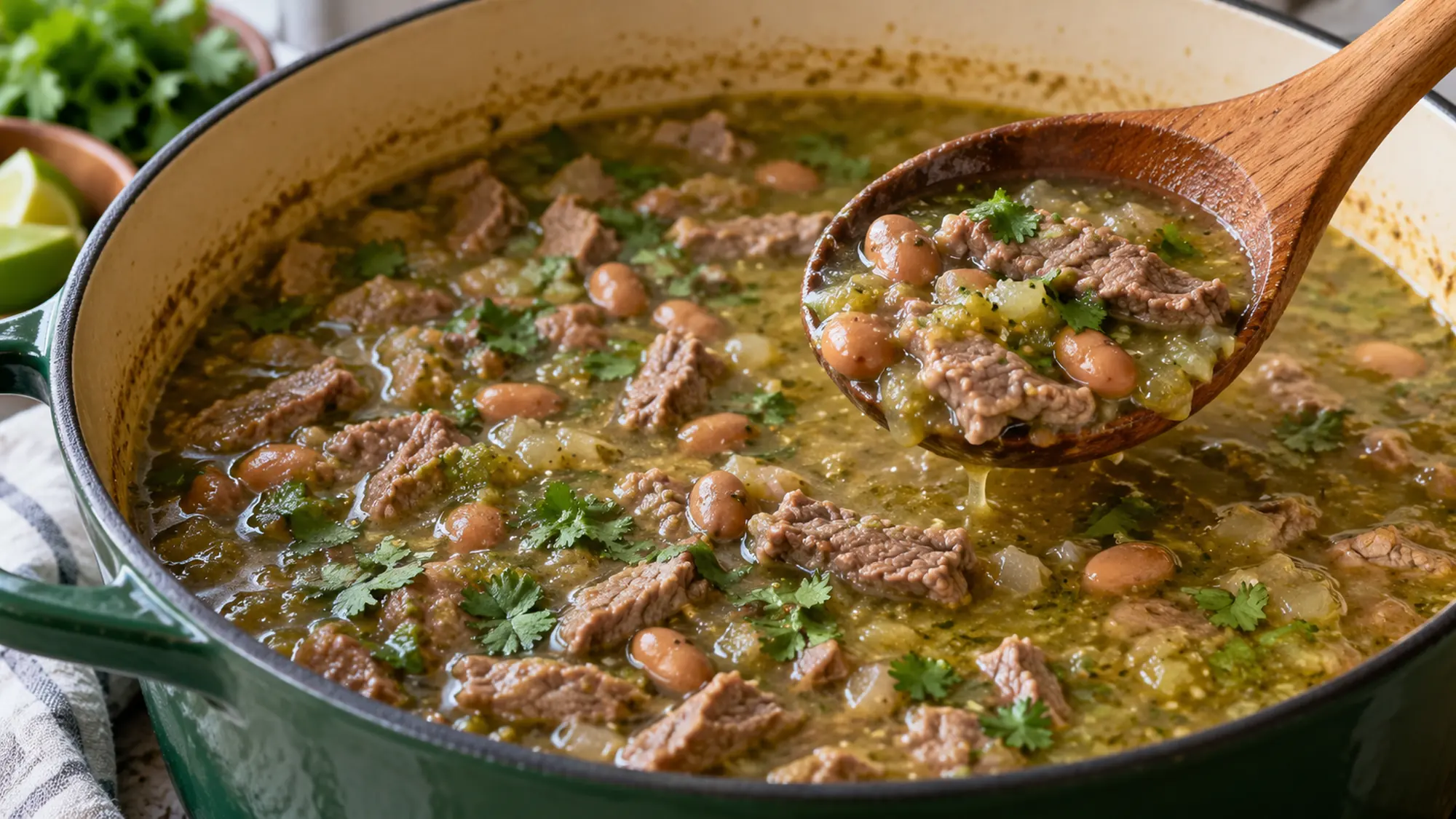
- Add the thin beef strips and pepper. Cook over medium-high heat, stirring, for 4–5 minutes until the beef releases its juices. Do not drain the juices. Add the blended sauce and remaining 2 1/2 cups broth.
- Bring to a simmer, then reduce heat and simmer gently, partly covered, for 15–20 minutes, until the beef is fully cooked and tender. If it is still chewy, continue gently, adding a splash of water if the broth reduces too much. Do not replace thin sirloin with thick stew meat on this timing.
- Meanwhile warm the fully cooked beans with a splash of water. Taste the stew, then add the measured salt only as needed; bacon and broth already contribute salt.
- Divide warm beans among six bowls, ladle the beef and broth over them, and finish with bacon, remaining onion and remaining cilantro. Serve with a lime wedge per bowl. Optional warm tortillas are not included in the estimates.
Nutrition
Video
Notes
Tried this recipe?
Let us know how it turned out!Hi, I’m Emily Pocker! I share recipes and food guides here at Recipes360 to help you find everyday meal inspiration and feel more confident in the kitchen. My goal is to make cooking approachable, enjoyable, and full of flavor.