
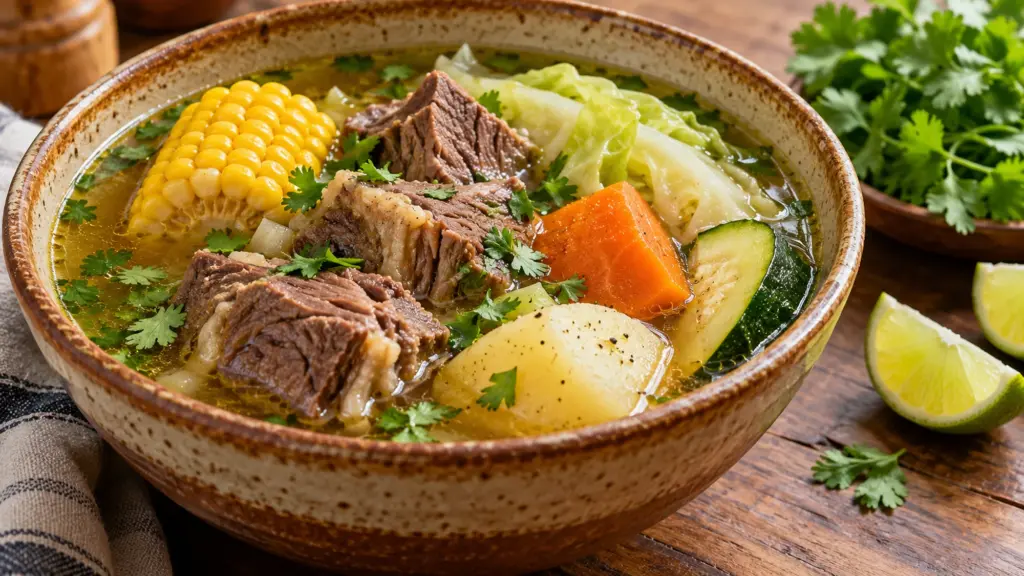
The vegetables are ready, the pot is steaming, and the beef still needs time. That is the small scheduling puzzle behind caldo de res. This version solves it by giving boneless chuck its own gentle simmer before corn, potatoes and carrots join the broth. Cabbage and zucchini come later, when the meat is already tender.

Let the beef set the pace. Add the vegetables only after a fork slips into the chuck easily, then keep the broth at a quiet simmer so the pieces stay recognizable.
I’d choose chuck with a little marbling and trim the large outer fat deposits. You want tenderness from time in the pot, without a heavy slick covering every spoonful.
Serving Suggestions for Caldo de Res
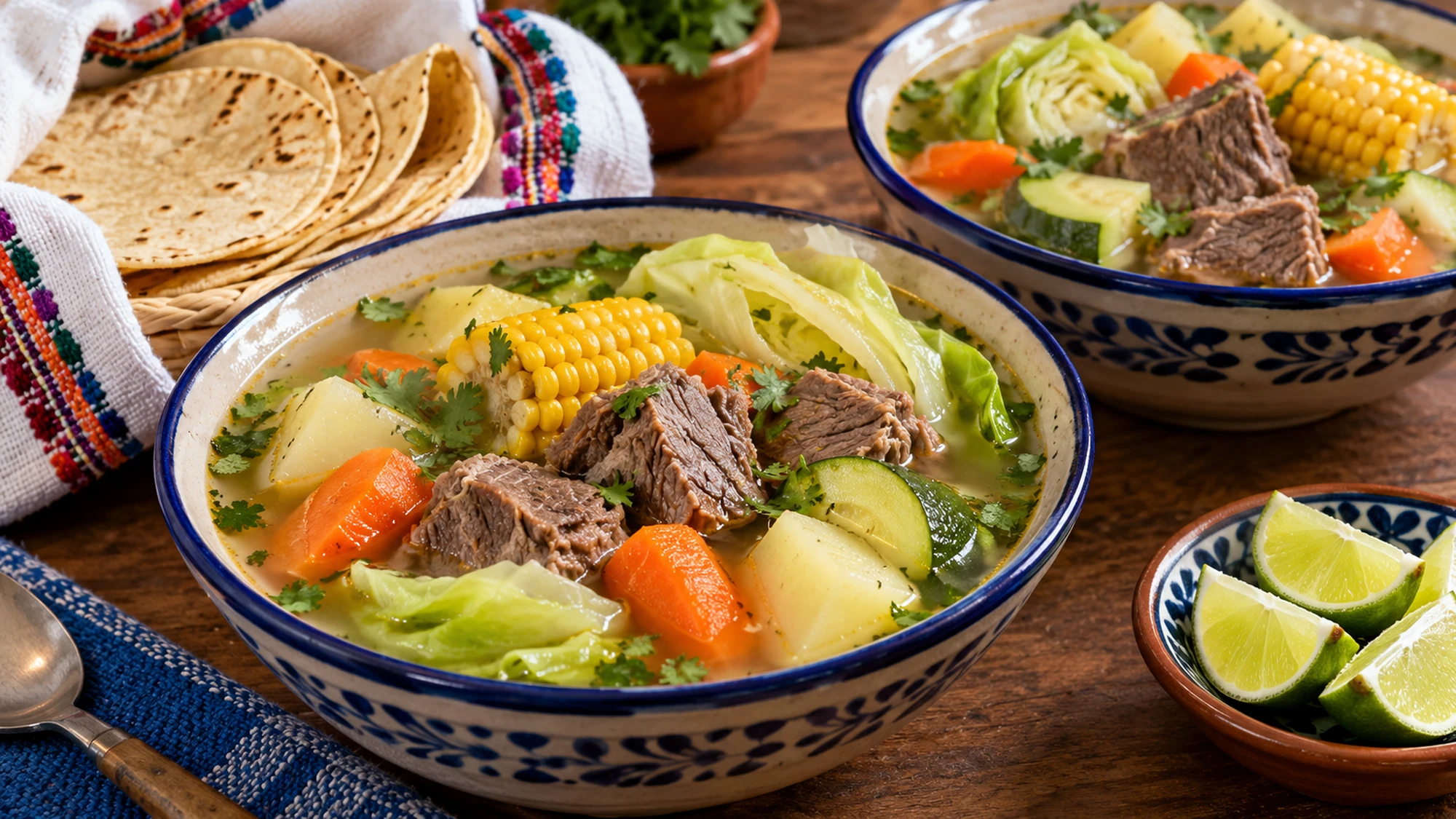
Use deep, roomy bowls and divide the solid ingredients before ladling over the broth. That gives everyone beef, a segment of corn and a fair share of vegetables. Corn on the cob has never promised to behave like a noodle.
Lime belongs at the table, where each person can decide how much brightness the broth needs. Start with a small squeeze and taste before adding more salt. I’d keep hot salsa separate as well, especially when serving people with different preferences for chile heat.
| Choice | What to expect |
|---|---|
| Warm corn tortillas | A soft accompaniment for the beef; keep wrapped until serving. |
| Cooked rice | Spoon a little into each bowl just before eating so it does not absorb the whole pot. |
| Cilantro and lime | Fresh aroma and acidity without making the broth thicker. |
If you want a separate vegetable side, these air fryer jacket potatoes offer a contrasting dry, fluffy texture. For leftovers, follow Illinois Extension’s cooling guidance: divide soup into shallow containers and refrigerate within two hours. Keep at 40°F (4°C) or below, use within three to four days, and reheat to 165°F (74°C).
Build each bowl with the beef and vegetables first; finish with broth, lime and fresh cilantro. Store rice and tortillas separately from the soup.
Variations That Keep the Broth Light
Caldo de res changes from kitchen to kitchen, and a vegetable swap should respect how quickly each piece cooks. The practical rule is simple: firm roots need longer than tender squash or leaves. Cut substitutions into similar sizes rather than assuming that every vegetable follows the same timer.
- Use chayote: replace the zucchini with peeled, seeded chayote chunks; add them with the potatoes and check tenderness before serving.
- Choose beef shank: bone-in pieces give a different yield and richer broth. Allow extra cooking time, then remove the bones and inspect for fragments before portioning.
- Add tomato: a chopped ripe tomato can simmer with the beef for a fuller-colored broth. It changes this recipe’s clear-broth character without requiring a thick sauce.
- Keep it mild: the measured recipe contains no chile. Offer salsa alongside rather than changing the whole batch.
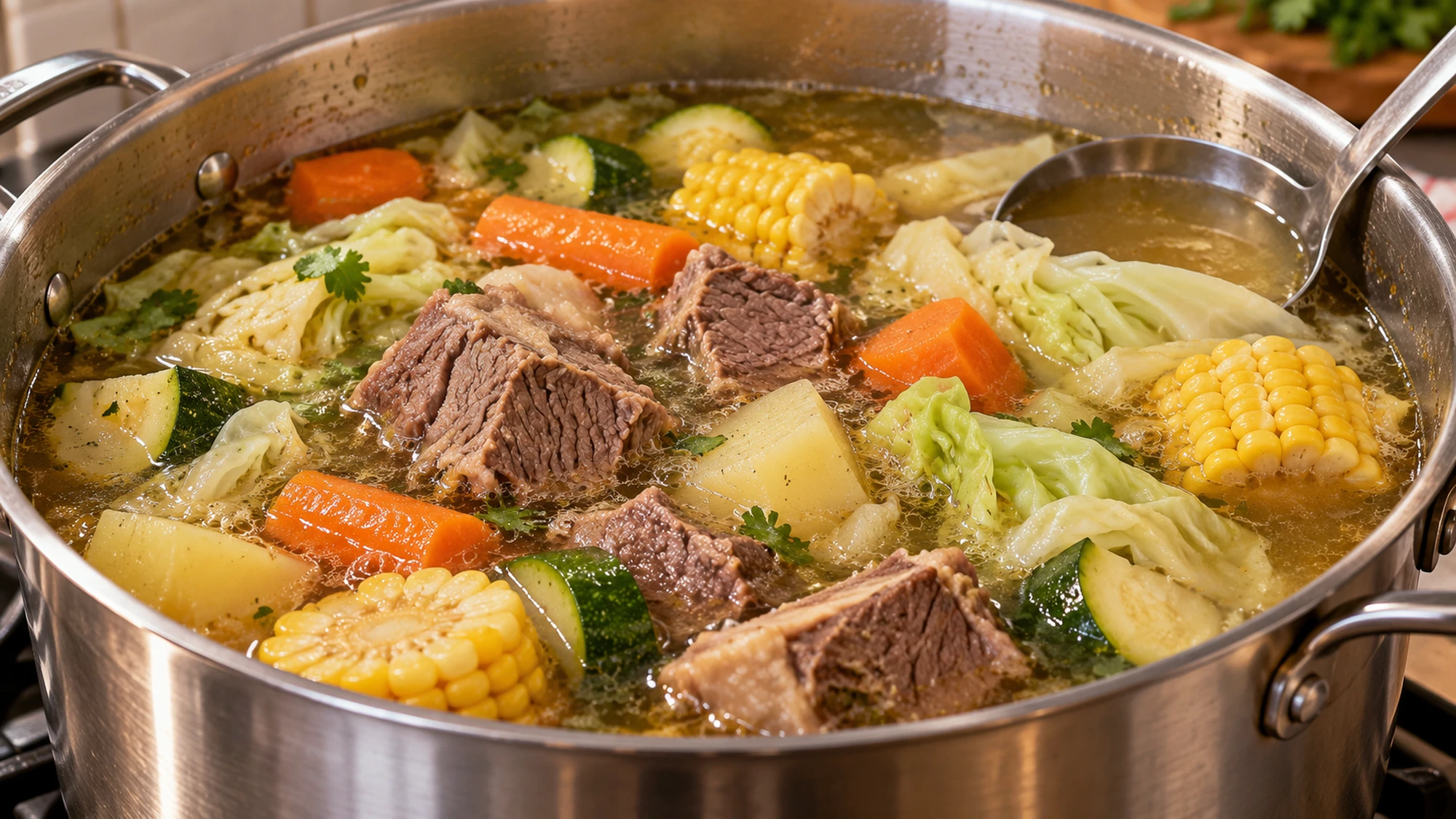
A hard boil does not hurry tough beef into tenderness in a useful way; it drives off water and knocks the vegetables around. If the liquid drops before the chuck softens, add hot water to keep the meat submerged. Taste after topping up, because both evaporation and dilution change the seasoning.
Match additions to their cooking needs: roots earlier, squash and cabbage later. Tender beef is the signal to move forward, even when the clock disagrees.
Health Benefits and Nutrition Context
Beef provides protein, and the vegetables add variety to the bowl. The USDA’s protein-food guidance explains that this food group contributes nutrients such as iron, zinc and B vitamins, while encouraging lean choices and variety.
- Fat depends on the cut: trimming visible fat and lifting excess from the surface changes the finished broth; the card estimate cannot capture every piece of chuck.
- Salt is adjustable: this recipe uses water rather than bouillon. Taste before adding the final portion of salt, especially if you substitute a salted stock.
- Portions matter: potatoes, corn and any rice or tortillas all contribute carbohydrate. Add accompaniments to suit your meal, rather than treating them as nutritionally invisible.
The nutrition shown in the card is an estimate for one-sixth of the measured recipe, including the lime and cilantro but excluding optional sides. It uses the raw trimmed beef weight, so the fat and energy numbers are approximate.
Think of this as a beef-and-vegetable meal with adjustable accompaniments. Choose the portion and salt level that fit your needs; the recipe is comfort food, without a medical promise.
Bottom Line
Caldo de res rewards a patient start and a tidy finish. Give the chuck time to soften, stagger the vegetables, and save the lime for serving. The result is a full bowl with tender meat, distinct vegetables and enough clear broth to bring everything together.
Caldo de Res Recipe


Ingredients
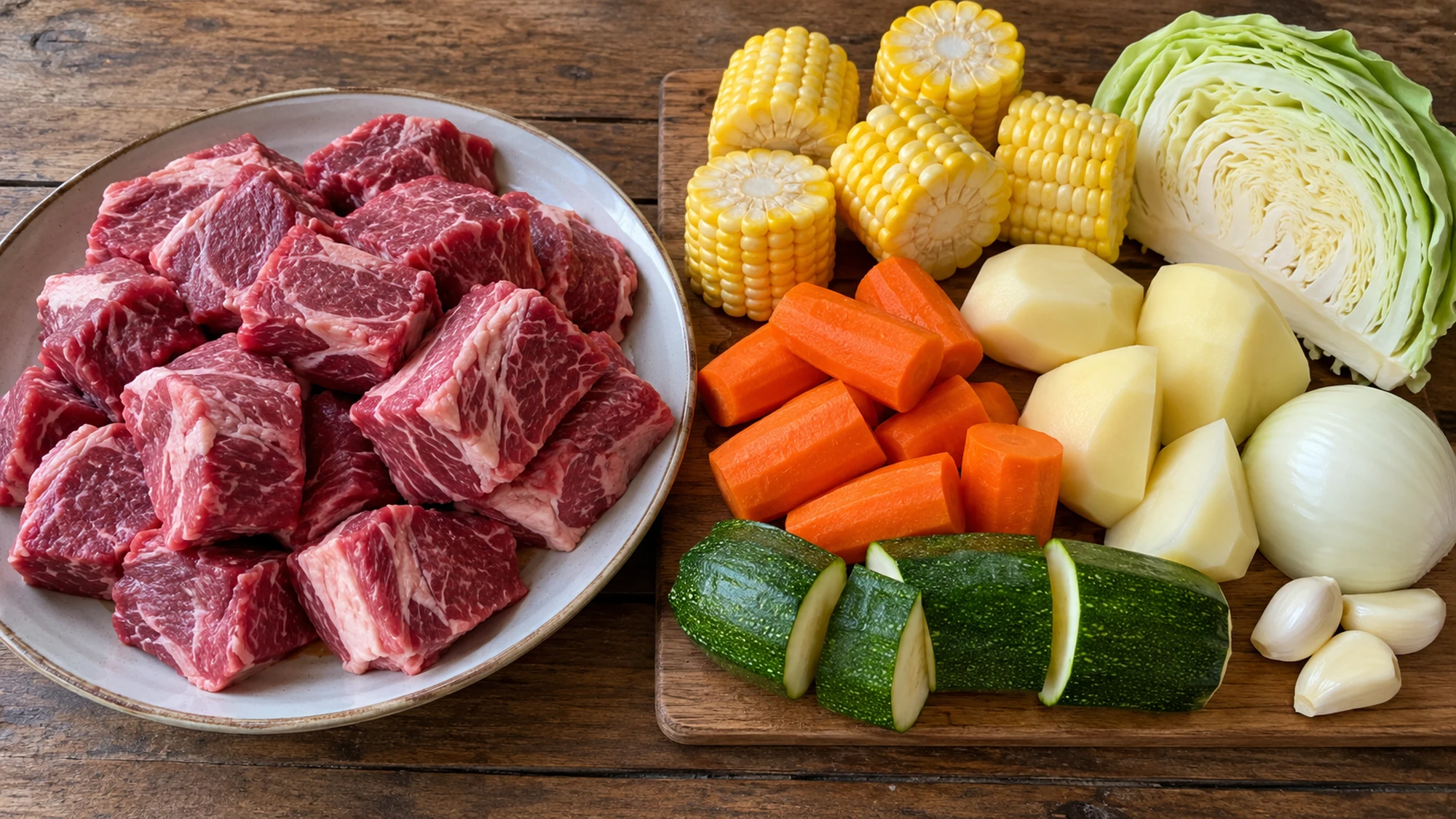
- 2.5 pounds boneless beef chuck 1.13 kg after trimming large outer fat deposits; cut into 1.5-inch chunks
- 12 cups water 2.84 L, plus hot water as needed
- 1 medium white onion 150 g, quartered
- 4 garlic cloves 12 g, peeled
- 1 bay leaf
- 2 teaspoons fine salt 12 g, divided; use the second teaspoon only as needed
- 2 ears corn husked, each cut into 3 segments; about 180 g edible kernels total
- 12 ounces potatoes 340 g, peeled and cut into 1.5-inch pieces
- 10 ounces carrots 280 g, peeled and cut into thick pieces
- 10 ounces green cabbage 280 g, cut into wedges
- 8 ounces zucchini 225 g, cut into thick chunks
- 1/4 cup cilantro 8 g, chopped
- 2 limes cut into wedges; about 60 mL juice
Equipment
- 1 8-quart stockpot with lid
- 1 Knife and cutting board
- 1 Ladle
- 1 Kitchen thermometer
Instructions
- Place chuck, water, onion, garlic and bay leaf in the stockpot. Bring slowly to a simmer, skimming surface foam. Add 1 teaspoon salt.
- Partly cover and simmer gently for 2–2.5 hours, until a fork enters the beef easily. Start checking around 2 hours and continue if needed. Add hot water to keep the beef submerged. Remove bay leaf and onion pieces; skim excess fat.
- Add corn, potatoes and carrots. Simmer for 15–20 minutes until potatoes begin to soften.
- Add cabbage and zucchini and simmer another 10–15 minutes, until tender but intact. Taste and add the reserved salt only as needed.
- Divide beef, corn and vegetables among six bowls. Ladle over broth and serve with cilantro and lime. Corn tortillas or cooked rice are optional accompaniments.
Nutrition
Video
Notes
Tried this recipe?
Let us know how it turned out!Hi, I’m Emily Pocker! I share recipes and food guides here at Recipes360 to help you find everyday meal inspiration and feel more confident in the kitchen. My goal is to make cooking approachable, enjoyable, and full of flavor.