
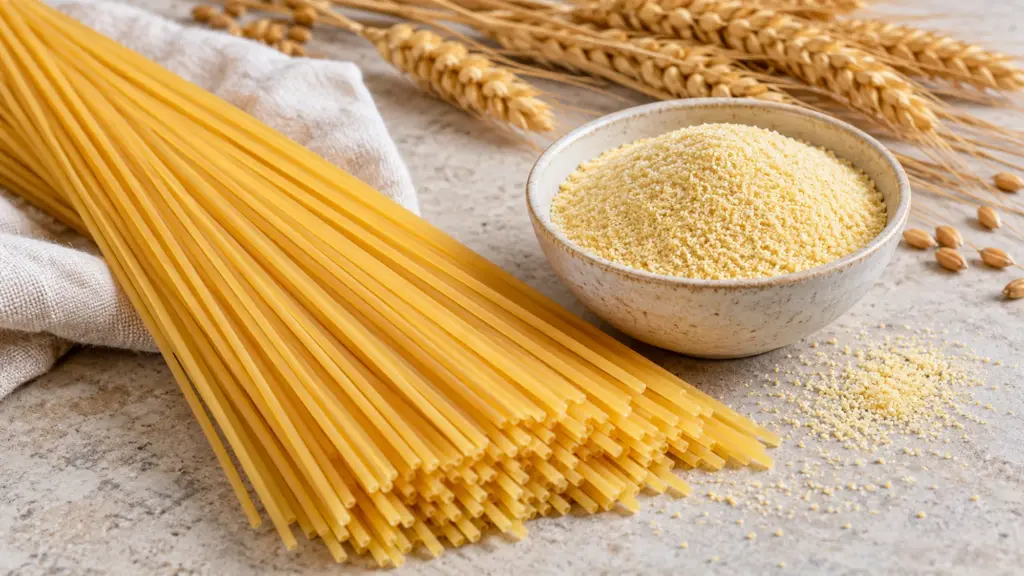
Two boxes of spaghetti can look almost identical until you turn them around. One says semolina, another says whole wheat, and a third promises durum wheat on the front. Those words answer different questions, so they are worth separating.
Spaghetti durum wheat refers to spaghetti made from durum wheat, commonly milled into semolina. It is wheat pasta and contains gluten. “Durum” identifies the wheat type; it does not, by itself, mean whole grain.
I’d start with the ingredient list rather than the most impressive phrase on the box. That makes it easier to choose the texture you want, recognize a whole-grain option and avoid a dietary mismatch before the water boils.
What Spaghetti Durum Wheat Means
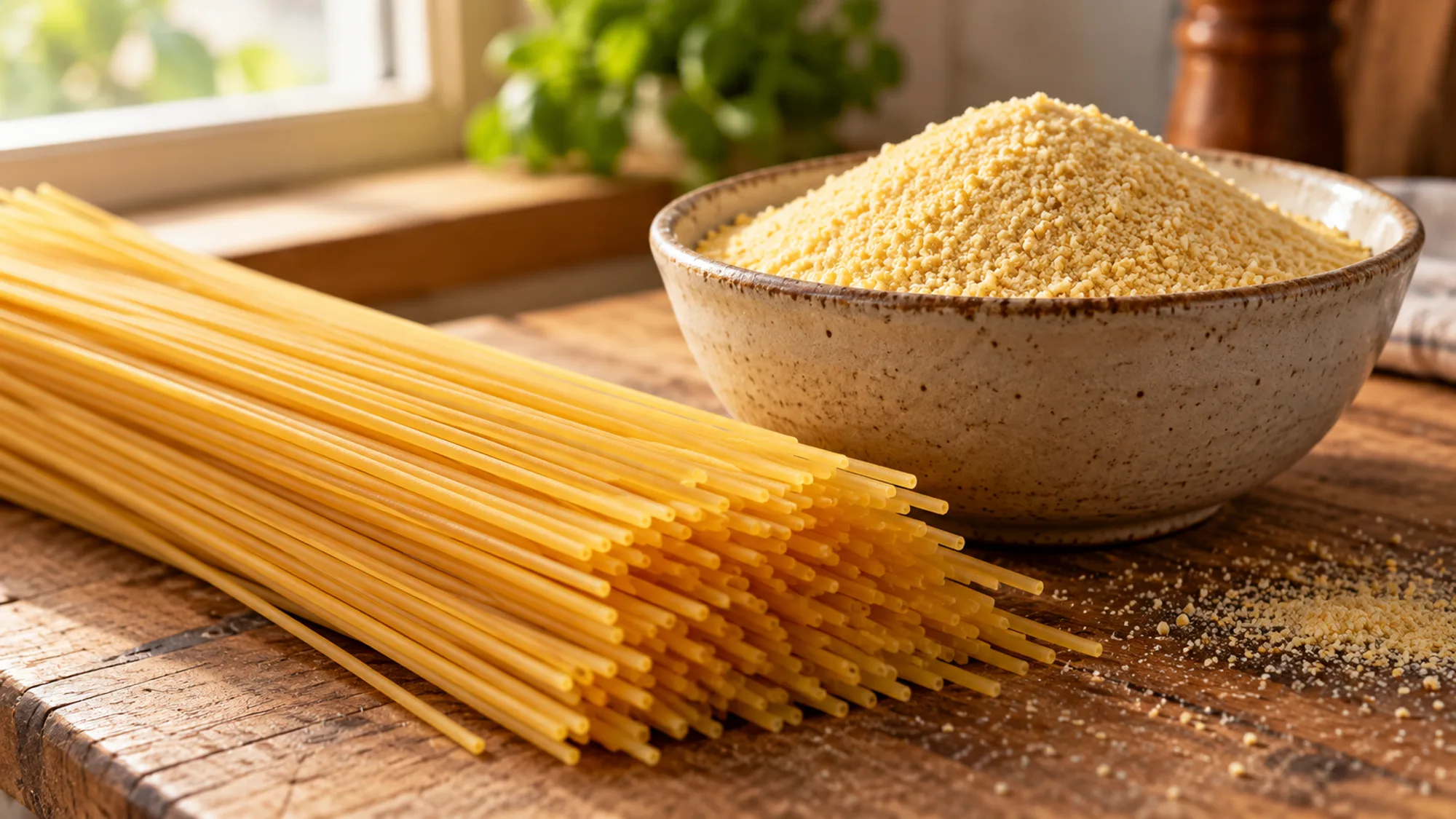
Spaghetti describes the long, narrow shape. Durum describes the wheat used to make it. Semolina is a milled wheat ingredient commonly used in dried pasta, so these terms can all appear on the same package without contradicting one another.
For a concrete label example, American Beauty’s spaghetti ingredient list names semolina and durum flour, both identified as wheat, along with added vitamins and iron. It is an example of one product, not a formula shared by every spaghetti brand.
| Label wording | What it tells you | What it does not prove |
|---|---|---|
| Spaghetti | The pasta shape | The grain or dietary suitability |
| Durum wheat | A type of wheat | That the entire grain is included |
| Semolina | A milled ingredient used in pasta | That the product is whole grain |
| Whole durum wheat / whole wheat | A whole-grain ingredient is named | That it is gluten-free |
| Gluten-free | A specific dietary labeling claim | That ordinary durum pasta qualifies |
A short ingredient list can be useful, but length alone is not a quality score. Enrichment ingredients, for instance, are not the same thing as a sauce or flavoring added to the pasta. Read what the words actually say before comparing boxes.
Durum and Whole Grain Are Different Questions
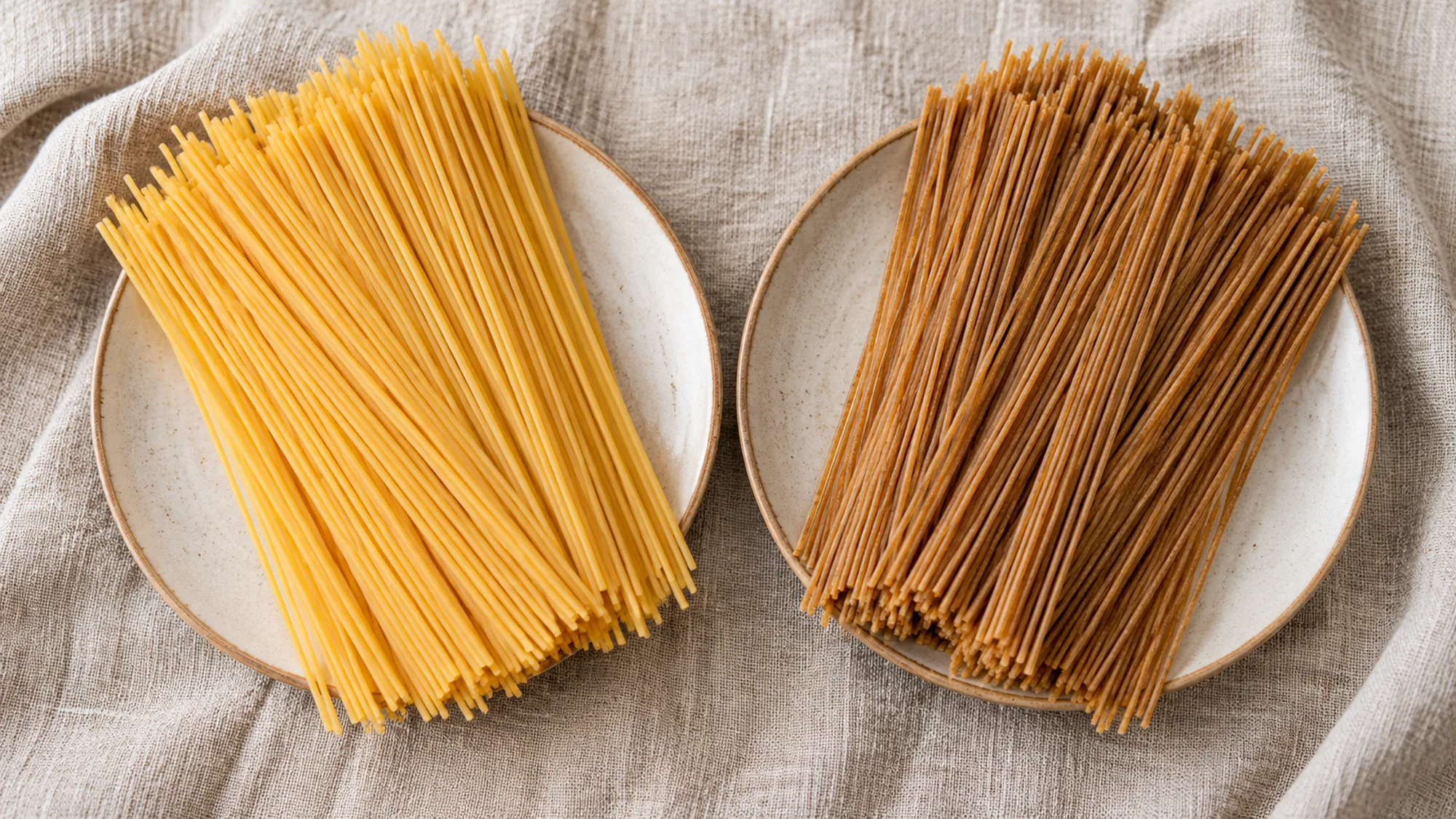
The Whole Grains Council’s label guide explains that words such as durum or wheat do not establish whole-grain content. Look for explicit whole-grain wording in the ingredients rather than relying on the color of the strands.
Refined and whole-wheat spaghetti can both fit different meals and preferences. Whole-wheat versions often have a more pronounced grain flavor; a classic semolina spaghetti may suit a dish where you want a quieter pasta background. I would compare the specific packages, not crown one universal winner.
- Read the first grain ingredient and look for the word “whole” when that is your goal.
- Compare fiber and other nutrition values using the same serving basis.
- Notice whether values refer to dry or prepared pasta before comparing numbers.
- Check ingredients separately from any sauce or meal kit packaged with the pasta.
No nutrition table is needed to explain the distinction: wheat type and how much of the grain remains are separate pieces of information. The front label may emphasize only one of them.
Is Durum Wheat Spaghetti Gluten-Free?
No. Ordinary spaghetti made from durum wheat semolina contains gluten. Changing the wheat’s variety, grinding it into semolina or cooking it until tender does not turn it into gluten-free pasta.
The FDA’s gluten-free labeling guidance excludes ordinary gluten-containing grains and ingredients made from them unless specific processing and other requirements are met. If you need gluten-free pasta, choose an appropriately labeled product rather than ordinary durum spaghetti.
- For wheat allergy, review wheat ingredients and follow your individual allergy guidance.
- For celiac disease or gluten avoidance, check the actual gluten-free label and preparation arrangements.
- Keep shared cooking water, strainers and serving utensils in mind when preparing different pasta types.
Cook for the Strand, Not Just the Clock
Use the package’s instructions as your starting point because spaghetti thickness and formulation vary. Barilla’s U.S. classic spaghetti page, for example, lists a 9–10 minute cooking range; that is not a universal time for every box.
Taste a strand near the suggested time and decide whether it needs longer. If it will finish cooking in a hot sauce, allow for that next step rather than draining it at the texture you want on the plate.
- Stir after adding the strands so they separate as they soften.
- Keep some cooking water available before draining if the sauce needs loosening.
- Add that water gradually while tossing, stopping when the coating looks right.
- Have the sauce and serving dishes ready so the pasta is not waiting around.
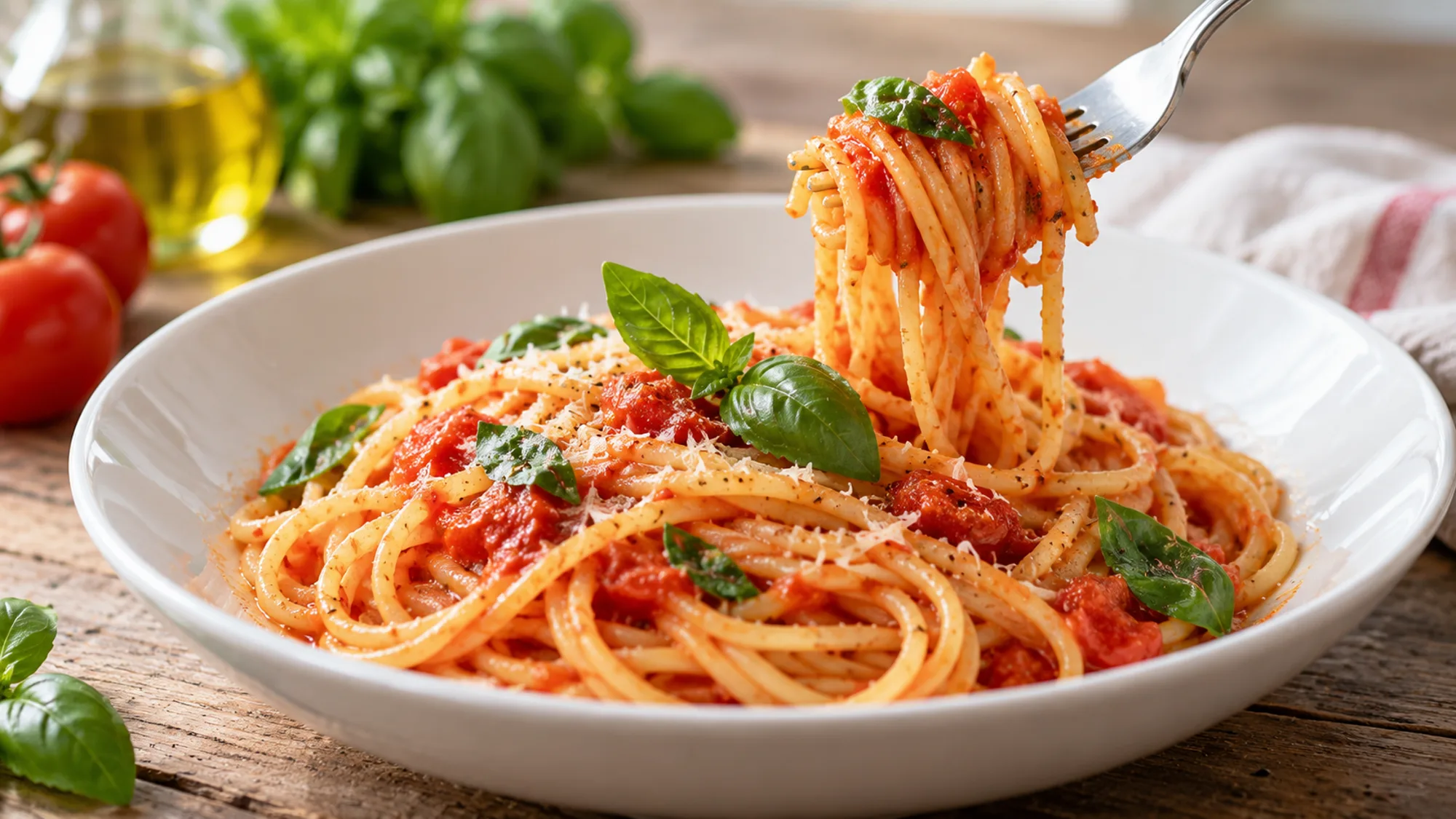
I’d put more attention into that final toss than into buying a box on wording alone. A familiar spaghetti, cooked with care and paired with a sauce you enjoy, is a useful pantry staple without needing a grand claim. A simple pomodoro sauce gives the strands a clear, familiar partner.
Bottom Line
A spaghetti durum wheat label tells you about the wheat, not automatically about whole-grain content or a health advantage. Read the ingredients, remember that durum contains gluten, and use the package directions plus a taste check to guide cooking.
Sources
- American Beauty: Spaghetti ingredients
- Whole Grains Council: identifying whole-grain products
- FDA: gluten-free labeling guidance
- Barilla: classic spaghetti and cooking guidance

Hi, I’m Emily Pocker! I share recipes and food guides here at Recipes360 to help you find everyday meal inspiration and feel more confident in the kitchen. My goal is to make cooking approachable, enjoyable, and full of flavor.