
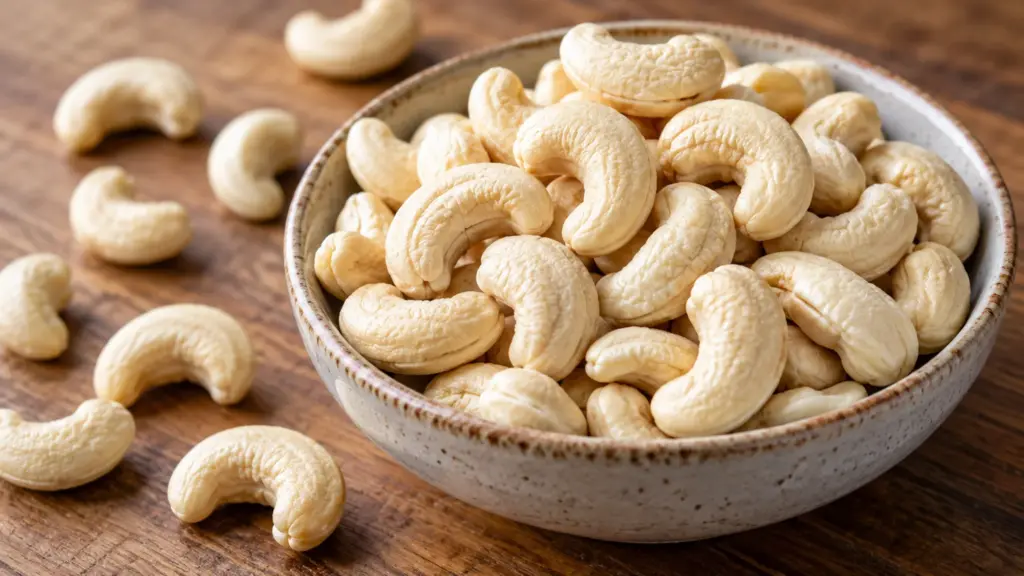
A bag labeled raw cashews can raise a reasonable question: if cashew shells need special handling, why are the pale kernels sold as a snack? The missing detail is processing. The grocery-store ingredient and the intact fruit straight from a tree are not the same thing. Understanding that difference makes it easier to buy the right bag without turning a simple pantry choice into a scare story.
Commercial raw cashews are shelled kernels, usually sold without a final flavor-roasting step. They have still undergone processing. Do not eat or attempt to shell truly unprocessed cashews from a tree.
What raw cashews actually means
Cashews grow with a hard shell around the edible kernel. The Food and Agriculture Organization describes cashew nut shell liquid as a separate material surrounding the kernel. Its edible-nuts reference identifies irritating compounds in that shell liquid. This is not something to explore with a kitchen knife or a home roasting experiment.
The International Nut and Dried Fruit Council’s processing overview describes stages including heating, shelling, drying, peeling, grading, and packing. In a retail bag, “raw” commonly distinguishes pale, unroasted kernels from cashews given a further roast for color and flavor. It does not reliably mean the ingredient has never encountered heat.
If an entirely unheated product matters to your diet, ask the manufacturer about its process rather than guessing from the front label. For everyday cooking, buy edible kernels from an established food seller and follow the package directions. Processed does not mean sterile, and a raw label is not a guarantee against contamination or recalls.
Choose cashews for texture, not a halo
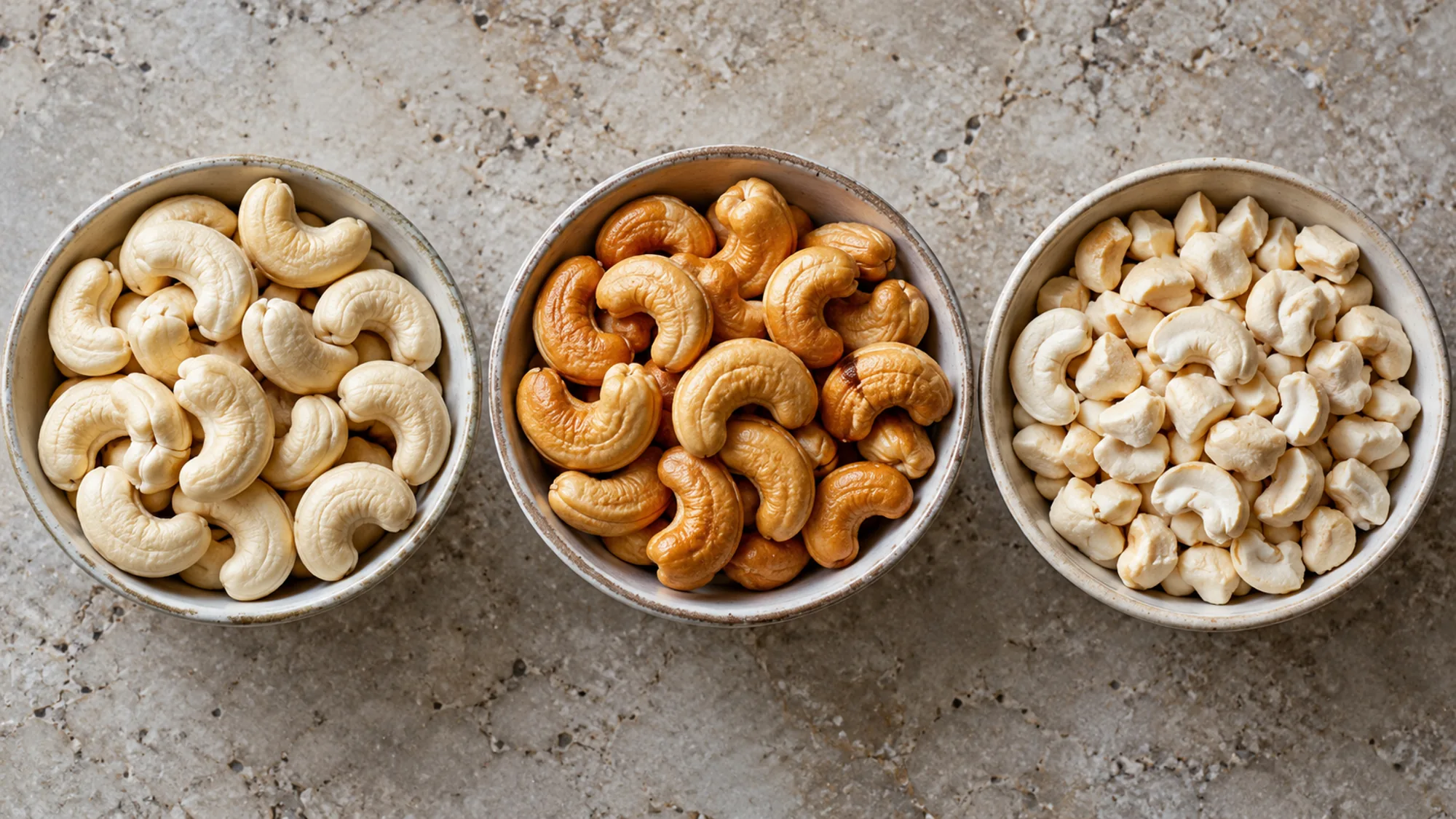
Pale kernels make sense when you want a mild flavor and a light-colored sauce. Roasted cashews bring a deeper toasted note and more pronounced snack-like character. Neither label tells the whole nutrition story: added salt, sugar, oil, and the portion you actually eat still matter.
| Choice | Where it fits | What to consider |
|---|---|---|
| Plain unroasted kernels | Creamy sauces and gentle-flavored blends | Check that the ingredient list matches your needs |
| Dry-roasted cashews | Snacks and crunchy toppings | Salt may still be added |
| Oil-roasted or seasoned cashews | A ready-flavored snack or garnish | Read added ingredients and sodium |
| Broken edible kernels | Blending, chopping, and baking | Compare price per ounce, not appearance |
I would choose pieces for a blended sauce if they cost less; a blender has no preference for perfect crescents. Save attractive whole kernels for a topping where their shape is visible. For another useful kernel-versus-name distinction, see our guide to pine kernels and pine nuts.
Use them in the kitchen without extra promises
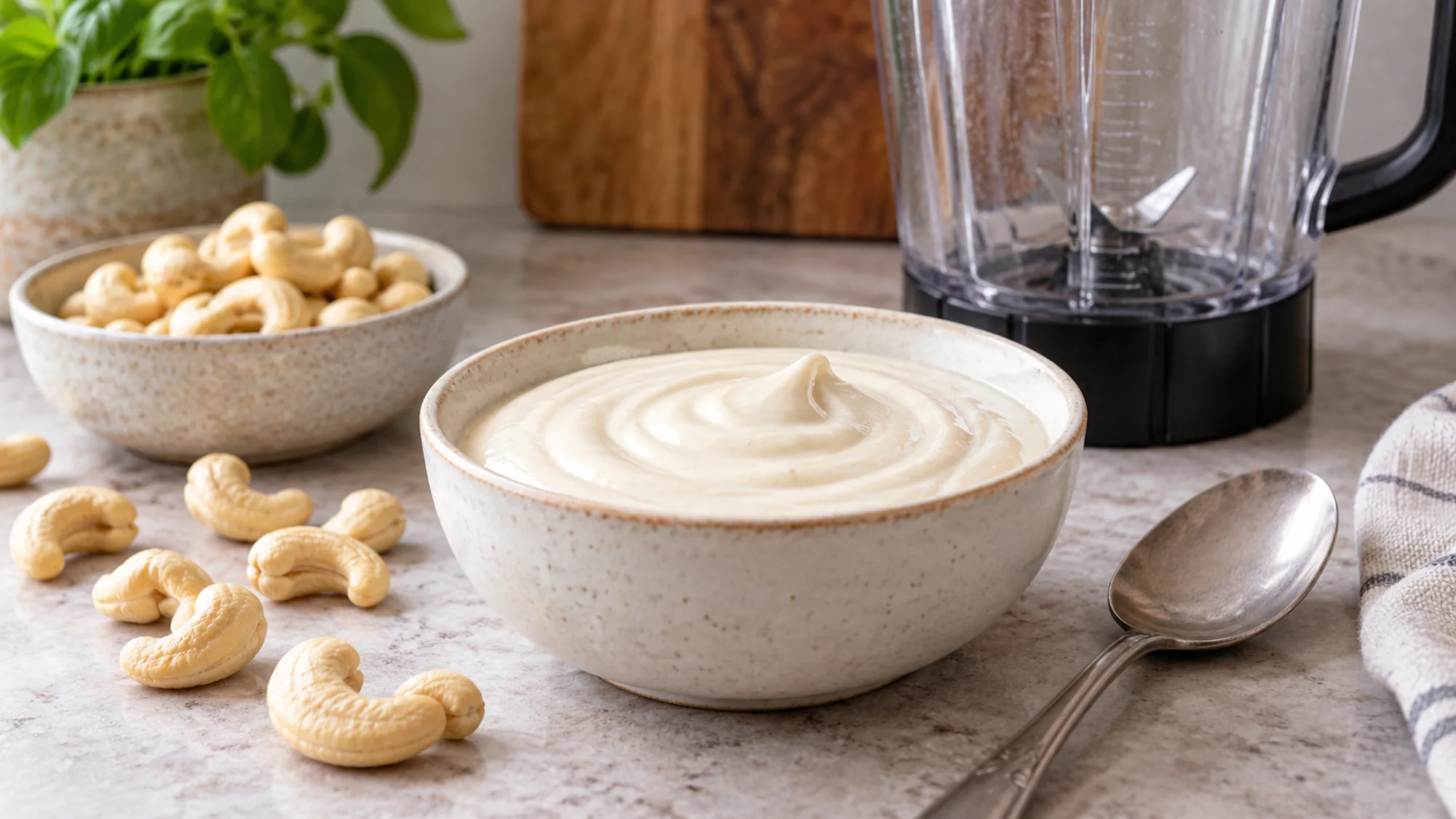
A neutral cashew blend can give soup or a sauce body without dairy ingredients, while chopped kernels add contrast to cooked vegetables or grains. That is a texture choice, not a claim that cashew cream has the same nutrition or cooking behavior as dairy cream. Start with a recipe written for the ingredient rather than assuming every substitution is one-for-one.
For a smooth blend, follow the recipe’s preparation instructions and add liquid gradually. Stop the blender before scraping the sides. If a recipe calls for soaking, keep the soaking nuts refrigerated rather than leaving a wet bowl on the counter for hours; drain and use them promptly. Soaking is not a validated way to sanitize nuts or make an unsafe product safe.
My preference is to season a plain blend after its texture is right. Otherwise, repeated splashes of water can dilute a sauce you have already carefully salted. If you want crunch instead, add chopped cashews near serving so they are not lost in a wet dish. These small decisions usually matter more than buying the biggest, most photogenic kernels.
Storage and allergy checks come first
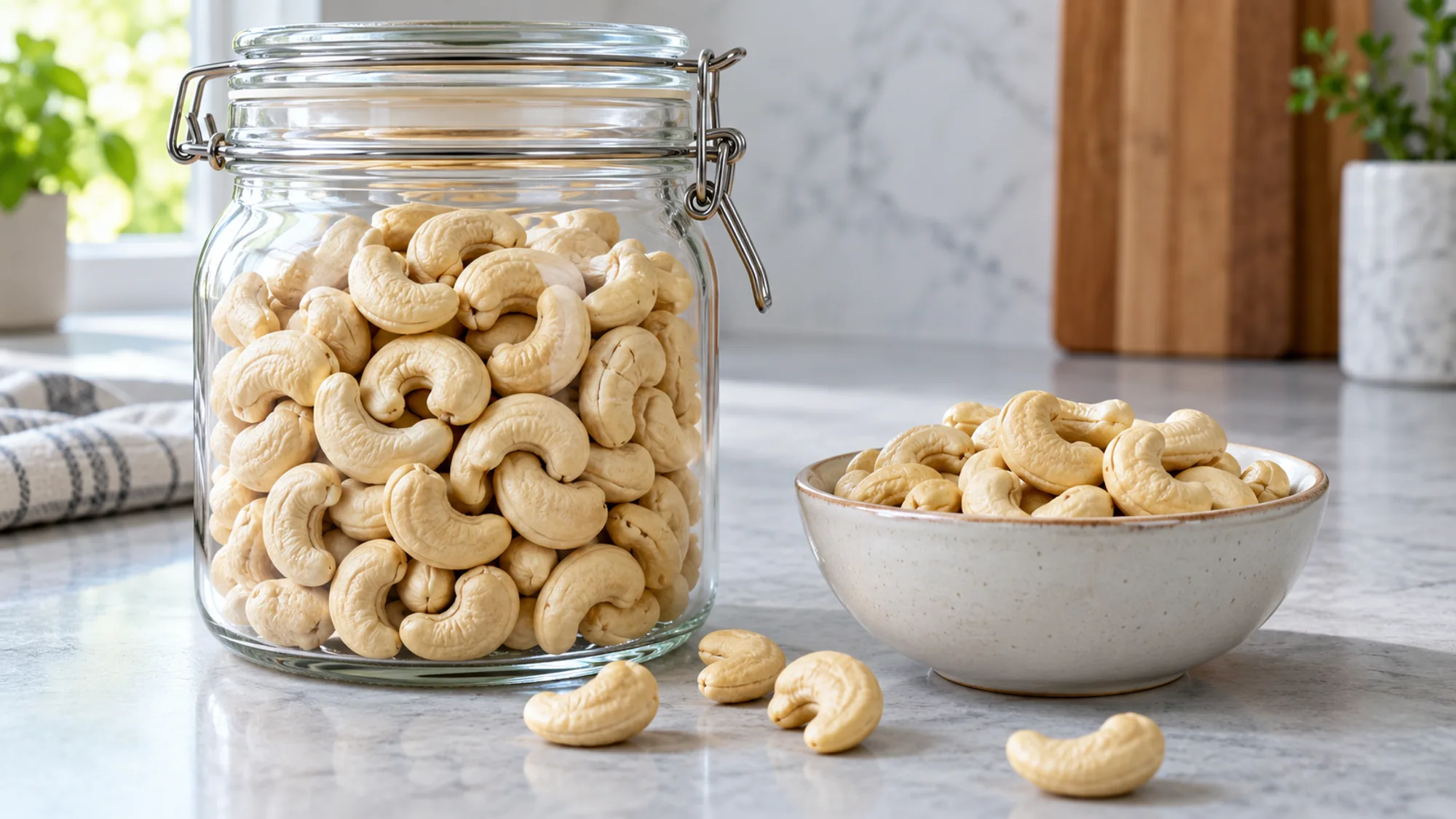
Keep dry kernels tightly closed, away from heat, moisture, and strong odors; follow any storage instructions on the package. The INC technical guide emphasizes cool, dry storage and protective packaging. Buy an amount you can use, and keep the original label or its details when decanting into a jar so recall information is not lost.
Cashews are a tree-nut allergen. FDA allergy guidance makes ingredient labels central to avoiding allergens. Do not assume roasting, soaking, or blending removes the allergy risk. A dairy-free sauce can still be unsuitable for someone with a cashew allergy; tell guests what it contains.
Once blended with water or incorporated into a perishable dish, cashews are no longer a dry pantry ingredient. Refrigerate promptly and follow the recipe’s food-safety guidance. Do not use smell alone to clear a product for safety, and never taste food that is moldy, recalled, or otherwise suspect to decide whether to keep it.
Bottom Line
Raw cashews from the grocery shelf are commercially prepared edible kernels, not untouched nuts in their shells. Choose plain kernels for a neutral blend and roasted ones for a toasted accent, while checking ingredients, allergy needs, and storage directions. There is no reason to turn shell removal into a home project: buy the food-ready ingredient.
Peace Corps Ghana’s processing film shows why several steps separate harvested cashews from edible kernels. It is background on commercial handling, not a home-processing recommendation.
Sources
FAO: Cashew nut monograph
FAO: Edible nuts and shell-liquid hazards
INC: Cashew processing
INC: Technical information and storage
FDA: Food allergies

Hi, I’m Emily Pocker! I share recipes and food guides here at Recipes360 to help you find everyday meal inspiration and feel more confident in the kitchen. My goal is to make cooking approachable, enjoyable, and full of flavor.