
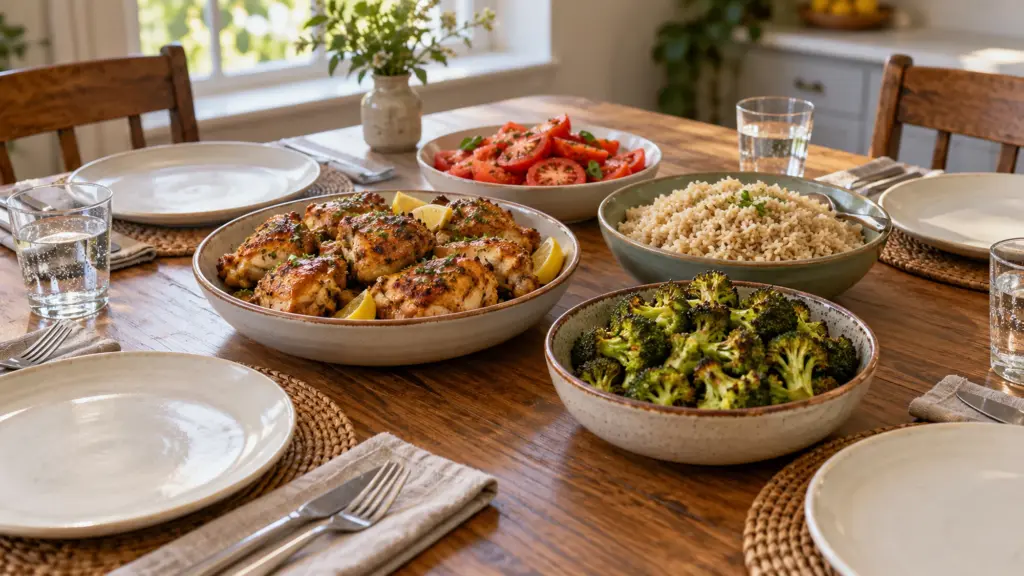
The hardest part of dinner can be deciding what to make while everyone is already hungry. Useful family meal plans remove a few of those decisions without asking you to cook seven impressive meals or fill the refrigerator with identical containers.
Build family meal plans around your real schedule: a few familiar dinners, overlapping ingredients, one flexible leftovers night, and a simple backup. Plan storage as carefully as the shopping list.
I prefer a plan with a little breathing room. A tray of chicken can become tomorrow’s tacos, but only if you set aside enough, cool it safely, and actually want tacos tomorrow. The goal is a workable week, not a perfect-looking menu.
Start Family Meal Plans With the Calendar
Before choosing food, mark late workdays, activities, visitors, and evenings when someone will eat elsewhere. Put the simplest dinner on the busiest day. Then check the refrigerator, freezer, and pantry so your list starts with what needs using rather than what looks exciting in the store.
USDA’s MyPlate budget guidance recommends planning meals and making a grocery list with your food budget in mind. Turn that into a short household conversation: choose two dependable favorites, one convenient meal, and a realistic amount of cooking.
Count who will actually eat each dinner, then adjust your recipe yields. A family with teenagers, young children, or different work schedules will not need the same portions every night. Leave room for appetite differences rather than expecting one fixed serving size to fit everybody.
A Flexible Five-Night Starting Plan
This example is a dinner-planning framework, not a complete nutrition prescription. Add breakfasts, lunches, snacks, and suitable portions for your household. For one make-ahead breakfast idea, our apple cinnamon baked oatmeal provides a separate recipe to fit into your plan. Swap ingredients around allergies, preferences, availability, and the foods your family already enjoys.
| Night | Dinner idea | Useful overlap |
|---|---|---|
| Monday | Chicken, brown rice, and broccoli | Reserve chicken promptly for Tuesday |
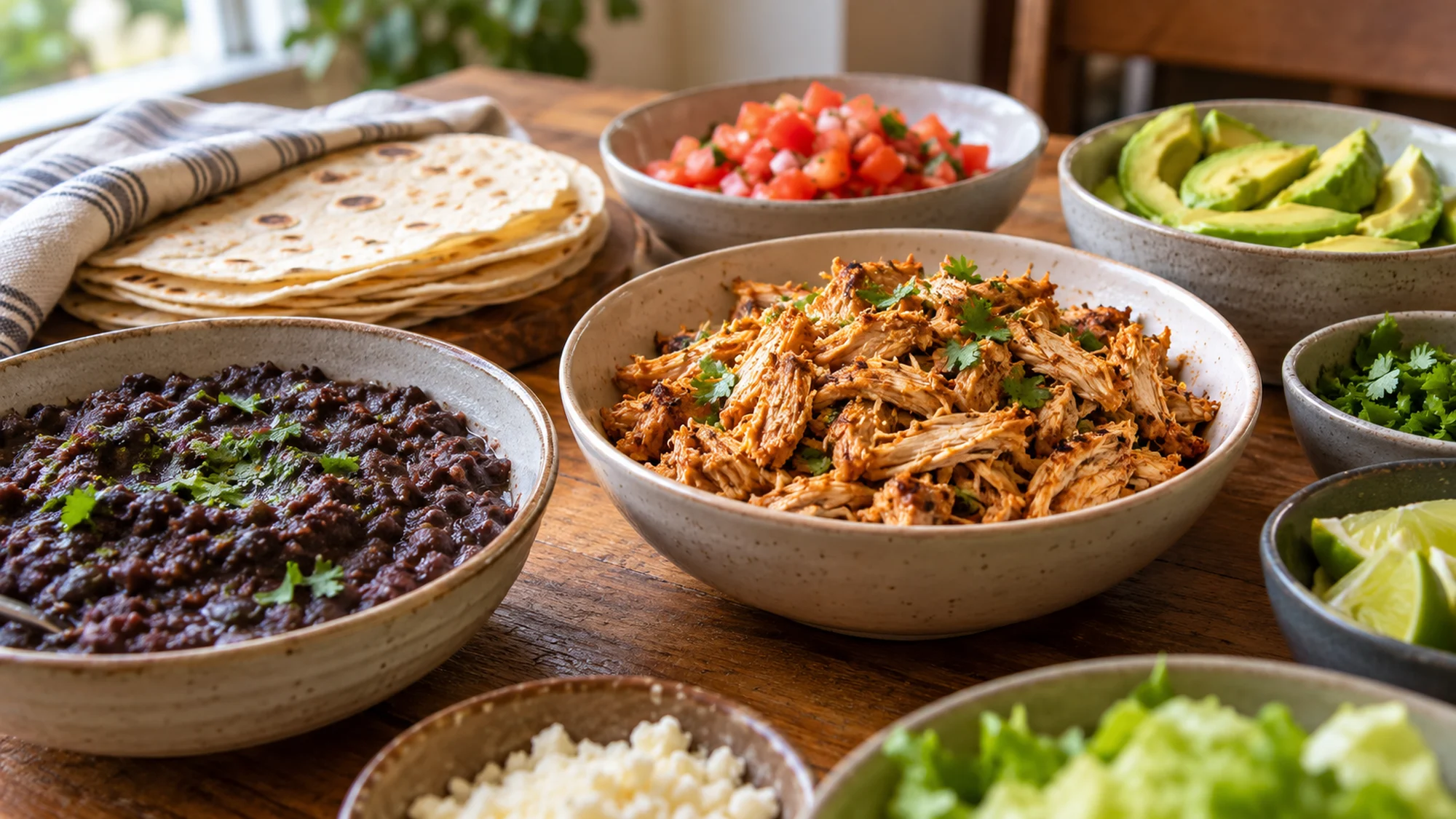
| Tuesday | Chicken and bean tacos | Use the reserved chicken; offer toppings separately |
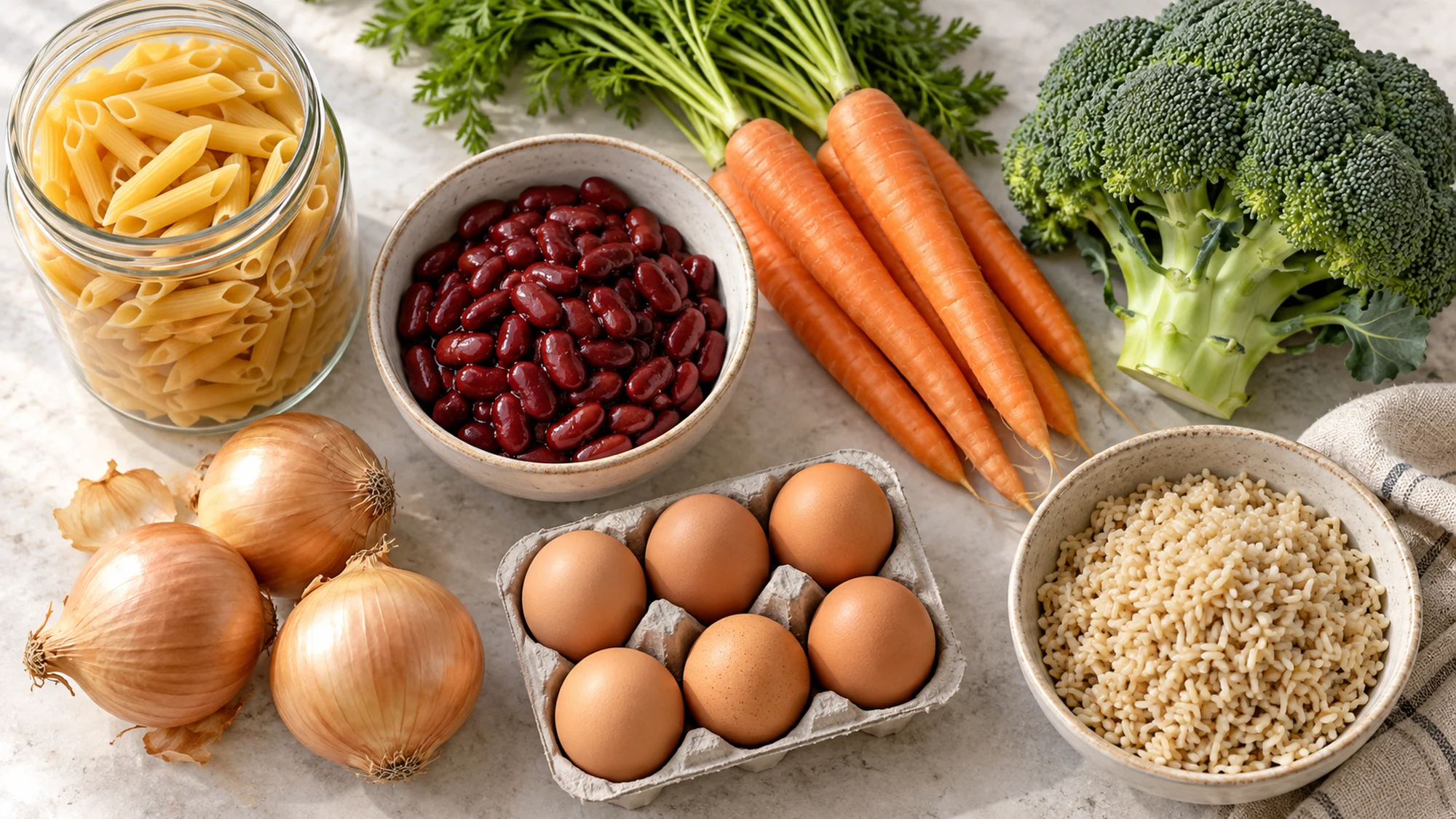
| Wednesday | Tomato and bean pasta with vegetables | Use beans and produce already purchased |
| Thursday | Eggs, toast, and a vegetable side | Keep a quick-cooking option for a busy night |
| Friday | A fresh meal or safely stored freezer portions | Check dates; do not stretch Monday’s leftovers |
Buy the rice, beans, vegetables, eggs, and other staples in amounts that match the actual dishes. Overlap does not mean every meal must taste the same: change the format and seasonings while keeping the shopping list manageable. Frozen vegetables can fill gaps without demanding another midweek trip.
Repeat ingredients, not necessarily dinners. A shared shopping list can support several different meals without a refrigerator full of food nobody wants.
Prep Components, Then Give Them a Storage Plan
USDA’s leftover-planning resource suggests repurposing components for later meals. Keep sauces and toppings separate when that makes the next dish easier. Label containers with the food and preparation date before the week gets busy.
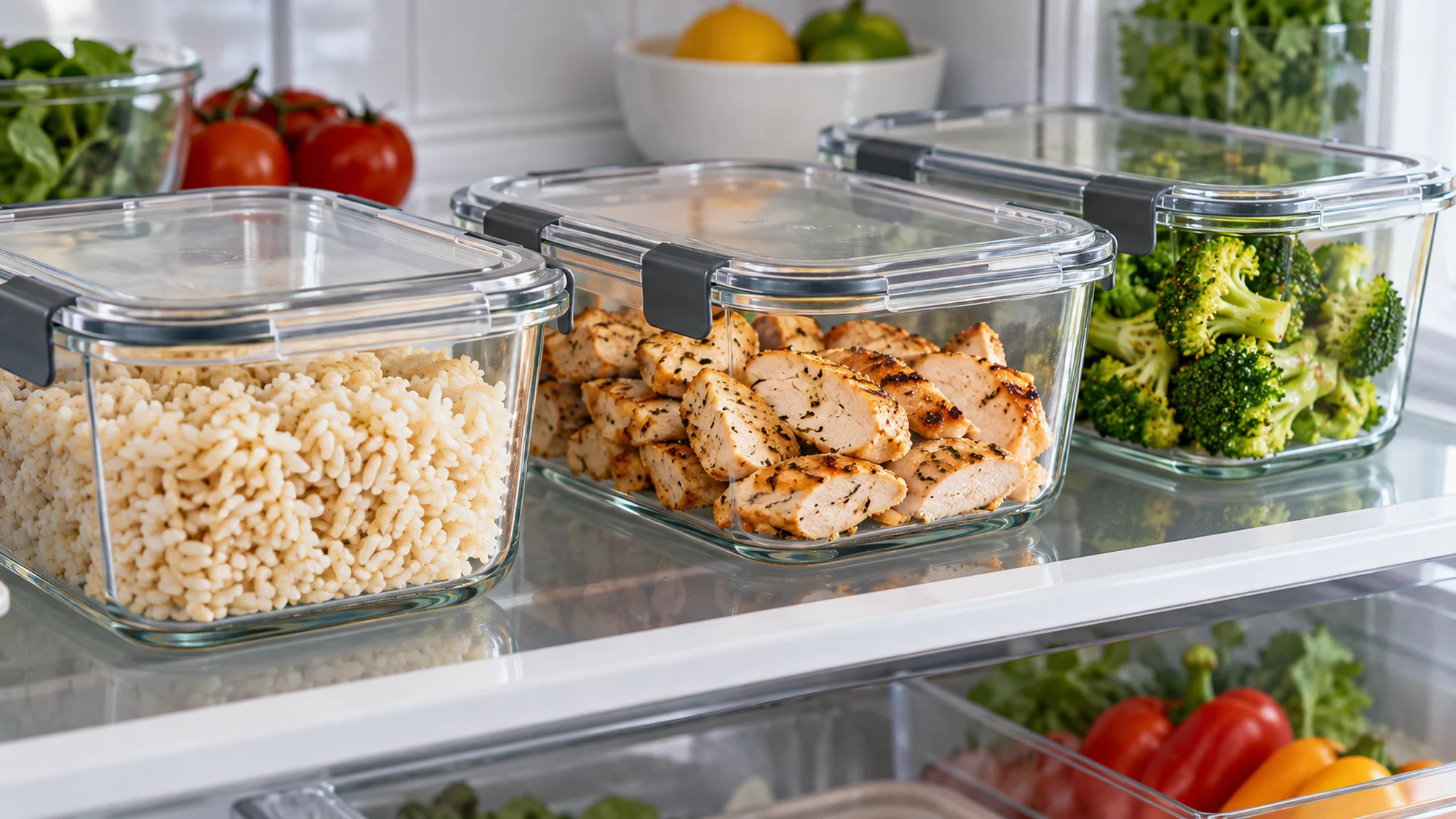
According to USDA food-safety guidance, refrigerate perishables within two hours, or one hour above 90°F, and keep the refrigerator at 40°F or below. Divide larger amounts into shallow containers. Use refrigerated leftovers within three to four days, or freeze them for later.
That means a Sunday cooking session does not automatically cover Friday from the refrigerator. Freeze later-week portions promptly instead of waiting until their storage window has nearly run out. Plan which container will be used next, and do not rely on a pleasant smell to establish that older food is safe.
Make One Dinner Adaptable
A meal served in components can be easier to share than several separate dinners. Put rice, chicken or beans, vegetables, and sauces on the table separately so people can assemble a plate. Keep allergen controls and age-appropriate textures in mind; separate bowls alone do not prevent cross-contact.
I’d also keep one low-effort backup, such as pantry pasta with beans or eggs with toast, on the list. A changed schedule should mean changing dinner, not abandoning the whole plan. If you repeatedly skip a planned dish, replace it with something your household will realistically make.
At the end of the week, note just two things: what disappeared happily, and what remained untouched. Use that information to buy a little more accurately next time. A useful meal plan gets easier through small adjustments, not through adding more recipes or stricter rules.
Bottom Line
Start with five realistic dinners, reuse a few ingredients, and give every leftover a date and destination. The best family meal plans make the next dinner easier while leaving room for life to change.
Sources
USDA MyPlate: eating on a budget; USDA MyPlate: planning with leftovers; USDA: handling leftovers safely.

Hi, I’m Emily Pocker! I share recipes and food guides here at Recipes360 to help you find everyday meal inspiration and feel more confident in the kitchen. My goal is to make cooking approachable, enjoyable, and full of flavor.