
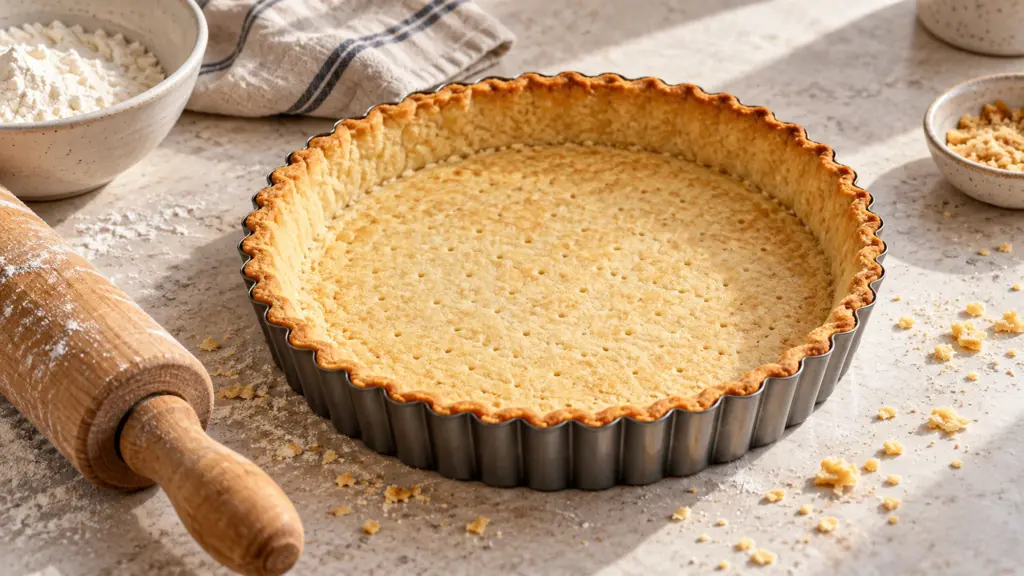
A pastry dough that looks pleasantly soft on the counter can become awkward the moment it meets a warm kitchen. This shortcrust pastry recipe starts with cold butter and just enough water to bring the flour together, then gives the dough time in the refrigerator before rolling.
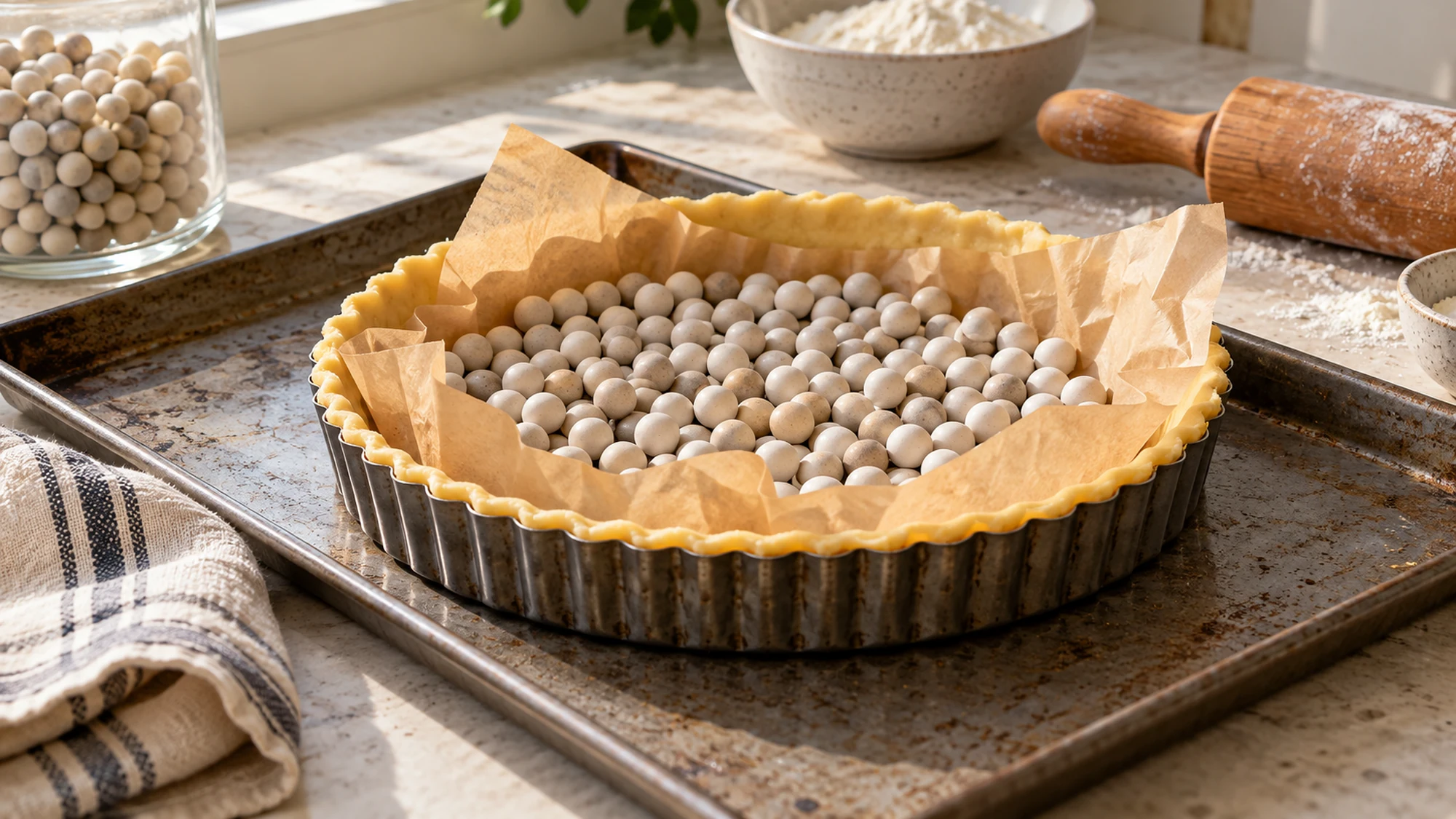
Keep the butter cold, stop mixing when the dough holds together and ease it into the tin without stretching. Chill the lined tin before blind baking to help the sides keep their shape.
The recipe makes one unsweetened nine-inch tart shell. I’d choose that neutral base when the filling is still undecided: it can sit under a savory quiche or a fruit dessert without forcing sweetness into either. The card includes a fully baked shell option, with a shorter partial bake for a filling that still needs oven time.
Serving Suggestions for This Shortcrust Pastry Recipe
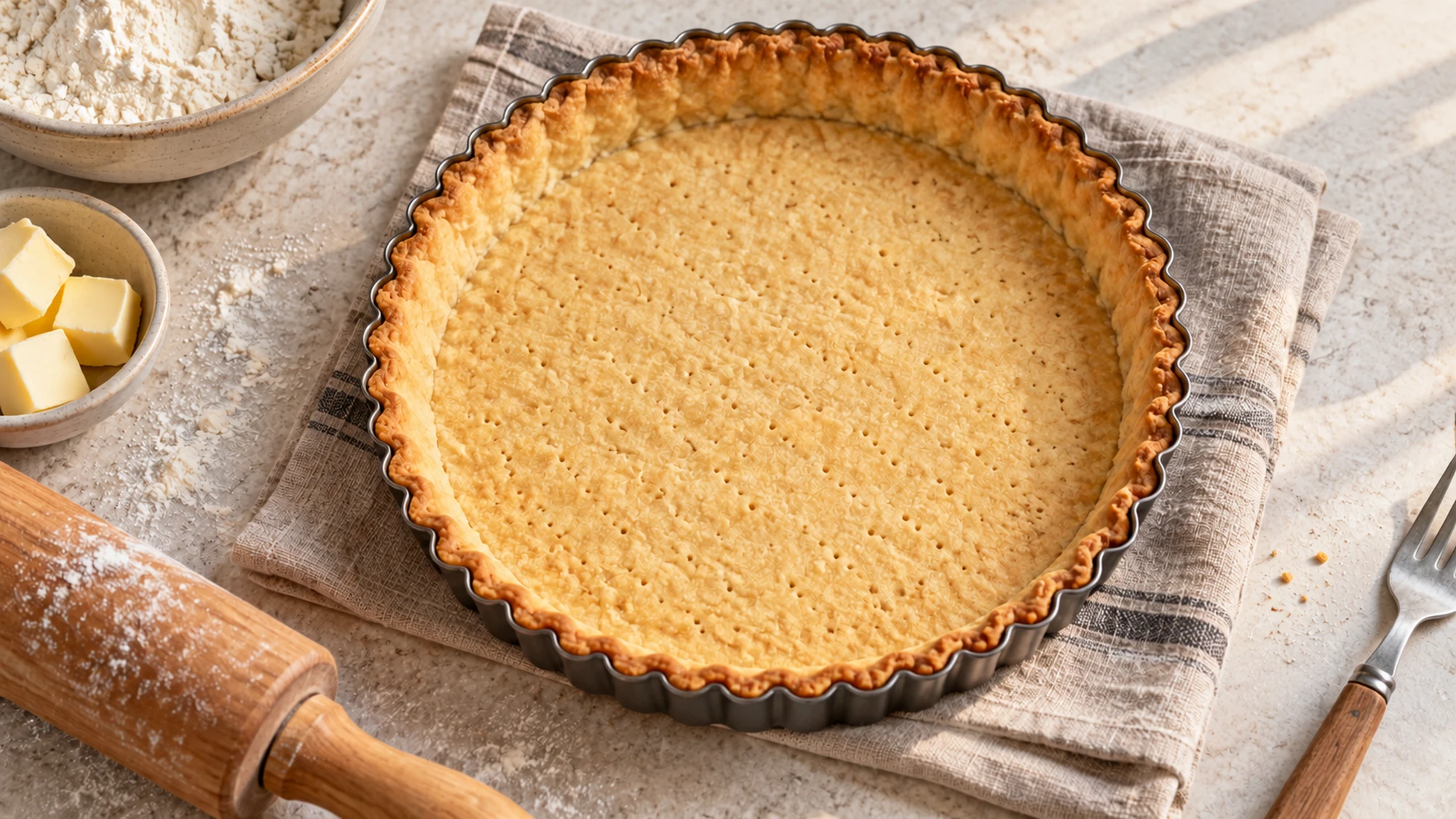
Pastry is a base rather than a finished meal, so choose the filling before you decide how far to bake it. A chilled pudding or a ready-to-eat fruit filling needs a fully baked, cooled shell. An egg-based tart that will return to the oven needs its own complete recipe and cooking guidance.
I’d keep the first shell plain enough to understand its texture before adding cheese, herbs or sugar. Let a fully baked shell cool in its tin before removing the outer ring. The sides are fragile while hot, and even a good crust cannot promise to survive an impatient tug. If you prefer a spooned dessert with a crumb topping, the apple crumble recipe is another option.
- For a fruit dessert: cool the fully baked shell before adding a suitable cooked or ready-to-eat filling.
- For a savory tart: use a compatible filling recipe and complete its required baking step.
- For individual portions: divide the dough among smaller tins, but watch closely because timing changes.
- For a tidy finish: trim the pastry evenly and avoid rolling leftover scraps into the main dough repeatedly.
| Filling plan | Shell preparation | What to remember |
|---|---|---|
| No further baking | Fully bake and cool | Base should be golden and dry |
| Filling needs baking | Partially blind bake | Finish using the filling recipe |
| Small tartlets | Use smaller tins | Check earlier; timing differs |
| Free-form galette | Different shaping | No blind baking in a tart tin |
Variations and Dough Handling
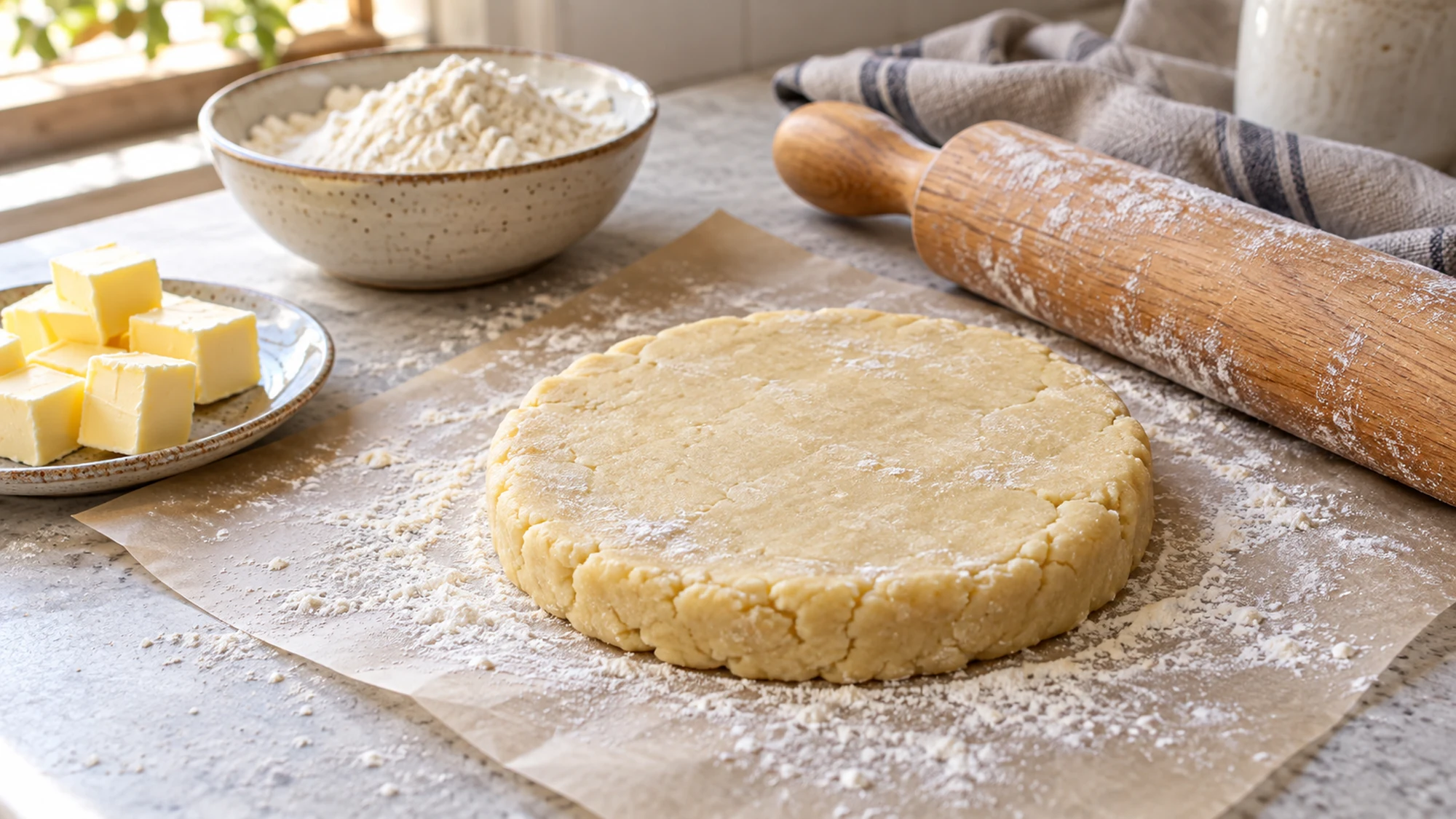
Shortcrust is sensitive to handling because mixing flour with water develops structure. Too much work can make a firm, shrinking shell rather than a tender one. Bring the dough together with gentle pressure; there is no benefit in kneading it like bread until it looks completely polished.
Butter temperature matters just as much. If it becomes greasy while you work, pause and chill the dough instead of adding handfuls of flour to make it manageable. Extra flour changes the balance. Small cracks at the edge can be patched with a scrap, while a dough that repeatedly breaks may need a little time to become pliable after chilling.
- Sweeter base: add a modest amount of sugar for a dessert version and watch the color as it bakes.
- Herbal base: use a little finely chopped herb without adding wet ingredients.
- Water adjustment: start with less and add small amounts only until the dough holds when pressed.
- Rolling technique: turn the dough regularly and dust lightly rather than coating the worktop in a thick flour layer.
Health Benefits and Honest Limits
A simple ingredient list makes it easier to see what the pastry contains, but butter pastry is still a rich part of the finished dish. It supplies energy and fat, while the eventual filling and portion determine much of the meal’s nutritional balance. There is no special health effect attached to making it by hand.
The card’s estimated nutrition describes one-eighth of the pastry recipe, with no filling. A vegetable-and-egg tart and a sweet custard tart will have different totals even when their crust is identical. Choose the filling for your needs, and do not use the crust estimate as if it represented the whole plate. See King Arthur Baking’s explanation of blind baking for context.
- Allergens: wheat and milk are present in the written recipe.
- Food safety: raw flour can contain harmful germs; do not taste uncooked dough.
- Utensils: wash hands, bowls and work surfaces after handling flour and pastry.
- Ingredient substitutions: gluten-free flour and butter alternatives need a specifically suitable formula; a direct swap may change strength and texture.
- Further guidance: CDC guidance on raw flour.
Bottom Line
Tender shortcrust begins with restraint: cold butter, enough water to bind and only brief handling. Give the dough its chilling time, support the sides with weights for blind baking and match the shell’s final bake to the filling you intend to use. The recipe below keeps those choices clear.
Shortcrust Pastry Recipe

Ingredients
- 250 g all-purpose flour about 2 cups, plus a light dusting for rolling
- 125 g unsalted butter about 9 tablespoons, cold and cubed
- 1/2 teaspoon fine salt 3 g
- 4 tablespoons ice-cold water 60 mL; start with 3 tablespoons and add only as needed
Equipment
- 1 9-inch fluted tart tin with removable base about 23 cm
- 1 Mixing bowl
- 1 Rolling Pin
- 1 Baking parchment
- 1 Pie weights enough to support the base and sides
- 1 Baking sheet
Instructions
- Mix the flour and salt in a bowl. Add the cold butter and rub it into the flour with your fingertips until the mixture resembles coarse crumbs with a few small butter pieces. If the butter becomes greasy, chill the bowl before continuing.
- Drizzle in 3 tablespoons of the cold water and mix with a fork. Add the remaining tablespoon in small amounts only if needed. Stop when a handful holds together when pressed; the dough should not be wet or sticky.
- Gather the dough with gentle pressure and flatten into a disk about 1 inch thick. Wrap and refrigerate for 30 minutes. Do not knead it smooth like bread.
- Let the chilled dough stand briefly only if too firm to roll. Roll on a lightly floured surface to a circle about 12 inches across and 1/8 inch thick. Ease into a 9-inch tart tin without stretching, press gently into the corners and trim the edge. Patch small cracks with dough scraps. Chill the lined tin for 20 minutes.
- Heat the oven to 375°F (190°C). Set the tin on a baking sheet. Line the pastry with baking parchment and fill with pie weights, supporting the sides as well as the base.
- Bake for 20–25 minutes until the rim looks dry and begins to color. Carefully lift out the parchment and weights. Prick any raised patches on the base gently with a fork.
- For a fully baked shell, return to the oven for 10–15 minutes until the base is dry and golden. For a filling that needs further baking, return for about 5 minutes just to dry the base, then follow that filling recipe for the final bake. Let a fully baked shell cool in the tin before filling or removing the outer ring.
Nutrition
Video
Notes
Tried this recipe?
Let us know how it turned out!Hi, I’m Emily Pocker! I share recipes and food guides here at Recipes360 to help you find everyday meal inspiration and feel more confident in the kitchen. My goal is to make cooking approachable, enjoyable, and full of flavor.