
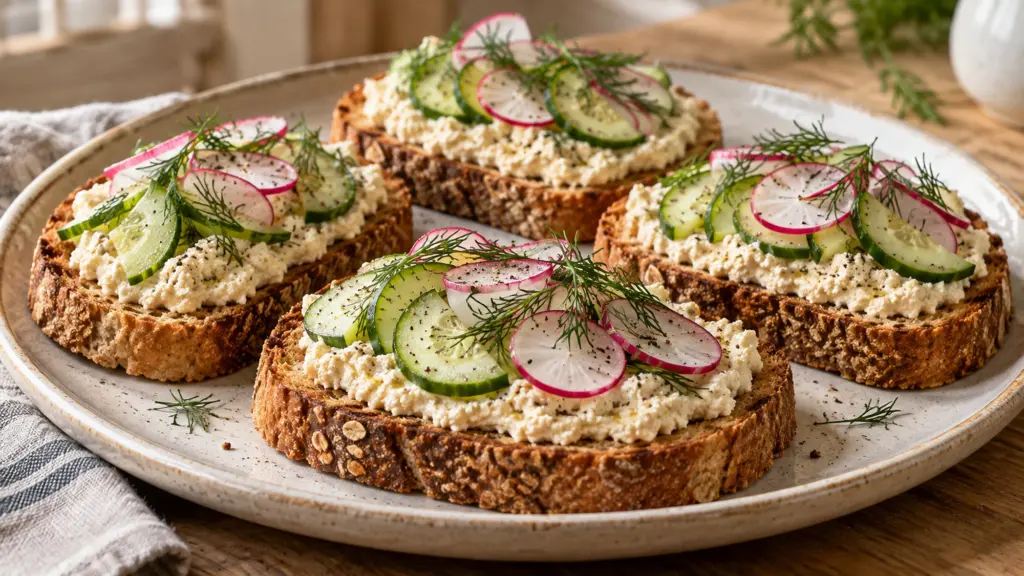
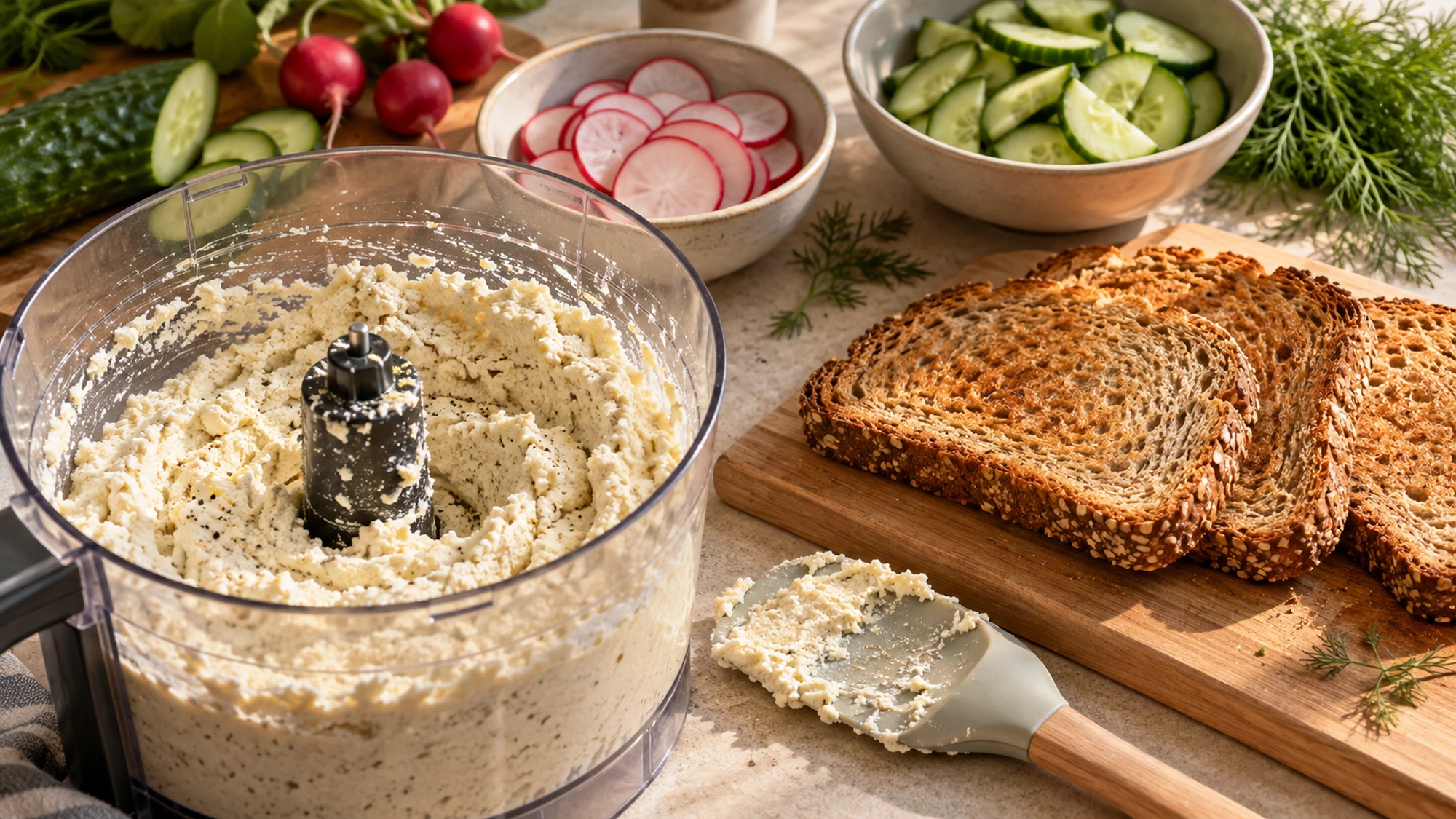
A crisp slice of toast needs a topping that stays put without becoming heavy. Vegan ricotta toast uses a lemon-seasoned tofu spread for that job, then adds cucumber, radish, and dill for a cool, fresh finish. Small curds in the spread are welcome here; it need not be whipped into a completely smooth sauce.
Drain firm tofu, pulse it briefly with lemon and seasoning, and spread it on freshly toasted bread. Dry the sliced vegetables before adding them so the toast keeps its crunch for the first bite.
I’d keep the vegetable slices thin and the layer of spread generous enough to anchor them. A pile of thick cucumber rounds has a habit of departing at the least convenient moment. The food should be easy to eat, not a balancing exercise with a garnish on top.
Serving Suggestions for Vegan Ricotta Toast
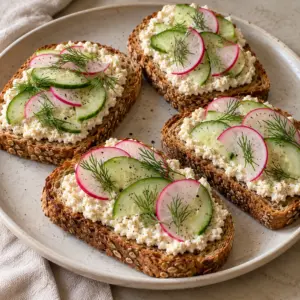
Assemble close to eating time, while the bread is still crisp. The tofu spread can be cold; the contrast with warm toast is part of the appeal. Pat washed cucumber and radishes dry after slicing, and distribute them across the surface rather than stacking everything in one impressive but unstable mound.
| When to serve | Practical approach |
|---|---|
| Breakfast or a snack | Offer one toast with fruit or another food that suits your appetite. |
| A light meal | Serve two smaller toasts or add a separate salad. |
| Prepared components | Keep bread, spread, and sliced vegetables apart until assembly. |
The card uses whole-grain bread with a stated weight, but a short piece of this baguette is another serving option. The texture and nutrition will change. I’d choose bread that toasts firmly without turning so hard that the topping is squeezed off at the first bite.
- A serrated knife makes smaller pieces without crushing the toast.
- Put extra vegetables beside the plate rather than overloading the bread.
- Use a clean spoon for the stored spread, and follow the tofu package’s handling directions.
Keep the bread crisp, the vegetables dry, and the topping low enough that every bite includes all three layers.
Vegan Ricotta Toast Variations
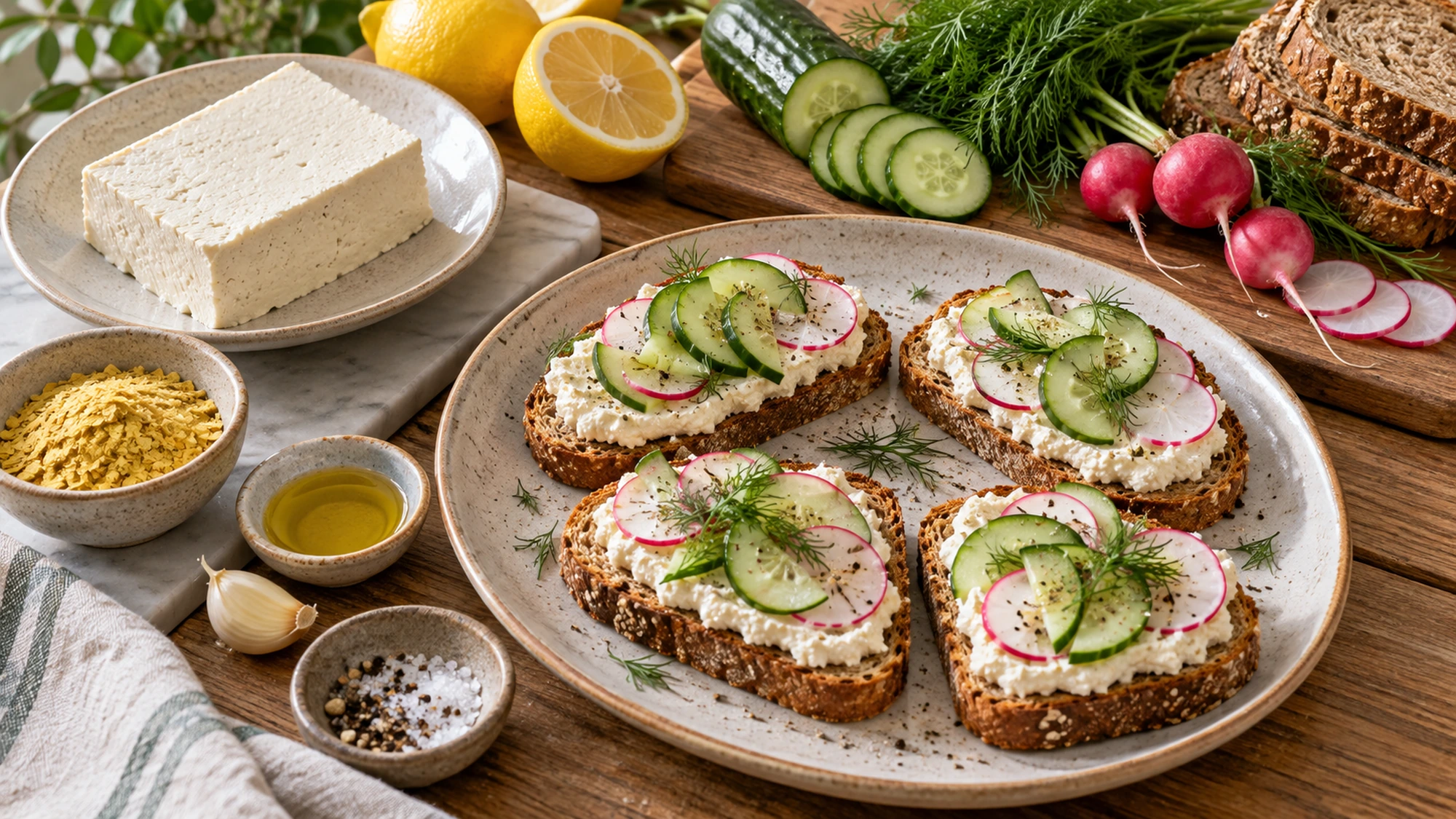
This ricotta-style spread is made from tofu, not dairy cheese. Lemon gives it tang, nutritional yeast brings a savory note, and a little olive oil helps it spread. The result depends on the tofu: a dry extra-firm block and a softer firm block will not behave exactly alike.
- For a finer spread, pulse a little longer and scrape the bowl rather than adding a large splash of liquid.
- For a different herb, use a small amount of chopped chives or parsley instead of dill.
- For a warmer topping, use separately cooked vegetables that have stopped releasing excess steam.
- For a garlic-sensitive palate, reduce the raw garlic rather than trying to hide it with more lemon.
Taste before increasing the acid. More lemon can brighten the flavor but also loosen the mixture, and the bread will notice. If the processor struggles, stop and scrape down the sides first. Mashing by hand is also possible when you want a coarse spread and would rather keep the equipment cupboard closed.
Adjust texture with short pulses and flavor with small additions; neither the spread nor the toast needs to be flooded.
Health Benefits and Ingredient Labels
Tofu contributes protein, while the bread and vegetables add their own nutrients and fiber. The amount varies with the tofu and bread you buy. Wash the cucumber, radishes, and herbs before cutting, following the FDA’s produce preparation advice; plain running water is the starting point.
- The estimate covers one-quarter of the spread, vegetables, and measured bread, including all the olive oil.
- Soy and wheat are present in the standard version. Read the bread label for additional ingredients such as sesame.
- Use tofu suitable for eating without further cooking, and follow its package directions if cooking is required.
A vegan label does not settle an allergy question. The FDA’s allergen guide explains why ingredient and allergen statements matter. Choose products that meet the needs of the people eating, rather than relying only on the dish’s name.
Treat the toast as a useful combination of bread, tofu, and vegetables, with the actual packages determining the details.
Bottom Line
Vegan ricotta toast works through contrast: crisp bread, a lightly curdy lemon-tofu spread, and thin fresh vegetables. Keep the components separate until serving, avoid excess liquid, and let a little texture remain in the spread for a toast that holds together.
Vegan Ricotta Toast Recipe

Ingredients
- 300 g firm tofu Drained; use a product suitable for eating without further cooking
- 2 tablespoons lemon juice 30 ml
- 1 tablespoon nutritional yeast 5 g
- 2 teaspoons olive oil 9 g
- 1 small clove garlic Finely grated
- 1/4 teaspoon fine salt
- 1/8 teaspoon black pepper
- 4 slices vegan whole-grain bread 160 g total, weighed before toasting
- 160 g cucumber Washed, thinly sliced and patted dry
- 80 g radishes Washed, trimmed and very thinly sliced
- 8 g fresh dill Washed, dried and snipped
Equipment
- 1 Food processor Or bowl and fork for a coarser spread
- 1 Toaster
- 1 Kitchen scale
Instructions
- Drain the tofu without pressing it completely dry. Pulse it with the lemon juice, nutritional yeast, oil, garlic, salt, and pepper in short bursts, scraping the bowl as needed, until it is spreadable with small curds. Alternatively mash thoroughly with a fork. If the mixture is too stiff, first scrape and pulse again before considering a teaspoon of water.
- Toast the bread until golden and crisp. Pat the sliced cucumber and radishes dry so they do not immediately wet the toast.
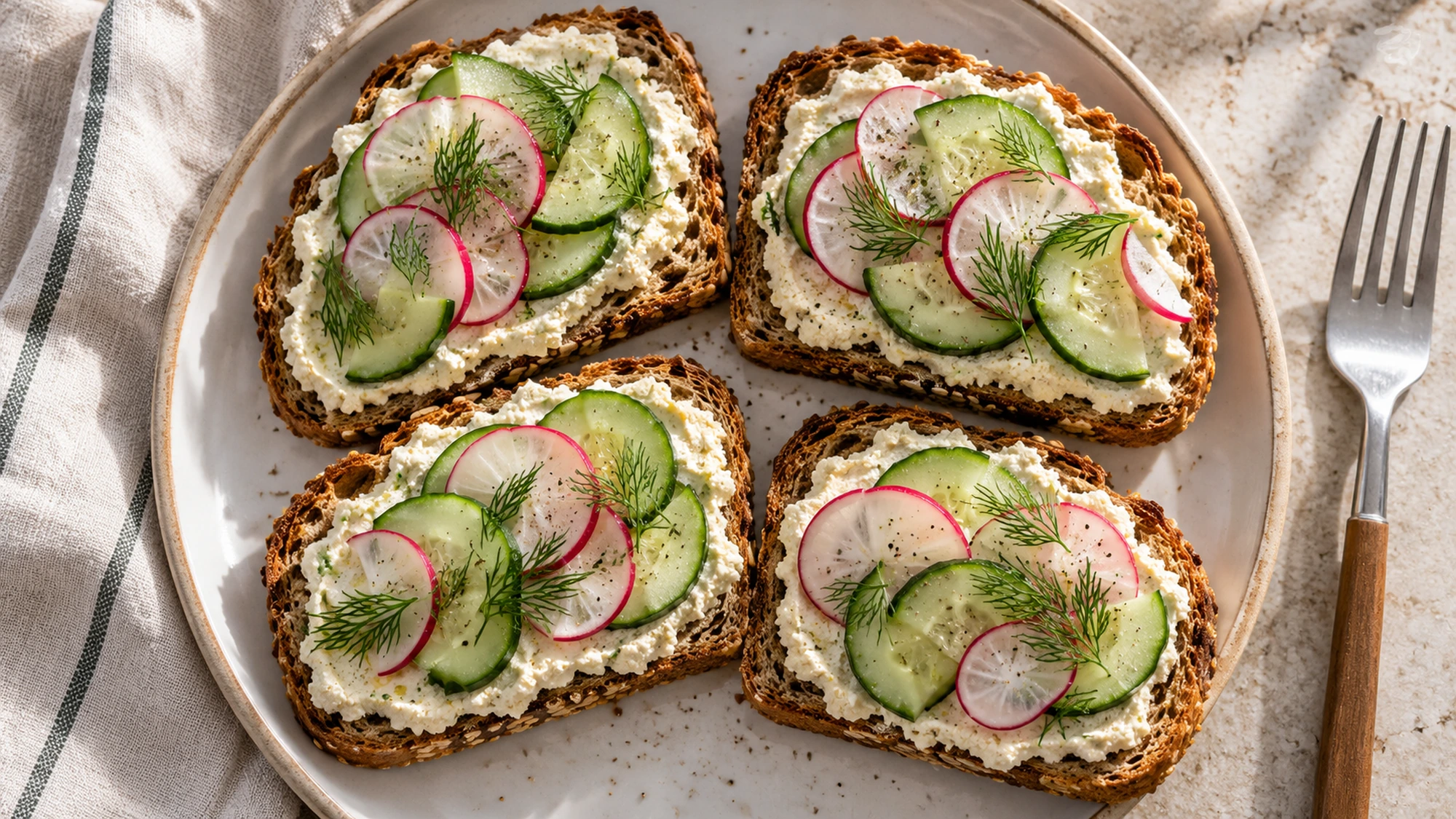
- Divide the tofu spread evenly over the four toast slices. Add the cucumber, radish, and dill in thin layers, then serve immediately. Keep unused spread and vegetables chilled separately from bread, and follow the tofu’s earlier package guidance.
Nutrition
Video
Notes
Tried this recipe?
Let us know how it turned out!Hi, I’m Emily Pocker! I share recipes and food guides here at Recipes360 to help you find everyday meal inspiration and feel more confident in the kitchen. My goal is to make cooking approachable, enjoyable, and full of flavor.