
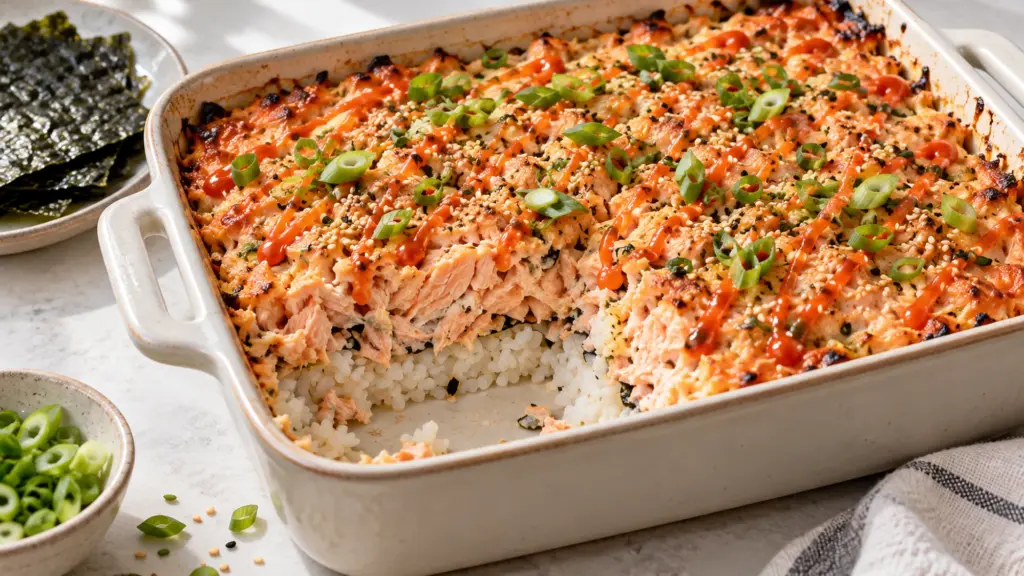
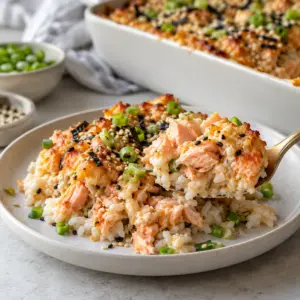
Sushi flavors are appealing until the thought of rolling neat pieces gets between you and dinner. Salmon sushi bake puts seasoned short-grain rice and creamy cooked salmon in a dish that everyone can scoop, with crisp nori, cucumber, and avocado offered alongside.

Cook the salmon before mixing it with the creamy topping, then bake the assembled rice and fish until hot throughout. Keep nori sheets separate so they stay crisp enough to hold each spoonful.
This is a cooked casserole inspired by sushi flavors, rather than traditional rolled sushi. The distinction is useful: there is no raw-fish handling step, but the cooked rice and fish still need careful timing and storage. I’d organize the cool toppings before the dish comes out, so serving stays simple.
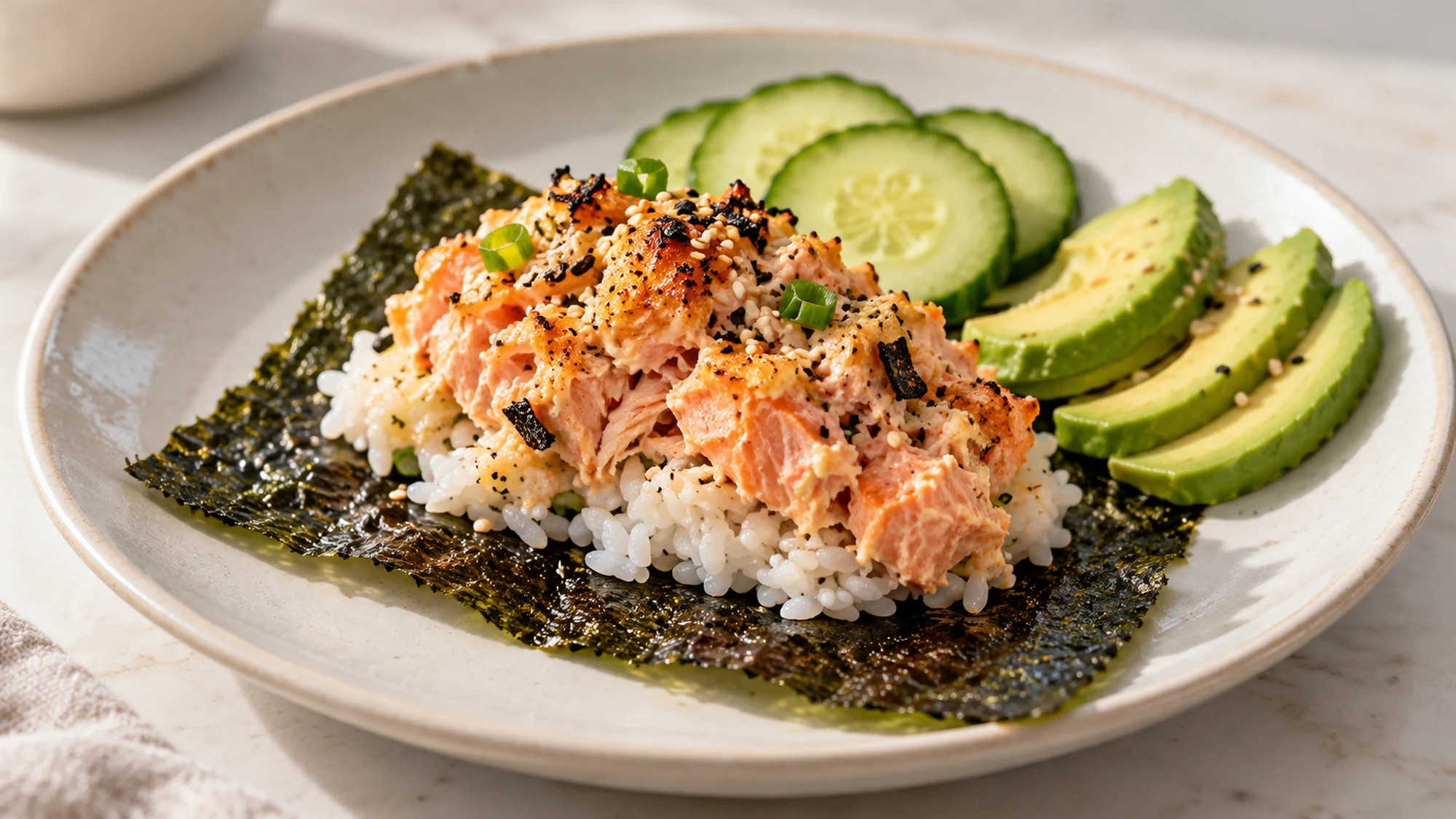
Serving suggestions for salmon sushi bake
Set the warm baking dish on a heatproof surface and put small nori sheets within reach. Scoop a little rice and salmon onto a sheet immediately before eating. The nori softens on contact with the warm filling, so making a whole platter of filled pieces ahead takes away the contrast that makes the dish interesting.
Cucumber supplies a clean, cool crunch; avocado makes a softer partner. Offer both separately and let people decide how much they want. Keep extra hot sauce at the table instead of making the whole casserole fiery. A little soy sauce may be enough, since the fish mixture is already seasoned.
A broad serving spoon works better than a knife here. The layers are meant to be scoopable, not cut into firm cake-like squares. If you prefer fish served simply with a side, the site’s salmon cooking recipe gives another direction without a rice casserole.
- Keep nori dry: open just before serving.
- Keep toppings cool: add cucumber and avocado at the table.
- Scoop modestly: small bites are easier to support on nori.
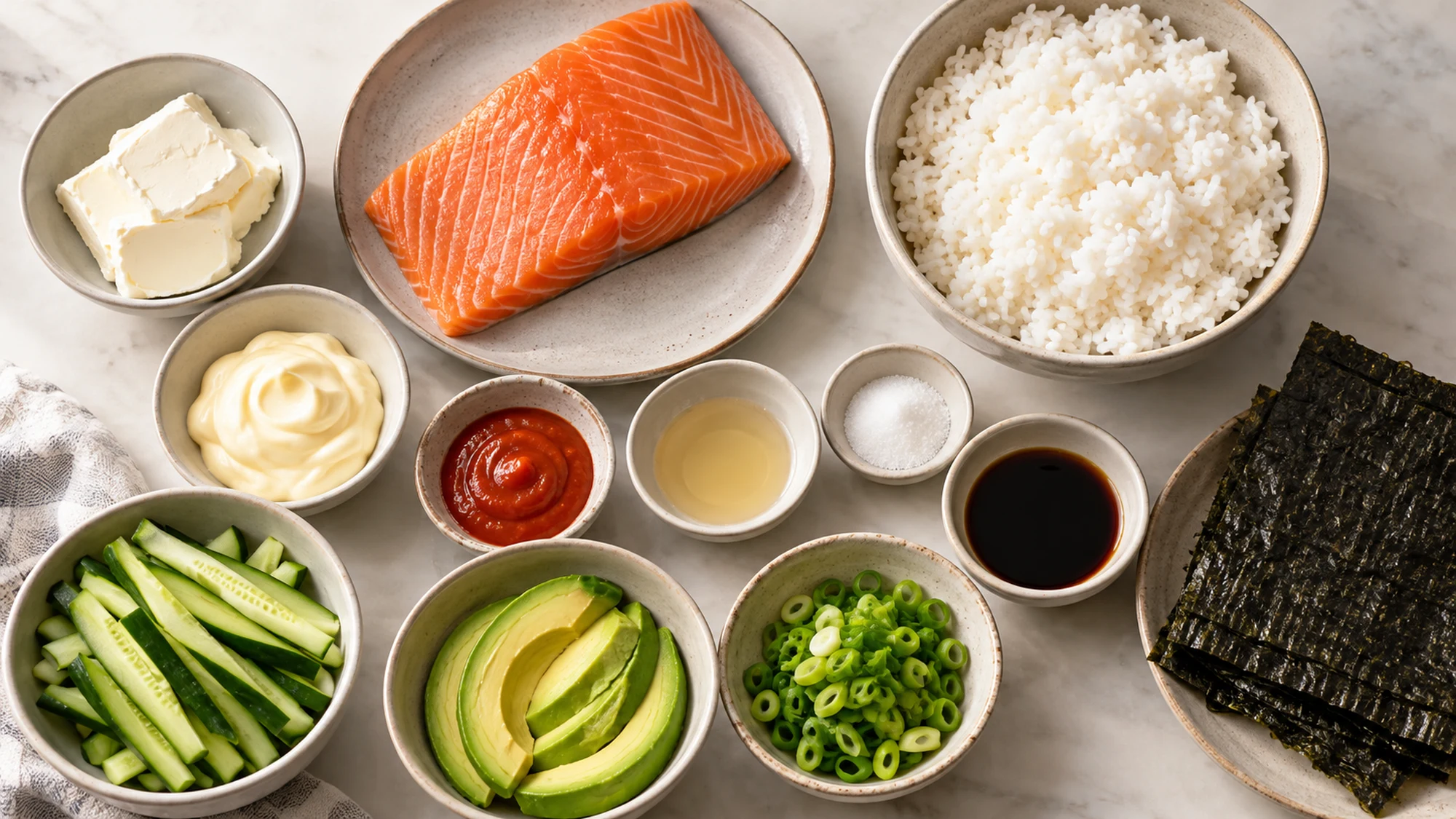
Variations and layer-building choices
| Choice | Effect | Useful limit |
|---|---|---|
| Short-grain white rice | Cling and soft texture | Do not pack it hard |
| Brown rice | A chewier base | Cook fully before assembly |
| Less hot sauce | Milder topping | Serve extra at the table |
| Canned cooked salmon | A pantry alternative | Drain well and remove unwanted skin or bones |
Short-grain rice has the cling that helps a spoonful stay together, while cream cheese and mayonnaise keep the flaked salmon mixture spreadable. Spread both layers gently. Packing the rice into a hard slab makes the bottom heavy, and grinding the fish into paste loses the flakes that give the topping character.
The table offers changes that make sense within the same layered format. I prefer retaining some salmon pieces rather than smoothing everything perfectly; a small amount of uneven texture is welcome. Taste the cooked fish mixture before spreading it, but use clean utensils and keep preparation moving.
Do not add raw salmon directly to the cream mixture and assume the same baking time will work. The method below deliberately cooks the fish first. The safe-temperature chart lists 145°F (63°C) for fish and 165°F (74°C) for casseroles; check both stages rather than judging only the browned surface.
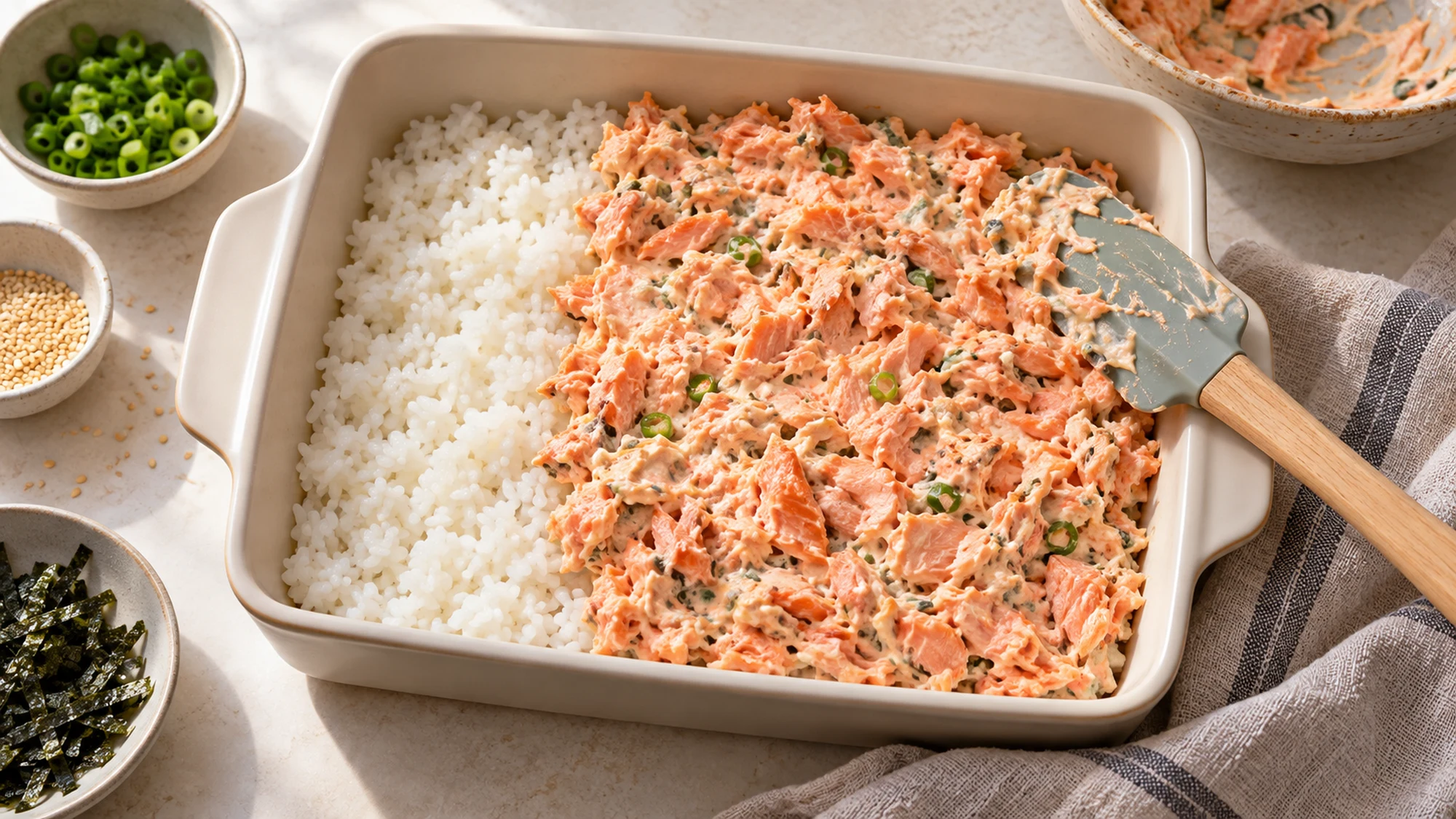
Health benefits with the creamy topping in view
Salmon provides protein and marine omega-3 fats, while rice supplies carbohydrate. The creamy topping also contributes fat and energy, and soy sauce, hot sauce, and nori seasonings can contribute sodium. The result is a satisfying mixed dish whose portion size matters more than a broad healthy-or-unhealthy label.
The NIH overview of omega-3 fats explains their food sources and the limits of health claims. Including salmon in dinner is different from promising that one casserole will improve a medical outcome. The nutrition figures in the card are estimates for the base dish; avocado and additional sauces change the total.
Check allergens before serving: this recipe contains fish, milk, egg from mayonnaise, soy, and sesame. Regular soy sauce may contain wheat. A gluten-free substitution needs a label check for every sauce, not just the rice. For anyone with fish allergy, a different dinner is a more sensible choice than removing visible salmon after baking.
Bottom Line
Salmon sushi bake works best as a warm, scoopable dish with cool toppings kept separate. Cook the fish first, season the rice lightly, and avoid compressing either layer. Refrigerate leftovers promptly in shallow containers, use within three to four days, and reheat to 165°F (74°C); keep fresh nori for the next serving.
Salmon Sushi Bake Recipe

Ingredients
- 1 US cup dry short-grain sushi rice 200 g, rinsed and drained
- 1 1/4 US cups water 300 mL; follow the rice package if different
- 2 tablespoons unseasoned rice vinegar
- 1 teaspoon sugar
- 1/4 teaspoon fine salt
- 450 g boneless salmon fillet 1 pound
- 60 g cream cheese softened
- 60 g mayonnaise 1/4 cup
- 1 tablespoon reduced-sodium soy sauce
- 1 tablespoon sriracha divided; reduce for a milder dish
- 2 scallions thinly sliced
- 1 teaspoon sesame seeds
- 6 sheets roasted nori cut into small squares
- 1 small cucumber optional; sliced
- 1 avocado optional; sliced
Equipment
- 1 8-inch square baking dish 20 cm
- 1 Lidded saucepan
- 1 Small baking tray
- 1 Mixing bowl
- 1 Food thermometer
- 1 Rice paddle
Instructions
- Combine rinsed rice and water in a saucepan, using package water instructions if different. Bring to a boil, cover, reduce to low and cook about 15 minutes until water is absorbed. Rest covered 10 minutes. Fold in rice vinegar, sugar and salt without mashing.
- Heat oven to 400°F (200°C). Place salmon on a small parchment-lined tray and bake 12–16 minutes, until the thickest part reaches 145°F (63°C). Remove skin if present and check for bones, then flake with a fork. Leave the oven on.
- Blend softened cream cheese, mayonnaise, soy sauce and half the sriracha in a bowl. Gently fold in the cooked salmon and half the scallions, keeping some flakes intact.
- Spread warm seasoned rice gently in an 8-inch square dish. Add salmon mixture in an even layer. Drizzle with remaining sriracha. Bake 15–20 minutes, or until the center reaches 165°F (74°C); begin checking early if all components are still hot.
- Scatter remaining scallions and sesame seeds over the top. Serve promptly with dry nori squares and optional cucumber and avocado, letting diners make one bite at a time.
Nutrition
Video
Notes
Tried this recipe?
Let us know how it turned out!Hi, I’m Emily Pocker! I share recipes and food guides here at Recipes360 to help you find everyday meal inspiration and feel more confident in the kitchen. My goal is to make cooking approachable, enjoyable, and full of flavor.