
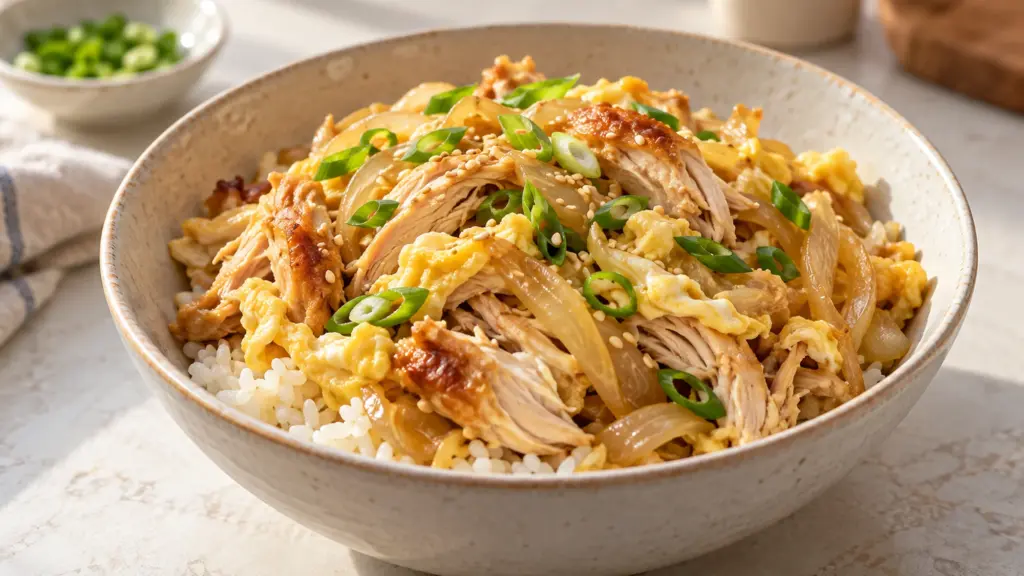
A rotisserie chicken can make dinner easier, but a pile of dry shreds on plain rice still needs a little help. This rotisserie chicken rice bowl uses a small amount of savory broth, sweet softened onion, and fully cooked egg ribbons to bring the chicken and rice together.

Warm the cooked chicken gently in a short onion-and-soy broth, then set the eggs before spooning everything over hot rice. Keep the topping moist enough to coat the grains without turning the bowl into soup.
The useful starting point is cooked chicken with a known storage history. Pull it into bite-size pieces and check carefully for bones, especially near the wings and joints. I’d use a mixture of breast and thigh for contrast, keeping the pieces broad enough to stay noticeable after warming.
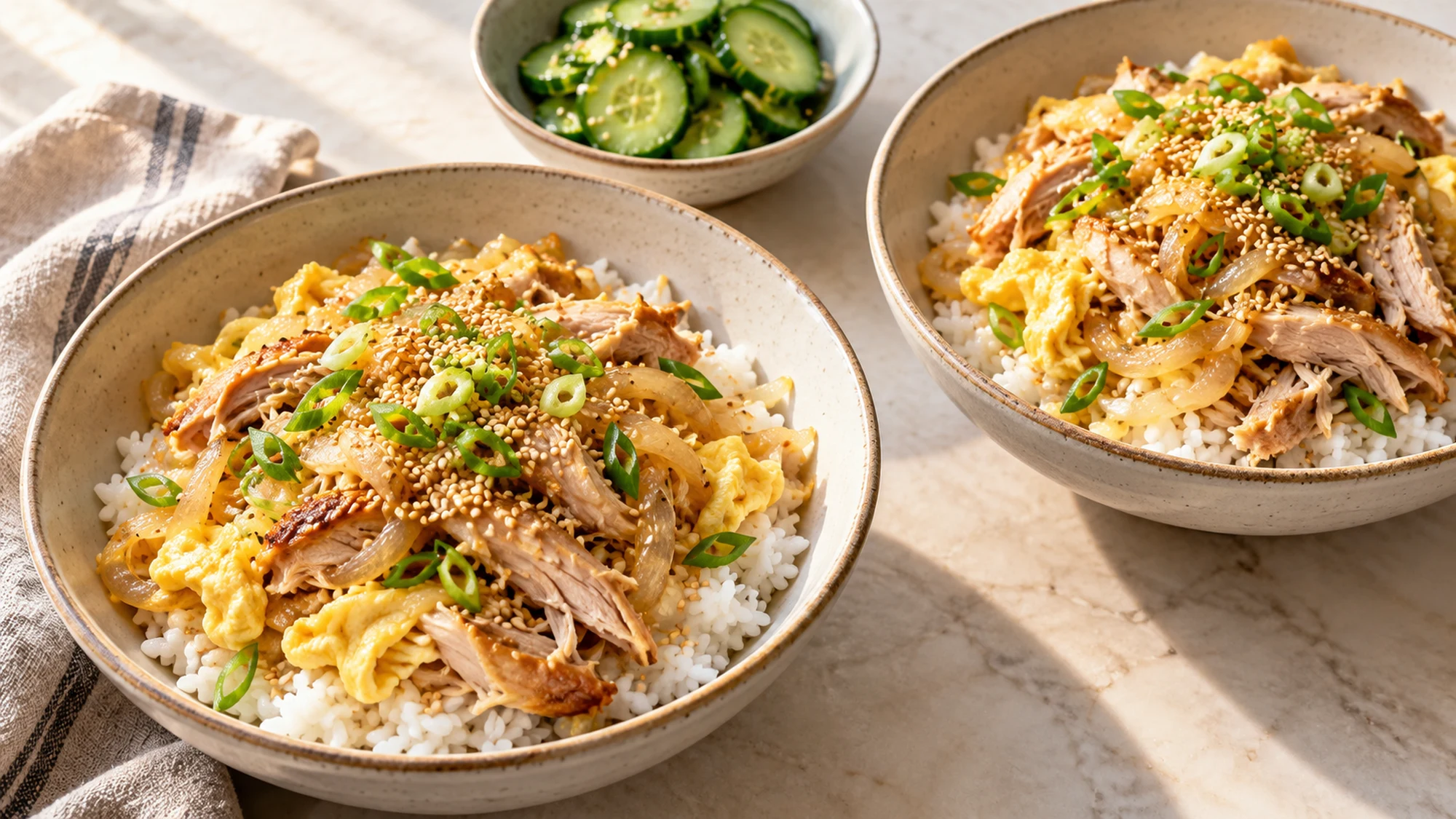
Serving suggestions for a rotisserie chicken rice bowl
Use a wide bowl so a spoon can catch rice, chicken, and egg in one bite. Spoon the hot topping across the center and leave some grains visible around the edge. Scallions add a fresh finish, while a small sprinkle of sesame seeds brings a little texture without needing a separate sauce.
Cucumber is a useful cool side because it contrasts with the warm savory topping. Keep it separate until serving so the bowl does not collect extra liquid. A modest portion of sautéed greens works too, especially when you want more vegetables than the onion alone provides.
Serve promptly after the egg is cooked. If the rice was prepared earlier, reheat it thoroughly before assembling rather than relying on the chicken topping to warm a cold center. For a different grain base on another day, see the site’s brown rice method; cook that separately before starting this quick topping.
- For crunch: offer sliced cucumber in a separate dish.
- For heat: add a little chili sauce to an individual portion.
- For leftovers: store the topping and rice separately where practical.
Variations that keep the bowl balanced
| Change | Practical approach | What changes |
|---|---|---|
| Brown rice | Cook separately first | Chewier base and longer prep |
| Low-sodium stock | Use the same amount | More control over salt |
| Spinach side | Cook separately and drain | More vegetables without extra broth |
| No sesame | Omit oil and seeds; use neutral oil | Milder aroma; check other labels |
This is a good use for leftovers, but it is not an invitation to add every sauce in the refrigerator. Rotisserie chicken and prepared stock can already contain plenty of salt. Begin with the measured soy sauce, taste the broth before adding the eggs, and make a small adjustment only if needed.
The table separates swaps that leave the method intact from changes that need their own preparation. I prefer keeping the egg in broad soft pieces rather than stirring constantly: the bowl feels more interesting when the components stay distinct. The egg should still be fully set, with no loose liquid hiding underneath. The safe-temperature chart is useful when checking the combined chicken-and-egg topping with a thermometer.
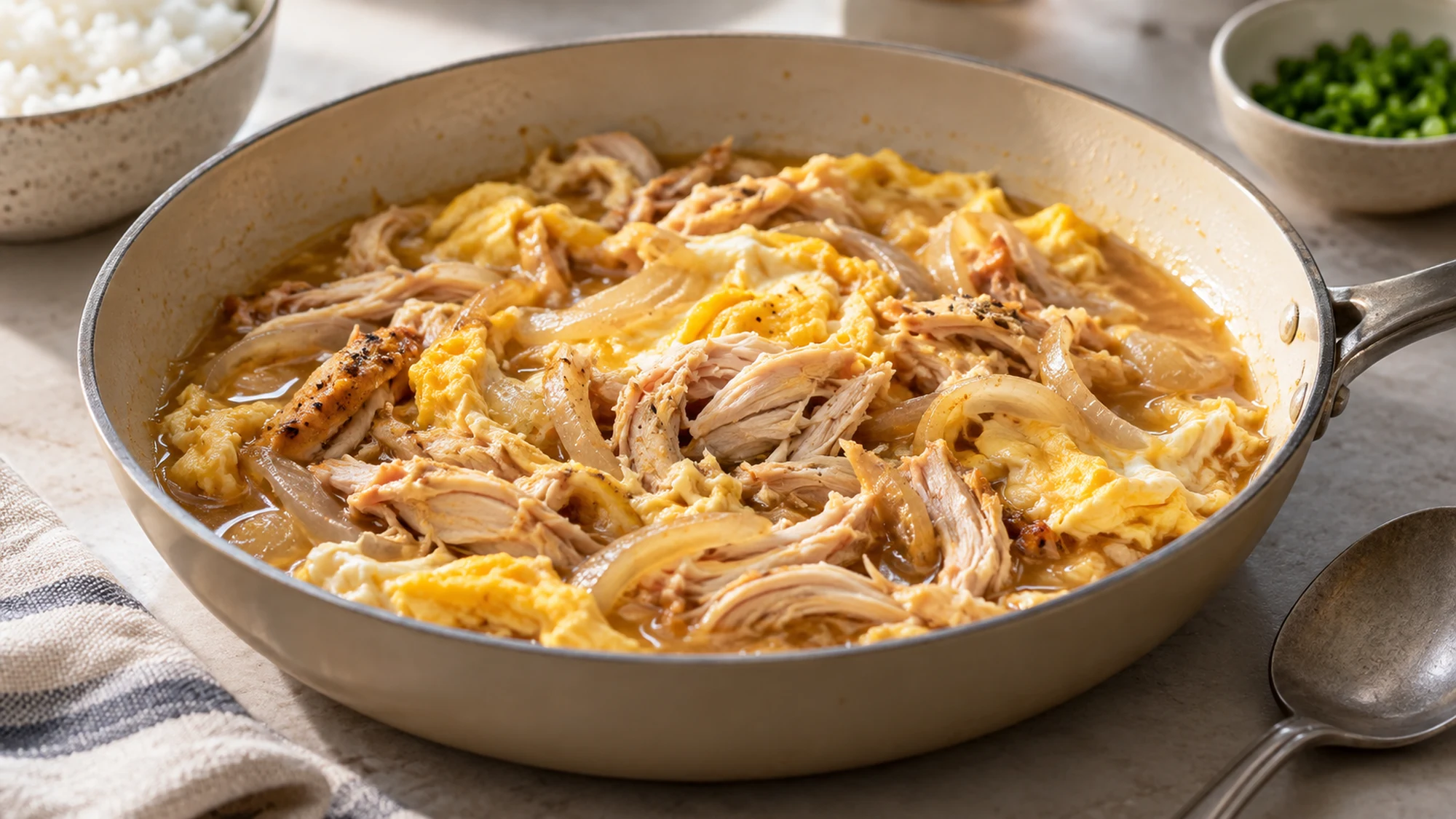
If the pan looks dry before the chicken has heated through, add a tablespoon of water. If it is overly soupy, briefly simmer the onion broth before adding the eggs. Chasing a thick glaze after the eggs have set can overcook them and turn the chicken stringy.
Health benefits and practical trade-offs
Chicken and eggs supply protein, while rice supplies carbohydrate. Onion and optional vegetable sides add variety, but the base bowl is not a substitute for a varied day of eating. Using leftover cooked meat makes the preparation convenient; it does not automatically make the meal lower in salt or fat.
Food safety depends on temperature and time, not whether the chicken still smells appetizing. Follow University of Florida guidance for cooked poultry and leftovers: refrigerate promptly, use within three to four days, and reheat to 165°F (74°C). Count storage from when the chicken was originally cooked or bought hot, rather than starting a new clock when it enters this bowl.
The recipe contains egg, soy, and sesame. Ordinary soy sauce may also contain wheat. Check the stock and chicken labels for additional ingredients, and use a labeled gluten-free soy sauce only when all the other components suit the same need.
Bottom Line
The best reason to make this bowl is the way a small amount of broth refreshes ready-cooked chicken. Keep the onion tender, the topping moist, and the eggs fully set. Portion the rice first so you can serve as soon as the topping is ready, with the cool vegetable side and extra seasoning left to the diner.
Rotisserie Chicken Rice Bowl Recipe


Ingredients
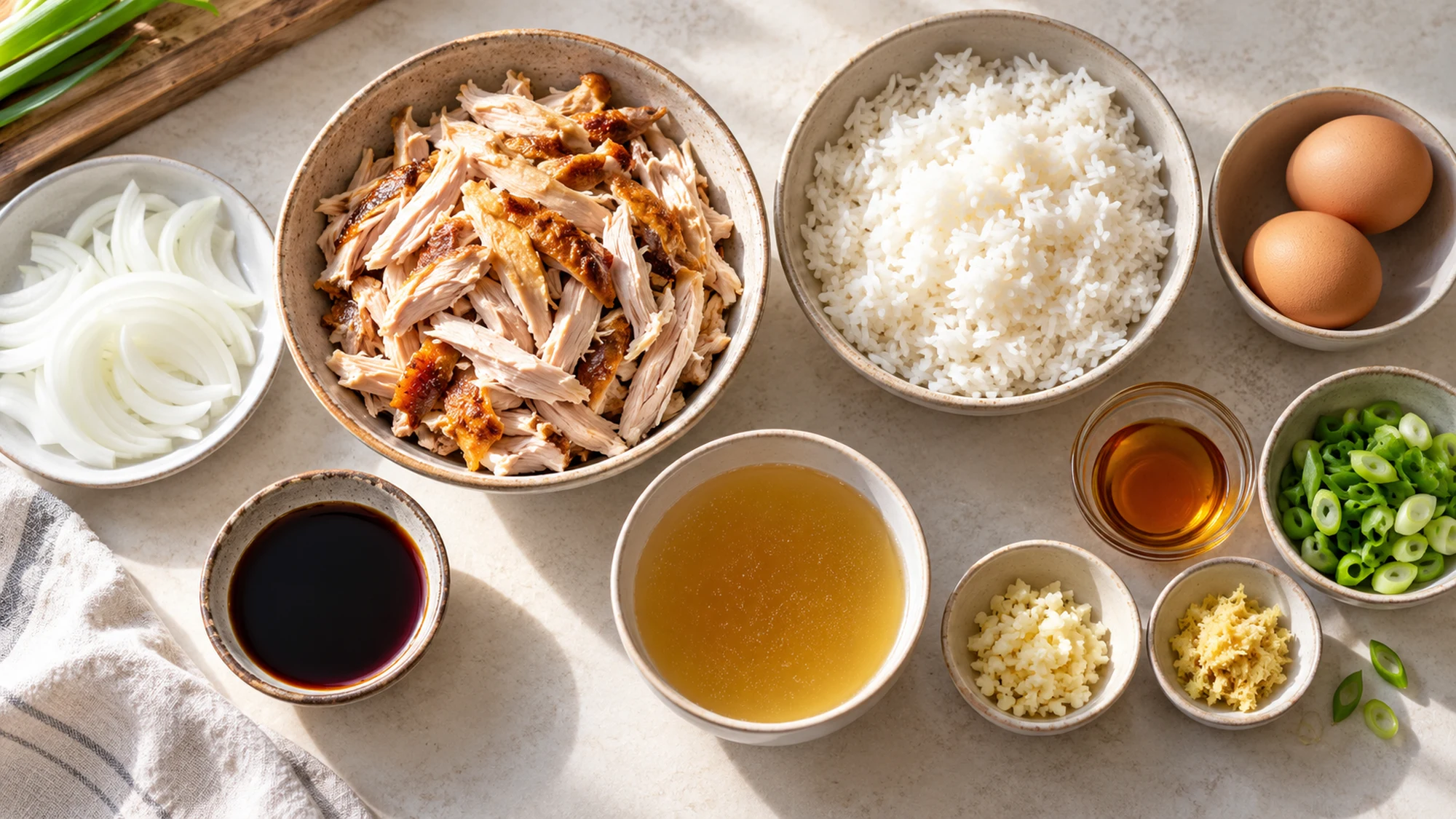
- 250 g cooked rotisserie chicken boneless bite-size pieces; mixed white and dark meat
- 2 cups cooked white rice about 320 g, hot
- 80 g onion thinly sliced
- 150 mL low-sodium chicken broth
- 1 tablespoon reduced-sodium soy sauce
- 1 teaspoon brown sugar 4 g
- 1 teaspoon sesame oil
- 1 clove garlic minced
- 1 teaspoon grated fresh ginger
- 2 large eggs beaten
- 1 scallion thinly sliced
- 1 teaspoon sesame seeds
Equipment
- 1 10-inch skillet with lid
- 1 Food thermometer
- 1 Small bowl
- 1 Knife and cutting board
- 2 Serving bowls
Instructions
- Remove bones and pull the cooked chicken into bite-size pieces. Reheat the cooked rice to 165°F (74°C) if previously chilled and keep hot. Beat the eggs in a small bowl.
- Heat sesame oil in the skillet over medium-low heat. Add onion and cook 4–5 minutes until softened, stirring. Add garlic and ginger and stir for 30 seconds.
- Add broth, soy sauce and sugar. Simmer for 2 minutes, then add cooked chicken. Cover and gently simmer 3–4 minutes or until chicken reaches 165°F (74°C), adding a splash of water if the pan dries.
- Pour beaten eggs evenly over the chicken and broth. Cover and cook gently for 2–3 minutes until fully set, with no runny egg; the mixture should reach 165°F (74°C). Avoid vigorous stirring so broad ribbons remain.
- Divide hot rice between two bowls, spoon over the chicken, onion, egg and remaining broth, and finish with scallion and sesame seeds. Serve promptly.
Nutrition
Video
Notes
Tried this recipe?
Let us know how it turned out!Hi, I’m Emily Pocker! I share recipes and food guides here at Recipes360 to help you find everyday meal inspiration and feel more confident in the kitchen. My goal is to make cooking approachable, enjoyable, and full of flavor.