
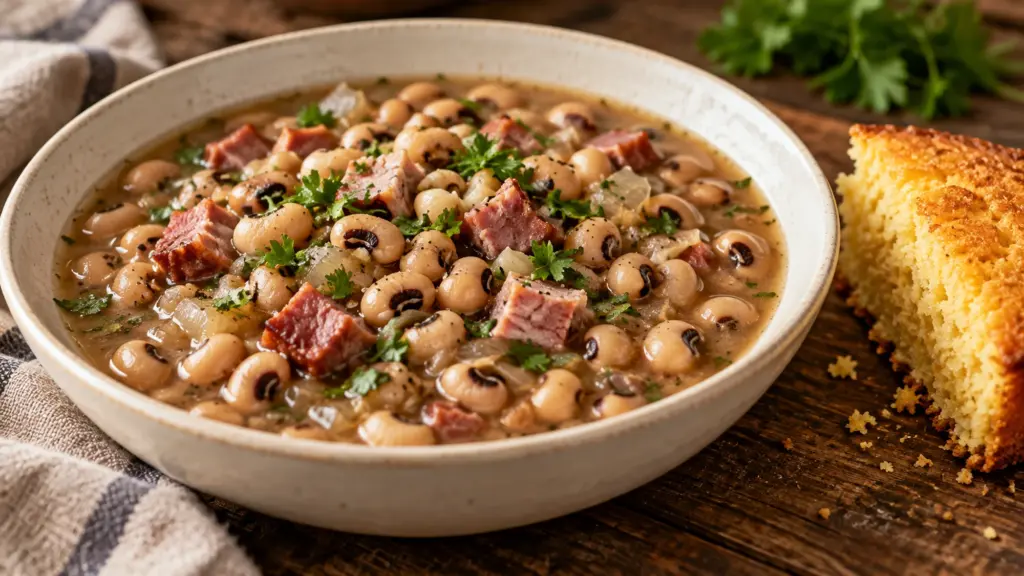
A pot of black-eyed peas is at its best when the beans keep their shape but the centers turn soft and creamy. This black eyed peas recipe builds that texture in a gently simmered broth with onion, garlic and a modest amount of smoked ham. It is hearty enough to anchor lunch, while leaving plenty of room for greens or cornbread.
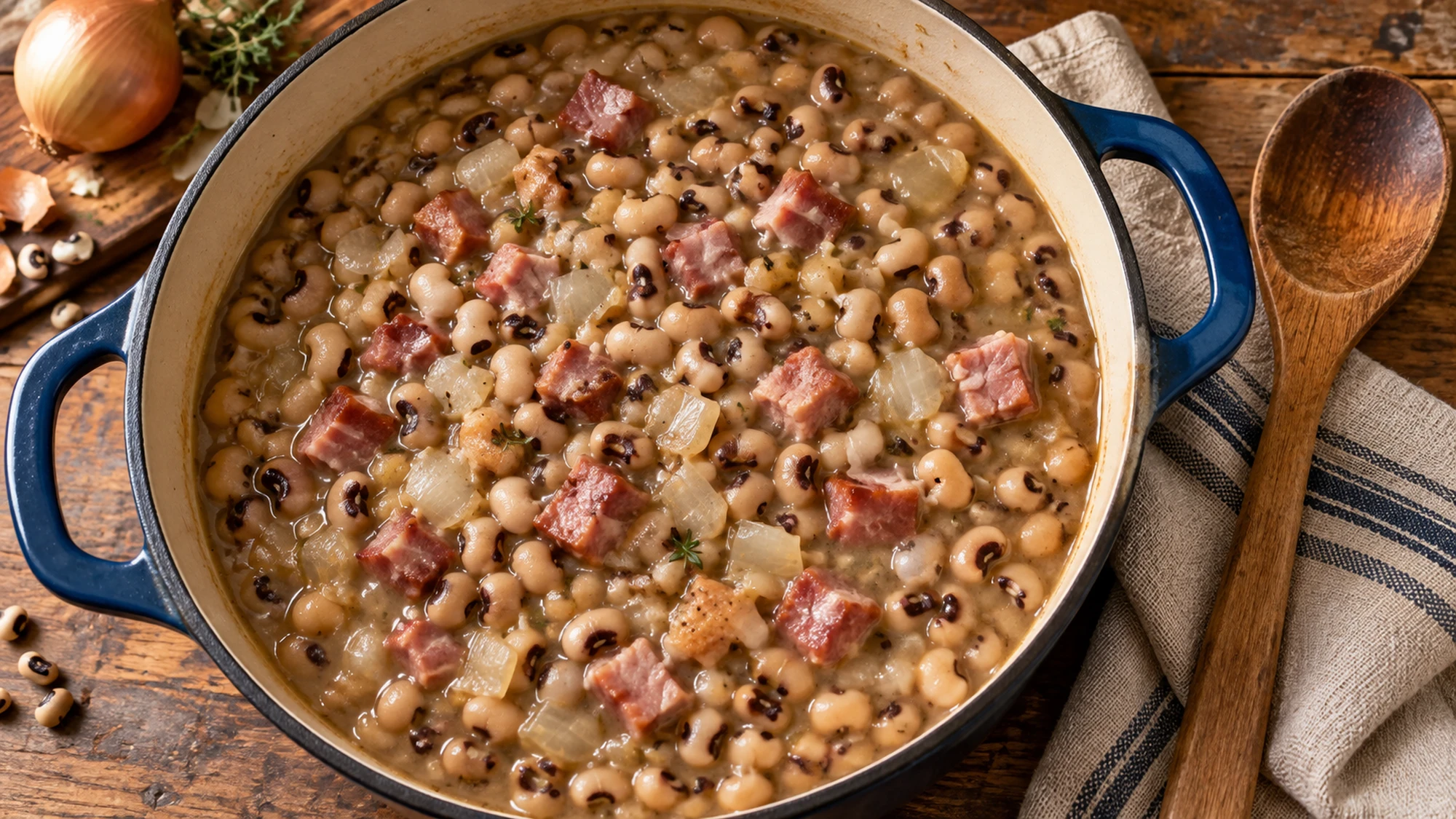
Soak dried black-eyed peas overnight, then simmer gently with ham and aromatics until completely tender. Taste the broth before adding salt, and mash a small spoonful of peas if you want a thicker pot.
I’d make tenderness the main target, rather than rushing toward a particular minute on the timer. A pea should yield easily when pressed, without a chalky center. The age of dried legumes affects the cooking time, so an extra splash of water and a little patience are more useful than turning the heat up.
Serving Suggestions for Black Eyed Peas Recipe
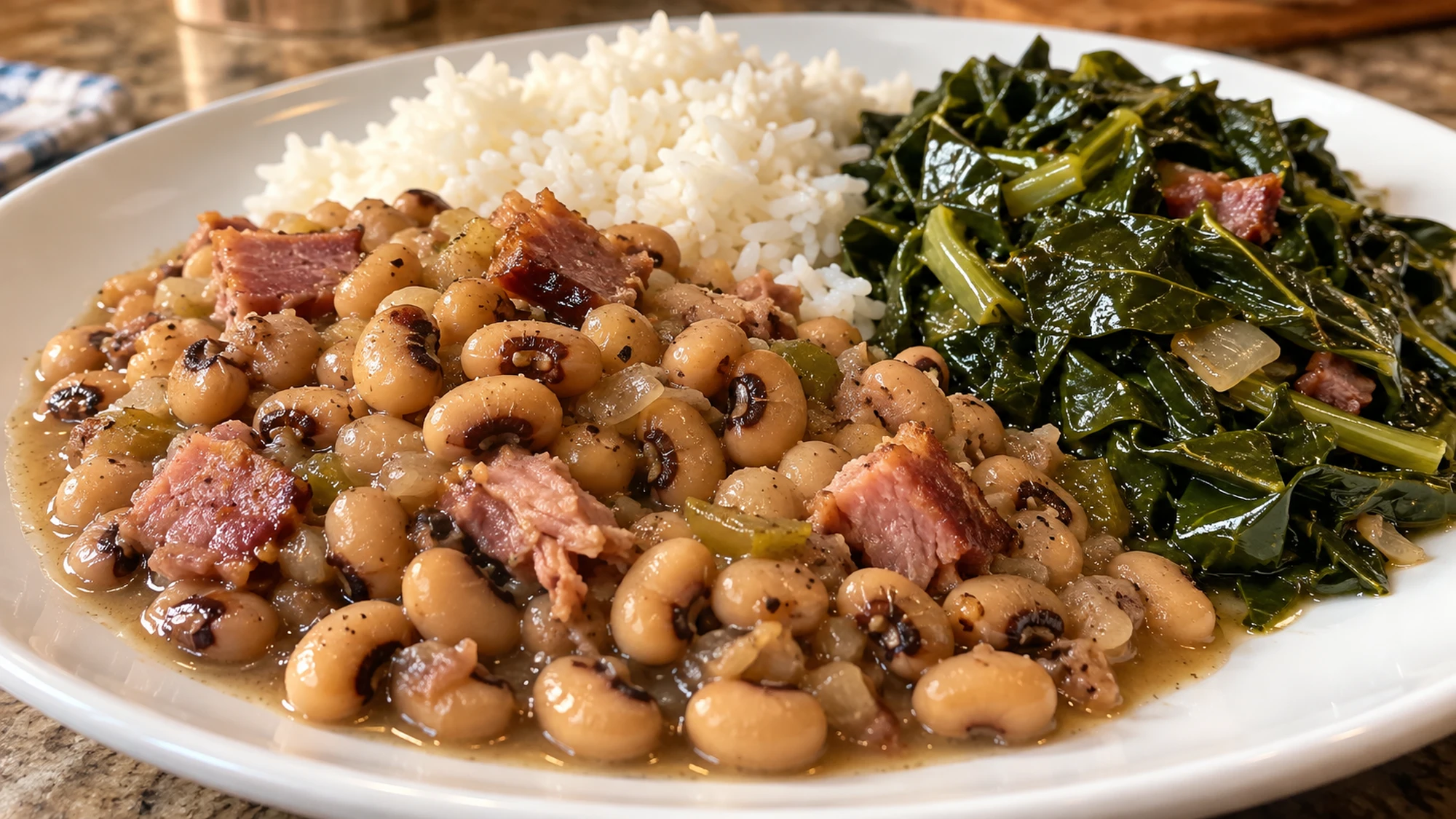
Spoon the peas into shallow bowls with enough broth to keep them moist. Cornbread is a natural partner for the smoky liquid, and a side of collard greens adds contrast. Plain rice turns a smaller serving into a fuller meal, but it need not crowd out the peas themselves.
At the table, offer hot sauce separately and let each person choose their heat. I prefer a small splash of vinegar or a tangy pepper sauce when the broth tastes rich; acidity can brighten the serving without adding another heavy topping. Add it to the bowl after the peas are tender.
| Companion | What it adds |
|---|---|
| Cornbread | A crumbly contrast and a way to catch the broth. |
| Plain rice | A mild base for a more substantial bowl. |
| Collard greens | Leafy texture alongside the creamy peas. |
| Tomato salad | A cool, fresh contrast to the warm pot. |
If you want a bean dish with a different seasoning direction, the site’s frijoles charros offers another way to plan a bean-centered meal. Treat it as an alternative dish, rather than adding its entire seasoning mixture to this pot.
Variations for the Pea Pot
The ham supplies smoke and savory depth, but it is not what makes the peas tender. Fully cooked smoked turkey can take its place, although its salt level and bone content will change the broth. A meat-free version can use vegetable broth and additional smoked paprika, with a different nutrition estimate.
Canned peas are already cooked and should not follow the dried-pea timing in the card. If that is what you have, make a smaller aromatic broth first, then warm drained canned peas gently in it. Their liquid needs and final texture will differ, so this is a separate shortcut rather than a direct swap.
- Thicker broth: Mash a spoonful of tender peas and stir it back in.
- More heat: Add hot sauce to individual bowls.
- More liquid: Stir in water a little at a time before serving.
For leftovers, divide the pot into shallow containers rather than leaving a deep pot to cool slowly. FoodSafety.gov’s guidance recommends prompt refrigeration, a maximum of 3–4 refrigerated days, and reheating leftovers to 165°F (74°C). Add a little water when reheating because the peas absorb liquid as they stand.
Health Benefits and Practical Trade-offs
Black-eyed peas provide plant protein and fiber, which gives this dish more substance than a broth-only soup. University of Florida Extension’s legume guidance describes those nutrients and notes that beans and peas also supply minerals and folate. These are food-composition benefits, not a promise that a particular bowl will prevent disease.
The ham and broth contribute sodium, so choosing a lower-sodium broth and tasting before salting are practical decisions. The estimated nutrition in the card covers the pea pot alone; rice, cornbread, greens and table sauces change the meal. A meat-free version also needs its own calculation.
People vary in how comfortably they tolerate legumes. If they are new to your usual meals, a smaller portion alongside other foods may be a more comfortable starting point. There is no need to turn a simple supper into a contest over who can finish the biggest bowl.
Bottom Line
This black eyed peas recipe works when the simmer stays gentle and the seasoning stays adjustable. Look for tender centers, a lightly thickened broth, and enough liquid to spoon over the serving. Leave the extra salt and heat decisions until the flavor of the ham has had time to spread.
I’d keep one container plain for the next meal, then add fresh parsley or a little acid after reheating. That brings back contrast without requiring a new pot. The card below keeps the overnight soak, ingredient amounts, cooking cues and storage notes in one place.
Black Eyed Peas Recipe

Ingredients
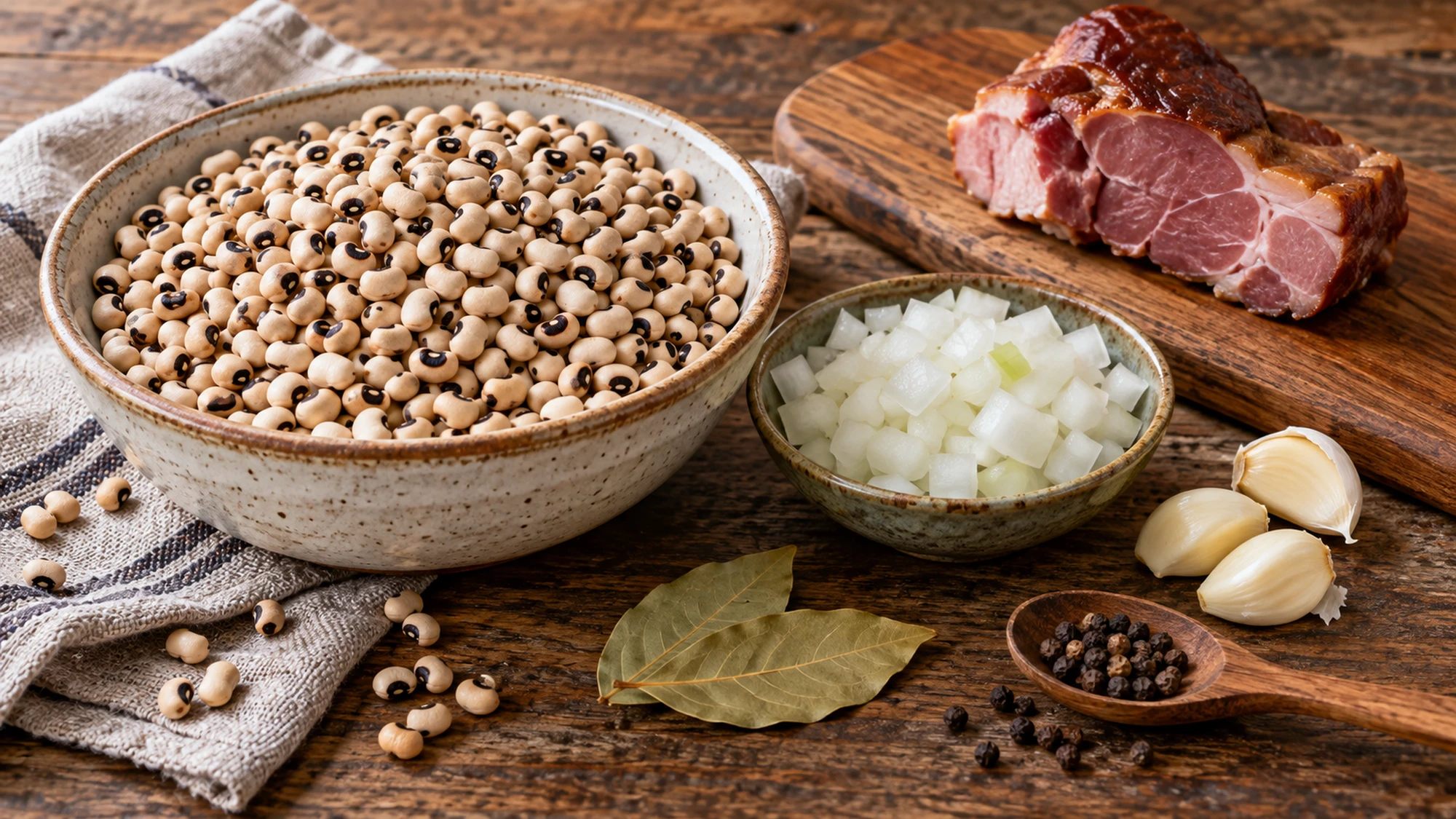
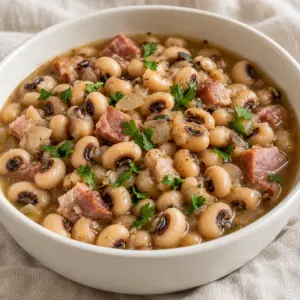
- 1 lb dried black-eyed peas 454 g, sorted and rinsed
- 1 tablespoon olive oil
- 1 medium onion 150 g, diced
- 3 garlic cloves minced
- 6 oz fully cooked smoked ham 170 g, diced
- 4 cups low-sodium chicken broth 960 mL
- 3 cups water 720 mL, plus more as needed
- 1 teaspoon smoked paprika
- 1 bay leaf
- 1/2 teaspoon ground black pepper
- 1/4 teaspoon fine salt start here; adjust only after tasting
- 1 tablespoon chopped fresh parsley
Equipment
- 1 Large bowl
- 1 Colander
- 1 5-quart Dutch oven or soup pot
- 1 Wooden spoon
Instructions
- Cover sorted, rinsed peas with plenty of cold water in a large bowl. Refrigerate for 8 hours or overnight, then drain and rinse.
- Warm oil in a large pot over medium heat. Cook onion for 5–7 minutes until soft. Add garlic and diced fully cooked ham; stir for 1 minute.
- Add drained peas, broth, 3 cups water, paprika, bay leaf and pepper. Bring to a boil, then lower to a gentle simmer. Partially cover and cook for 60–90 minutes, stirring occasionally, until peas are tender throughout. Add water as needed to keep them covered. Older peas may take longer.
- Remove and discard bay leaf. Mash a small spoonful of peas against the pot and stir back in if a thicker broth is desired. Add salt after tasting the ham broth; simmer briefly if needed.
- Stir in parsley and divide into 8 servings, with some broth in each portion.
Nutrition
Video
Notes
Tried this recipe?
Let us know how it turned out!Hi, I’m Emily Pocker! I share recipes and food guides here at Recipes360 to help you find everyday meal inspiration and feel more confident in the kitchen. My goal is to make cooking approachable, enjoyable, and full of flavor.