
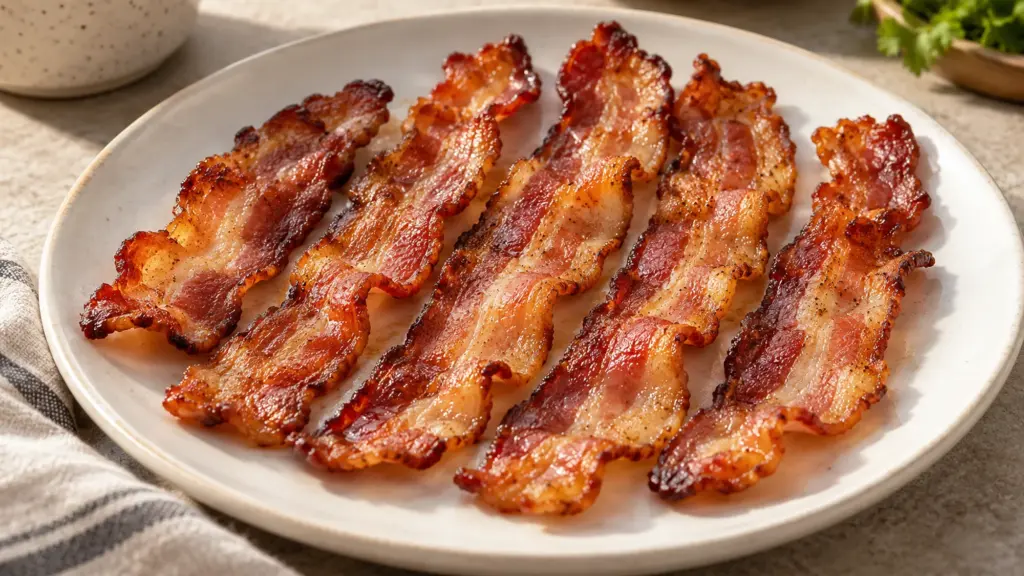
Microwave bacon is useful when you want a few strips, not a whole skillet full. It keeps the stovetop free and makes a small breakfast feel less involved. The trade-off is timing: microwave wattage, bacon thickness, and the number of strips all influence how quickly the edges become crisp.

Start with less time than you think you need; another short burst is easier to manage than overcooked bacon.
This recipe is for four regular-cut raw pork bacon strips in a single layer. Thick-cut bacon, turkey bacon, and fully cooked packaged bacon behave differently, so they are not direct timing swaps. I’d check the package when you are using a different product.
Use a microwave-safe plate and plain paper towels labeled suitable for microwave use. The towels absorb rendered fat, but they do not make the plate or grease safe to touch barehanded. Keep an eye on the microwave, use oven mitts, and let the bacon rest briefly before moving it with tongs.
Serving Suggestions for Microwave bacon
Serve the strips beside eggs and tomatoes, crumble them over a baked potato, or add a little to a sandwich. Because bacon has a strong salty flavor, you do not always need a large amount to notice it. Taste the other parts of the meal before adding extra salt.
For a breakfast with a sweet component, a small portion works alongside apple cinnamon baked oatmeal. At lunch, a few crumbled pieces can provide contrast in a grain bowl such as quinoa salad. Add them near serving time if you want to keep the texture.
The recipe makes two servings of two strips, though actual strip size varies by brand. For more people, work in separate batches rather than overlapping extra slices. Crowding changes both cooking speed and the amount of grease the towels must absorb.
| Bacon type | How to handle it |
|---|---|
| Regular-cut raw pork bacon | Use this recipe and check in short intervals |
| Thick-cut raw bacon | Expect different timing; follow package guidance |
| Fully cooked bacon | Use the package reheating directions |
| Turkey bacon | Use its own package cooking instructions |
Cook separate batches when you need more, rather than stacking strips.
Microwave bacon Variations
Texture is the easiest adjustment. Stop when the bacon is fully cooked and still flexible if it is going into a sandwich. For crumbling, allow it to cook a little further, checking frequently, then rest it before breaking it up. Bacon firms as it cools, so judge after that short pause rather than chasing a brittle texture while it is piping hot.
I’d keep the first batch unglazed. Sugary coatings can scorch, and a method intended for plain bacon is not the place to guess at caramelization. If you want a sweet-savory pairing, put fruit or a little sweetness elsewhere on the plate.
Microwave turntables and power levels differ. If one area cooks faster, carefully reposition the plate or strips when checking, using heat protection. Never leave cooking bacon unattended, and stop the microwave if you notice smoke or scorching.
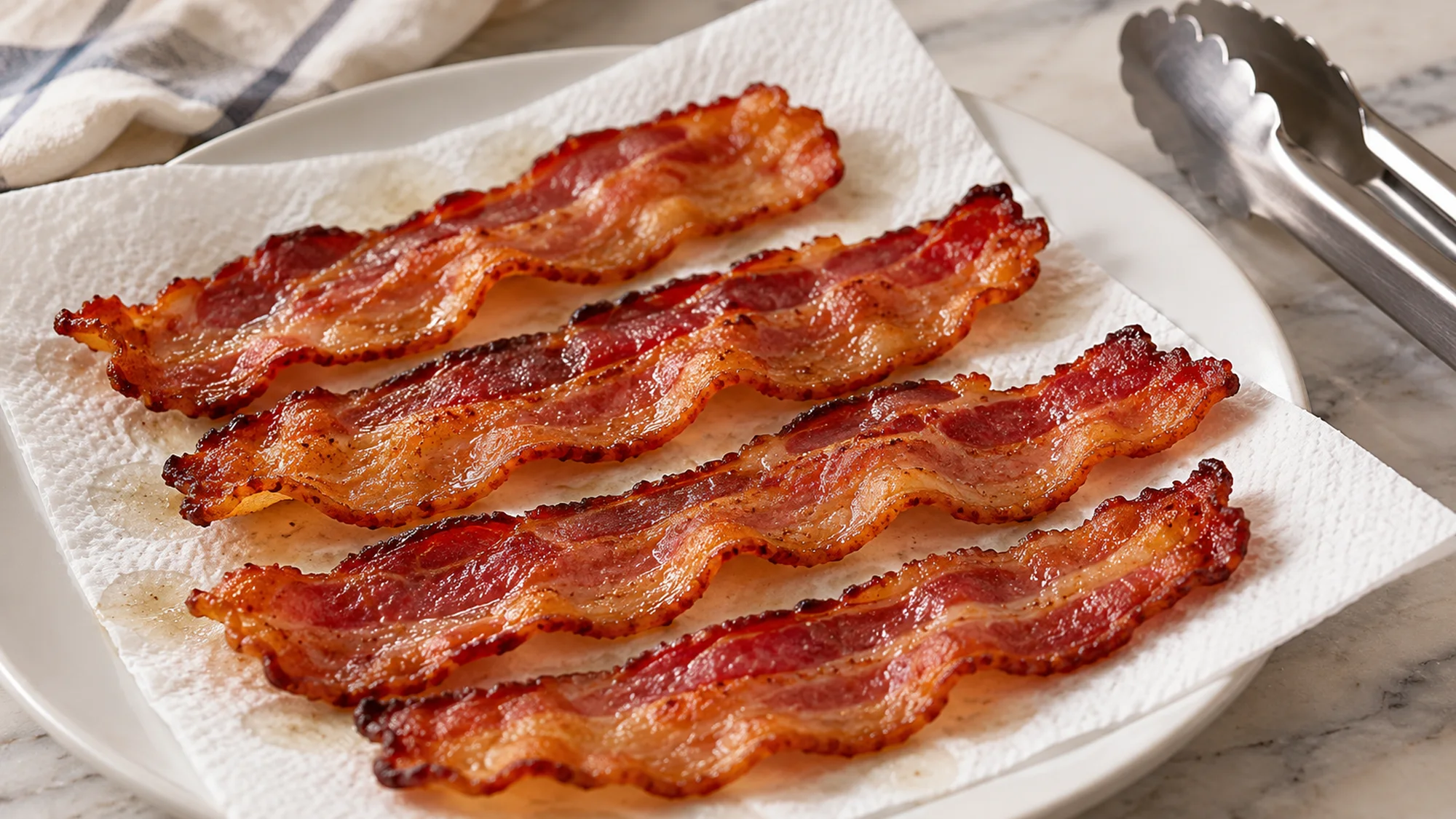
Adjust the texture in short intervals and allow a brief rest.
Health Benefits and Nutrition: Keep Bacon in Perspective
Microwaving does not turn bacon into a health food. It remains processed meat that can contribute substantial sodium and saturated fat. Paper towels catch some rendered grease, but the exact amount removed is not a reliable basis for promising a lower-fat serving.
The card uses an illustrative estimate of about 100 calories per two cooked strips, based on a 19-gram serving on Hormel’s original bacon label. Other packages have different serving weights and sodium levels. Use your own label when tracking intake.
For safe equipment choices, GE Appliances advises checking paper products for microwave suitability. Avoid printed or unsuitable recycled towels that may contain material that sparks. Do not substitute newspaper or a brown paper bag.
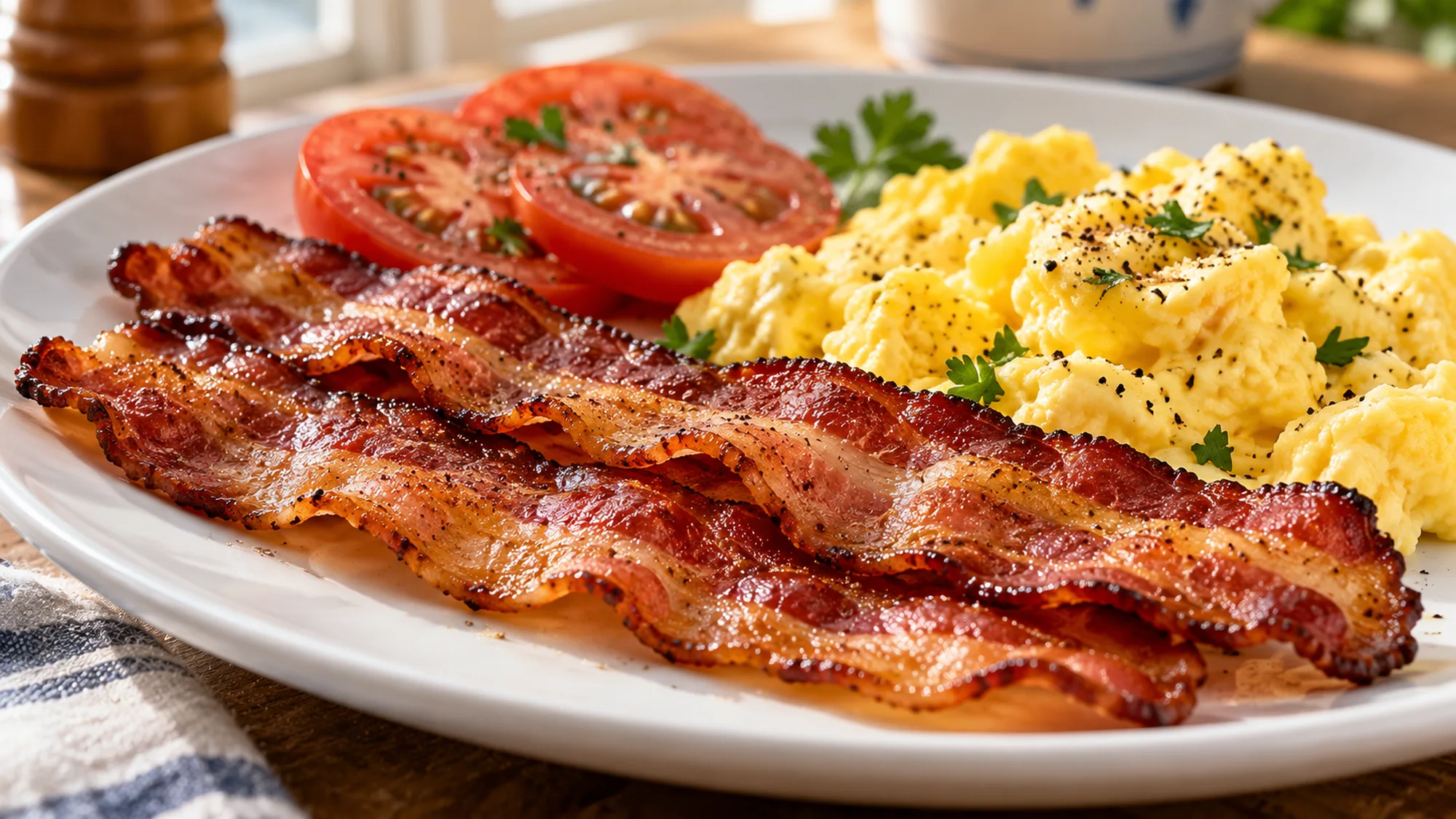
Keep portions in perspective and choose microwave-safe materials.
Bottom Line
Microwave bacon works best as a small-batch technique: separate strips, suitable equipment, and short checks near the end. The goal is fully cooked bacon with the texture you enjoy, not loyalty to one exact number of minutes.
Refrigerate leftovers within two hours and use within three to four days. Reheat leftovers to 165°F, following University of Illinois Extension’s guidance. Let hot grease cool before disposal; do not pour it down the sink.
Use the clock as a starting point, not a substitute for checking.
Microwave Bacon Recipe


Ingredients
- 4 strips regular-cut raw pork bacon about 4 oz/113 g before cooking; not thick-cut or fully cooked
Equipment
- Large microwave-safe plate
- Plain white microwave-safe paper towels
- Tongs
- Oven mitts
Instructions
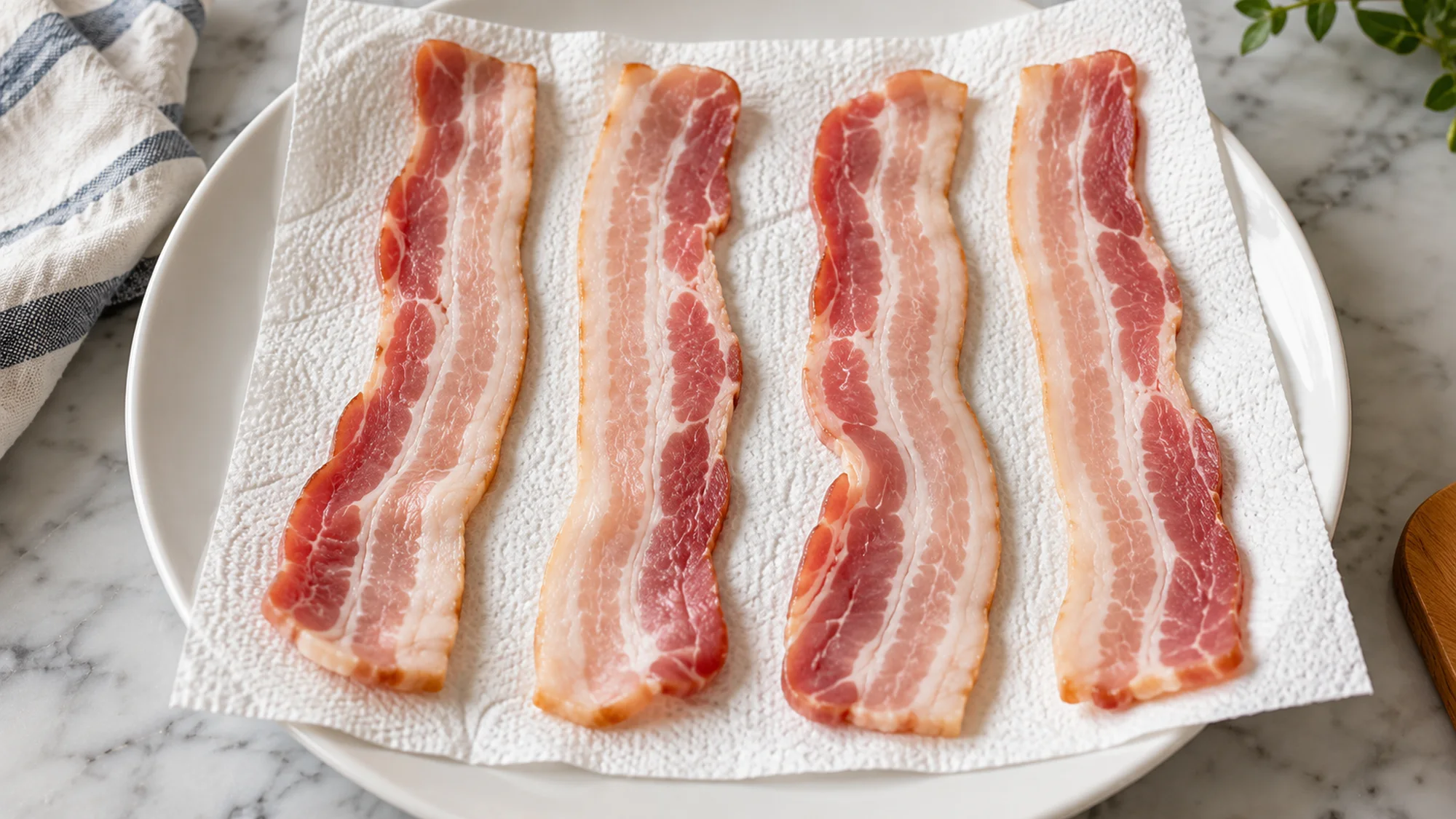
- Line a large microwave-safe plate with 2–3 plain white paper towels labeled suitable for microwave use. Arrange the bacon in a single layer with space between strips; do not overlap. Cover loosely with one additional suitable paper towel.
- Microwave on high for 3 minutes. Stay nearby and watch for scorching. Carefully remove the hot plate with oven mitts and check the bacon; hot grease can burn.
- Continue microwaving in 30-second bursts, checking each time, until fully cooked and the edges are as crisp as you prefer. Four regular-cut strips often take about 4–6 minutes total, but lower wattage or thicker strips may need longer. Reposition carefully with tongs if cooking is uneven; stop immediately if there is smoke or scorching.
- Let stand for 1 minute, then transfer with tongs. The strips firm as they cool. Allow the used towels and grease to cool before disposing of them. Do not pour grease down the sink.
- Refrigerate within 2 hours, or 1 hour above 90°F/32°C, in a covered container at 40°F/4°C or colder. Use within 3–4 days and reheat to 165°F/74°C. For another batch, start with fresh suitable towels and a plate safe to handle.
Nutrition
Video
Notes
Tried this recipe?
Let us know how it turned out!Hi, I’m Emily Pocker! I share recipes and food guides here at Recipes360 to help you find everyday meal inspiration and feel more confident in the kitchen. My goal is to make cooking approachable, enjoyable, and full of flavor.