

A pitcher can turn watery once the ice starts melting. Here is how to make iced tea with a timed hot brew and a measured cold-water dilution. Plain black tea gives this unsweetened version a brisk flavor, while lemon and mint stay optional finishing touches.

Brew the tea hot, remove the bags on time and add the measured cold water. Chill promptly, then pour over fresh ice. Keeping those jobs separate makes it easier to control strength without a long, bitter steep.
I’d make the first pitcher without sugar or citrus so the tea itself is easy to judge. You can dress individual glasses afterward. This batch makes approximately two liters, enough for eight small glasses before serving ice, with no special tea brewer or flavored concentrate needed.
Serving Suggestions for Iced Tea
Start with chilled tea and ice-filled glasses. Pouring warm tea straight over a little ice melts the cubes quickly and changes the drink’s strength. A cold pitcher also lets you add a little ice for temperature rather than relying on it to cool the entire batch.
- Keep it simple: serve the black tea plain alongside a sandwich, salad or afternoon snack.
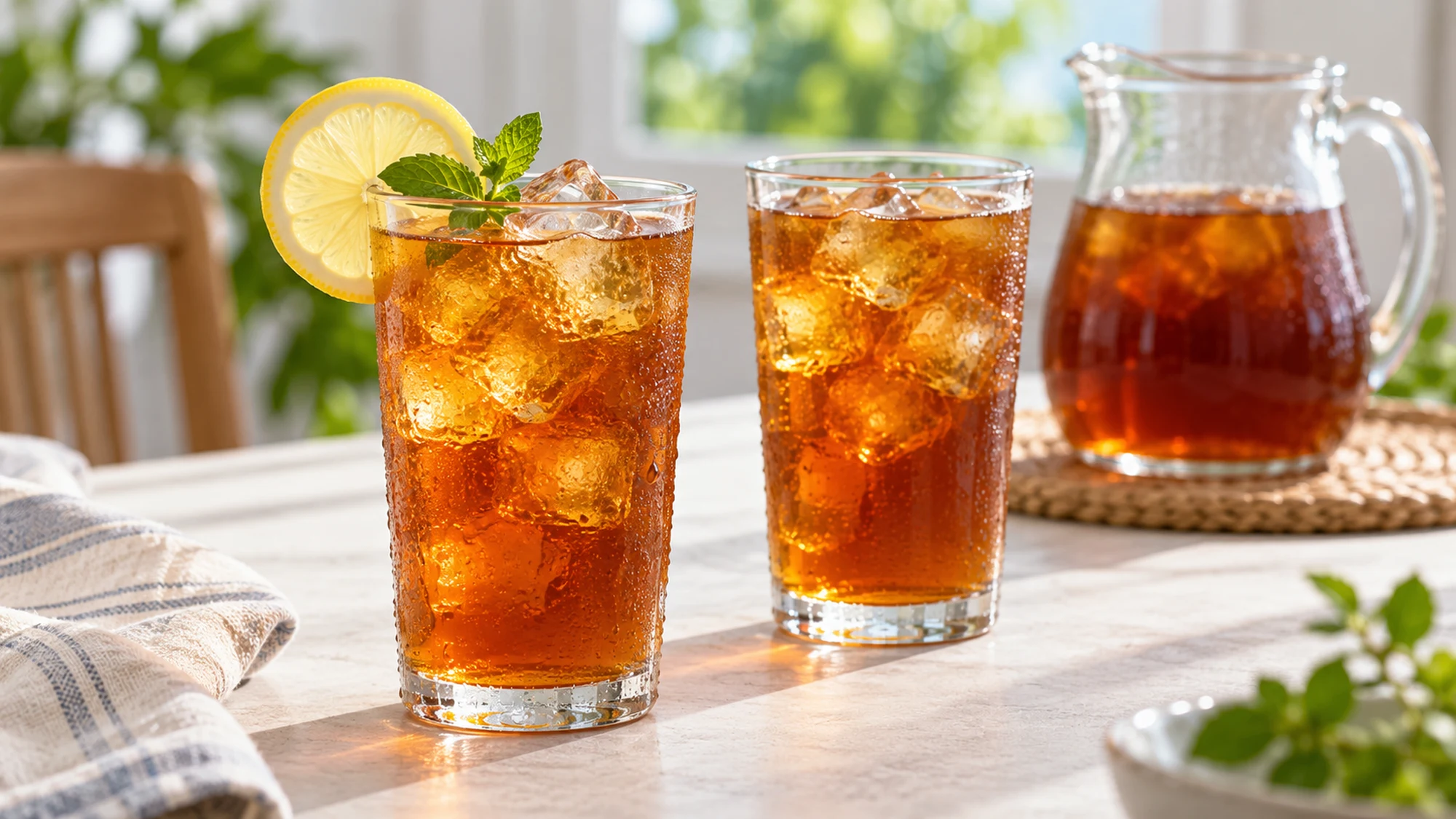
- Add a fresh finish: wash lemon and mint, then add a slice and a small sprig to each glass. Leave the rest of the batch plain.
- Offer sweetness separately: a little simple syrup mixes readily into cold tea. Add it to a serving, taste, then decide whether more is needed.
Use a clean, covered pitcher and return it to the refrigerator between servings. For the freshest flavor, make an amount you can finish by the next day. Keep garnish out of the main pitcher until serving, and remember that a tall glass may hold considerably more than the card’s 250 ml portion.
The pitcher is the base; the glass is where you make it personal. Lemon, mint and sweetness can be optional without making the plain version feel unfinished.
How to Make Iced Tea With Consistent Strength
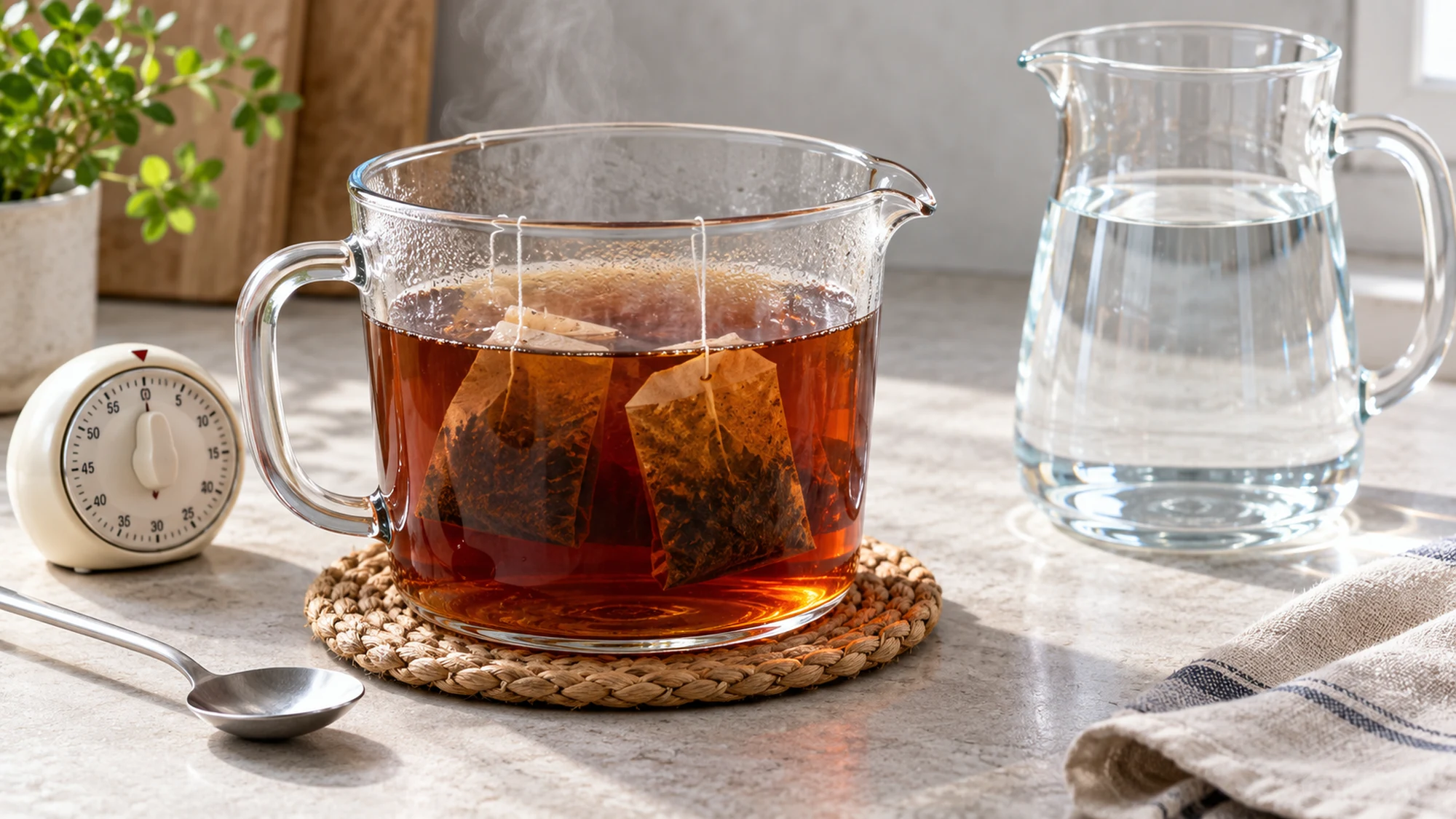
Black tea bags are convenient because you can remove them quickly and repeat the same amount next time. Different brands still produce different strength. Use the package’s guidance when it is more specific, and avoid compensating for a weak tea by leaving the bags in indefinitely.
| If the tea tastes… | Try this | For the next batch |
|---|---|---|
| Too strong | Add cold drinking water to a serving | Keep the measured dilution |
| Too weak over ice | Use larger ice cubes and chilled tea | Chill before filling glasses |
| Too bitter | Dilute a small portion and reassess | Shorten the steep; do not add extra time |
- Use decaffeinated black tea: it changes the caffeine contribution, though decaf does not mean caffeine-free.
- Choose another flavor carefully: an Earl Grey-style black tea will bring a fragrant citrus note. Keep the same unsweetened baseline before adding extras.
- Make a different drink deliberately: green tea, herbal infusions and a ginger-and-whole-spice chai latte need their own brewing choices rather than an automatic swap.
This recipe uses hot brewing instead of leaving tea in the sun or on a counter. Illinois Extension’s brewing guidance explains why sufficiently hot water and refrigeration matter. I’d use the timer and a clean heat-safe vessel rather than treating a sunny windowsill as equipment.
Adjust one thing at a time: the tea you buy, the steep or the dilution. Keeping a repeatable base is more useful than chasing color alone.
Health Benefits and What the Glass Contains
Unsweetened iced tea contributes very few calories. That changes when syrup, sugar, juice or other additions go into the glass. The card’s estimate covers plain brewed tea only, so it should not be read as the nutrition for a heavily sweetened restaurant-sized drink.
- Watch the add-ins: citrus and mint bring flavor; sweeteners bring additional sugar and energy.
- Consider the timing: black tea contains caffeine, which may affect sleep or how comfortable you feel later in the day.
- Keep the portion visible: start with a serving if you are comparing drinks or tracking caffeine from several sources.
There is no reliable single caffeine figure for every homemade pitcher. The tea, brewing and portion all matter, and personal sensitivity varies, as the FDA’s caffeine guidance explains. This recipe does not promise detoxification, weight loss or disease prevention; it is simply a refreshing way to enjoy tea.
Choose the tea and sweetness that suit your day. A drink can be enjoyable without needing a health promise attached to the glass.
Bottom Line
For a clear-tasting pitcher, measure the water, time the hot steep and chill promptly. I’d leave the base unsweetened, add fresh ice only at serving and keep lemon or mint for the glasses. A small adjustment next time is easier when the first batch has a consistent starting point.
How to Make Iced Tea Recipe


Ingredients
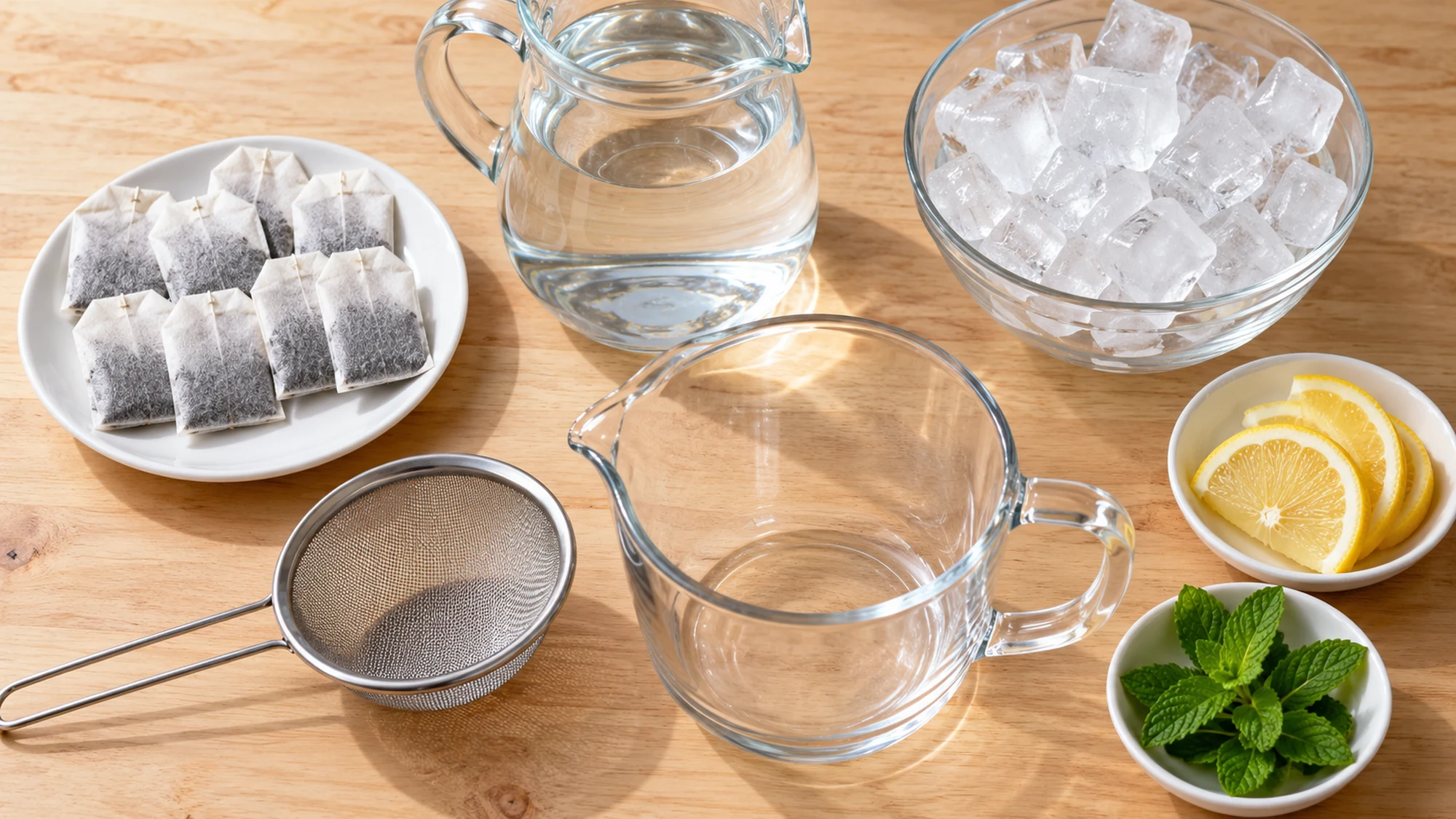
- 8 plain black tea bags about 16 g total
- 1 liter freshly boiled drinking water at least 195°F (91°C) when added to the tea
- 1 liter cold drinking water for dilution
- ice for serving, separate from the measured water
- 8 lemon slices optional, from a washed lemon
- 8 small mint sprigs optional, washed
Equipment
- 3-quart saucepan
- Kettle or stovetop
- Timer
- Food thermometer
- Heat-safe pitcher of at least 2 liters with cover
- Ice-water bath
- Serving glasses
Instructions
- Wash the pitcher and utensils. Put the tea bags in a heat-safe 3-quart saucepan. Bring 1 liter drinking water to a boil; use it at 195°F (91°C) or hotter.
- Pour the hot water over the bags, cover and steep off the heat for 4 minutes. Remove the bags with clean utensils. Do not extend the steep to make the tea darker.
- Stir in the measured 1 liter cold drinking water. Cool the pan promptly in an ice-water bath, stirring with a clean spoon. Transfer to a heat-safe pitcher, cover and refrigerate at 40°F (4°C) or below until cold, about 1 hour. Do not leave the tea on the counter to cool for hours.
- Divide the chilled tea among eight servings of approximately 250 ml, then pour over fresh serving ice. Add optional lemon and mint to the glasses. Keep the remaining pitcher refrigerated and use within 24 hours for best flavor. Sweetener is optional and excluded from the estimate.
Nutrition
Video
Notes
Tried this recipe?
Let us know how it turned out!Hi, I’m Emily Pocker! I share recipes and food guides here at Recipes360 to help you find everyday meal inspiration and feel more confident in the kitchen. My goal is to make cooking approachable, enjoyable, and full of flavor.