
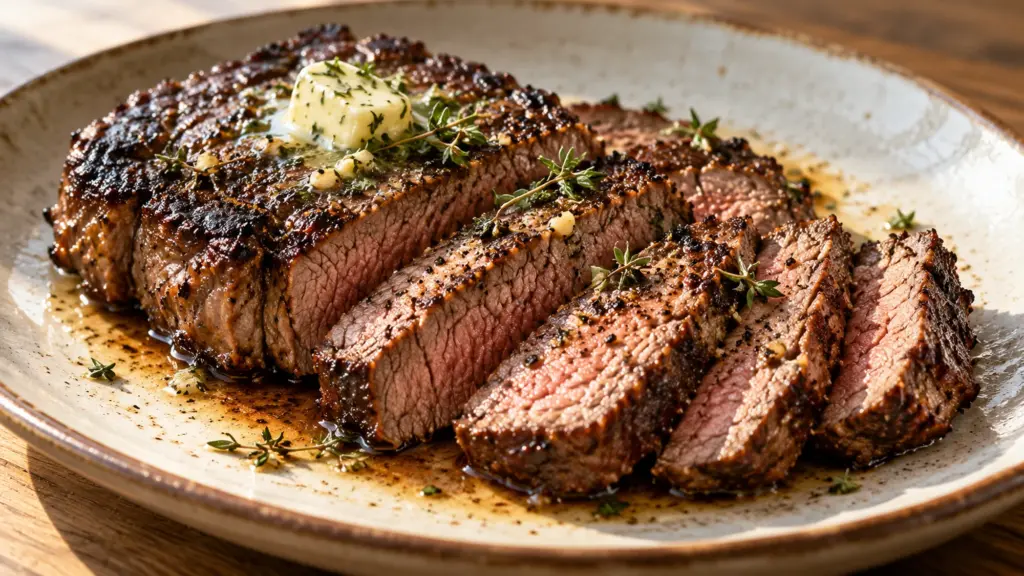
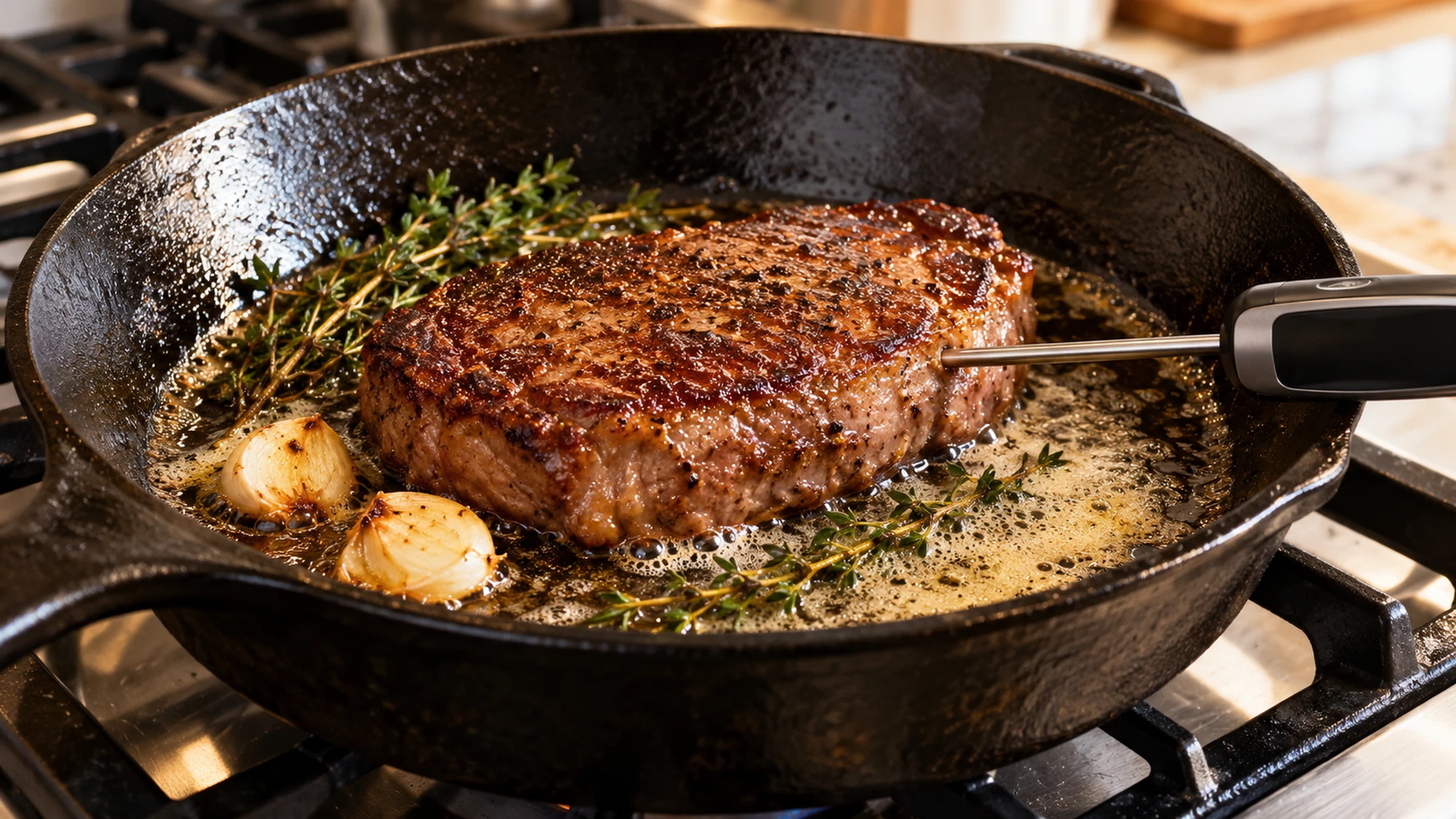
A brown crust is satisfying, but the center of a steak cannot be judged from the sound of the skillet. Learning how to cook steak is easier when you separate those two jobs: use a dry surface and a hot pan for browning, then a thermometer for the finish. This recipe uses boneless top sirloin with a small garlic-thyme butter baste.
Choose steaks of similar thickness, give them room in the pan and reduce the heat before adding butter. Cook whole-cut beef to at least 145°F (63°C) before removing it from the heat, then rest for at least three minutes. The card uses a five-minute rest; cooking time is an estimate, not the safety check.
Serving Suggestions for Pan-Seared Steak
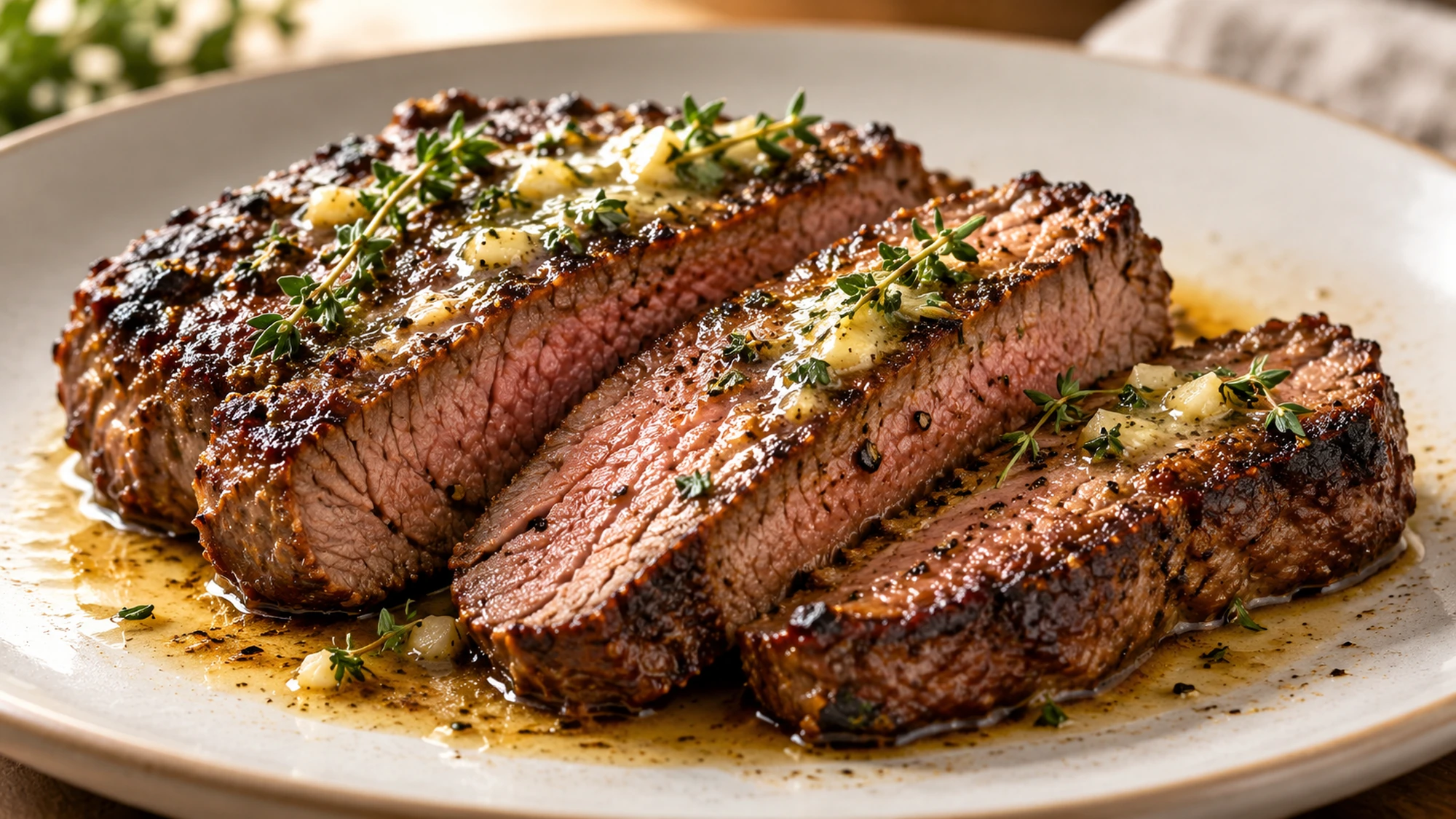
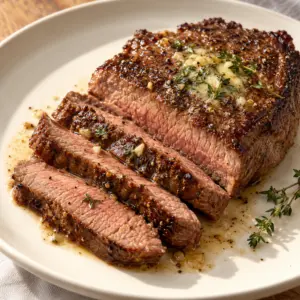
Have the side dishes ready before the steak starts cooking so the final rest fits naturally into dinner. Serve the meat on a warm plate with a spoonful of its resting juices rather than an enormous puddle of pan fat. Slice across the visible grain to shorten the muscle fibers in each bite.
I’d choose a simple jacket potato in air fryer and something crisp or green alongside. The potato can cook while you prepare the steak, but its size controls its own timing. Keep extra butter or sauces optional; this steak already has garlic and thyme in the finish.
- Use a clean serving plate, separate from the tray that held raw beef.
- Rest the steak before slicing, while keeping the side dishes ready.
- Offer extra sauce separately so the crust does not disappear under it.
If you are sharing the steaks, slice them after resting and divide them between plates instead of assuming every steak must belong to one person. The card serves two from the specified raw weight. Smaller portions with more sides are also possible, but the nutrition and cost per plate change when the yield changes.
How to Cook Steak With Different Cuts
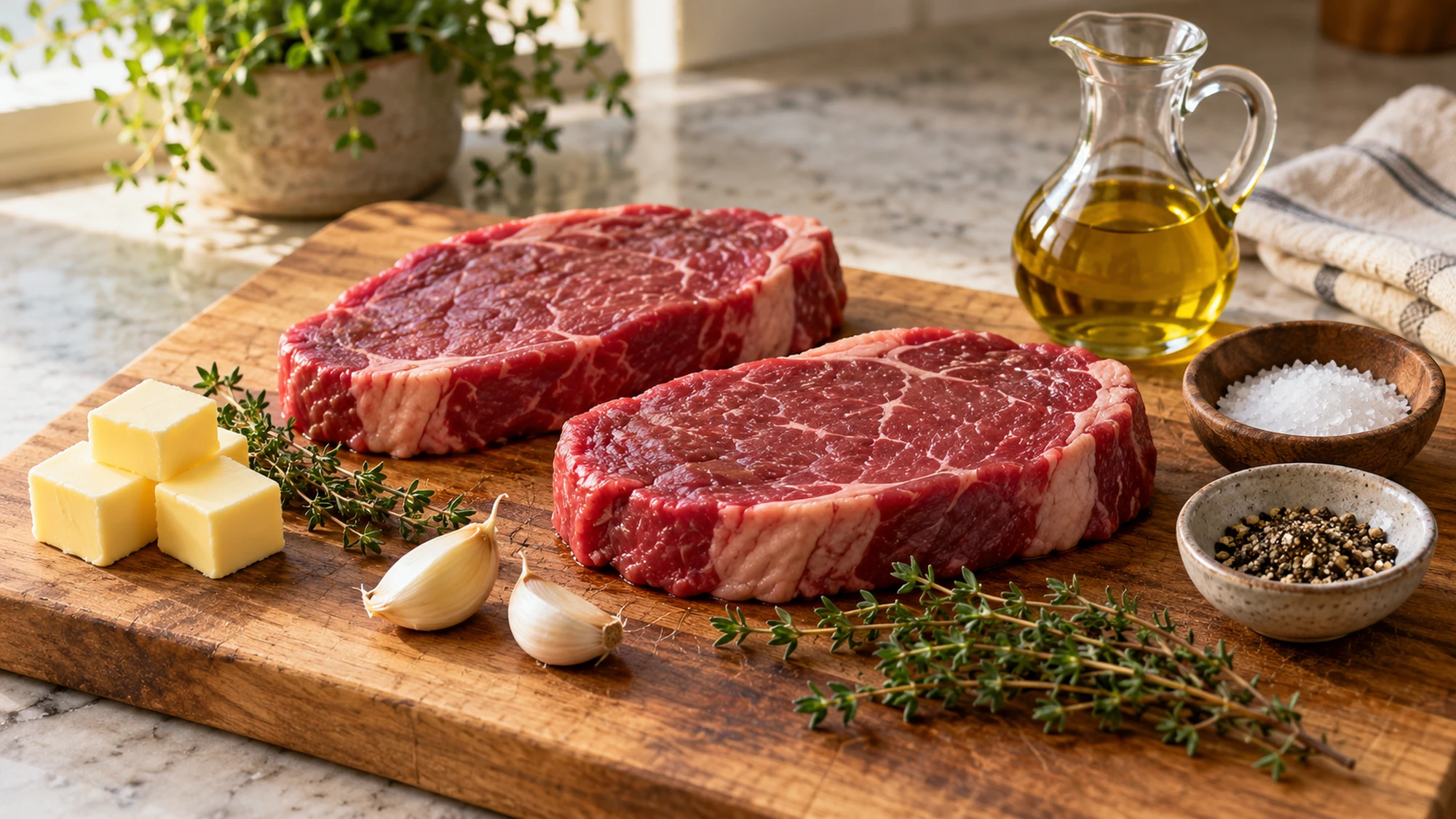
Top sirloin is the specified cut because it works with quick pan cooking and does not need a long braise. Ribeye generally carries more fat, while tenderloin has a different shape and leanness. Thickness matters as much as the name: a thin steak can finish before a thick steak has developed the same crust.
I prefer smashed garlic cloves to finely minced garlic for basting because the tiny pieces can darken rapidly in a hot skillet. Add the butter after turning down the heat, and watch the milk solids. Browned butter can smell nutty; blackened, acrid butter is a reason to stop and use a clean pan.
A heavy stainless steel skillet can replace cast iron, but the pan still needs enough room around each steak. If two steaks crowd the cooking surface, cook them separately and plan the rest accordingly. The table compares choices by the handling they require rather than pretending every cut shares an identical minute-by-minute schedule.
| Choice | What changes | Useful adjustment |
|---|---|---|
| Thin steak | Center cooks quickly | Check temperature earlier |
| Thicker steak | Center takes longer | Reduce heat after browning and keep checking |
| Ribeye | More visible fat | Render edges carefully; nutrition differs |
| Two crowded steaks | Pan loses heat | Use a larger pan or cook separately |
Health Benefits and Portion Balance
Beef supplies protein, while the cut, visible fat and portion determine much of the meal’s fat content. The measured butter and oil count too. The card conservatively includes all of them in its estimate, even though some may remain in the skillet; it does not include potatoes, vegetables or extra sauce.
The USDA-aligned minimum for whole beef steaks is 145°F (63°C) with a three-minute rest. A chef’s preferred rare or medium-rare result may be below that recommendation. This recipe follows the stated minimum rather than relying on color, the feel of the meat or anticipated carryover heat.
Follow clean, separate, cook and chill guidance when handling raw beef. Refrigerate leftovers within two hours, or one hour above 90°F (32°C). Use them within three to four days and reheat to 165°F (74°C); reheating can firm the meat, so save modest portions rather than repeatedly warming the entire batch.
Bottom Line
Dry the steak, let the pan establish the crust and give the thermometer the final say. I’d use the garlic-thyme butter as a finishing flavor, not as permission to keep the skillet fiercely hot. A suitable cut, controlled heat and a short rest are more useful than chasing a fixed number of minutes for every steak.
How to Cook Steak Recipe

Ingredients
- 2 boneless top sirloin steaks about 225 g each and 1 inch (2.5 cm) thick; visible hard fat trimmed
- 2 tsp neutral cooking oil
- 20 g unsalted butter
- 2 garlic cloves lightly smashed
- 4 thyme sprigs
- 1/2 tsp fine salt
- 1/4 tsp black pepper
Equipment
- 12-inch heavy skillet
- Tongs
- Instant-read meat thermometer
- Large spoon
- Clean cutting board and knife
Instructions
- Pat the steaks thoroughly dry and season both sides with salt and pepper. Keep raw-meat utensils and plates separate from the clean serving equipment. Turn on the extractor fan and preheat the heavy skillet over medium-high heat for about 3 minutes.
- Add the oil and swirl. Place the steaks in the pan with space between them. Sear for about 2 minutes on each broad side to develop a brown surface; use tongs to briefly sear a fatty edge if present. Reduce the heat if the oil smokes heavily.
- Lower the heat to medium-low. Add the butter, smashed garlic and thyme. Once the butter foams, tilt the pan carefully and spoon it over the steaks. Turn the steaks about every minute while checking their centers with a clean instant-read thermometer inserted from the side.
- Continue until each whole-cut steak reaches at least 145°F (63°C) before removing it from the heat. Total steak cooking may take roughly 8–14 minutes, but thickness, starting temperature and pan heat change this; use the thermometer rather than a fixed time or color.
- Transfer to a clean board and rest for 5 minutes, meeting the minimum 3-minute rest. Slice across the grain and serve with a little resting juice and optional pan butter. Refrigerate leftovers promptly and follow the storage note.
Nutrition
Video
Notes
Tried this recipe?
Let us know how it turned out!Hi, I’m Emily Pocker! I share recipes and food guides here at Recipes360 to help you find everyday meal inspiration and feel more confident in the kitchen. My goal is to make cooking approachable, enjoyable, and full of flavor.