
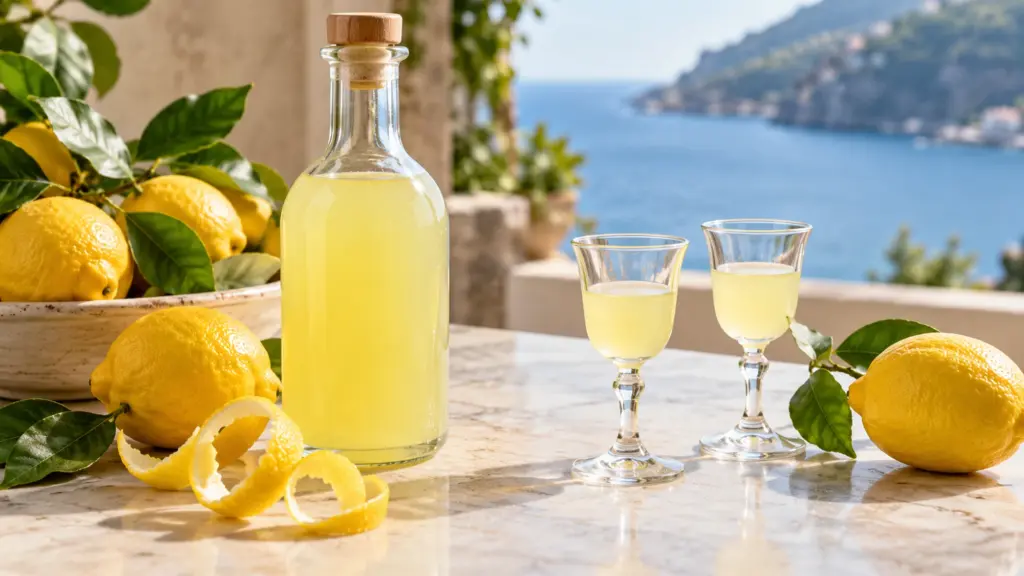
The useful part of a lemon for limoncello is its fragrant yellow skin. Juice would add a different kind of sharpness, while thick white pith can bring bitterness. This small-batch liqueur uses thin peel, commercially bottled 50% ABV vodka and a separately cooled sugar syrup. It is an infusion, with no home distillation and no dairy.
Peel clean, dry lemons lightly, steep the yellow ribbons in the vodka and strain before adding cooled syrup. Keep the spirit away from heat and flames. The recipe gives the peel two weeks to infuse, followed by overnight chilling after mixing; a calendar label is more useful here than trying to rush the jar.
Serving Suggestions for Limoncello
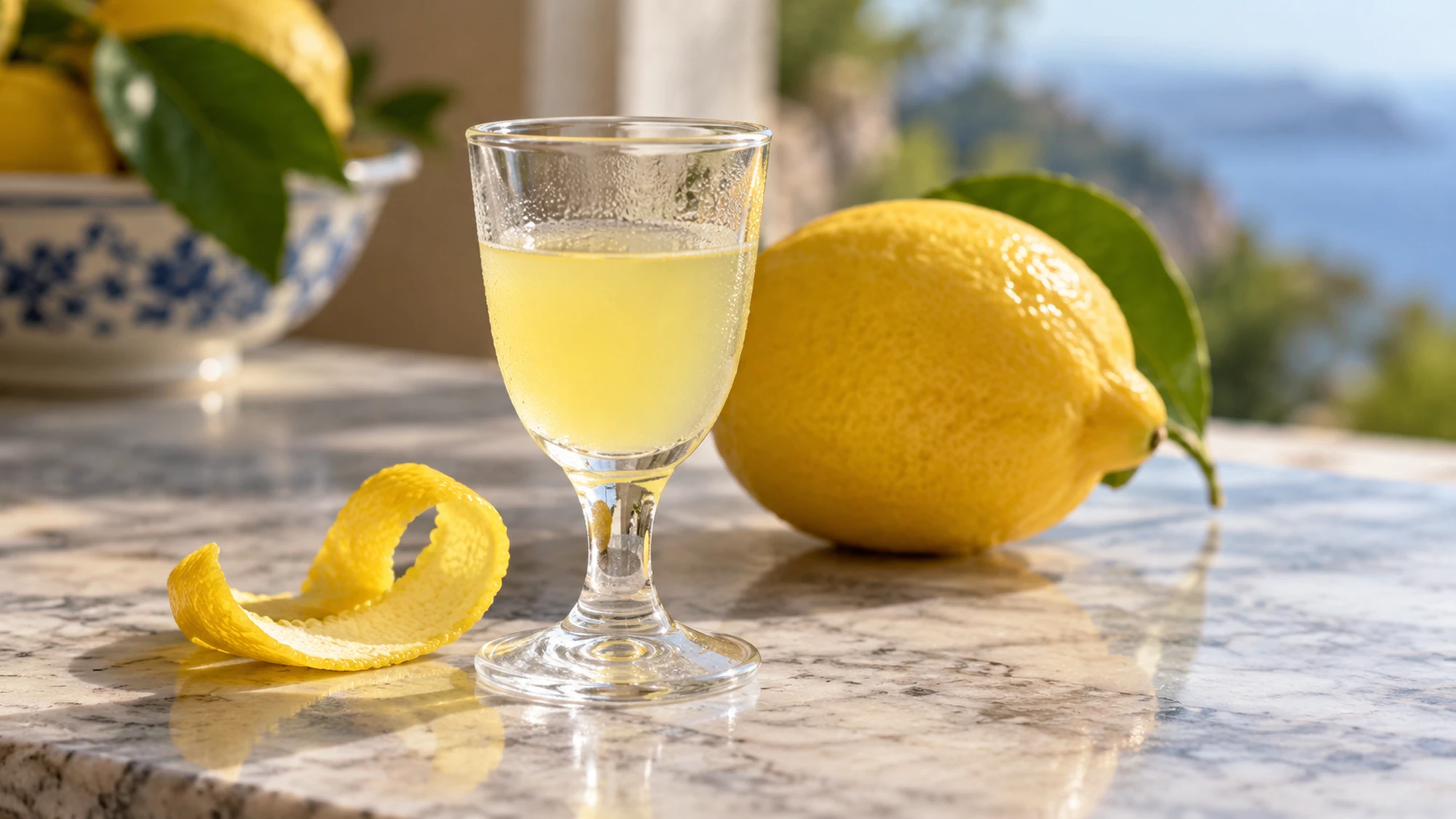
Serve a modest pour in a small chilled glass after a meal, or measure it as an ingredient in a drink. Chilling softens the impression of warmth but does not remove alcohol. Leave room in the glass rather than filling a large wine glass and treating it as a small serving.
I’d put water and an appealing alcohol-free option on the table at the same time. The blog’s ginger and whole-spice chai latte is a different warm drink for someone who wants one. There is no reason for a shared meal to require everyone to choose the same beverage.
- Pour size: use a small measure rather than the glass’s apparent size.
- Bottle label: record the spirit strength and any later syrup additions.
- Chilling: use the refrigerator without assuming a freezer-proof alcohol level.
Store the strained liqueur capped in the refrigerator, labeled with its ingredients, preparation date and alcoholic contents. Use clean bottles and pour into glasses rather than returning leftovers to the bottle. A homemade batch may freeze in some freezers; strength, sugar and freezer temperature all affect its behavior.
Variations and Limoncello Strength
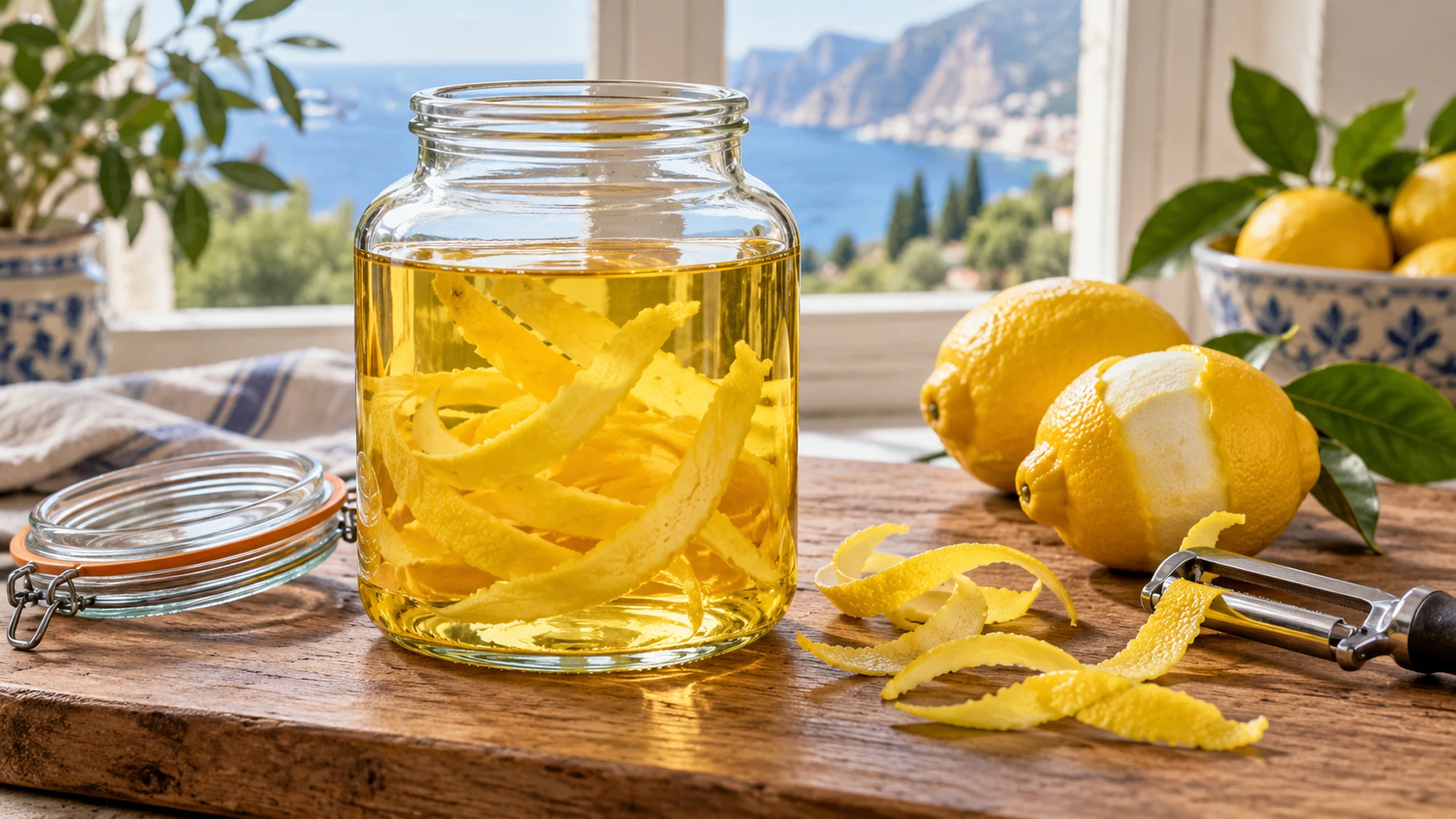
Use lemons with sound, aromatic skins and avoid wax when practical, but wash every lemon even if it looks clean. Organic labeling does not replace washing. A vegetable peeler gives broad strips that are easy to strain; trim away obvious white pith rather than digging into the fruit to collect more peel.
Vodka strength is part of this formula, not a detail to change casually. This card specifies commercial 50% ABV vodka. Ordinary 40% vodka would produce a weaker finished mixture with the same syrup, while high-proof grain spirit would make it substantially stronger. Neither substitution should inherit this batch’s estimated alcohol concentration.
I prefer to decide sweetness after the specified mixture has chilled, rather than chasing the taste of warm syrup. Extra syrup changes both the sweetness and alcohol concentration. Replacing the lemons with oranges or adding cream creates a different liqueur, with different flavor and storage considerations, rather than a harmless garnish change.
| Choice | What changes | Practical limit |
|---|---|---|
| Yellow lemon peel | Citrus aroma | Avoid thick white pith |
| 40% vodka instead | A weaker final drink | Recalculate rather than assume |
| High-proof spirit | A stronger extraction and drink | Not this recipe’s formula |
| Additional syrup | More sweetness and dilution | Measure and record additions |
Health Benefits and Portion Balance
Limoncello is an alcoholic sweetened drink, not a source of health benefits to seek out. Lemon aroma does not turn it into a vitamin supplement or prove that it improves digestion. The NIAAA guidance on alcohol and health advises against starting to drink for health and explains that less alcohol means less risk.
A small glass still contains alcohol, and serving size alone cannot reveal how much. The NIAAA standard-drink explanation bases a US standard drink on 14 grams of pure alcohol. The card’s calorie estimate includes alcohol as well as sugar; ordinary carbohydrate grams alone would leave out much of its energy.
Follow the FDA advice to wash produce under running water before peeling, then dry it. Use only beverage-grade commercial spirit. Avoid alcohol during pregnancy, before driving and when medically advised, and keep the bottles out of children’s reach. The finished strength estimate is a calculation, not a laboratory alcohol measurement.
Bottom Line
Thin peel, the specified vodka strength and a measured syrup make this limoncello easier to understand and portion. I’d keep the bottle label as clear as the recipe: lemon, vodka, sugar, water and an approximate strength. Let the infusion take its time, cool the syrup completely and serve small measured pours to adults who choose alcohol.
Limoncello Recipe

Ingredients
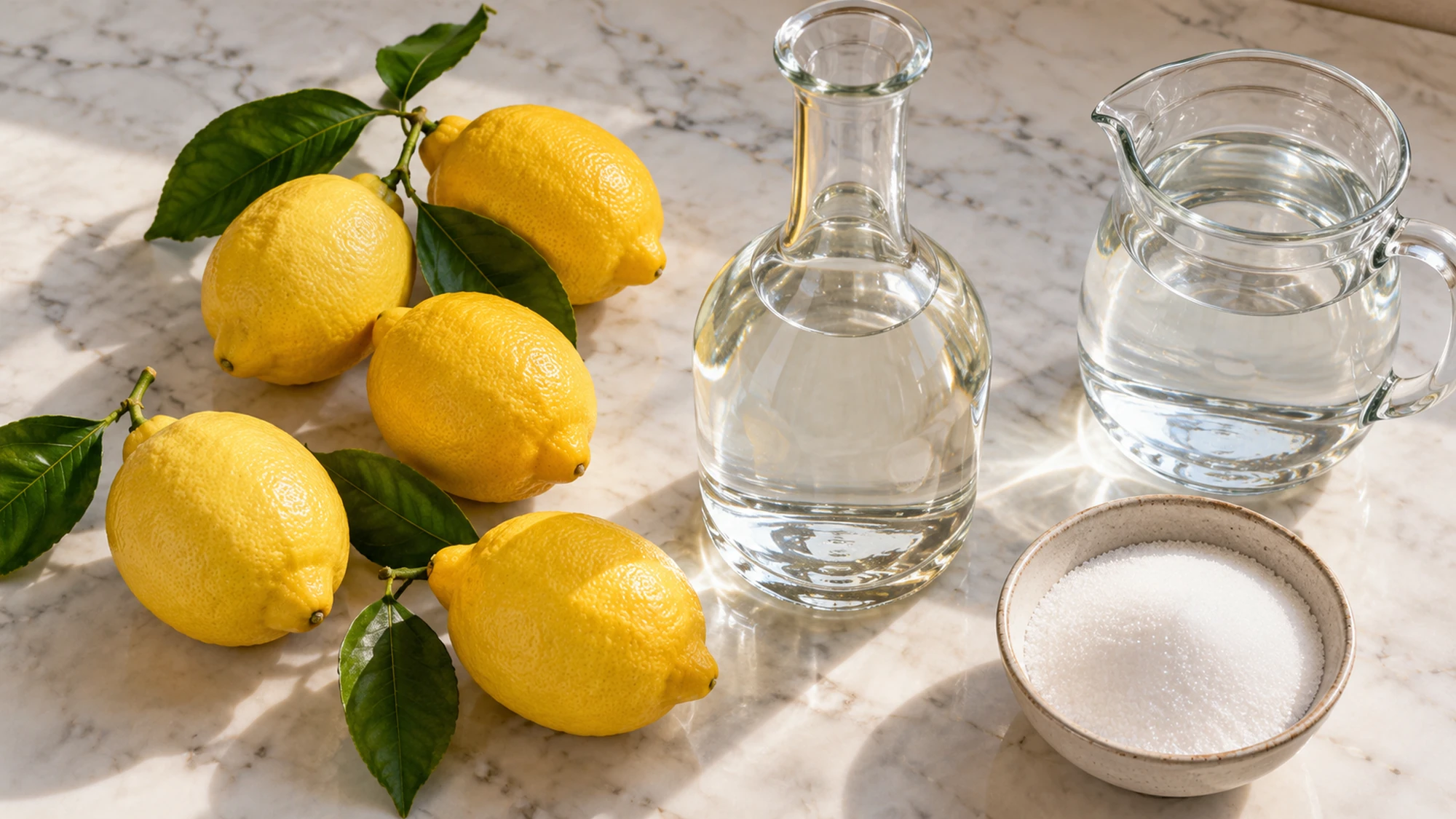
- 6 lemons sound skins, washed and thoroughly dried; peel only
- 500 ml commercial vodka 50% ABV / 100 proof; beverage grade
- 250 ml water
- 180 g granulated sugar
Equipment
- Vegetable peeler
- Clean 1-litre glass jar with lid
- Fine-mesh strainer
- Small saucepan
- Measuring jug
- Clean glass bottles and funnel
Instructions
- Wash the lemons under running water and dry thoroughly. Using a vegetable peeler, remove thin strips of yellow peel, leaving the thick white pith behind. Reserve the peeled fruit for another use.
- Put the peel in a clean, dry glass jar and pour over the 50% ABV vodka. Cap, label and keep in a cool dark place away from heat or flame for 14 days, gently turning the closed jar every few days.
- After the infusion, put the water and sugar in a small saucepan. Heat gently for about 5 minutes, stirring until dissolved. Remove from the heat and let the syrup cool completely. Never heat the vodka or add it to hot syrup.
- Strain the infused vodka through a fine-mesh strainer into a clean measuring jug, removing all peel. Stir in the completely cooled syrup. Measure and record the finished volume; the expected yield is approximately 850–870 ml.
- Funnel into clean bottles, cap and label as alcoholic lemon liqueur with the preparation date. Refrigerate overnight before serving. Keep refrigerated and use clean pours; this recipe does not establish a tested shelf life.
- Serve measured small portions of about 30 ml to adults who choose alcohol. Do not assume the mixture will stay unfrozen in every freezer, and do not use a freezer rating as a measure of alcohol strength.
Nutrition
Video
Notes
Tried this recipe?
Let us know how it turned out!Hi, I’m Emily Pocker! I share recipes and food guides here at Recipes360 to help you find everyday meal inspiration and feel more confident in the kitchen. My goal is to make cooking approachable, enjoyable, and full of flavor.