
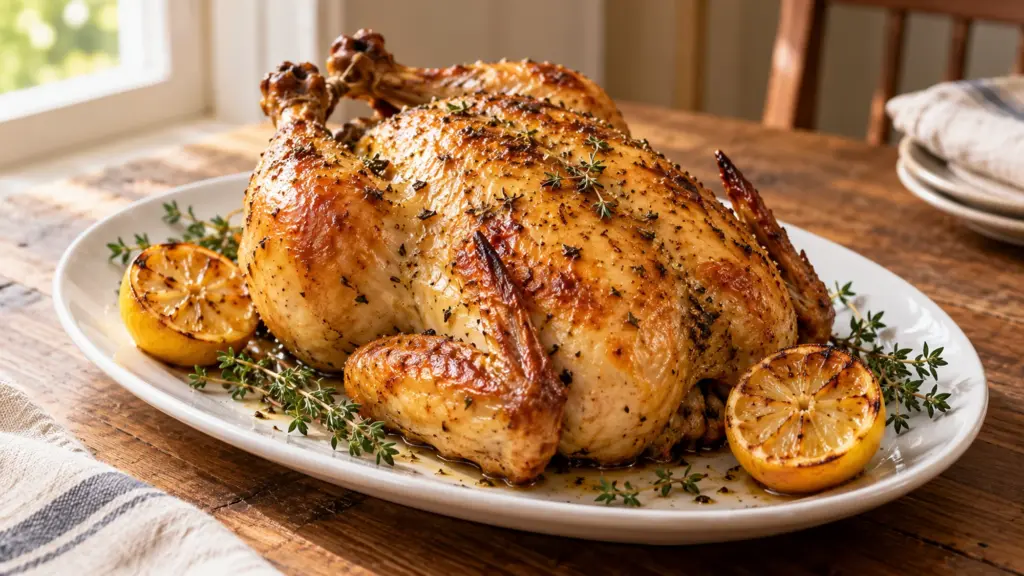
A whole chicken turning golden in the oven makes dinner feel settled before the plates are even out. This lemon-thyme version keeps the seasoning simple and leaves the side dishes up to you. The important trick is not a complicated marinade: dry the skin well, give the bird an uncovered roast, and use a thermometer rather than guessing from its color.
Roast a thoroughly thawed whole chicken with olive oil, thyme and lemon until the thickest breast and innermost thigh reach 165°F (74°C), without touching bone. Rest it before carving, then serve the browned skin and tender meat while they are warm.
Choose a bird around 4½ pounds so the timing below is a useful starting point. A larger chicken needs longer, and a crowded, deep pan can slow browning. I prefer a shallow roasting pan with a rack because it keeps the underside out of the juices without turning dinner into an equipment project.
Serving Suggestions for Whole Chicken
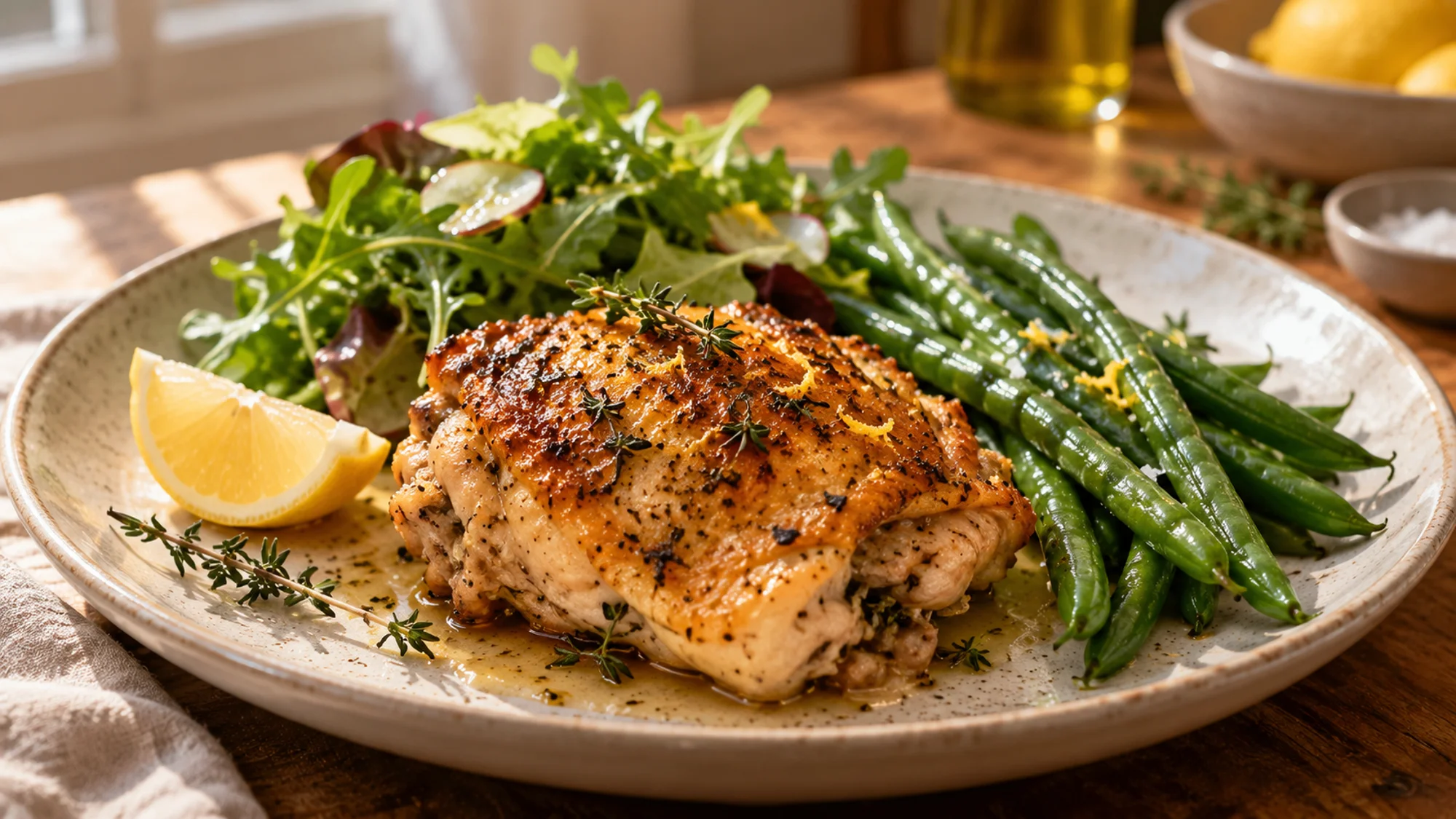
Think about contrast when building the plate. The chicken brings savory richness; a crisp salad, bright dressing or simply cooked green vegetable gives it somewhere to go. For a more substantial dinner, add a baked potato or a scoop of rice rather than crowding vegetables around the bird and changing the roasting conditions.
- For a cozy plate: pair carved chicken with a crisp-skinned air-fryer jacket potato and green beans.
- For something brighter: serve small portions with chickpea cucumber salad; its lemon and parsley complement the thyme.
- For next-day lunch: chill carved meat promptly and add it cold to a sandwich or salad. Keep raw-chicken utensils away from these ready-to-eat ingredients.
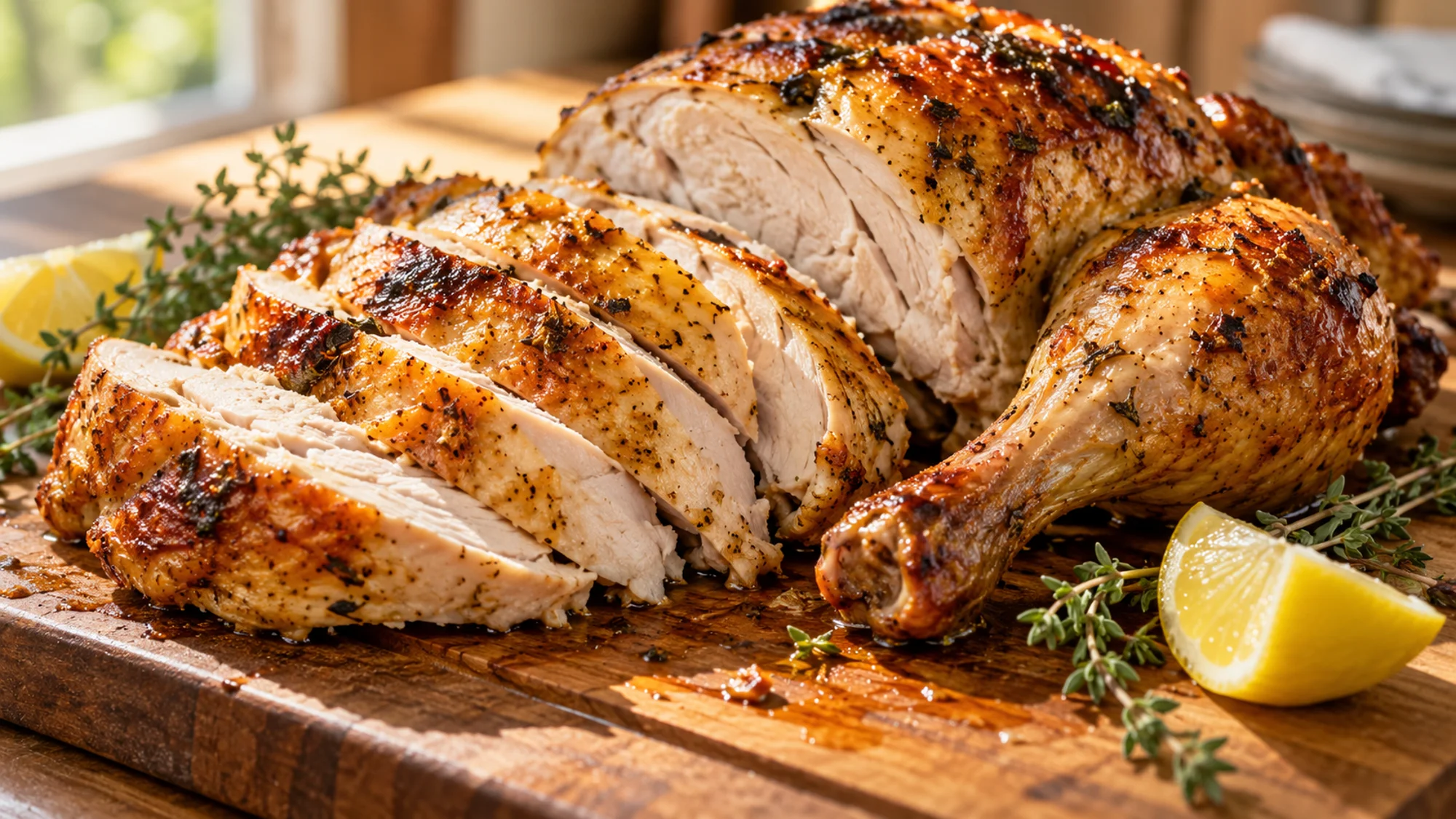
Carve on a board with a juice groove, not on a crowded serving platter. Remove the legs first, then lift the breasts from the breastbone and slice across the meat. A clean, sharp knife helps keep the slices intact; you do not need to saw through the entire bird at the table.
Keep the sides bright or simple, and carve the chicken before bringing it to the table if you want an easier serving moment.
Whole Chicken Variations and Helpful Swaps
Lemon and thyme are a gentle starting point rather than a fixed rule. I would change one seasoning at a time so the chicken still tastes like chicken. Avoid thick, sugary coatings at the start: they can darken before the center is cooked.
| Change | How to use it | What to watch |
|---|---|---|
| Rosemary instead of thyme | Use 1 teaspoon finely chopped fresh rosemary. | Its flavor is stronger; chop the needles finely. |
| Paprika finish | Add ½ teaspoon sweet paprika to the oil. | The red color is seasoning, not a doneness test. |
| No lemon | Leave it out; add a little lemon juice at the table if available. | Do not fill the cavity with stuffing. |
| Lower-sodium seasoning | Reduce added salt; keep thyme and pepper. | Check whether the packaged bird contains a salt solution. |
- Skin browns too quickly: loosely shield the browned area with foil and continue until the thermometer reaches the safe temperature.
- Skin stays pale: check that the oven is fully heated and the pan is not covered; do not raise the temperature sharply just to chase color.
- Juices seem plentiful: leave room in the pan and keep the chicken on the rack. Serve any pan juices only after the bird has cooked safely.
Change the seasoning, not the doneness rule. Every version still needs an accurate thermometer reading.
Health Benefits and Safe Handling
Chicken contributes protein, and the rest of the plate matters just as much as the meat. USDA’s family-meal guidance includes poultry among protein foods and notes that removing skin makes a leaner serving. You can enjoy some crisp skin or remove it according to your preferences; neither choice turns this meal into a cure or a nutritional shortcut.
- Do not rinse raw chicken. CDC chicken-safety guidance recommends avoiding washing and keeping raw juices away from ready-to-eat foods.
- Chill promptly. Refrigerate carved leftovers in shallow containers within 2 hours, or 1 hour above 90°F (32°C).
- Use leftovers in 3–4 days. Keep the refrigerator at 40°F (4°C) or below, following the federal cold-storage chart, and reheat leftovers to 165°F (74°C).
A useful chicken dinner combines satisfying portions, varied sides and careful handling, without exaggerated health promises.
Bottom Line
A whole chicken needs patient roasting more than fancy ingredients. Dry the skin, season simply and let the thermometer make the final decision. I would spend the extra moment on careful carving and a fresh side dish rather than another layer of seasoning.
Whole Chicken Recipe

Ingredients
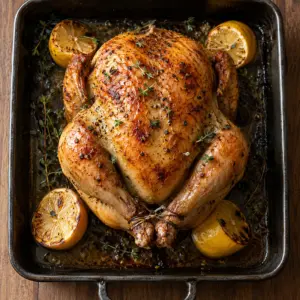
- 1 whole chicken about 4½ lb (2 kg), completely thawed; giblets removed
- 1 tablespoon olive oil
- 1 teaspoon fine salt reduce if the chicken is pre-seasoned or injected with salt solution
- 1/2 teaspoon black pepper
- 1 teaspoon dried thyme
- 1 lemon halved
Equipment
- 1 Shallow roasting pan with rack
- 1 Instant-read thermometer
- 1 Carving board and sharp knife
Instructions
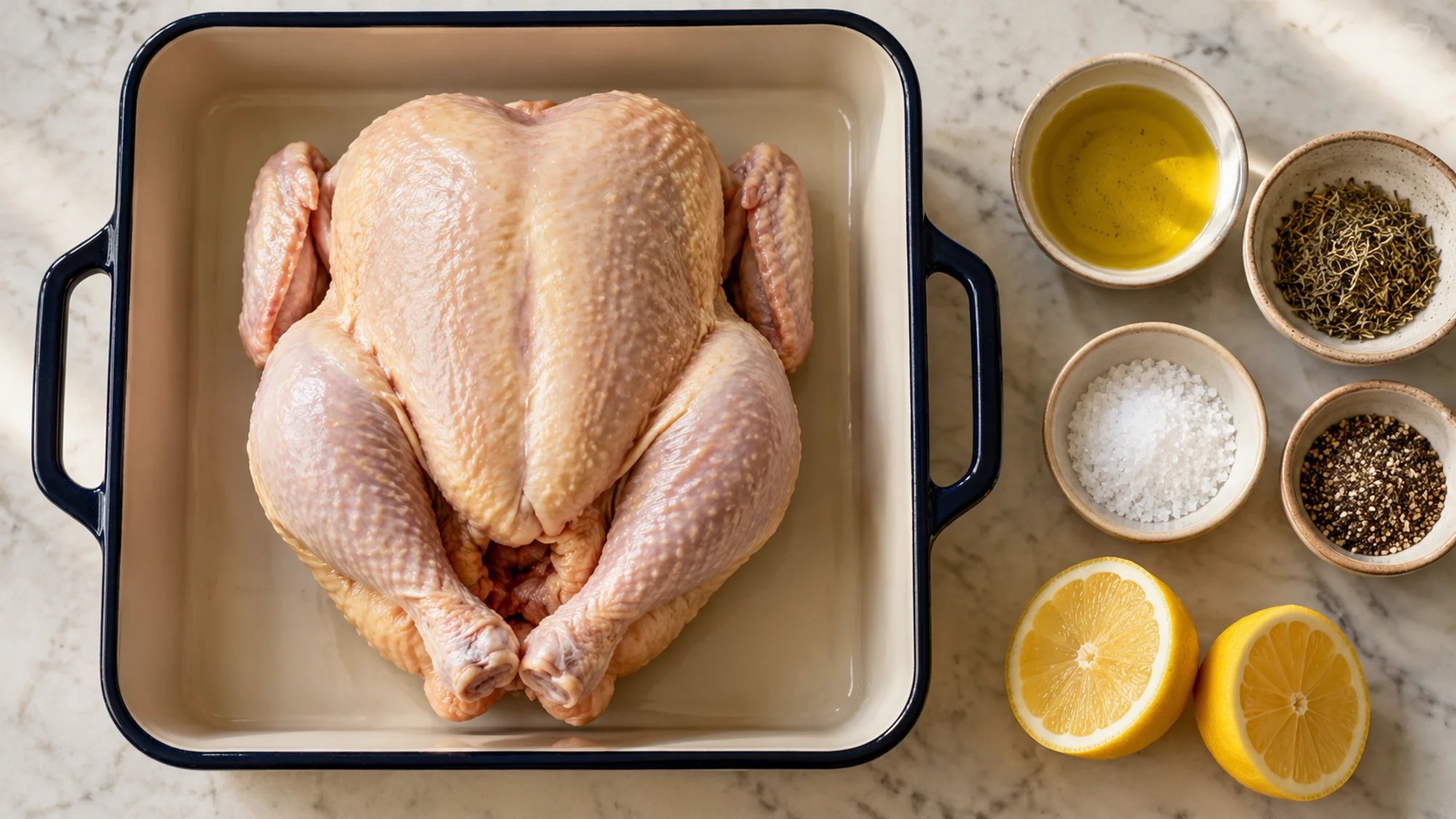
- Heat the oven to 425°F (220°C). Remove the giblet packet from the thawed chicken. Do not rinse the bird. Pat it dry with paper towels, discard them, then wash your hands and clean any contacted surfaces.
- Set the chicken breast-side up on the rack in a shallow roasting pan. Rub with olive oil and sprinkle with salt, pepper and thyme. Tuck the wing tips behind the shoulders. Place the lemon halves beside the chicken in the pan; do not stuff the cavity.
- Roast uncovered for about 75–90 minutes, beginning temperature checks at 65 minutes. Insert an instant-read thermometer into the thickest breast and innermost thigh, avoiding bone; both must reach at least 165°F (74°C). Time varies with the bird and oven. If the skin darkens early, shield that area loosely with foil and keep cooking.
- Transfer to a clean carving board and rest for 15 minutes. Remove the legs, then the breasts, and slice the breast meat. Serve warm with the roasted lemon. Refrigerate remaining meat in shallow containers within 2 hours, or 1 hour above 90°F (32°C).
Nutrition
Video
Notes
Tried this recipe?
Let us know how it turned out!Hi, I’m Emily Pocker! I share recipes and food guides here at Recipes360 to help you find everyday meal inspiration and feel more confident in the kitchen. My goal is to make cooking approachable, enjoyable, and full of flavor.