
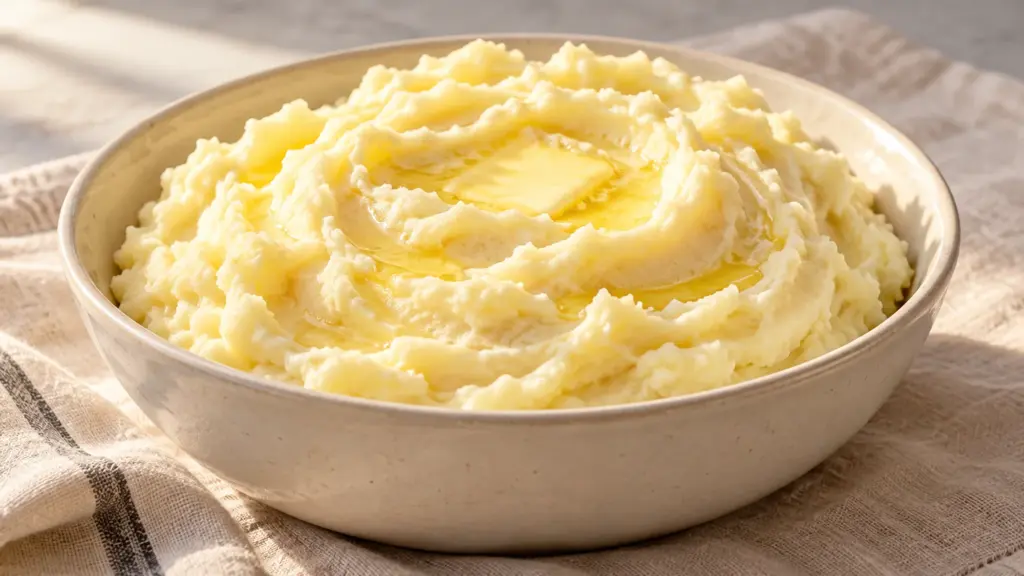
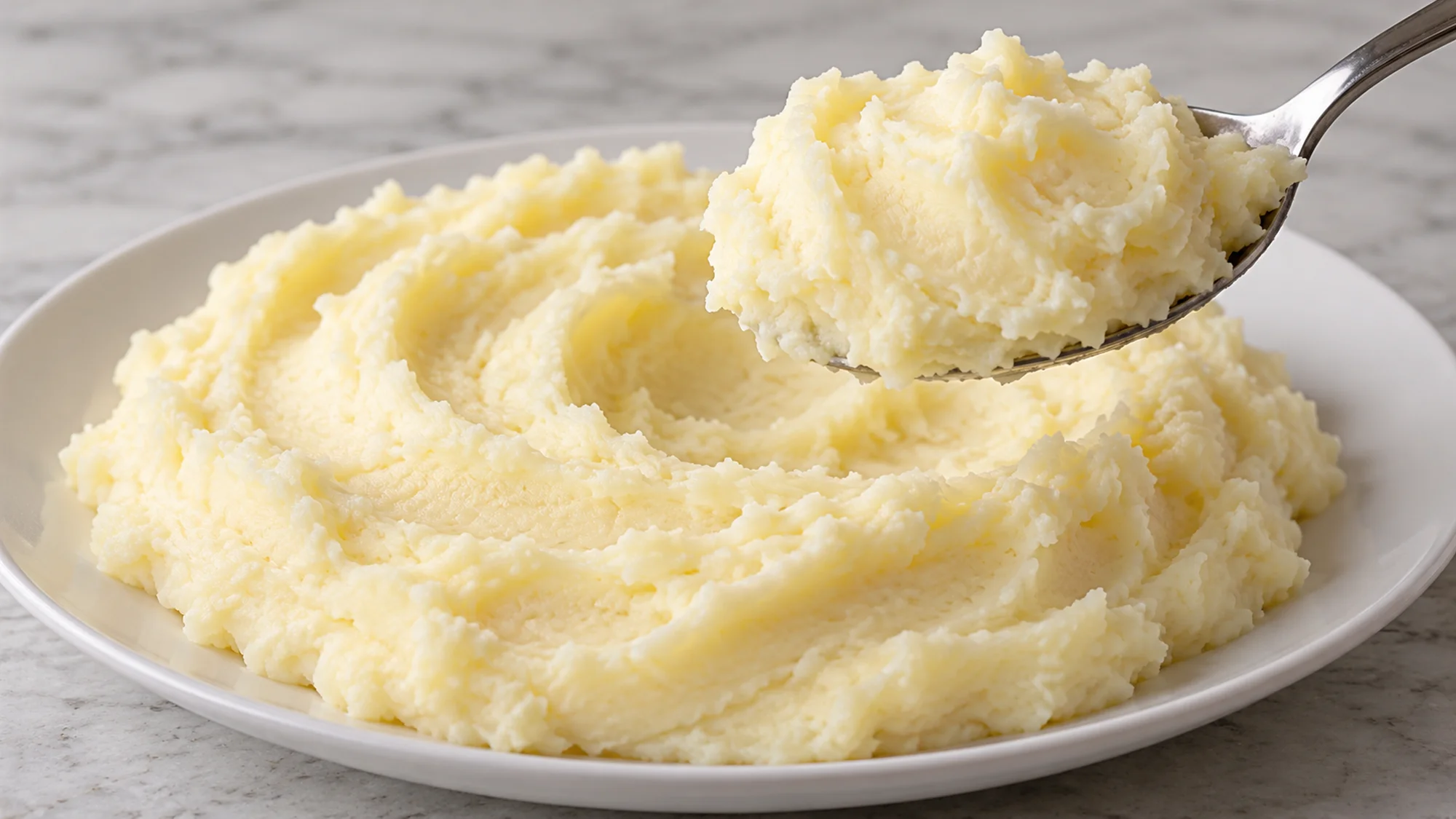
Learning how to make mashed potatoes starts with cooking the potatoes all the way through, then removing the water they no longer need. This version uses peeled russets, warm whole milk and unsalted butter for a soft, spoonable side. You need a saucepan and a hand masher or ricer; the finish should have gentle ridges rather than a whipped, elastic texture.
Cut the potatoes evenly, drain them thoroughly and add warm dairy a little at a time. Those small choices give you much more control over the finished mash than vigorous mixing ever will.
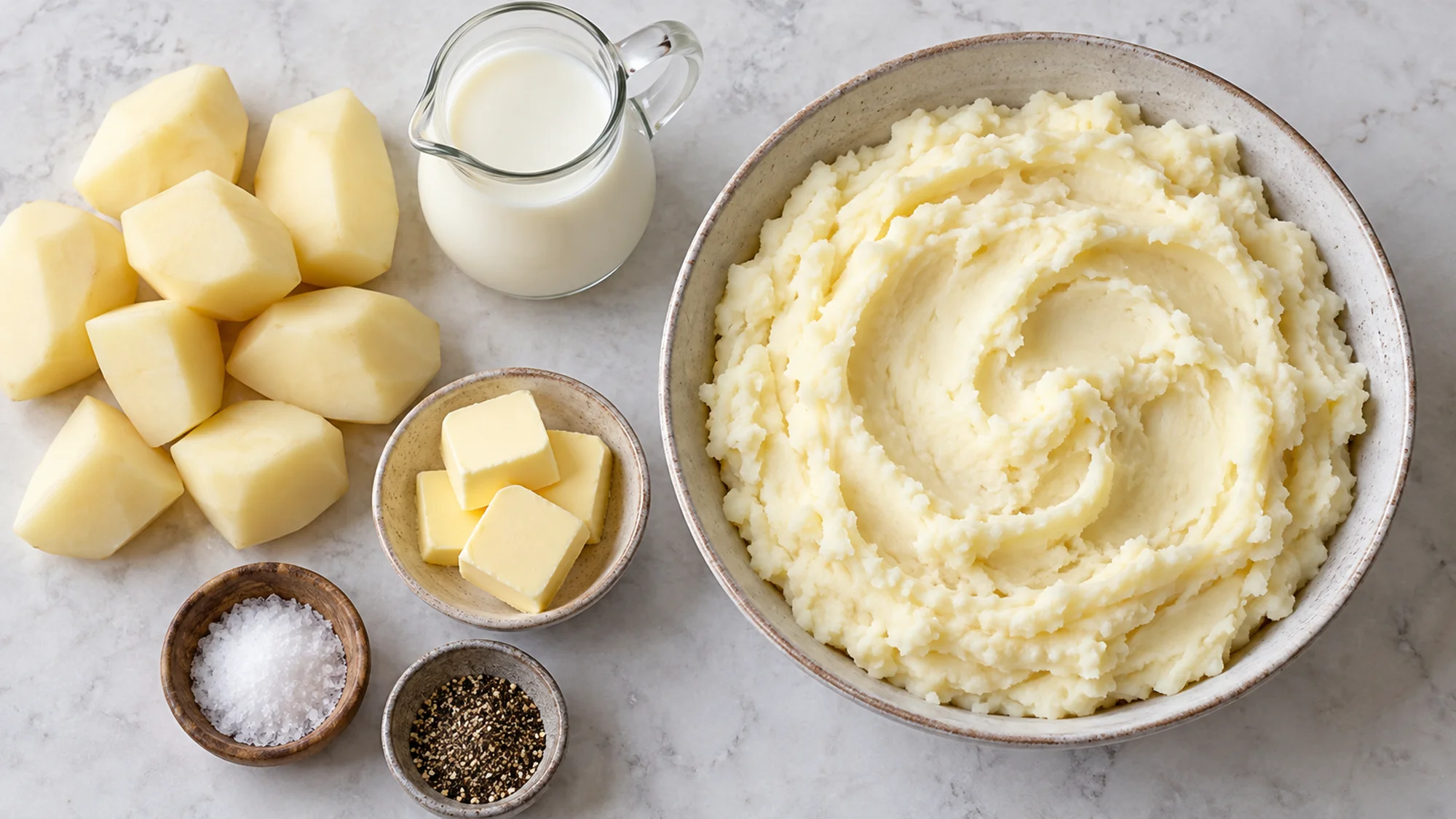
Weigh 900 g of potatoes after peeling, then cut them into pieces about 3 cm across. Start them in cold water so their centers heat along with the outsides. Once the water simmers, cook until a knife slides through several pieces with almost no resistance. Depending on the potato and the size of your pieces, that usually takes 15–20 minutes after simmering begins.
How to serve mashed potatoes
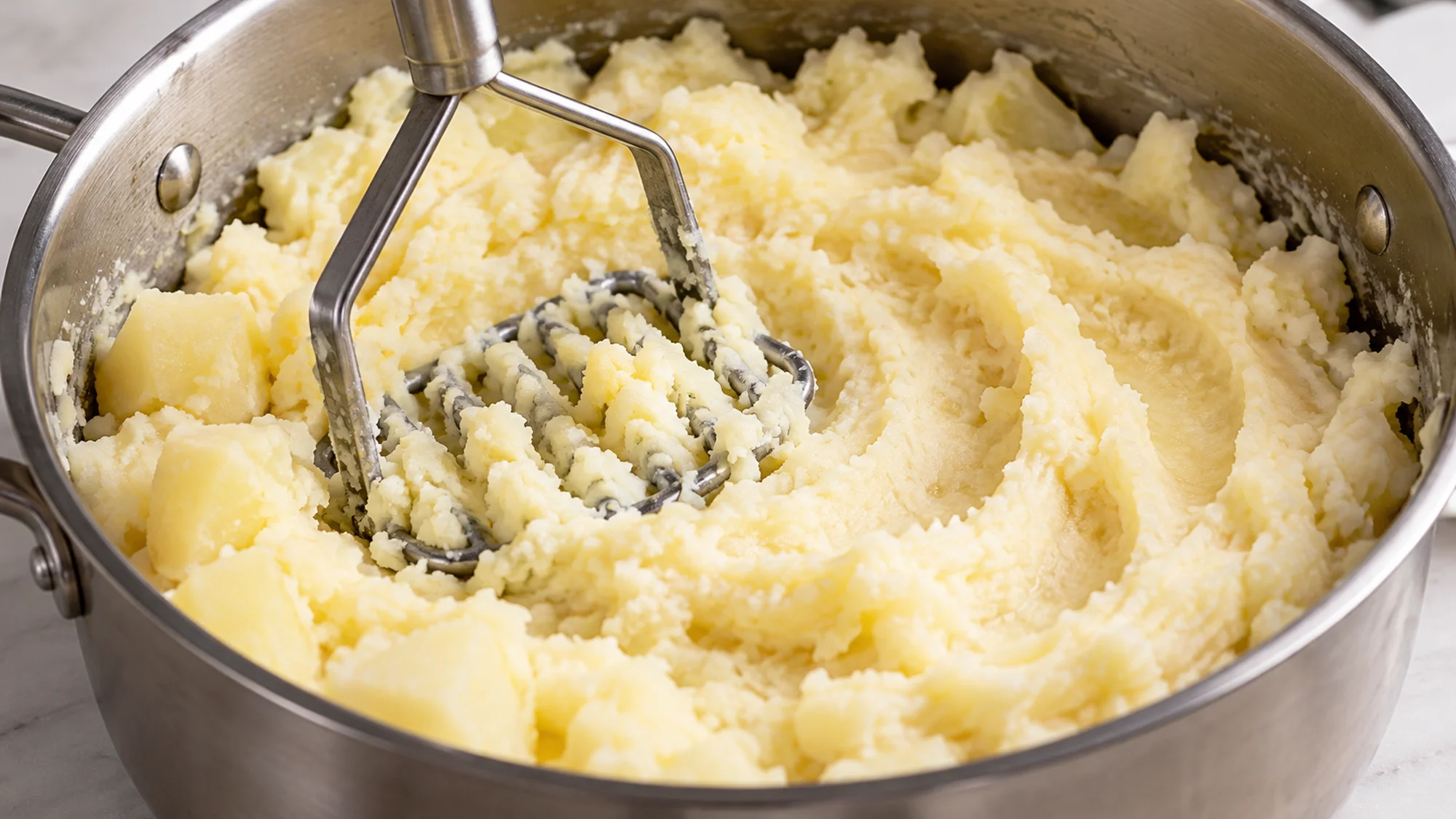
Drain the potatoes well and return them to the empty pan over low heat for a minute or two, shaking gently. Stop when surface moisture has evaporated; do not let the bottoms brown. Meanwhile, warm the milk with the butter until the butter melts. Mash the potatoes first, then fold in the warm mixture in three additions. A ricer gives a finer result, while a hand masher leaves small, pleasant pieces.
Spoon the mash into a warmed bowl just before serving. It suits roasted vegetables, lentil patties or the apricot chicken recipe, whose tangy sauce gives the buttery potatoes a bright companion. Make a shallow hollow with the back of a spoon if you want a place for gravy. Extra butter, gravy and garnishes are optional additions and are outside the card’s nutrition estimate.
| What you see | Likely cause | Useful adjustment |
|---|---|---|
| Firm lumps | Potatoes need more cooking | Check tenderness before draining; cook longer if needed |
| Loose mash | Excess liquid or wet potatoes | Steam-dry thoroughly and add dairy gradually |
| Dense, stretchy texture | Too much mechanical mixing | Use a hand masher or ricer; fold briefly |
How to Make Mashed Potatoes With Different Finishes
Russets have the dry, starchy flesh that works well for a fluffy mash. Illinois Extension distinguishes these mature, starchy potatoes from waxier varieties. Yukon Gold potatoes also work, though their texture is naturally creamier and a little denser. Keep the peeled weight the same and judge the milk by the potatoes: you may not need every last spoonful.
For a dairy-free version, use an unsweetened plain plant drink and olive oil or a suitable plant spread. Start with less liquid and add it slowly. The flavor, allergens and estimated nutrition will change. Roasted garlic, chopped chives or black pepper are easy additions, but this plain base does not depend on them. Avoid adding raw minced garlic if you want a mellow rather than sharp result.
A food processor is the wrong tool for this texture because it can overwork the cooked potato. If you prefer a rustic result, leave a few small pieces instead of chasing complete smoothness. Season only after incorporating the dairy, then taste a small spoonful. The printed salt amount is a starting quantity, not a requirement to keep adding salt until the potatoes taste salty.
Health benefits and portion notes
Potatoes provide carbohydrate for energy, and the NHS identifies them as a source of potassium and B vitamins. Peeling and boiling affect the nutrients retained, so the card gives an estimate rather than a laboratory result. Butter and whole milk add richness and saturated fat. A moderate scoop alongside vegetables and a protein food makes a more varied plate than treating mash as the whole meal.
Cool leftovers promptly in shallow containers. FoodSafety.gov recommends refrigeration within two hours, or within one hour above 90°F/32°C, with the refrigerator at 40°F/4°C or below. Use refrigerated mash within three days. Reheat the portion you need with a splash of milk, stirring until it reaches 165°F/74°C throughout. A covered microwave-safe bowl is useful; stir halfway through so the center does not stay cold.
Bottom Line
For dependable mashed potatoes, focus on tenderness, a dry surface and gentle mixing. Have the warm milk and butter ready before draining, and keep a little liquid back until you see the texture. The recipe below gives six side portions from a manageable saucepan batch. Serve it fresh for the lightest texture, or cool the leftovers carefully and reheat only what you plan to eat.
How to Make Mashed Potatoes Recipe

Ingredients
- 900 g russet potatoes peeled weight; cut into even 3 cm pieces
- 180 ml whole milk
- 60 g unsalted butter cubed
- 0.5 tsp fine salt about 3 g
- 0.25 tsp ground black pepper optional
Equipment
- Large saucepan
- Colander
- Hand masher or potato ricer
- Small saucepan
- Food thermometer
Instructions
- Put the peeled potato pieces in a large saucepan and cover with cold unsalted water by about 2 cm. Bring to a boil, then lower the heat to a steady simmer.
- Simmer for 15–20 minutes, until a knife slides through several pieces with almost no resistance. Check the largest pieces; cook a little longer if their centers are firm.
- While the potatoes cook, warm the milk and butter in a small saucepan over low heat until the butter melts. Do not boil.
- Drain the potatoes thoroughly. Return them to the empty pan over low heat for 1–2 minutes, shaking gently, until the surfaces look dry without browning.
- Remove from the heat. Mash or rice the potatoes, then gently fold in the warm milk mixture in three additions. Hold back a little milk if the mash already looks soft.
- Fold in the salt and optional pepper. Serve promptly. For leftovers, refrigerate in shallow containers within 2 hours, use within 3 days and reheat to 165°F/74°C throughout.
Nutrition
Video
Notes
Tried this recipe?
Let us know how it turned out!Hi, I’m Emily Pocker! I share recipes and food guides here at Recipes360 to help you find everyday meal inspiration and feel more confident in the kitchen. My goal is to make cooking approachable, enjoyable, and full of flavor.