
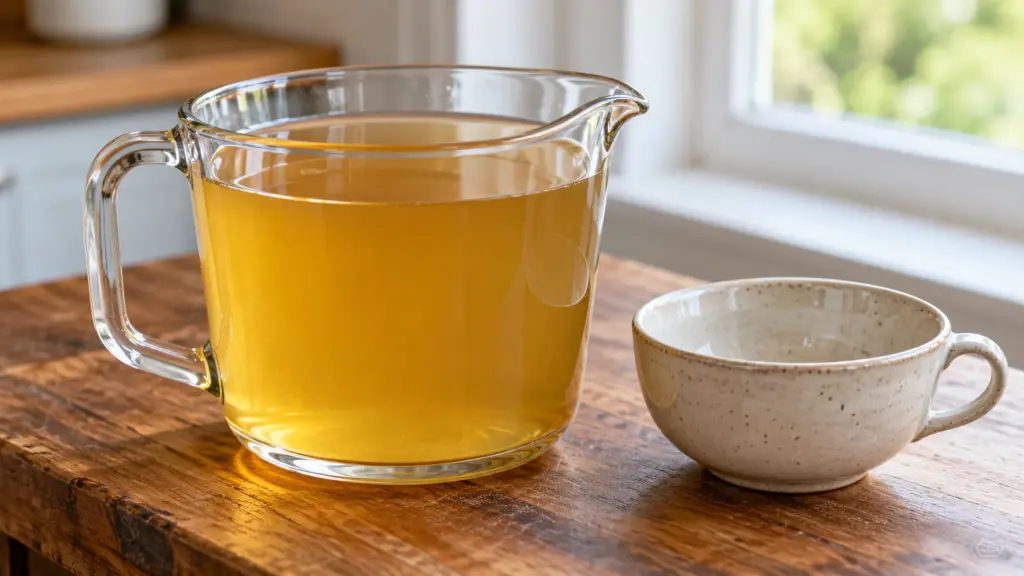
Learning how to make vegetable stock gives you a useful base for soups, sauces and rice. This batch starts with onions, carrots and celery, then adds mushrooms and leek for a rounded savory flavor. The vegetables simmer gently in water before you strain them out. The finished stock should be a clear, light amber liquid, ready to season when you use it.

Use clean, fresh vegetables, keep the simmer gentle and taste before straining. Stock is a supporting ingredient: a balanced flavor is more useful than a strong taste that overwhelms the next dish.
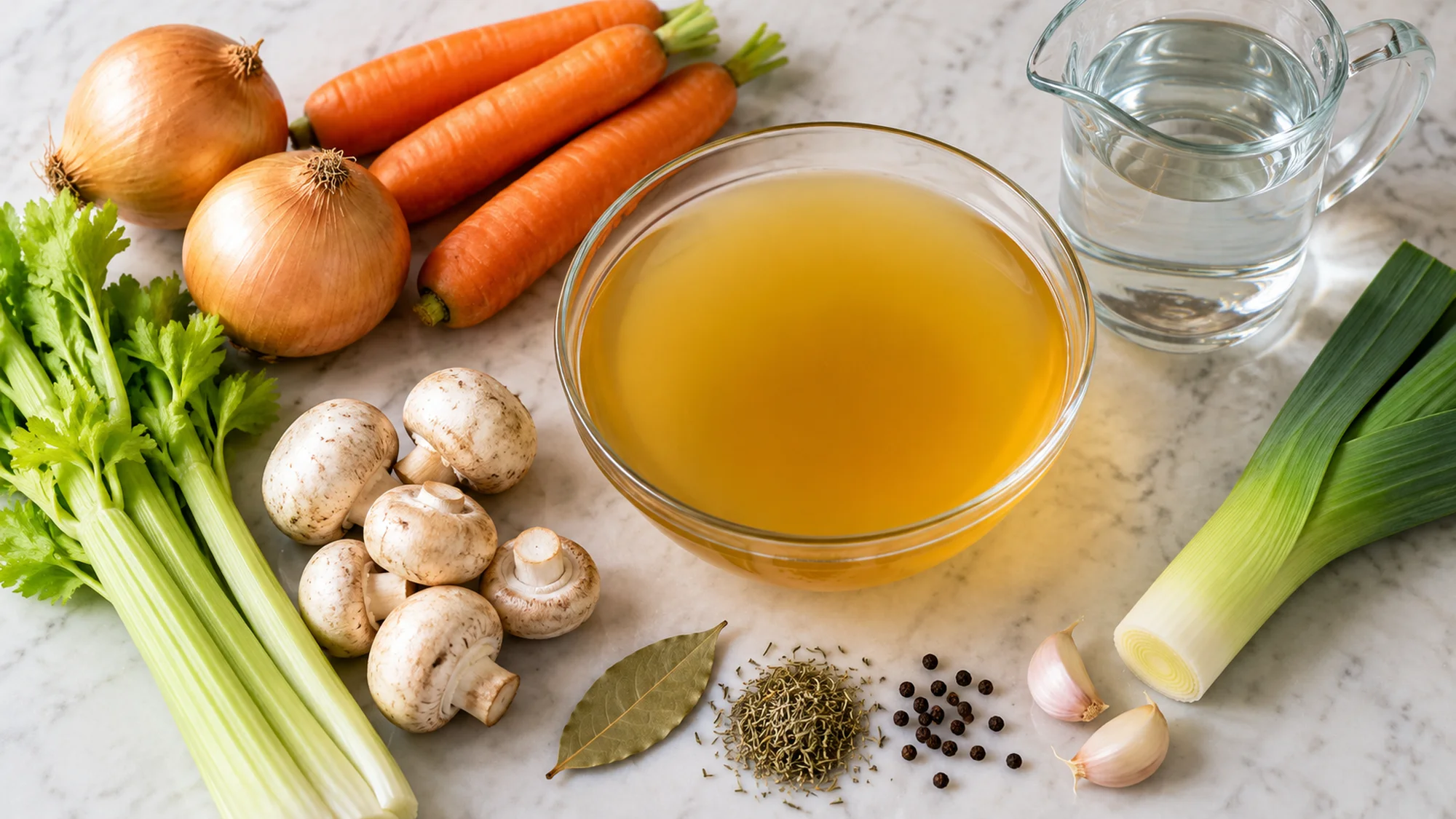
You do not need perfect knife cuts, but aim for pieces around 2–3 cm so the vegetables release flavor at a similar pace. Rinse the produce first and wash leeks carefully between their layers, where grit collects. Trim away damaged areas and discard anything spoiled. This recipe uses measured fresh vegetables rather than an unpredictable mixture of old scraps.
How to use vegetable stock
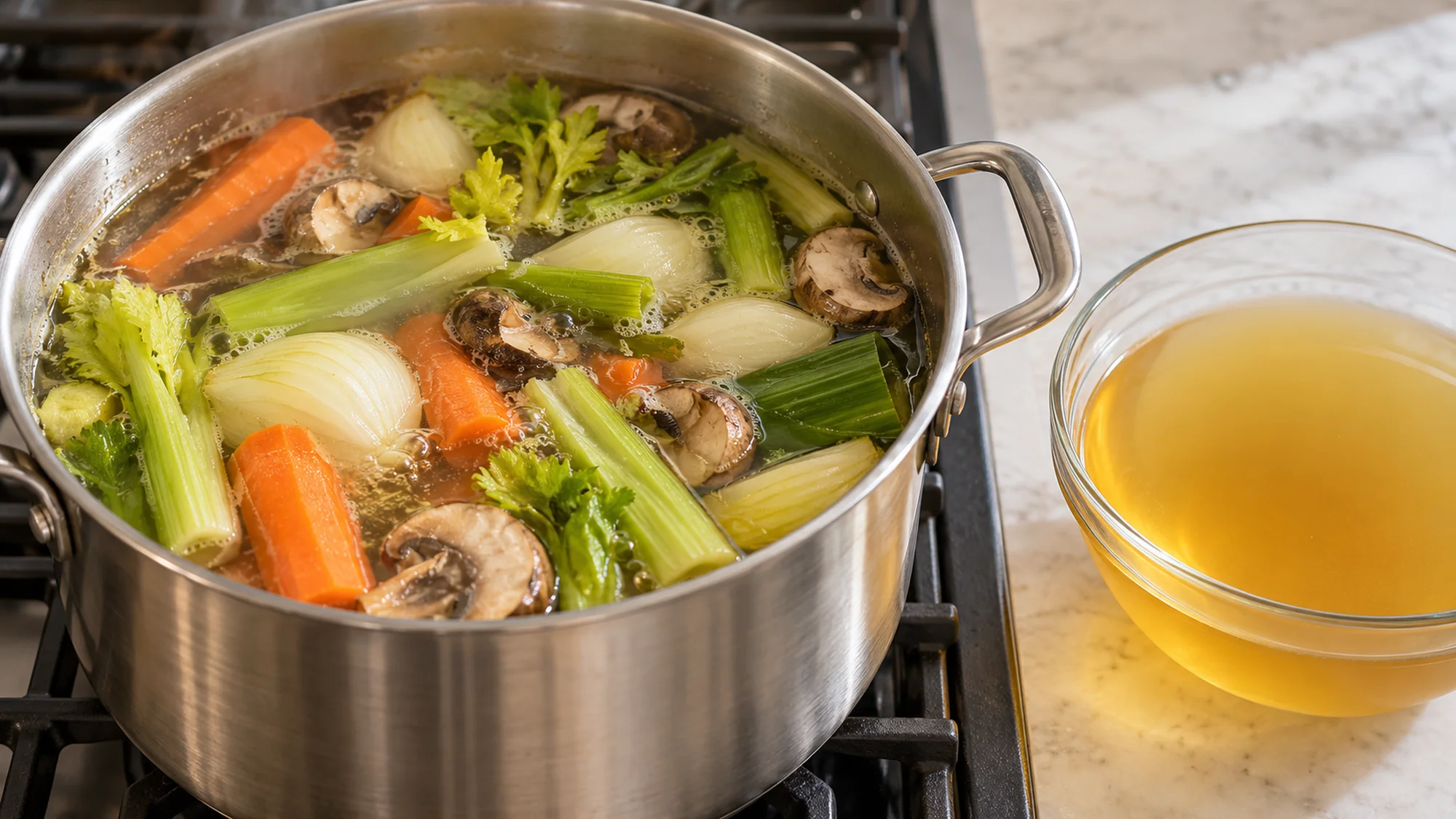
Put the vegetables, garlic, bay leaf, thyme and peppercorns in a pot with two liters of cold water. Bring just to a boil, then reduce the heat until small bubbles rise steadily. Simmer partly covered for about 45 minutes. The carrots should be soft and the liquid should taste gently savory. A violent boil is unnecessary and makes it harder to control evaporation.
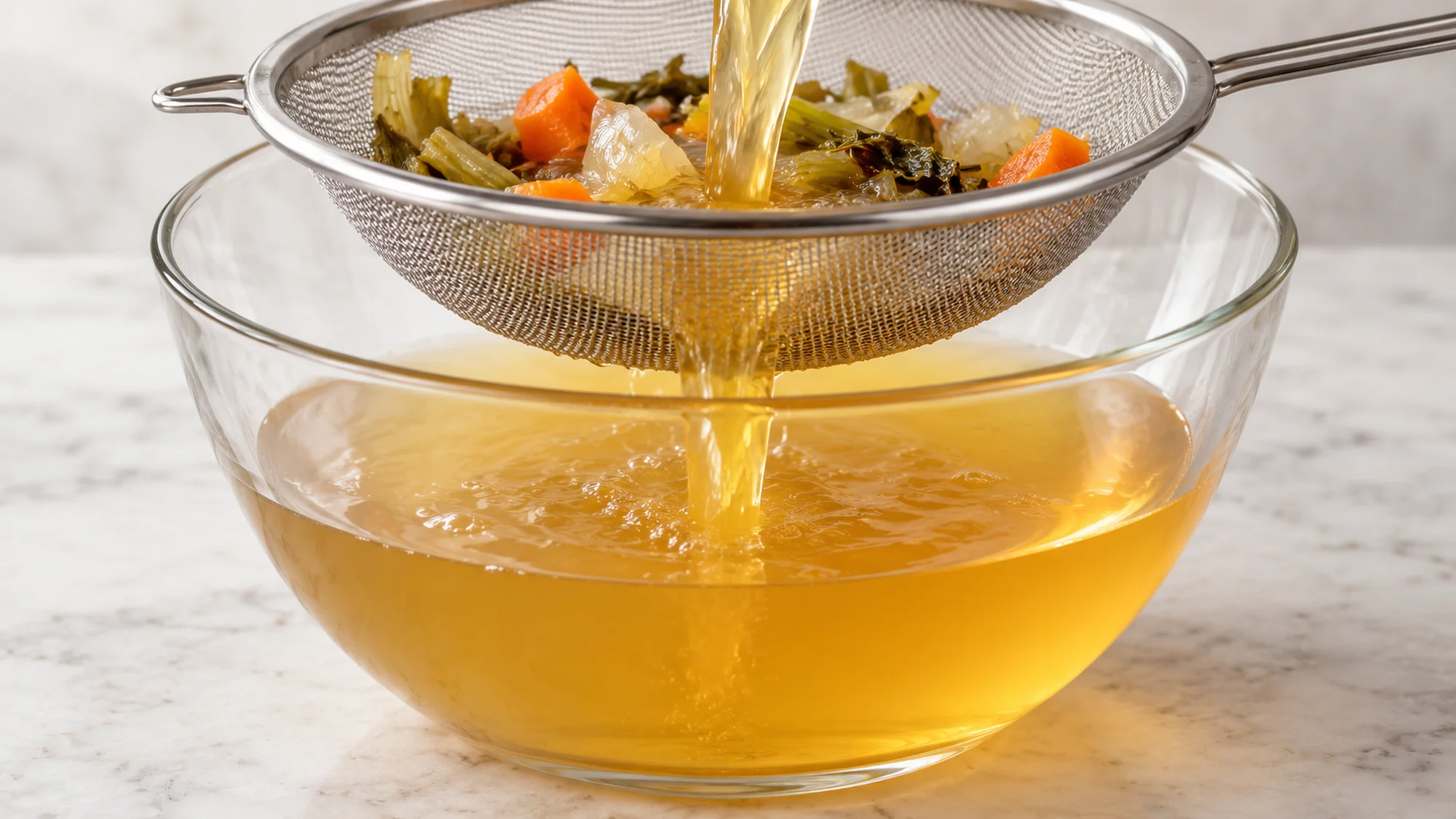
Set a fine-mesh strainer over a heatproof bowl or another pot and ladle the stock through it. Let the vegetables drain without forcing them through the mesh. Discard the spent solids. Measure the strained liquid: if it is short of 1.5 liters, add enough freshly boiled water to reach that amount; if there is extra, simmer it briefly to reduce before cooling.
Use it in vegetable soup, a pan sauce or a pot of lentils. It can replace stock in rice dishes such as chicken and chorizo paella, although changing the stock does not make a meat-containing dish vegetarian. Keep the stock unseasoned until you know its destination. A soup that reduces substantially needs less initial salt than one served with little further cooking.
| Amount | Useful for | Storage approach |
|---|---|---|
| Small cubes | Loosening sauces | Freeze in a clean food-safe tray, then bag |
| 250 ml | One measured recipe portion | Cool promptly in a shallow container |
| 500 ml | Soup or rice base | Divide before chilling rather than cooling a full pot |
How to Make Vegetable Stock With Different Vegetables
Mushrooms give this light stock a savory note without browning or added oil. If you omit them, the stock will taste milder. More carrot makes it sweeter; more celery can make its herbal flavor dominant. Small changes are easy to accommodate, but replacing every vegetable at once produces a different stock. Keep a note of what you used if you want to repeat a particular balance.
For a darker version, roast the vegetables first, then simmer them in fresh water. That adds cooking time and changes the color, so the card below stays with the simpler unroasted method. Avoid adding large amounts of cabbage or broccoli to this batch: their strong flavor can take over. Beetroot changes the color dramatically and is better reserved for a dish where that is intentional.
Do not treat stock as a way to rescue spoiled produce. FoodSafety.gov advises rinsing vegetables under running water rather than using soap or commercial produce washes. After straining, divide the liquid into shallow containers or cool the receiving bowl in an ice bath, stirring with a clean utensil. Refrigerate within two hours, or within one hour when the room is above 90°F/32°C.
Health benefits and nutrition limits
Homemade stock lets you choose when to add salt, which is useful when the next recipe also contains cheese, cured meat or another salty ingredient. It is not automatically sodium-free, because vegetables contain naturally occurring sodium. This strained liquid also does not provide the same fiber or nutritional value as eating the vegetables themselves. Add whole vegetables, beans or other substantial ingredients when building a meal.
The recipe card uses a representative prepared vegetable-stock label estimate for energy and macronutrients. It is a rough proxy for the strained liquid, not a calculation that assumes all the discarded vegetables are eaten. Sodium and micronutrients are omitted because extraction and ingredient variation make them uncertain. Keep refrigerated stock at 40°F/4°C or below, use within three days, or freeze portions for later.
Bottom Line
A useful vegetable stock needs a balanced selection of vegetables, a gentle simmer and careful cooling. Measure the yield after straining so future recipes start with a predictable amount. Label each container with the date and volume. When reheating refrigerated stock, bring it to a rolling boil before using it, following the leftover handling advice from Health Canada.
How to Make Vegetable Stock Recipe


Ingredients
- 250 g yellow onion peeled and cut into 2–3 cm pieces
- 200 g carrots scrubbed and cut into 2–3 cm pieces
- 150 g celery rinsed and chopped
- 100 g white mushrooms cleaned and quartered
- 100 g leek white and light green parts, washed between layers and chopped
- 2 garlic cloves about 6 g, peeled and lightly crushed
- 1 bay leaf
- 1 tsp dried thyme
- 0.5 tsp black peppercorns
- 2 liters cold water plus freshly boiled water to adjust the final yield if necessary
Equipment
- Large stockpot
- Fine-mesh strainer
- Heatproof bowl or second pot
- Measuring jug
- Shallow food storage containers
Instructions
- Rinse the vegetables under running water. Wash the leek thoroughly between its layers. Trim damaged areas and cut the vegetables into roughly 2–3 cm pieces.
- Put all ingredients into a large pot with 2 liters of cold water. Bring just to a boil, then reduce to a gentle simmer.
- Simmer partly covered for 45 minutes, until the vegetables are soft and the liquid tastes gently savory. Avoid a vigorous boil.
- Ladle through a fine-mesh strainer into a heatproof bowl or second pot. Let the vegetables drain without pressing them into the liquid. Discard the solids and bay leaf.
- Measure the liquid. Adjust to 1.5 liters with freshly boiled water if short, or briefly simmer to reduce excess liquid. Leave unsalted and season in the recipe where it will be used.
- Use immediately or divide into shallow containers and cool promptly, using an ice bath if helpful. Refrigerate within 2 hours, or within 1 hour above 90°F/32°C. Keep at 40°F/4°C or below and use within 3 days, or freeze. Bring refrigerated stock to a rolling boil when reheating.
Nutrition
Video
Notes
Tried this recipe?
Let us know how it turned out!Hi, I’m Emily Pocker! I share recipes and food guides here at Recipes360 to help you find everyday meal inspiration and feel more confident in the kitchen. My goal is to make cooking approachable, enjoyable, and full of flavor.