
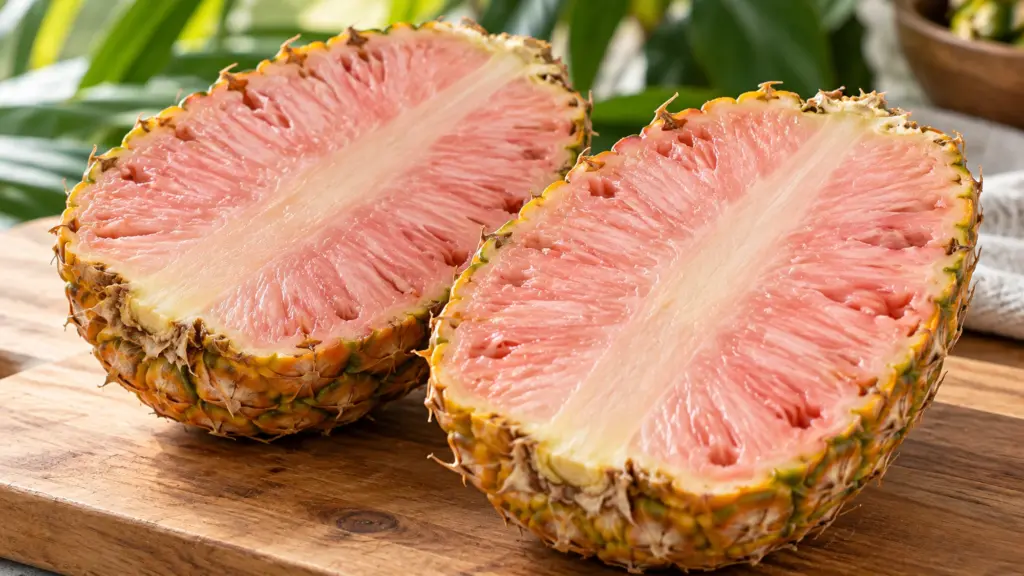
The outside looks familiar, then the knife reveals a rosy center. Pink pineapple is real fruit, not yellow pineapple soaked in dye: the Pinkglow variety was developed to retain more of a naturally occurring pink pigment. The useful questions are what changes in the fruit, what does not, and how to enjoy it without wasting an expensive purchase.
Pink pineapple gets its color from lycopene, not added pink dye. Treat it as a distinctive pineapple to enjoy, not as a proven nutritional upgrade over the yellow kind.
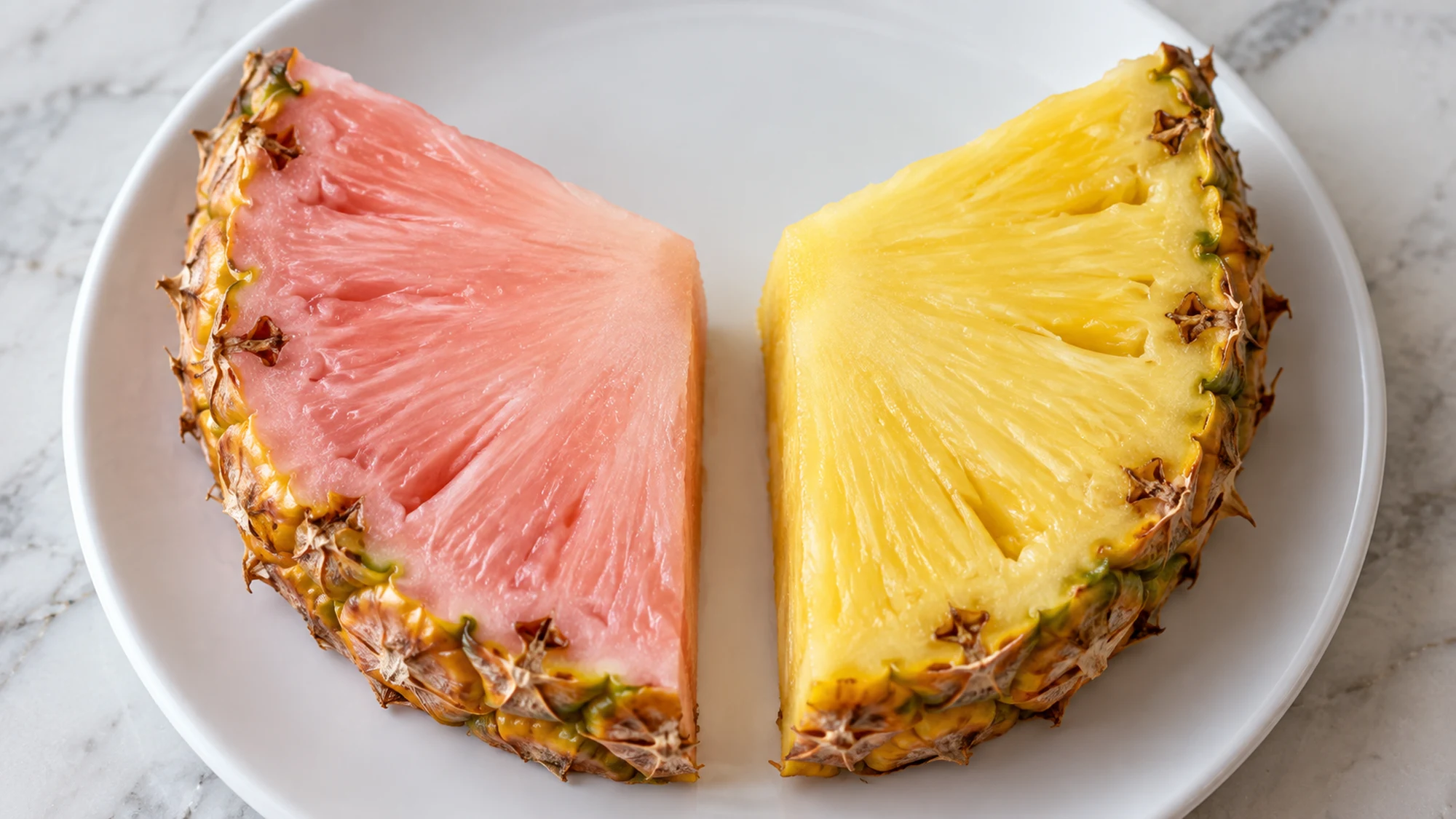
Why Pink Pineapple Has Rosy Flesh
In its 2016 consultation summary, the FDA explains that Del Monte’s pineapple was genetically engineered to reduce the enzymes that convert pink lycopene into yellow beta carotene. Lycopene is also the pigment associated with red tomatoes and pink watermelon. The change happens as the fruit grows; it is not a coloring step after harvest.
That makes two common claims worth separating: the pigment occurs in foods naturally, and this pineapple variety was developed through genetic engineering. Both can be true. Calling the fruit naturally colored should not hide how the variety was developed.
- It is still pineapple: the pink center does not make it a pineapple-watermelon cross.
- The color is a varietal trait: do not treat an ordinary yellow pineapple turning an unexpected color as the same product.
- Check the identity: use the retailer’s labeling and producer information rather than color alone.
The clearest explanation names both the pigment and the breeding technology instead of treating them as competing stories.
What to Expect From Pink Pineapple
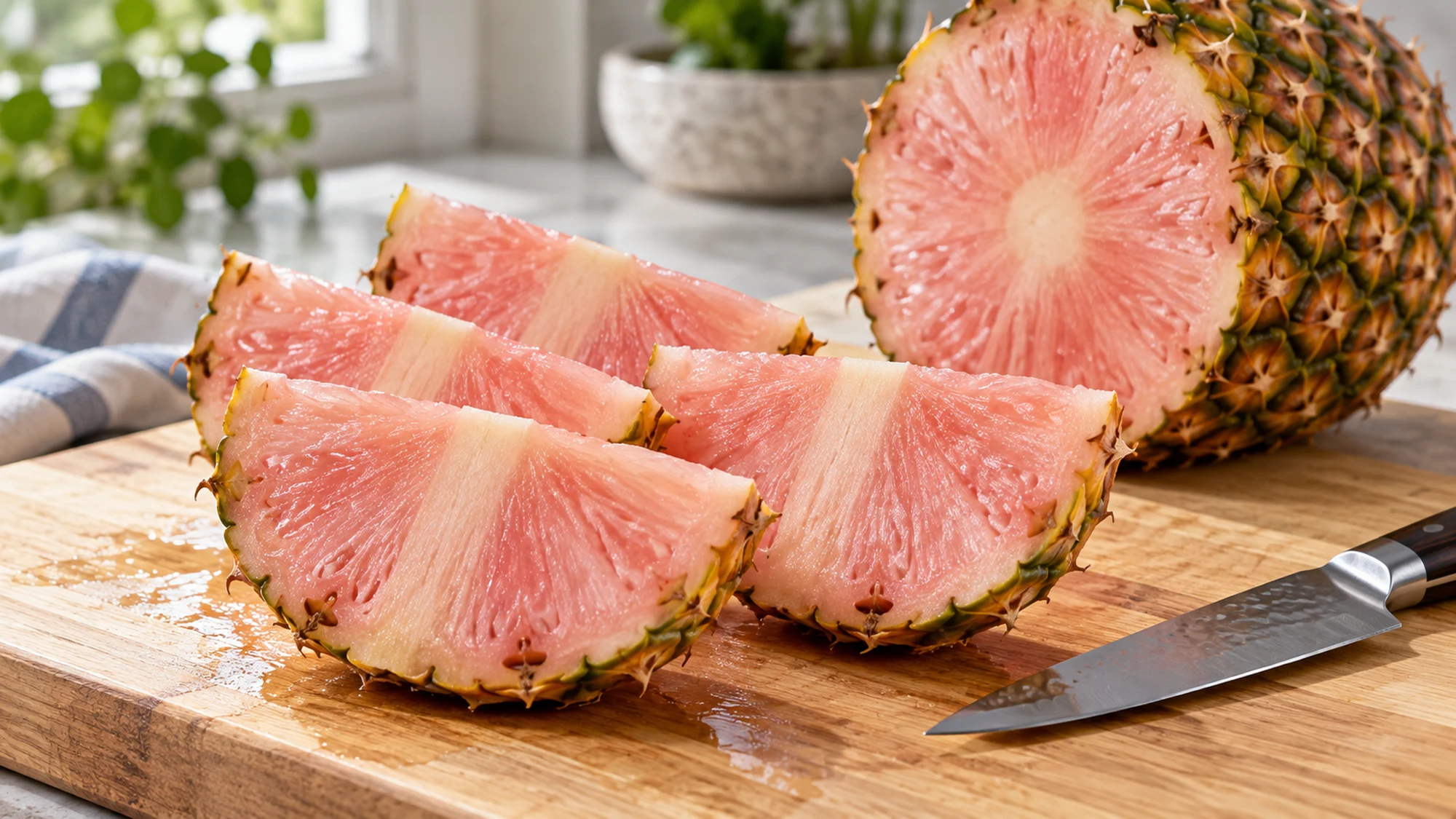
According to Fresh Del Monte’s Pinkglow FAQ, the fruit is grown in Costa Rica and is described as sweeter, juicier, and less sour than traditional pineapple. Those are the producer’s descriptions, not a guarantee that every fruit will taste identical or that everyone will prefer it.
I would taste a plain piece before adding lime, syrup, or a strong dressing. If you are buying it for its color, thick slices or simple chunks give that pale interior a chance to show. A dark berry smoothie may hide the very feature you paid extra for.
| Your plan | Pink pineapple makes sense when | Consider yellow pineapple when |
|---|---|---|
| Fruit platter | You want a visible rosy contrast | Color is not the priority |
| First taste | You are curious about this variety | You mainly want familiar pineapple flavor |
| Blended drink | Other ingredients let the color show | Dark ingredients will cover it |
| Everyday cooking | The novelty is worth the price to you | Budget and availability matter more |
Buy the pink variety for a flavor and presentation experience, not because a higher price proves better nutrition.
Is Pink Pineapple Safe to Eat?
The FDA’s review concluded there were no unresolved safety or regulatory questions about the submitted variety. Its consultation explanation explicitly distinguishes this process from FDA approval. That is a more precise description than saying the agency approved every pink pineapple sold in a store.
The review does not remove ordinary food risks or individual allergies. It also does not establish that eating this variety prevents disease. A pigment’s presence is not, by itself, a clinical benefit, and a less-sour taste does not mean someone with a pineapple allergy can safely eat it.
- Keep expectations ordinary: enjoy it as fruit rather than using it as a treatment.
- Respect an existing allergy: a different color is not an allergy workaround.
- Inspect the fruit: packaging and novelty do not excuse rot, damage, or poor handling.
Cutting and Storing Your Purchase
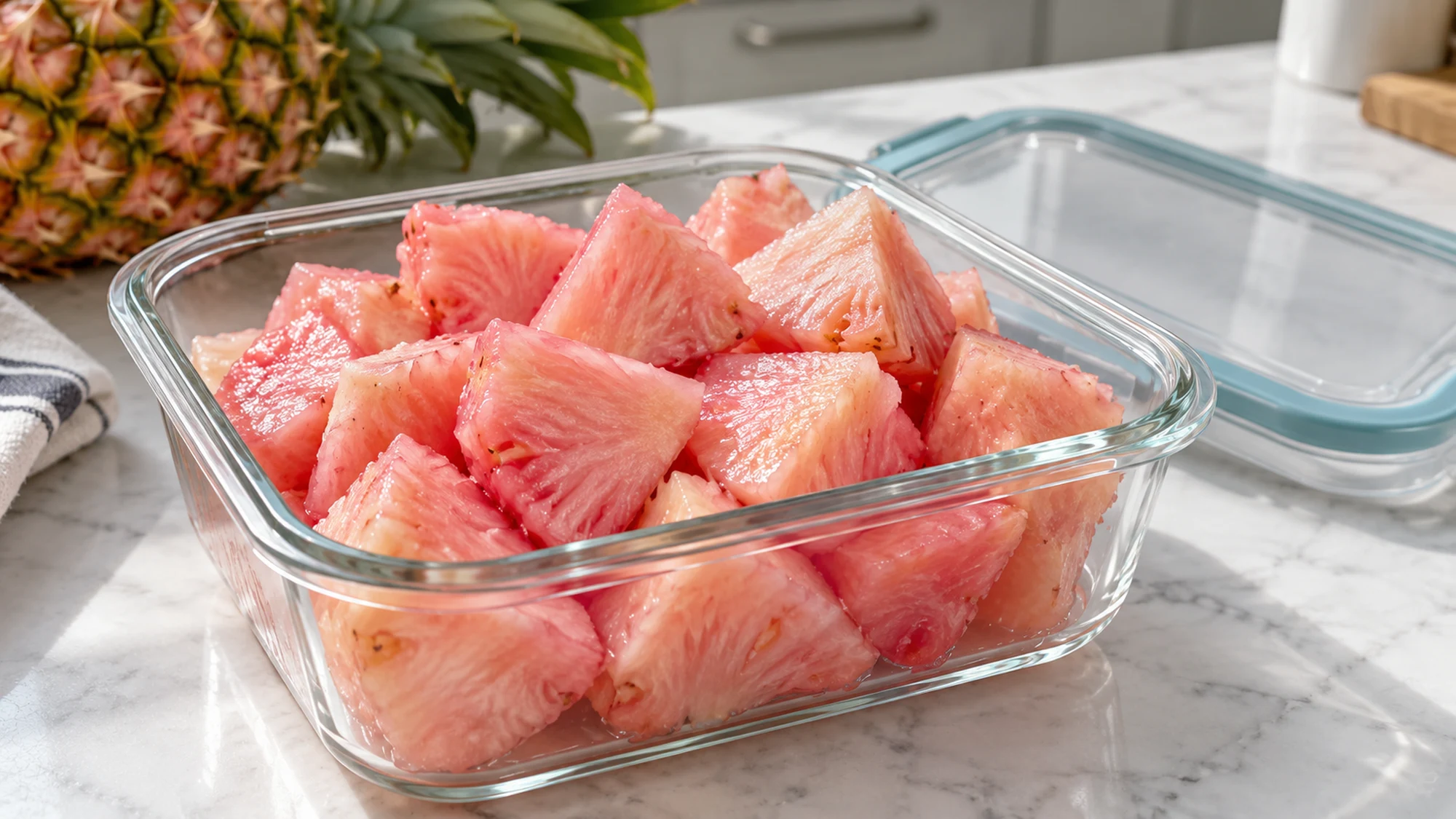
Pinkglow is commonly sold without its leafy crown; the producer says the crowns are removed for replanting. The missing crown is therefore not necessarily damage. Buy close to when you plan to serve it, and follow the package’s storage instructions rather than waiting for a dramatic change in appearance.
- Wash before cutting: FDA produce guidance says to rinse produce under running water even when you will discard its skin. Do not use soap or detergent.
- Use clean tools: start with a clean board and knife, and keep ready-to-eat fruit away from raw meat juices.
- Refrigerate the pieces: USDA guidance for cut fruit recommends covered containers and no more than two hours at room temperature. Keep the refrigerator at 40°F (4°C) or below.
- Plan the remainder: portion what you expect to eat soon; freeze extra pieces for a later blended drink rather than forgetting them behind other groceries.
For serving, I like the idea of a plain platter with a small bowl of lime wedges alongside, so each person can decide on tartness. The fruit is already doing the visual work; it does not need an elaborate costume.
Bottom Line
Pink pineapple is a genuine genetically engineered variety with a naturally occurring pink pigment. Choose it when its color and character appeal to you, keep health claims modest, and handle the cut fruit as carefully as any other fresh pineapple.
Blue Book Services’ comparison below offers one tasting perspective on Pinkglow and Honeyglow; preferences and individual fruit will vary.
Sources
- FDA: Pink-flesh pineapple consultation
- Fresh Del Monte: Pinkglow frequently asked questions
- FDA: Selecting and serving produce safely
- USDA: Storing cut fruit and vegetables

Hi, I’m Emily Pocker! I share recipes and food guides here at Recipes360 to help you find everyday meal inspiration and feel more confident in the kitchen. My goal is to make cooking approachable, enjoyable, and full of flavor.