
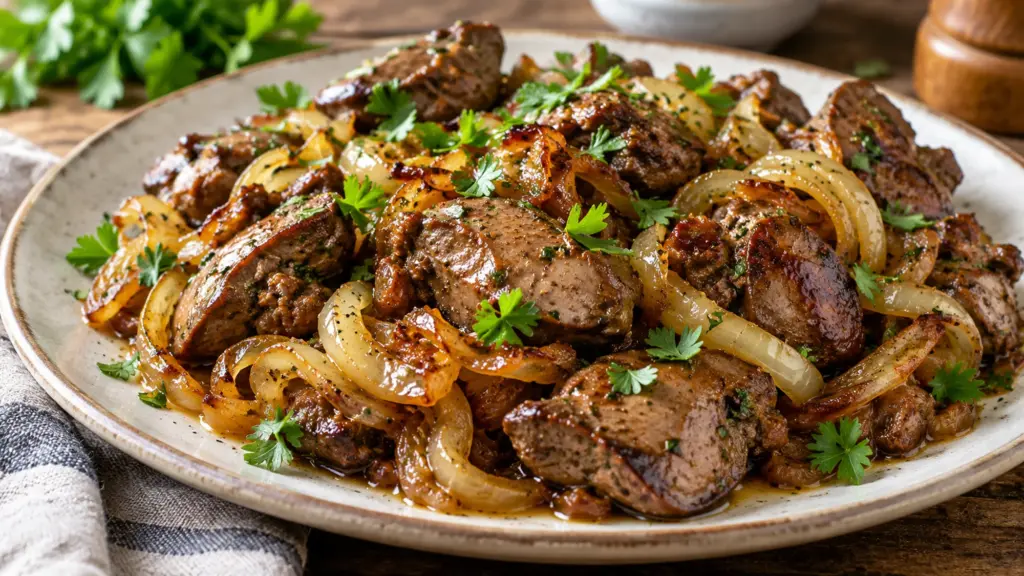
Chicken liver can be richly savory with sweet onions or blended into a smooth pâté, but its tenderness sometimes leads to the wrong cooking advice. This is poultry, not a steak that can be ordered rare. A food thermometer matters more than the color in the pan.
Cook chicken liver all the way through to 165°F (74°C). It is also very rich in vitamin A, so more is not automatically better; people who are pregnant should avoid liver and liver products under NHS guidance.
I would approach it as a strongly flavored ingredient to enjoy occasionally, not a daily nutritional shortcut. The useful questions are how to handle it, how to check doneness, and whether it suits the people at your table.
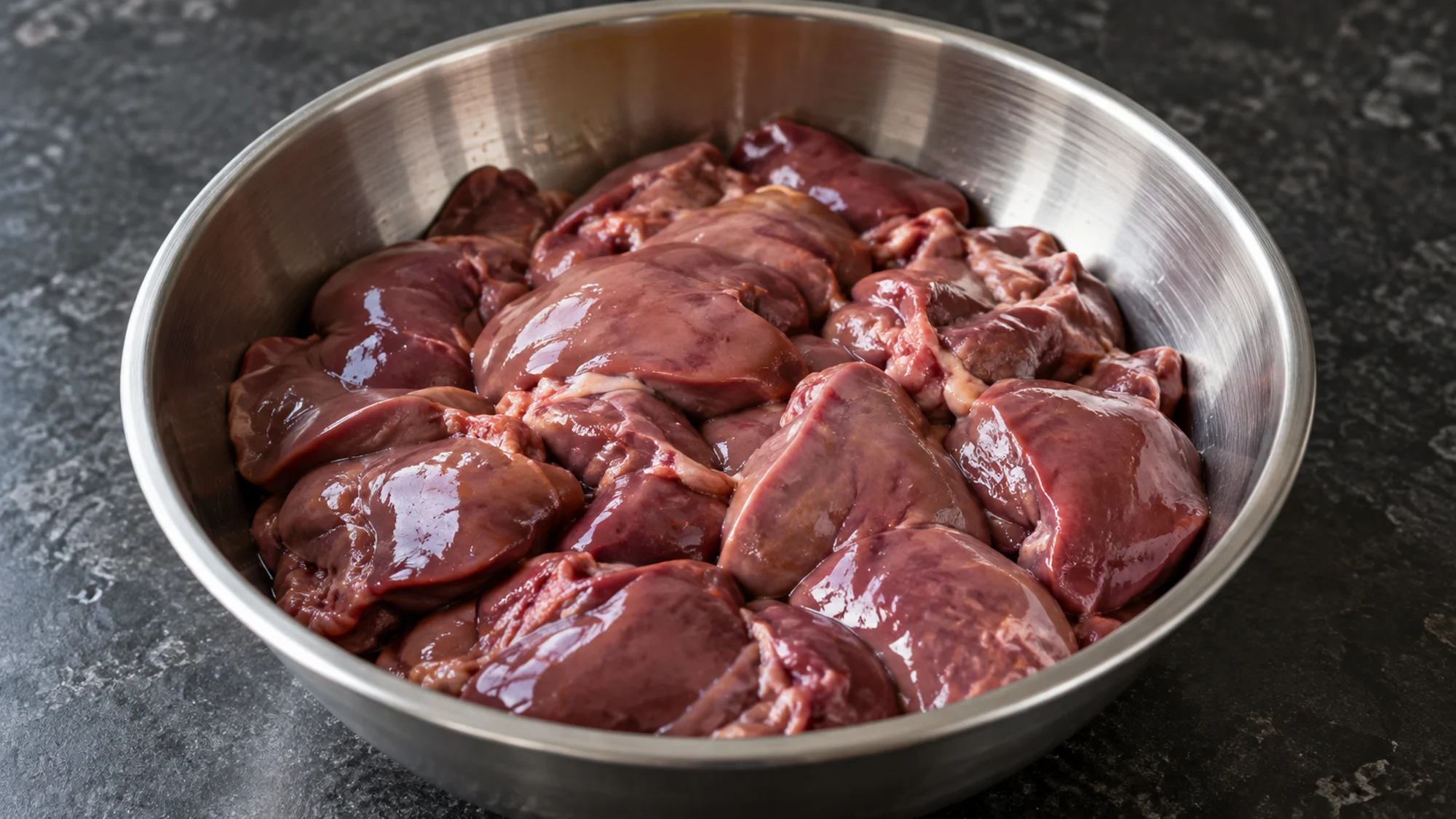
Chicken Liver Needs Thorough Cooking
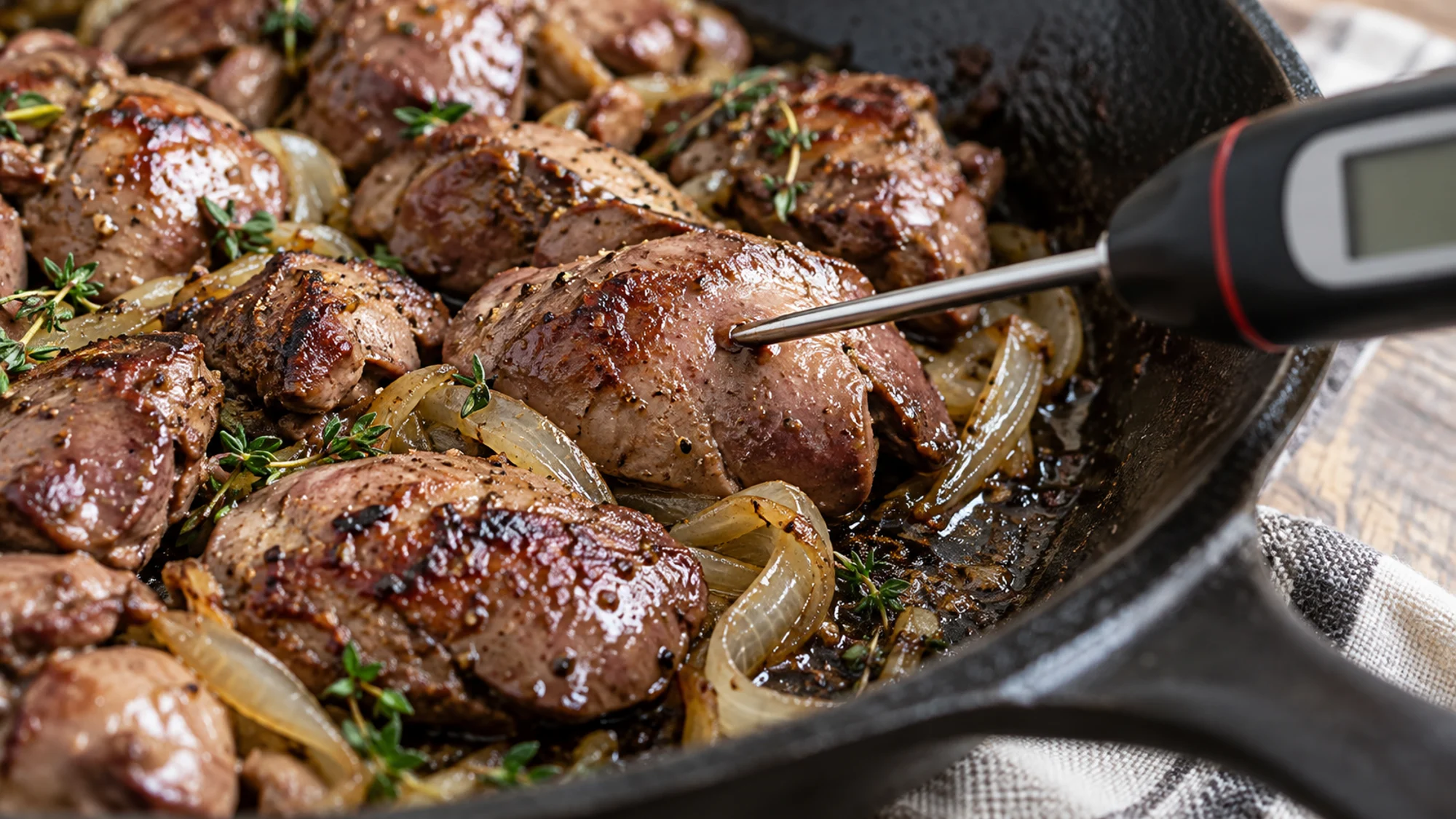
The CDC’s chicken-liver guidance explains that Campylobacter can live inside the organ, not just on its surface. Quickly browning the outside therefore cannot establish safety. The center needs to reach 165°F (74°C), including when the liver will later become pâté.
- Measure the thickest part: insert a suitable thin-tip thermometer so its sensing area reaches the center, without touching the pan. Check several pieces when sizes differ.
- Do not use pinkness as a target: appearance is not a reliable substitute for a temperature reading. A recipe promising a rare center conflicts with this safety guidance.
- Keep cooked food separate: use a clean plate and utensils rather than returning cooked liver to a dish that held it raw.
Browning supplies flavor; a measured safe internal temperature supplies the doneness check. You need both jobs covered.
Keep Vitamin A in Perspective
Liver is an unusually concentrated source of preformed vitamin A, also called retinol. The NHS vitamin A guidance advises against liver or liver products more than once a week and warns that supplements can add to the total. That frequency is a general caution, not a prescribed serving for every person.
- Pregnant or planning pregnancy: avoid liver and liver products and discuss supplement ingredients with your maternity clinician. Cooking does not remove the vitamin A concern.
- Already taking supplements: check whether a multivitamin or fish-liver oil contains vitamin A before making liver a regular habit. Do not stop prescribed treatment without advice.
- Managing a diagnosed deficiency: liver is not a replacement for testing, an explanation for fatigue, or a treatment plan. Different deficiencies need different care.
I would be especially wary of advice that treats a larger serving as a better serving. Nutrient concentration is a reason to pay attention, not a competition to win.
A nutrient-rich food can still need limits. Pregnancy and vitamin A supplements deserve a separate check before liver goes on the menu.
A Practical Handling and Storage Reference
Buy liver from a refrigerated display, keep it cold on the trip home, and store it where juices cannot drip onto ready-to-eat food. USDA advises using or freezing raw poultry and variety meats within one to two days of purchase. Follow an earlier package use-by instruction when provided.
| Situation | Practical action | Why it matters |
|---|---|---|
| Raw liver in the refrigerator | Use or freeze within 1–2 days; keep at 40°F (4°C) or below | A short cold-storage window |
| Preparing it | Do not rinse raw poultry; keep equipment separate | Avoid spreading raw juices |
| Checking doneness | Measure 165°F (74°C) in the center | Color alone is not a safety test |
| Cooked leftovers | Refrigerate promptly; use within 3–4 days | Cold storage does not last indefinitely |
USDA does not recommend washing poultry, because splashes can spread bacteria around the kitchen. If trimming is needed, use a clean board and knife, contain the raw juices, and wash hands and equipment afterward. Thaw frozen liver in the refrigerator rather than on the counter.
Plan the cooking day when you buy it, and keep raw handling separate from the food that is ready to serve.
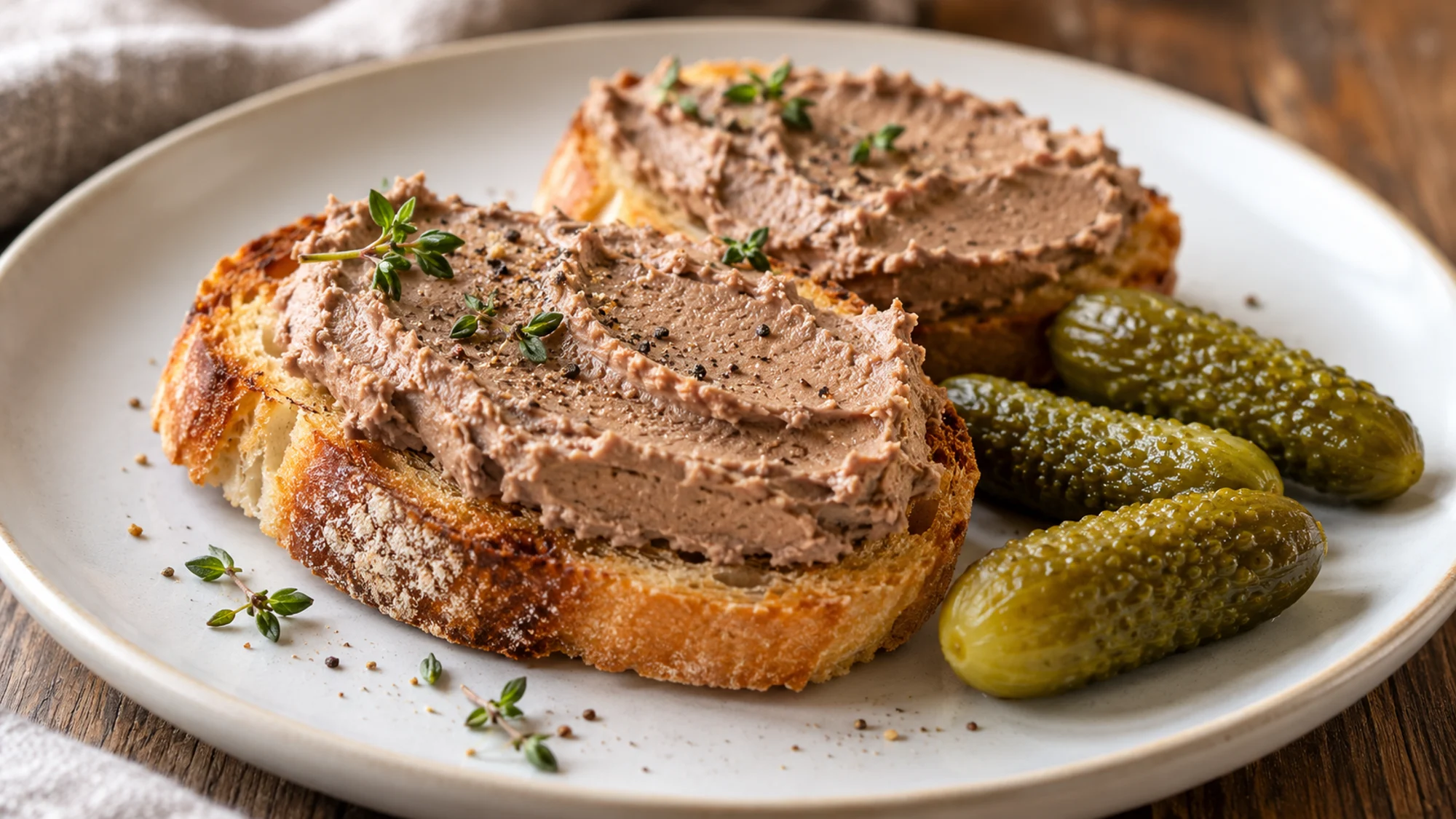
Make the Flavor Work Without Undercooking
Its deep, slightly mineral flavor benefits from contrast. Sweet cooked onions, a little acidity, and a crisp accompaniment can make the plate feel more balanced without trying to disguise the ingredient. Texture matters, but it is never a reason to skip the thermometer.
- For a warm plate: pair cooked liver with onions and a simple starch, then add a crisp vegetable side.
- For pâté: follow a trustworthy method that cooks the liver safely before blending. Smoothness can come from blending and the recipe’s fat, not a raw center.
- For newcomers: start with a small serving to learn whether the flavor appeals to you. You do not need to like every ingredient with a nutritional reputation.
Bottom Line
Chicken liver deserves careful cooking and sensible context: reach 165°F (74°C), prevent cross-contamination, and account for its concentrated vitamin A. Avoid it during pregnancy, and choose portions and frequency with your circumstances in mind.
USDA’s food-thermometer demonstration explains the temperature-checking skill behind safe poultry cooking. Use the chicken-liver target given above, rather than temperatures for other meats.
Sources
- CDC: Cooking chicken liver safely
- NHS: Vitamin A and liver
- USDA: Refrigerator storage for raw meats
- USDA: Why not to wash poultry
- FoodSafety.gov: Safe internal temperatures
- FoodSafety.gov: Cold food storage chart

Hi, I’m Emily Pocker! I share recipes and food guides here at Recipes360 to help you find everyday meal inspiration and feel more confident in the kitchen. My goal is to make cooking approachable, enjoyable, and full of flavor.