
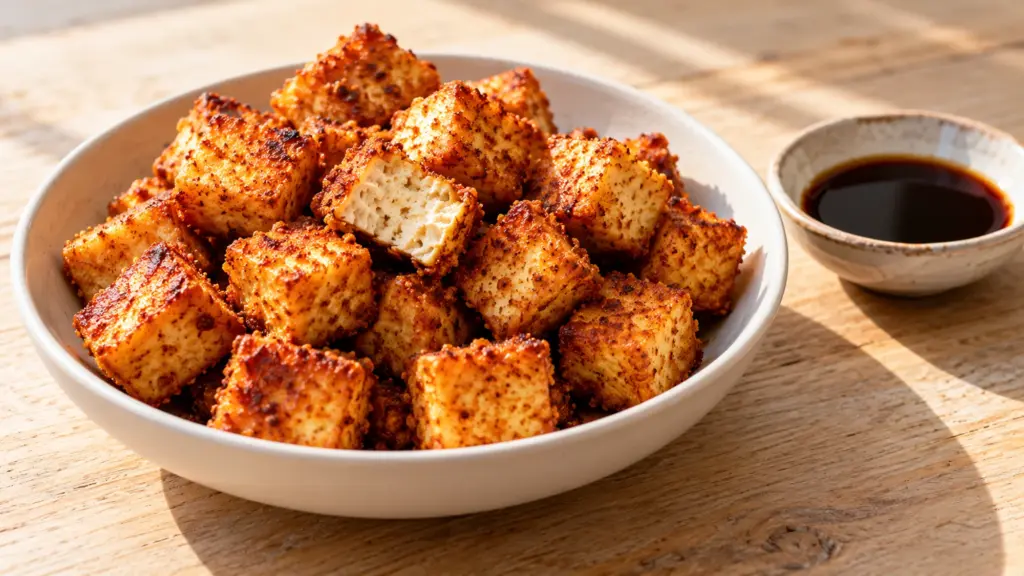
A tray of tofu can brown at the corners while the middle pieces stay pale and damp. Crispy baked tofu needs a drier surface, a light starch coating, and enough space for oven heat to reach the cubes. This version uses extra-firm tofu with a little soy sauce, oil, and seasoning, then leaves the sauce for the table instead of soaking the finished crust.
Drain and press the tofu, pat it dry, and add the cornstarch after the liquid seasonings. Spread the pieces apart on the baking sheet so the coating can set and the edges can brown.
Serving Suggestions for Crispy Baked Tofu
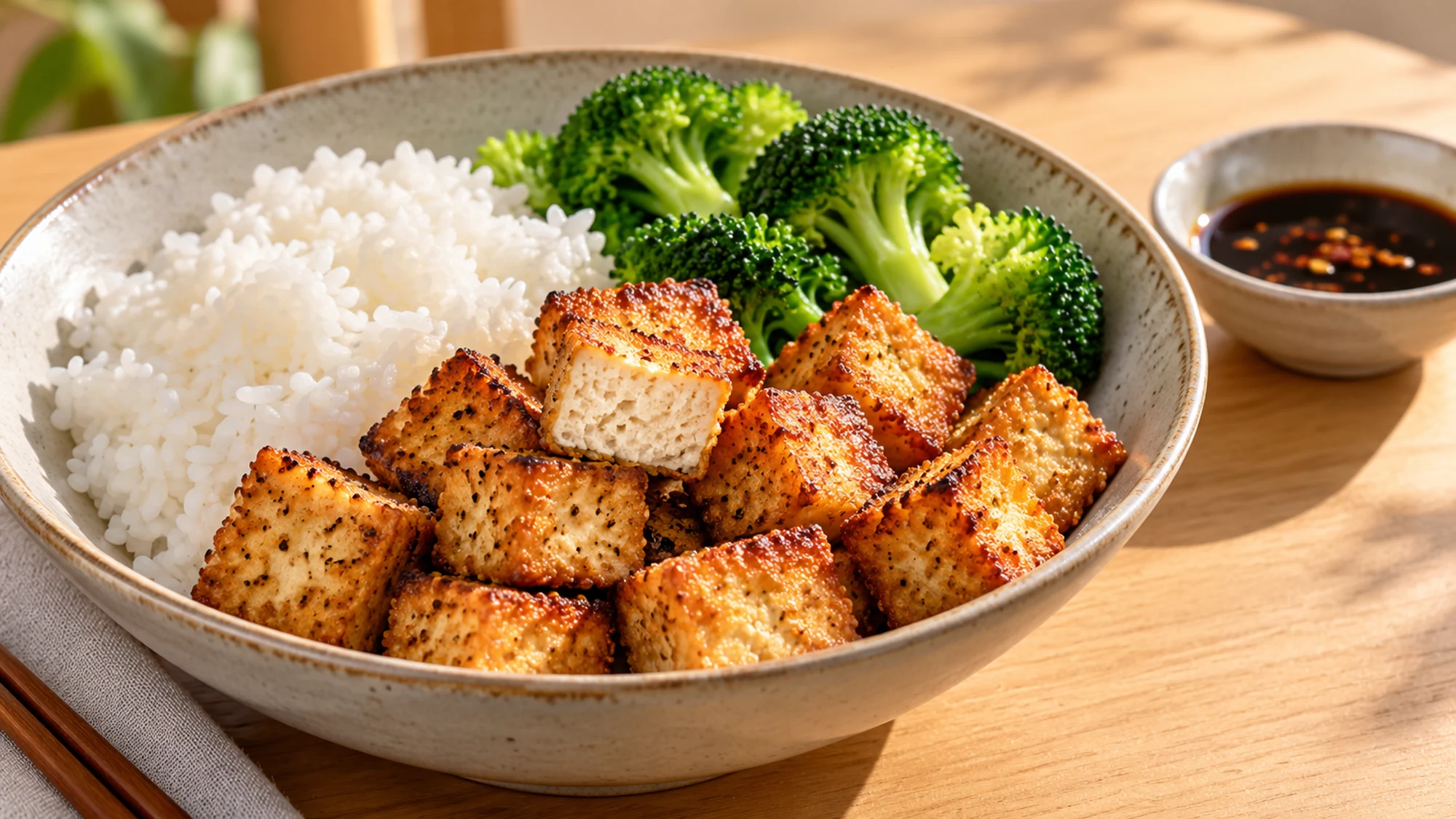
Serve the tofu soon after baking, when the corners are firmest and the centers remain tender. I’d add it to a bowl at the last moment rather than bury it under a hot sauce while the rest of dinner catches up.
- Build a rice bowl with steamed broccoli, cucumber, or another vegetable you enjoy. Rice, vegetables, and dipping sauces are not included in the card’s estimate.
- Set a small dipping bowl alongside an appetizer portion so each piece is coated only when someone is ready to eat it.
- A little carrot ribbon salad offers a cool, sharp contrast to the warm cubes without another hot cooking step.
- Keep finished pieces in one layer until plating. A deep covered bowl traps steam and softens the coating.
| Serving approach | Texture to expect | Best timing |
|---|---|---|
| Dip alongside | Firmer exposed edges | At the table |
| Light drizzle | Some crisp edges remain | Just before eating |
| Toss in warm sauce | Softer coated surface | Serve immediately |
Let the tofu finish the bowl rather than wait underneath it. Keep sauce separate until serving if the dry, crisp edges are your priority.
Variations and Coating Decisions
Extra-firm tofu is the starting point for this method because it holds its shape during pressing and turning. House Foods’ extra-firm tofu guidance recommends pressing, a light cornstarch coating, and space on the pan. I’d focus on those details before collecting a long list of seasonings; extra spice cannot dry a wet surface.
- Use a tofu press or a stable weighted plate, and stop if the block starts crushing. The goal is draining, not flattening it beyond recognition.
- Pat the cut surfaces dry after pressing.
- Keep the starch layer light and evenly distributed. A dusty white patch is excess dry coating, not a promise of extra crunch.
- Try a small pinch of smoked paprika or chili powder for a different finish. Check blended seasonings for salt and allergens.
- A labeled gluten-free tamari can replace soy sauce when appropriate, but inspect the tofu, starch, and other ingredients too.
Firm tofu can work, but brands differ in water content and how easily they break. Silken tofu is designed for a different texture and will not behave like these cubes. If a piece sticks during turning, give it a little more time for the underside to set rather than scraping hard enough to tear away the coating.
Choose a sturdy tofu, remove surface moisture, and keep the coating thin. Give the underside time to set before turning, then judge the browned edges rather than a timer alone.
Health Benefits and Portion Choices
Tofu contributes plant protein, while the measured oil and starch add fat and carbohydrate to the finished serving. Harvard’s Nutrition Source describes soy as a source of complete protein, but that does not turn one tray of tofu into a complete meal. Vegetables, grains, and the rest of the day’s food still matter.
- Use your tofu package for a closer nutrition calculation. Extra-firm brands vary in protein, fat, water, and calcium content.
- The estimate includes the listed oil, starch, and soy sauce. Extra dipping sauces can change sodium and energy substantially.
- Contains soy; ordinary soy sauce may also contain wheat. Check labels for any dietary or allergy requirement.
- Keep uncooked tofu refrigerated according to its package directions and use clean utensils and a clean board.
- Follow FoodSafety.gov’s two-hour refrigeration limit, shortened to one hour when temperatures exceed 90°F (32°C).
Refrigerate baked leftovers in a shallow covered container at 40°F (4°C) or below and use within three days. Reheat to 165°F (74°C), then serve promptly. An oven can help firm the surface again, but refrigerated tofu will not necessarily have the exact texture of a fresh tray, especially after it has been dressed.
Treat tofu as a useful protein component, count the coating and sauce, and keep storage straightforward. A measured portion and a varied bowl are more useful than an exaggerated health claim.
Bottom Line
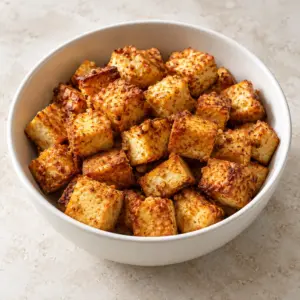
Crispy baked tofu comes from moisture control, a light coating, and space on the pan. Press gently, dry the cubes, and add sauce at serving. Look for browned edges and a tender center, then enjoy it while the surface is still firm.
Crispy Baked Tofu Recipe

Ingredients
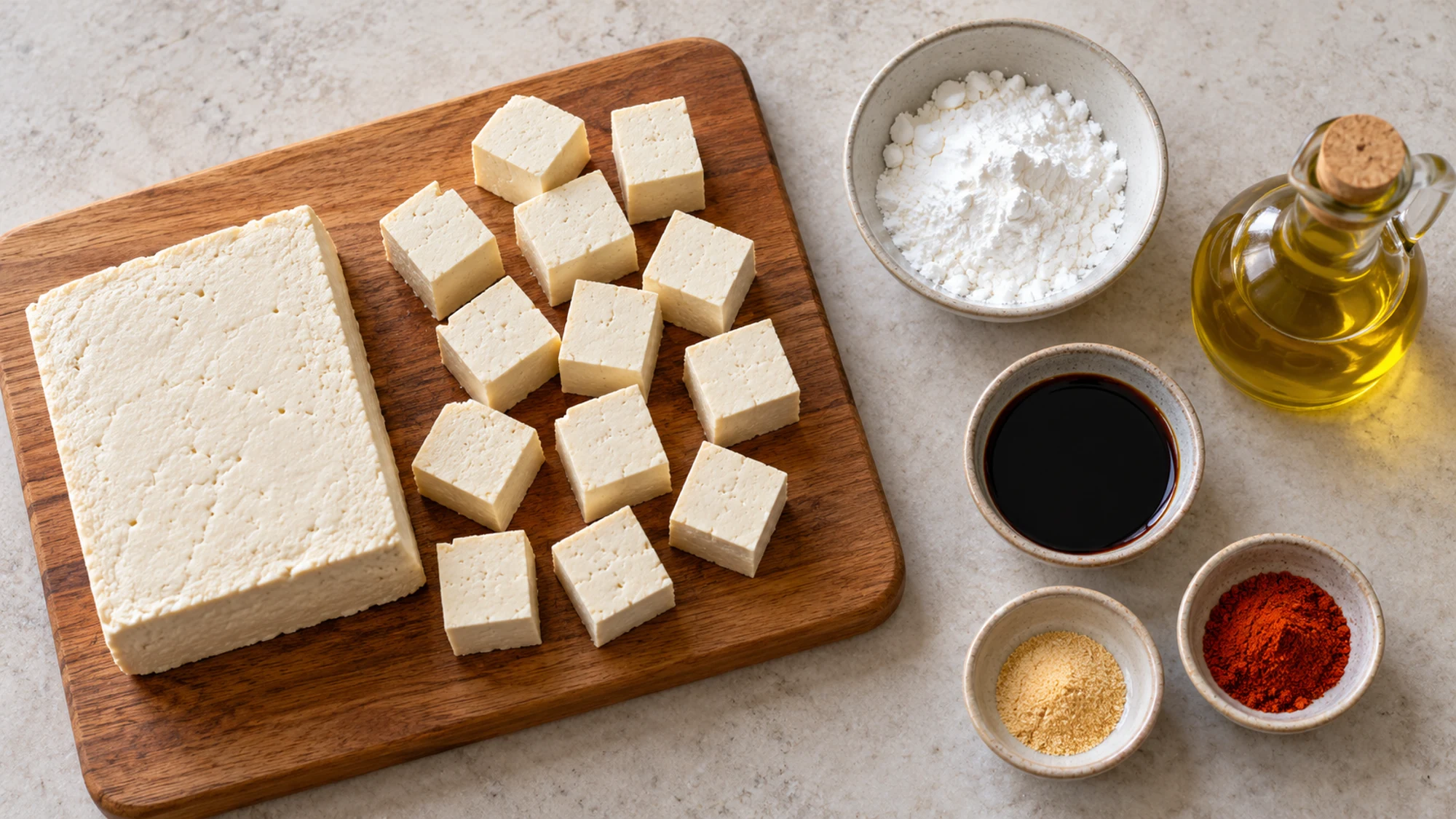
- 450 g extra-firm tofu drained
- 20 g cornstarch
- 1 tablespoon olive oil 14 g
- 1 tablespoon reduced-sodium soy sauce 15 ml
- 1/2 teaspoon garlic powder about 1.5 g
- 1/2 teaspoon smoked paprika about 1 g
Equipment
- Tofu press or stable weighted plate
- Clean towel or paper towels
- Large mixing bowl
- Large rimmed baking sheet
- Oven-rated parchment paper
- Wide spatula
Instructions
- Wrap the drained tofu in a clean towel or paper towels. Press gently under a stable weighted plate, or use a tofu press, for 20 minutes. Avoid crushing the block.
- Heat the oven to 425°F (220°C). Line a large rimmed baking sheet with parchment rated for that temperature.
- Cut the pressed tofu into 3/4-inch (2 cm) cubes and pat the surfaces dry. Toss gently in a bowl with the oil, soy sauce, garlic powder and paprika.
- Sprinkle over the cornstarch and fold gently until a light, even coating clings to the pieces. Break up any dry starch pockets without crushing the cubes.
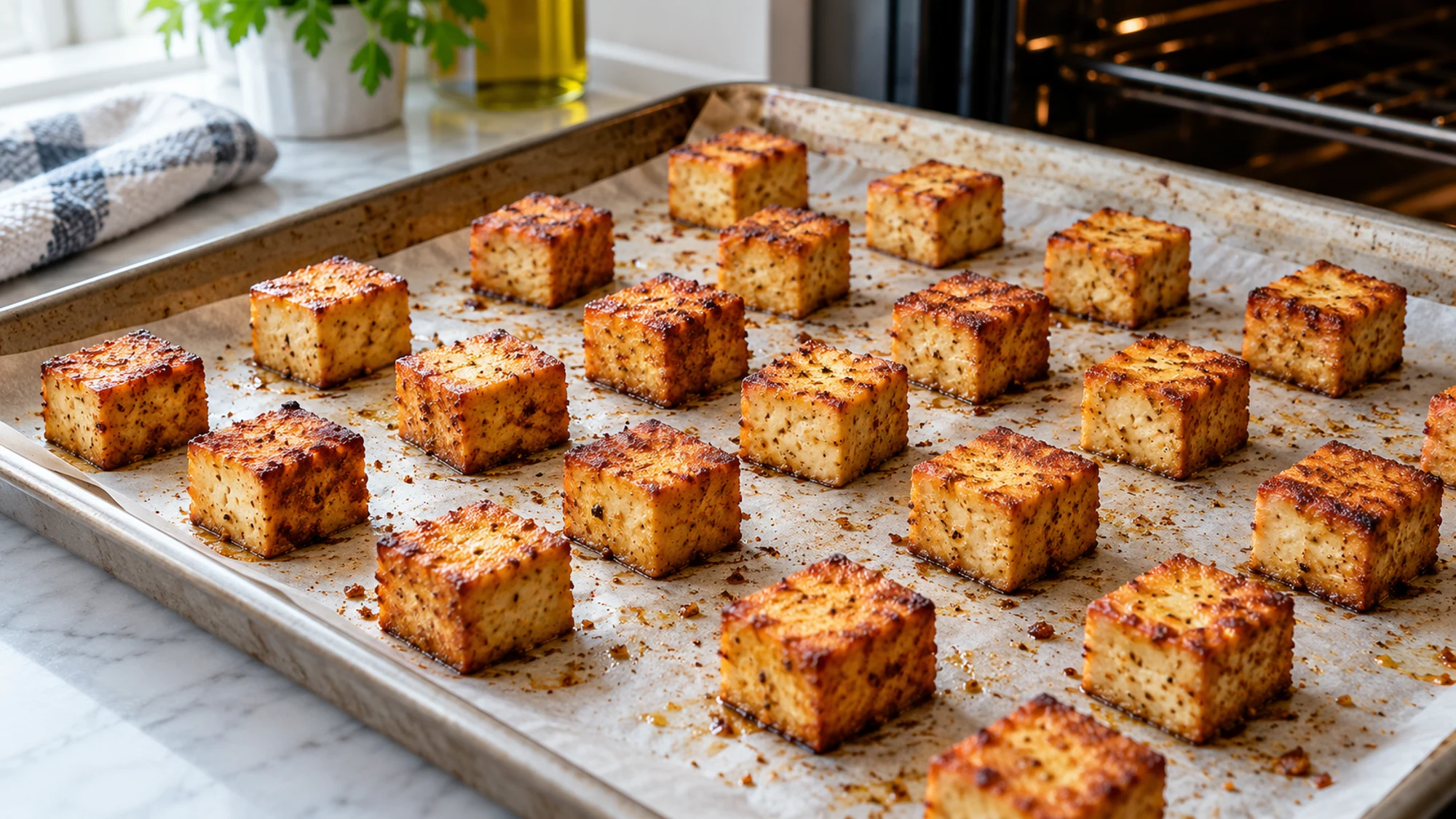
- Arrange on the baking sheet in a single layer with space between pieces. Bake for 30–35 minutes, turning carefully about halfway, until the edges are golden and the coating is set. Allow a little extra time if needed, watching to prevent scorching.
- Serve promptly in 4 side portions, with any sauce alongside or added just before eating. Rice, vegetables and dipping sauces are optional and excluded from the estimate.
Nutrition
Video
Notes
Tried this recipe?
Let us know how it turned out!Hi, I’m Emily Pocker! I share recipes and food guides here at Recipes360 to help you find everyday meal inspiration and feel more confident in the kitchen. My goal is to make cooking approachable, enjoyable, and full of flavor.