
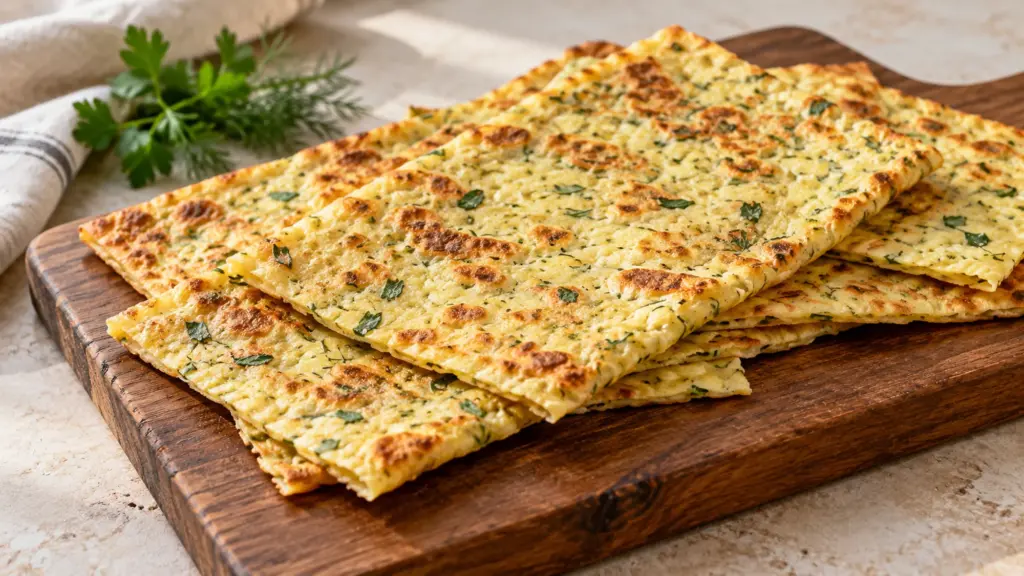
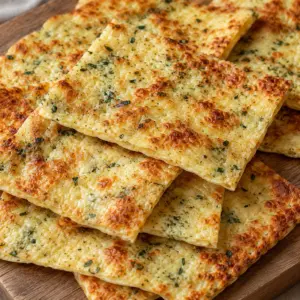
A batter made from cottage cheese and eggs looks very different from a ball of bread dough. This cottage cheese flatbread sets into a thin sheet in the oven, with golden edges and a tender center. It contains no flour or yeast, so its texture belongs to the egg-and-cheese mixture rather than a traditional kneaded flatbread.
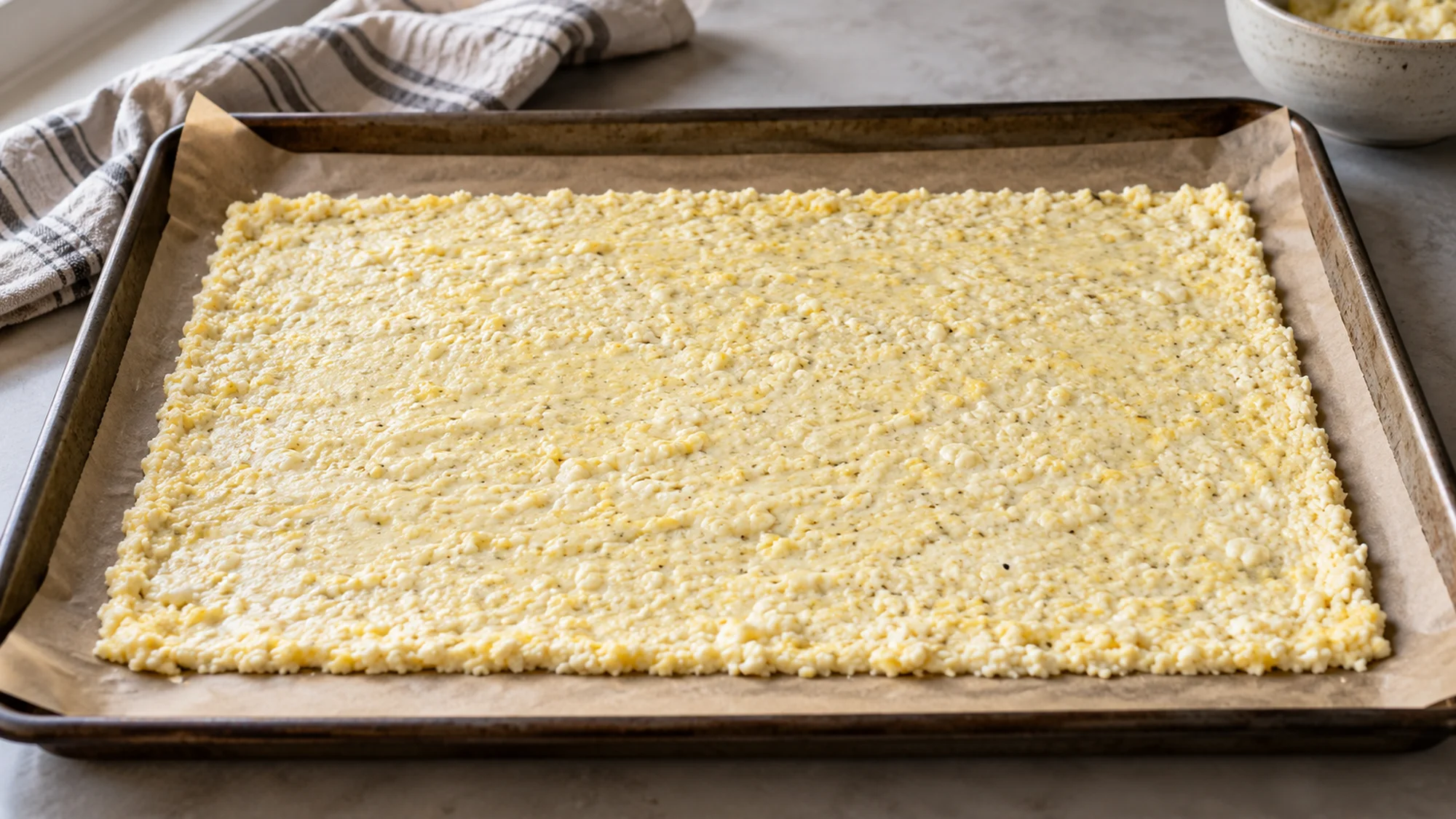
Blend the cottage cheese and eggs, spread the mixture evenly on well-greased parchment and bake until set through. Let it cool briefly before peeling away the paper. Thin edges dry first, so an even rectangle matters more than an impressive shape, and a pale wet center needs additional cooking time.
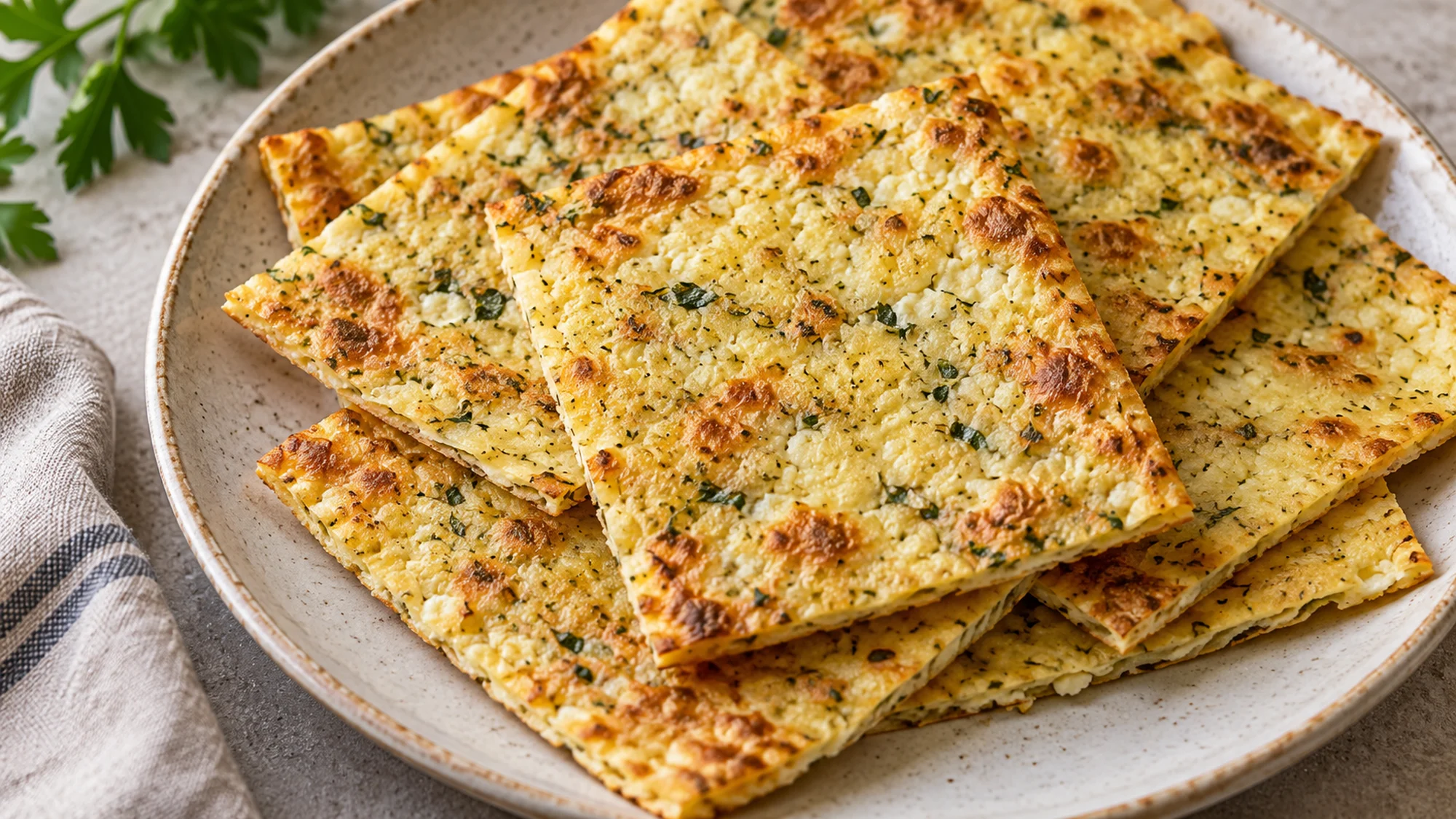
Serving Suggestions for cottage cheese flatbread
Cut the sheet into two larger portions or smaller rectangles, depending on how you plan to serve it. Keep moist fillings modest, and add them close to eating time. A flexible center can hold a light filling, but an overbaked brittle edge will not suddenly become a sturdy sandwich wrap when rolled tightly.
I’d begin with cucumber, lettuce and a thin layer of a spread you enjoy rather than a tall stack of wet ingredients. Cold coronation chicken is another possible filling. The flatbread’s card nutrition covers the base alone, so fillings are additional.
- For a wrap: start with a light filling and fold gently rather than pulling tightly.
- For a platter: cut smaller rectangles after the sheet has cooled enough to release.
- For packed lunches: keep particularly wet fillings separate until you are ready to eat.
For later use, cool and refrigerate the flatbread promptly, placing parchment between pieces if stacking. Use within three to four days and reheat saved portions to 165°F (74°C). Expect the texture to change with chilling and reheating; a stored sheet may be less flexible than one served shortly after baking.
Variations for cottage cheese flatbread
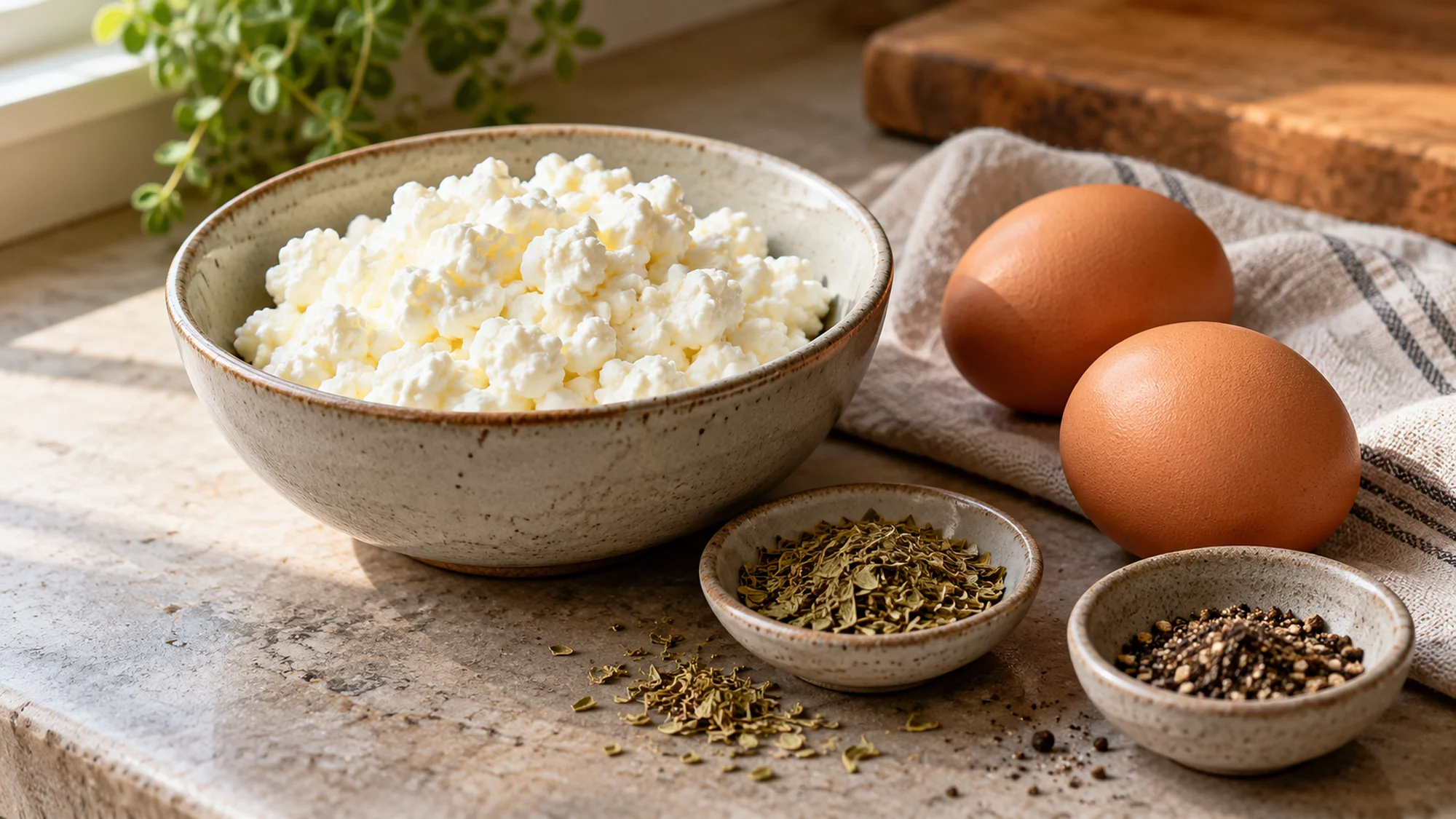
Cottage cheese varies in moisture and curd size. Drain obvious loose whey but do not press the product into a dry mass. Blend only until the eggs and curds form a mostly smooth mixture, then scrape it from the container so the ingredient proportions reaching the tray remain close to those in the card.
I prefer dried oregano here because a small measured amount distributes through the thin sheet without adding much moisture. Fresh chopped herbs can work, but large wet pieces may create patches that cook differently. Garlic powder is another seasoning option, though it changes the flavor from the simple herb version shown.
Use the table when deciding whether a change fits this method. Replacing whole eggs with whites alters both structure and richness, and omitting the eggs entirely removes an important setting ingredient. Do not treat every flourless mixture as interchangeable simply because the finished pieces are all called flatbread.
| Choice | What changes | Useful approach |
|---|---|---|
| Whole eggs | Richness and setting | Use the stated amount |
| Different cottage cheese | Moisture and salt | Drain only loose whey |
| Thicker spreading | Slower center cooking | Keep an even thin rectangle |
| Longer baking | Drier, more brittle edges | Check the center before adding time |
Health Benefits and Portion Balance
Cottage cheese and eggs contribute protein, along with fat and sodium that depend on the product. Leaving out flour changes the nutrient balance compared with wheat bread, but it does not make the finished base a complete meal. Vegetables, fillings and serving size still shape the plate.
For a broader view, variety across food groups is more useful than describing every bread alternative as better. The card estimates half the sheet, including the measured oil. A smaller rectangle contains less, and extra fillings should be counted separately when that matters to your choices.
The recipe contains milk and eggs. Check labels for any other ingredients relevant to your needs, and cook the center to the safe temperature for an egg dish. Follow safe leftover handling rather than storing this moist dairy-and-egg sheet like dry bread.
Bottom Line
Spread evenly, use suitable parchment and allow a short cooling pause before lifting. I’d choose the serving style after seeing the texture: lighter filling for a flexible sheet, smaller pieces for a firmer one. A well-set center matters more than dark edges, and the egg-and-cheese character should remain clear instead of being judged as an exact copy of wheat bread.
Cottage Cheese Flatbread Recipe

Ingredients
- 300 g 4% cottage cheese loose whey drained
- 2 large eggs
- 1/2 tsp dried oregano
- 1/4 tsp black pepper
- 1 tsp olive oil for greasing parchment
Equipment
- 9-by-13-inch rimmed baking sheet
- Blender
- Nonstick baking parchment
- Food thermometer
Instructions
- Heat the oven to 350°F (175°C). Line a 9-by-13-inch rimmed baking sheet with nonstick baking parchment and brush it thoroughly with the measured oil.
- Blend the cottage cheese, eggs, oregano and pepper until mostly smooth, scraping down the container as needed.
- Pour onto the prepared sheet and spread into an even rectangle, keeping the center and edges a similar thickness.
- Bake about 30–40 minutes until set, lightly golden and no longer wet in the middle. Check that the center reaches 160°F (71°C). Protect very dark edges loosely with foil if the center needs more time.
- Cool on the tray for 10 minutes, then loosen carefully and peel the parchment away from the flatbread. Cut into two portions or smaller rectangles. Add optional fillings only when ready to serve; refrigerate leftovers within 2 hours.
Nutrition
Video
Notes
Tried this recipe?
Let us know how it turned out!Hi, I’m Emily Pocker! I share recipes and food guides here at Recipes360 to help you find everyday meal inspiration and feel more confident in the kitchen. My goal is to make cooking approachable, enjoyable, and full of flavor.