
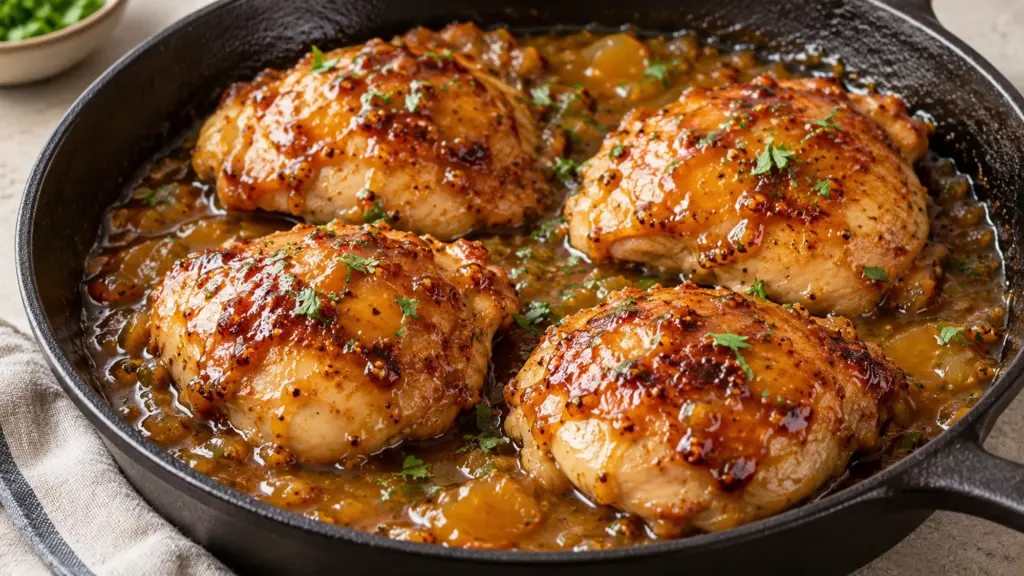
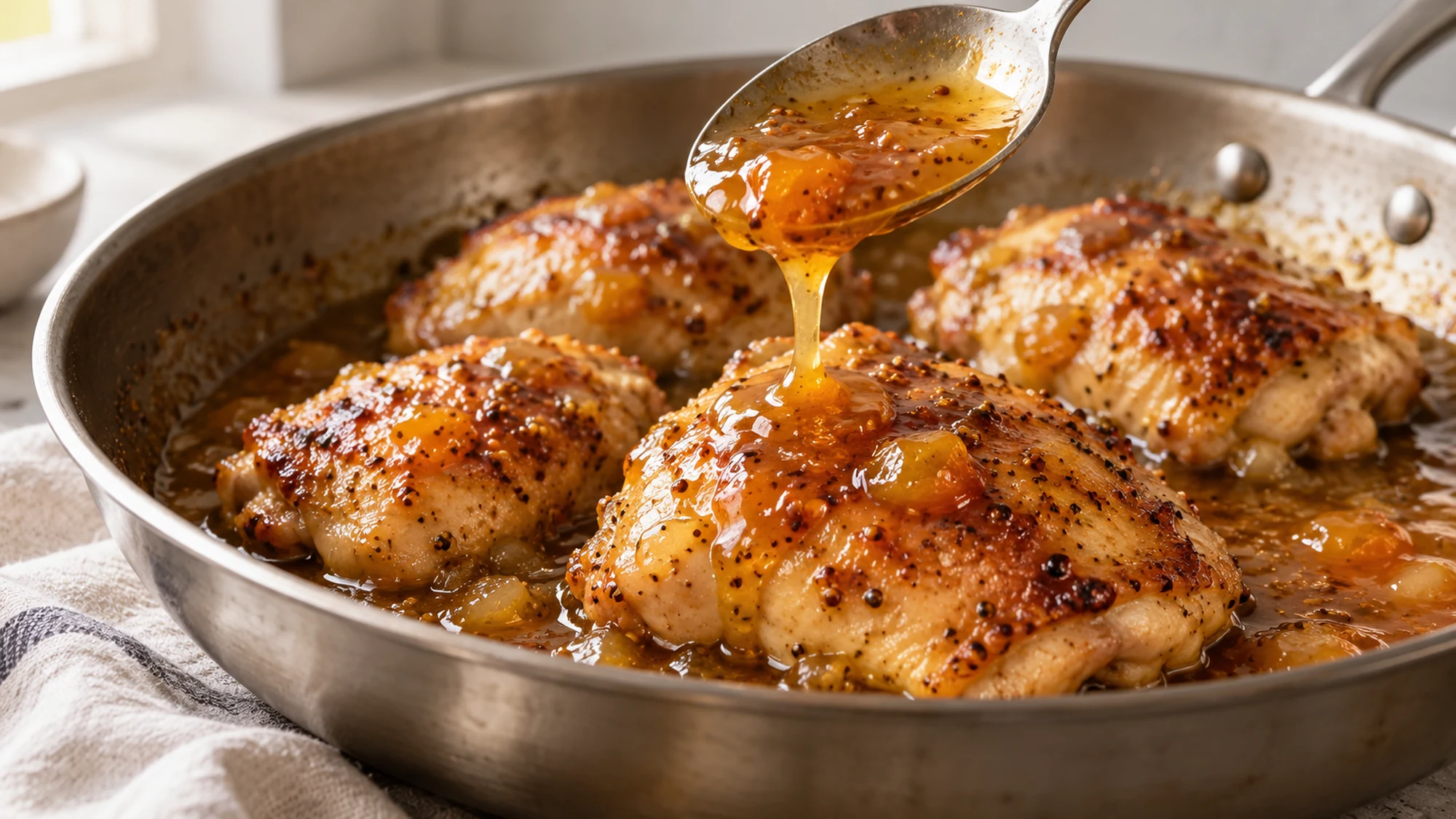
A sweet chicken sauce can become sticky long before the meat is ready. This apricot chicken recipe keeps those jobs separate: brown the boneless thighs first, then finish them gently in an apricot-and-mustard pan sauce. The result is a savory dinner with a fruity edge, rather than chicken covered in hot jam.
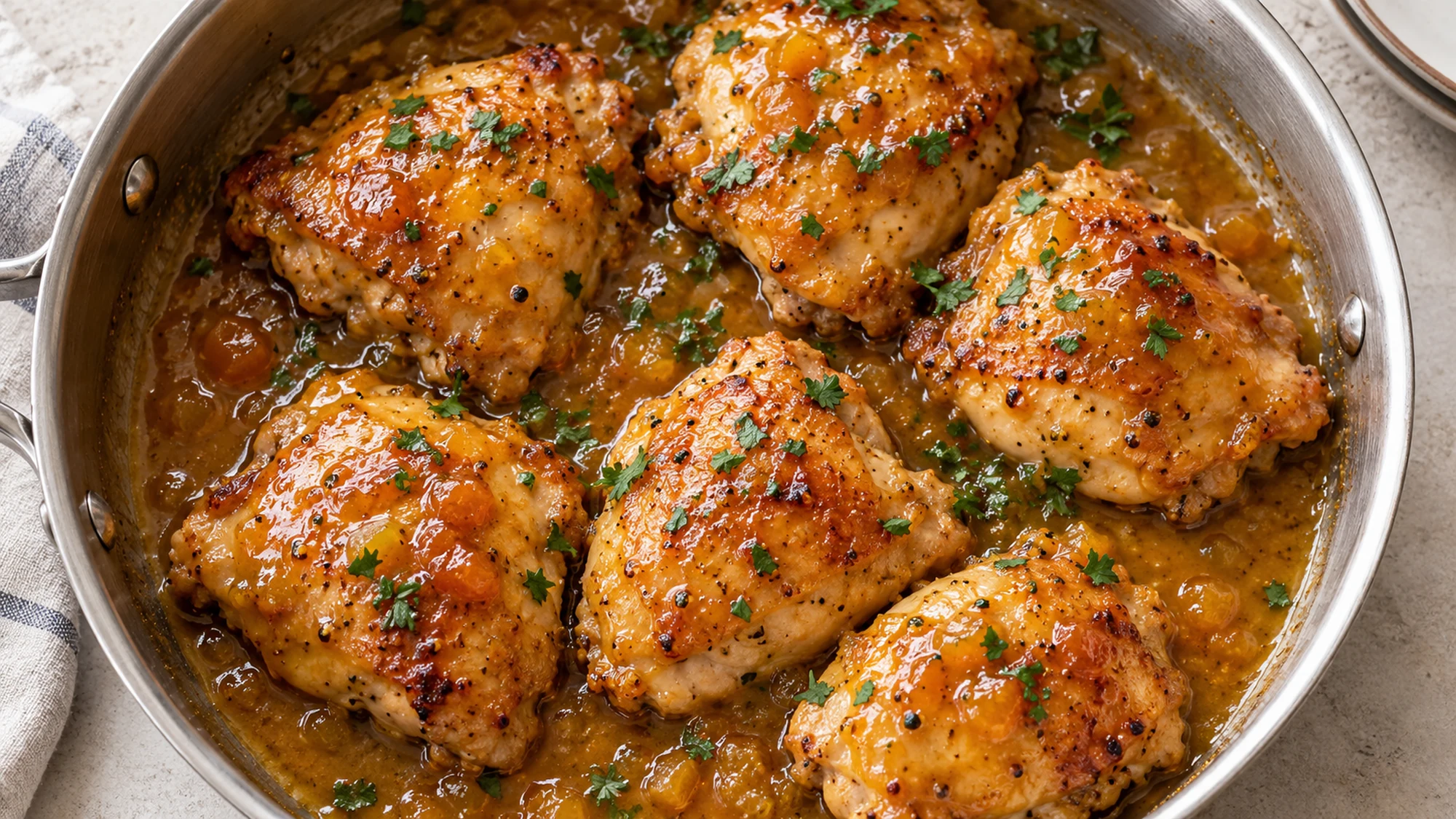
Sear the chicken before adding the preserves, then use gentle heat and a thermometer to finish the meat without scorching the glaze.
Whole-grain Dijon brings little mustard seeds and a welcome tang; cider vinegar keeps the apricot flavor from taking over. I’d use a wide skillet rather than a deep saucepan because the chicken needs room to brown. If your pan feels crowded, work in two batches and allow a few extra minutes.
Serving Suggestions for This Apricot Chicken Recipe
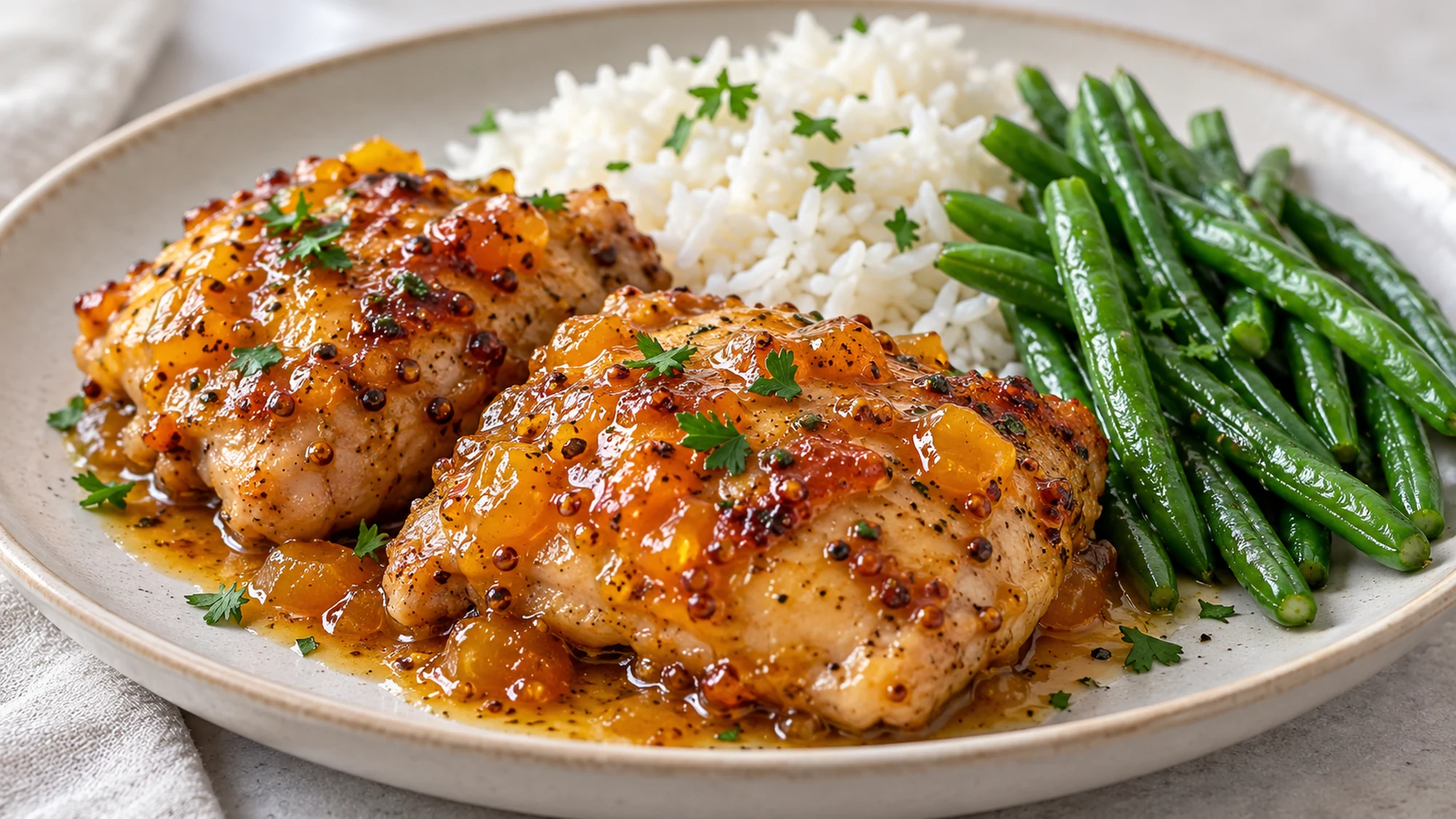
The sauce is meant to coat the chicken and leave a little for the plate. Choose a mild side that catches it, plus something green or crisp for contrast. Start rice before heating the skillet, or use a cooked grain you have on hand.
| Side | Why it fits | How to serve |
|---|---|---|
| Steamed rice | Absorbs the apricot pan sauce | Spoon a little sauce over both |
| Green beans | Adds a fresh, firm contrast | Steam separately until tender |
| Plain couscous | Keeps the plate quick and mild | Fluff before adding the chicken |
| Cucumber salad | Adds cool crunch | Dress lightly rather than sweetly |
- For a family-style meal: Bring the skillet to the table on a heatproof trivet, with sides in separate bowls. Keep the hot handle out of reach.
- For lunch tomorrow: Divide leftovers into shallow containers rather than chilling the whole skillet. Keep a little sauce with the chicken to help it reheat evenly.
- For a lighter coating: Serve the chicken with a spoonful of glaze instead of pouring every last drop onto each plate. The extra sauce is optional, not an obligation.
Refrigerate cooked chicken promptly and use it within three to four days, following the FoodSafety.gov cold-storage guidance. Reheat leftovers to 165°F (74°C); a small splash of water loosens a sauce that has thickened in the fridge.
A mild starch and a green vegetable balance the sweet-tangy sauce without making the meal complicated.
Apricot Chicken Recipe Variations and Sauce Fixes
Boneless thighs are the starting point here, not bone-in pieces or a whole bird. A different cut needs a different cooking schedule. Preserves also vary: some are thick with fruit pieces, while others melt into a smoother sauce, so judge the consistency after everything has warmed together.
- Prefer chicken breast? Use evenly thick boneless cutlets, not oversized whole breasts. Check them early with a thermometer and remove each piece when it reaches the safe temperature.
- Want a little heat? Add a small pinch of red pepper flakes with the sauce. Start lightly; it is easier to add heat at the table than remove it.
- Sauce too thick? Stir in water a tablespoon at a time over low heat. It should flow from a spoon, not sit on the chicken like a paste.
- Sauce too thin? Transfer cooked chicken to a clean plate and simmer the sauce briefly by itself. Return the meat only long enough to coat it.
- Using smooth Dijon? Keep the same amount; the sauce will lose the little mustard seeds but retain its tang. Avoid treating sweet honey mustard as an identical substitute.
Adjust the sauce once the chicken is safely cooked and resting, so balancing its flavor does not overcook the meat. If the pan develops blackened, bitter patches during searing, do not dissolve those into the glaze; lower the heat and use a clean pan for the sauce.
Adjust sauce thickness separately from chicken doneness, so fixing one does not spoil the other.
Health Benefits and Practical Nutrition Choices
Chicken supplies protein, while the sauce supplies much of this dish’s sweetness and some of its sodium. Apricot preserves are a condiment, not a replacement for a serving of whole fruit. Check the jar and broth labels when comparing products; the FDA’s added-sugar guidance explains what that label category includes.
- Build out the plate: Serve vegetables alongside instead of expecting the glaze to provide the meal’s produce.
- Watch the seasoning: Low-sodium broth gives more control. Taste the cooked sauce before adding extra salt, since mustard varies by brand.
- Use a thermometer: Color and clear juices do not replace a temperature check. FoodSafety.gov specifies 165°F (74°C) for poultry; check the thickest part of each large piece.
Think of this as chicken with a flavorful condiment: pair it with vegetables and let the portion of sauce suit your plate.
Bottom Line
This apricot chicken recipe works best when browning and glazing happen in stages. Keep the final simmer gentle, check the chicken’s temperature and loosen the sauce until it coats rather than clumps.
Apricot Chicken Recipe

Ingredients
- 1 1/2 pounds boneless skinless chicken thighs 680 g, about 6 small thighs, excess fat trimmed
- 1 tablespoon olive oil
- 1/2 teaspoon fine salt
- 1/4 teaspoon freshly ground black pepper
- 1/2 cup apricot preserves 170 g
- 1/2 cup low-sodium chicken broth 120 ml
- 1 1/2 tablespoons whole-grain Dijon mustard
- 1 tablespoon apple cider vinegar
- 2 garlic cloves finely minced
- 1 tablespoon fresh parsley chopped, for serving
Equipment
- 1 12-inch skillet with lid
- 1 Instant-read food thermometer
- 1 Tongs
- 1 Small mixing bowl
Instructions
- Pat the chicken dry and season with the salt and pepper. Whisk the preserves, broth, mustard and vinegar in a small bowl; keep it separate from the raw chicken.
- Heat the oil in a 12-inch skillet over medium-high heat. Add the thighs in a single layer and sear for about 4 minutes per side, until golden. Work in batches if crowded. Transfer to a plate; the chicken may not yet be cooked through.
- Reduce the heat to medium-low. Add the garlic and stir for 30 seconds, without browning it. Pour in the sauce mixture and scrape up the golden browned bits, leaving any blackened bits behind. Bring to a gentle simmer.
- Return the chicken and its collected juices to the skillet. Cover loosely and simmer gently for 8 to 12 minutes, turning once, until each thick piece reaches at least 165°F (74°C) on a food thermometer. Adjust the heat so the sugary sauce does not scorch; add water a tablespoon at a time if it becomes too thick.
- Transfer fully cooked chicken to a clean serving plate. If needed, simmer the sauce uncovered for 1 to 3 minutes until it coats a spoon. Spoon it over the chicken and sprinkle with parsley. Serve with rice and vegetables if desired.
Nutrition
Video
Notes
Tried this recipe?
Let us know how it turned out!Hi, I’m Emily Pocker! I share recipes and food guides here at Recipes360 to help you find everyday meal inspiration and feel more confident in the kitchen. My goal is to make cooking approachable, enjoyable, and full of flavor.