
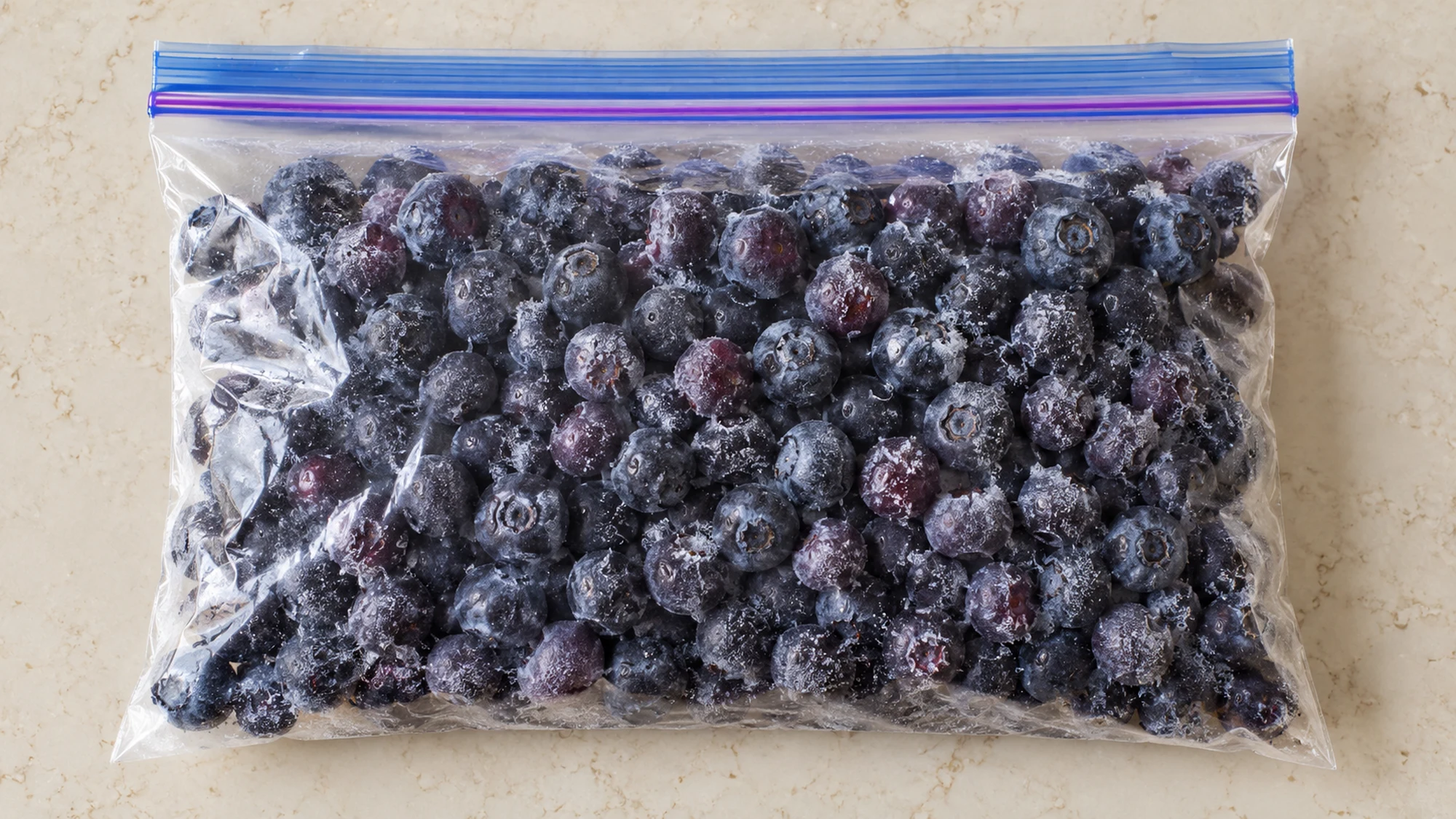
That half-used bag of blueberries looked fine when it went into the freezer. Now the fruit is frosty, the zipper has a gap, and breakfast seems less promising. Learning how to prevent freezer burn starts with the package—not a special appliance or an elaborate meal-prep system.
Use freezer-rated packaging, remove unnecessary air, seal carefully, and keep food consistently at 0°F (−18°C) or below. Then label it so good food does not get forgotten.
The goal is to keep moisture in the food and dry freezer air away from its surface. I’d rather spend an extra moment checking a seal than discover leathery patches on dinner later.
How to Prevent Freezer Burn Starts With the Seal
Freezer burn is drying at the food’s surface, sometimes with grayish or brown leathery patches. USDA explains that freezer burn itself does not make food unsafe, although flavor and texture can suffer. It is a quality problem, not proof of a food-poisoning hazard—or proof that a food is safe.
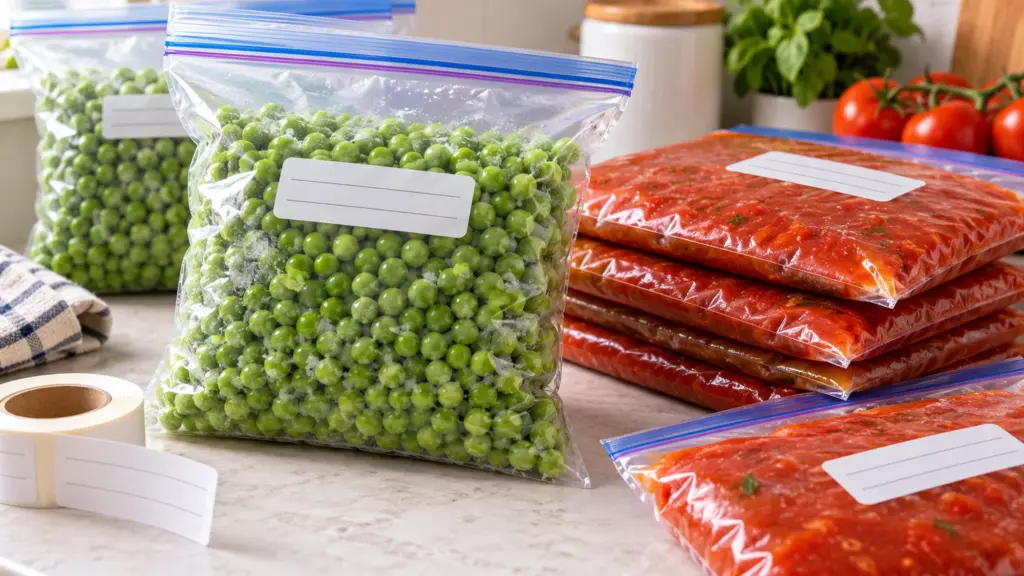
- Use bags, wrap, or rigid containers specifically intended for freezing. A thin everyday storage bag is not an equivalent barrier.
- Press excess air out of flexible bags before closing them. Keep food out of the zipper track and check the entire seal.
- Inspect corners and folds for tears. A carefully closed top cannot compensate for a hole lower down.
For meat in supermarket wrapping, Illinois Extension recommends an additional airtight freezer layer for longer storage. Vacuum packaging can reduce air exposure, but you do not need to buy a machine to start packing food well.
Choose packaging for freezer use, then check the whole package—not just whether the lid looks closed.
Match the Package to the Food
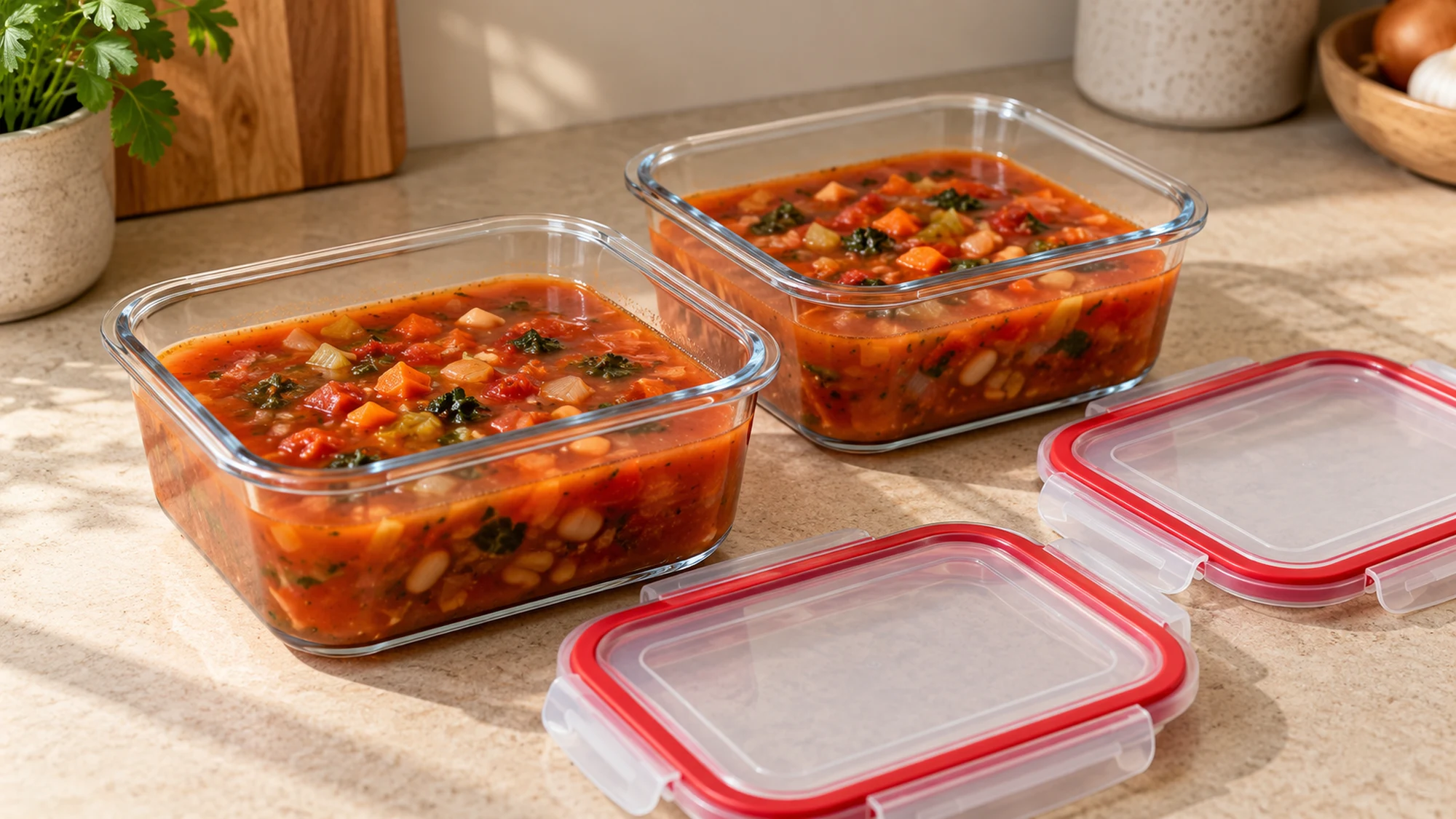
The National Center for Home Food Preservation distinguishes close packing from necessary headspace. Liquids expand as they freeze, so “remove air” does not mean filling a soup container to its rim. Follow the container’s instructions and the food’s recommended freezing method.
| Food or package | Useful approach | Check before freezing |
|---|---|---|
| Berries | Freezer bag after tray freezing | Air pressed out; seal clean |
| Soup or sauce | Freezer-safe container or bag | Room for expansion |
| Store-wrapped meat | Additional freezer-rated wrapping | No exposed edges or tears |
| Small leftovers | Meal-sized packages | No oversized empty space |
For loose berries, freezing pieces separately before bagging makes it easier to remove only what you need. For soup, portion size is the more useful decision: a single-meal container avoids repeatedly opening a large supply. Clean the rim before attaching the lid.
Keep unnecessary air out while preserving the expansion space the food actually needs.
Cool Safely, Then Freeze Efficiently
Do not leave cooked food on the counter for hours while waiting for it to cool. Iowa State Extension describes rapid cooling in the refrigerator or an ice bath before packaging for the freezer. Divide a large batch into smaller portions rather than treating a deep pot as one package.
- Keep a freezer thermometer inside; the control dial alone does not show the actual temperature.
- Leave space around newly added packages so cold air can circulate. Once frozen, arrange them more closely.
- Avoid loading a large quantity of unfrozen food all at once. Check your appliance’s freezing-capacity guidance.
The University of Missouri’s freezing guide explains that faster freezing limits large ice-crystal damage and temperature fluctuations reduce quality. That means packaging and temperature work together; a thick bag cannot fix a freezer that repeatedly warms up.
Cool food promptly and give new packages room to freeze before stacking them tightly.
Make the Oldest Package Easy to Find
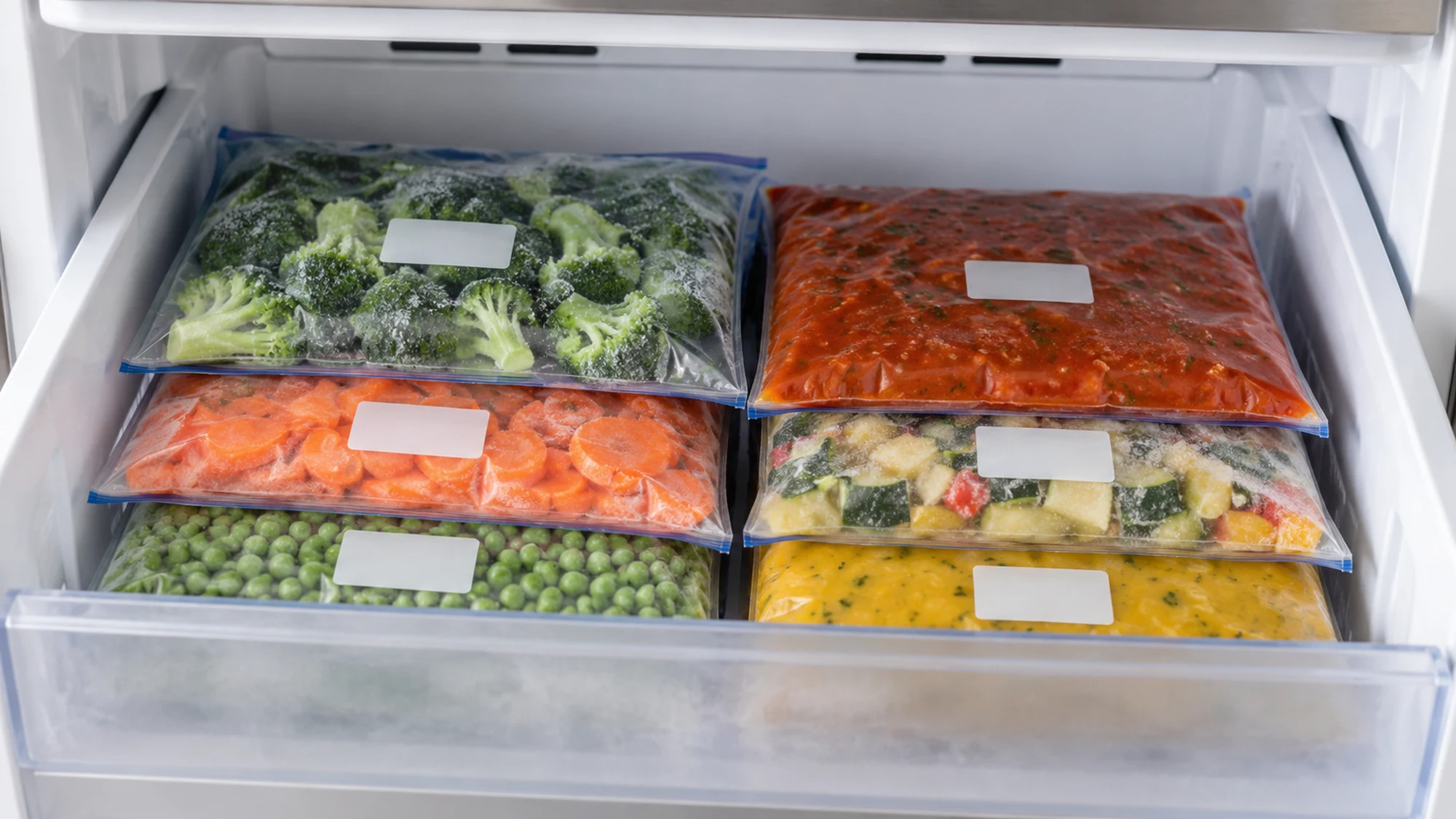
A date label is most useful when you can actually see it. Write the food name, packing date, and portion amount before the bag becomes cold and slippery. “Red sauce” is better than a mystery brick, but “tomato sauce, two portions” is better still.
- Keep similar foods together and place older packages where they are easy to reach.
- Before shopping, choose one existing freezer item for an upcoming meal.
- Reseal opened bags immediately, pressing out extra air again rather than simply folding the top.
If freezer burn has already happened, trimming dry areas may improve the result, but cooking cannot restore lost moisture. If the food thawed unexpectedly or its handling history is uncertain, assess that separately; do not assume the problem is only freezer burn.
Bottom Line
A sound seal, the right container, steady cold, and a visible date do most of the work. Protect the food you freeze—and make a plan to enjoy it.
University of Wyoming Extension’s “Freezing Food” offers a general overview of home freezing, listed in UC Master Food Preserver’s educational video collection.
Sources
- USDA: What is freezer burn?
- Illinois Extension: Freezer storage
- NCHFP: Packaging and labeling foods
- Missouri Extension: Freezing basics
- Iowa State Extension: Freezer burn and food safety

Hi, I’m Emily Pocker! I share recipes and food guides here at Recipes360 to help you find everyday meal inspiration and feel more confident in the kitchen. My goal is to make cooking approachable, enjoyable, and full of flavor.