
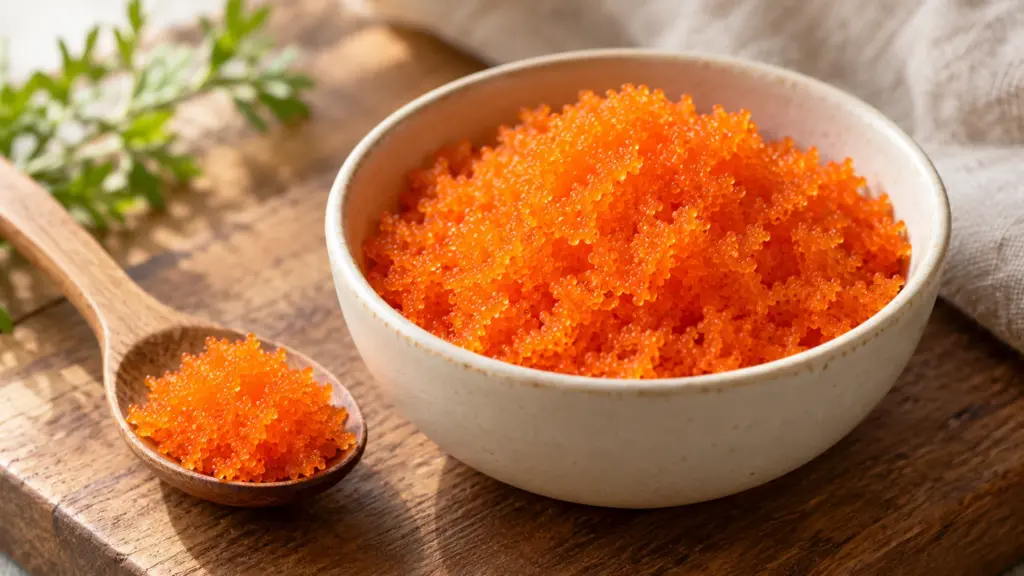
Those tiny orange grains clinging to a sushi roll are easy to overlook until you notice their gentle crunch. They may be masago: a seasoned fish roe used in small amounts to bring color, texture, and a salty finish to a bite.
Masago is capelin roe. It is different from tobiko, which comes from flying fish, and the packaged product may contain sugar, coloring, soy, or wheat as well as fish.
For home cooking, the useful questions are less about its bright color and more about the label: which fish is named, what seasonings are included, and how the package should be stored after thawing.
What Masago Is—and What It Is Not
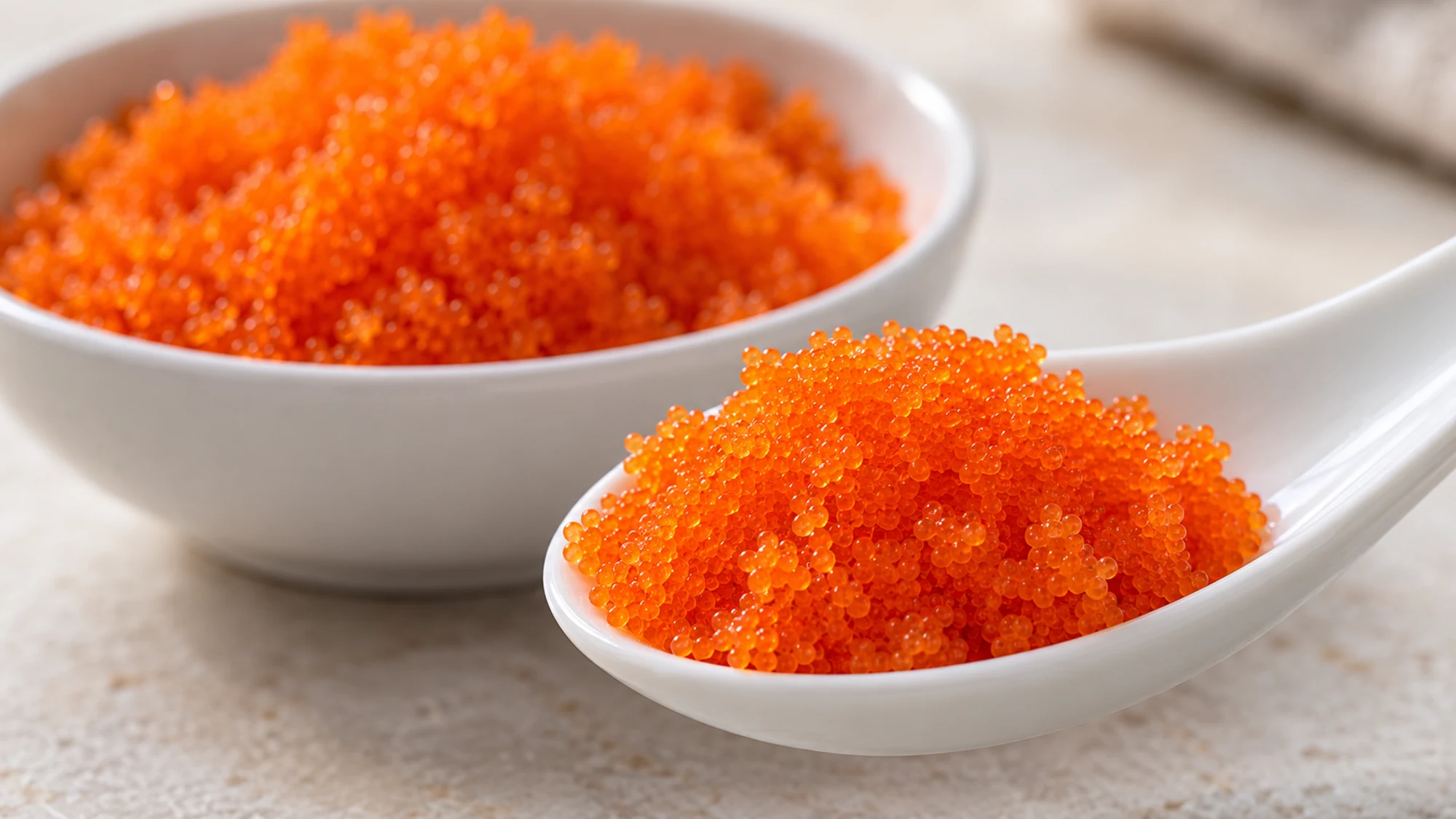
Seafood producer Brim distinguishes masago from tobiko by the fish it comes from: capelin for masago and flying fish for tobiko. These are different products, even when both appear as an orange garnish on a sushi menu.
The masago sold for serving is often seasoned rather than simply fish eggs in their natural state. Brim describes processing that includes desalting, coloring, and seasoning. That means color alone does not tell you the species, freshness, or exact flavor of the roe.
Masago is a fish ingredient, so it is not vegetarian or vegan. A vegetable-filled roll can still contain fish if masago is sprinkled over it. If that distinction matters to you or someone sharing the meal, ask about toppings and sauces as well as the filling.
Masago, Tobiko, and the Ingredient Label
Tobiko often attracts attention for its popping texture; Yutaka’s tobiko product description identifies it as seasoned flying fish roe. Rather than treating either name as a promise about every package, compare the actual products you can buy.
| What to compare | Masago | Tobiko |
|---|---|---|
| Fish source | Capelin roe | Flying fish roe |
| Common role | Small-grained sushi garnish or sauce ingredient | Sushi garnish with a distinct popping texture |
| Seasonings | Check the complete ingredient list | Check the complete ingredient list |
| Dietary suitability | Contains fish; other allergens may be present | Contains fish; other allergens may be present |
One Yutaka orange masago label, for example, lists capelin roe, sugar, salt, and soy sauce containing soybeans and wheat gluten. That is why a simple fish topping should not automatically be described as gluten-free. Recipes and formulas can change, so the package in your hand takes priority.
Read masago as a seasoned seafood product, not a single-ingredient garnish. The smallest topping can still matter for an allergy.
How to Use Masago at Home
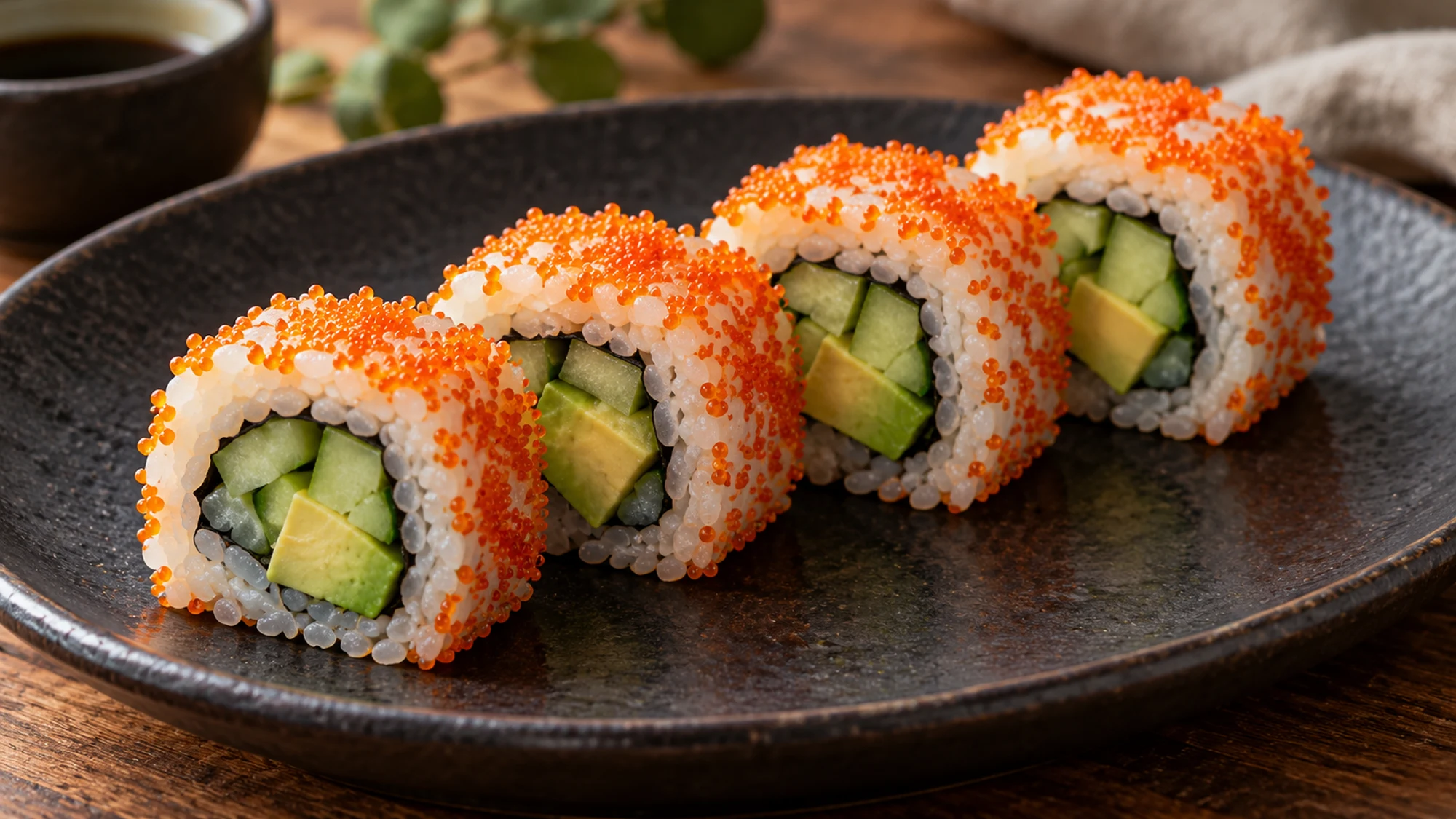
Masago is best approached as a finishing ingredient. Start with a little, taste, and decide whether the dish needs more salt or sauce afterward. A heavy layer can hide the cucumber, avocado, or other ingredients you wanted to enjoy in the first place.
- Scatter a small amount over a freshly assembled rice bowl.
- Press a light coating onto the outside of a sushi roll.
- Stir a little into a chilled sauce just before serving.
- Spoon it onto a small cucumber bite for contrasting texture.
Use a clean utensil to portion it rather than taking the whole container to the table. If several people are assembling rolls, keep a small serving portion chilled and the main package refrigerated. Make separate utensils and serving dishes available when someone needs to avoid fish, soy, or wheat.
Buying, Thawing, and Food Safety
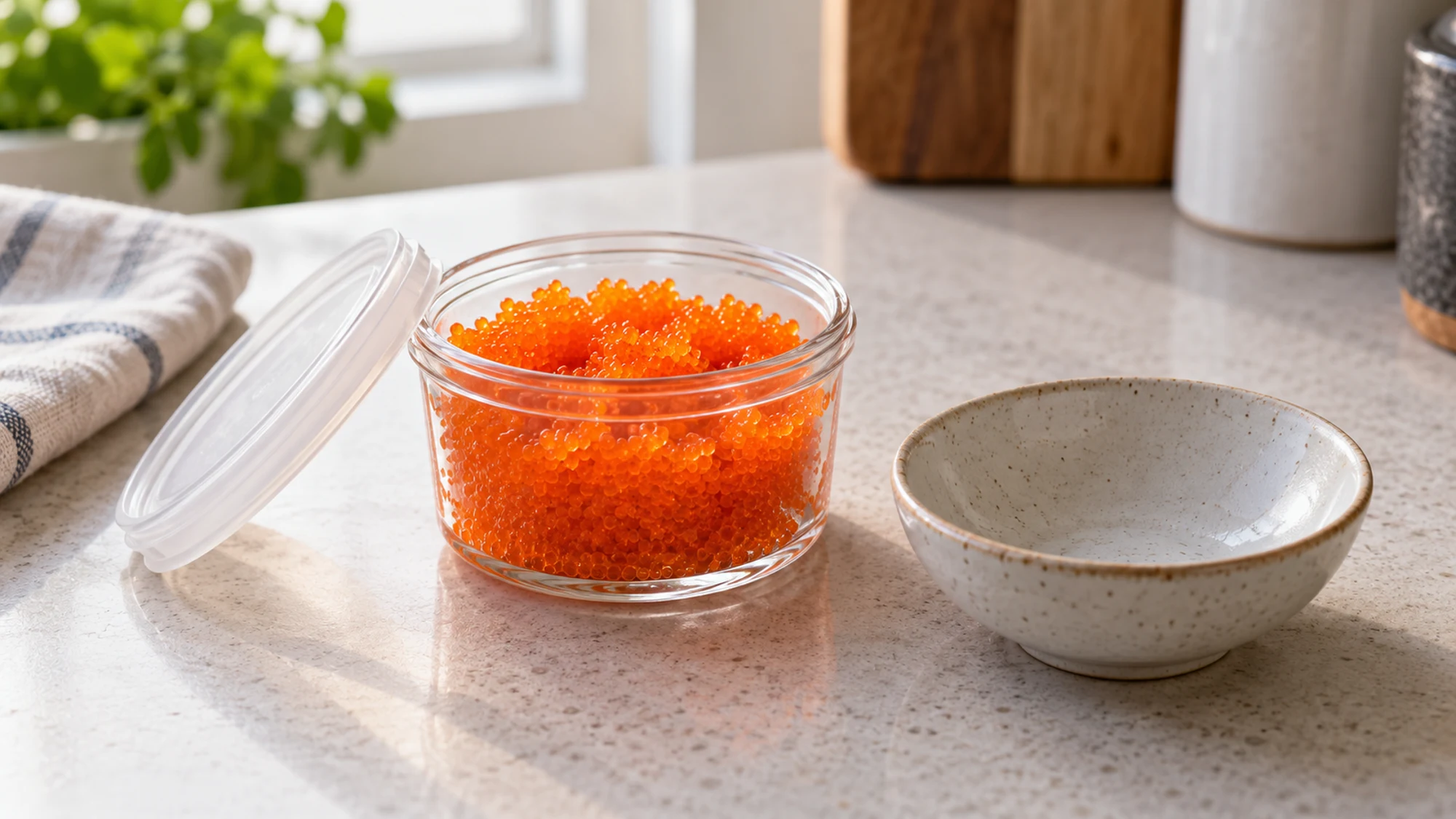
Choose intact packaging and follow the product’s frozen or refrigerated storage instructions. The FDA’s seafood guidance recommends refrigerator thawing and keeping refrigerated seafood at 40°F (4°C) or below. Do not leave the tub on the counter to soften while you prepare everything else.
After thawing or opening, follow the manufacturer’s deadline and any instruction not to refreeze; do not borrow a storage window from another brand. Write the opening or thawing date on the container. Seasoning and freezing do not make seafood shelf-stable, and a normal smell cannot prove that it has been handled safely.
Do not assume salted roe is cooked or pasteurized. Check with the manufacturer if the label is unclear. FDA advises pregnant people, children, older adults, and people with weakened immune systems to avoid raw or undercooked seafood. For someone in those groups, choose an appropriately cooked alternative when the product’s processing is uncertain.
Bottom Line
Masago adds a little color, saltiness, and texture, but the ingredient list deserves more attention than its appearance. Buy a product you can identify, keep it properly chilled, and use it as an accent rather than the main event.
The FDA video below explains the seafood handling principles behind those storage precautions.
Sources
- Brim: fish roe products and processing
- Yutaka: orange masago ingredients and storage instructions
- Yutaka: orange tobiko
- FDA: selecting and serving seafood safely

Hi, I’m Emily Pocker! I share recipes and food guides here at Recipes360 to help you find everyday meal inspiration and feel more confident in the kitchen. My goal is to make cooking approachable, enjoyable, and full of flavor.