
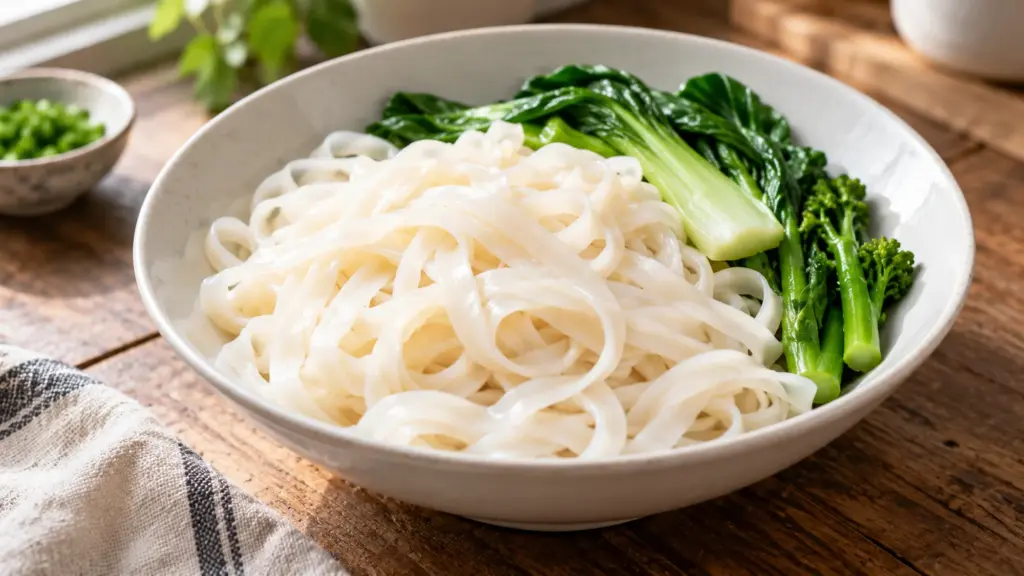
The noodle aisle offers delicate rice ribbons, dark buckwheat strands and pasta made from grains or beans. Choosing gluten free noodles is not just a matter of swapping the familiar box for a different color.
Choose noodles labeled gluten-free, check the full ingredient list, and match their preparation to the dish. Rice or buckwheat in the name alone does not guarantee that a packaged noodle is gluten-free.
I’d make two decisions separately: which product meets your dietary needs, and which texture belongs in tonight’s bowl. Getting both right is more useful than finding one noodle that supposedly does everything.
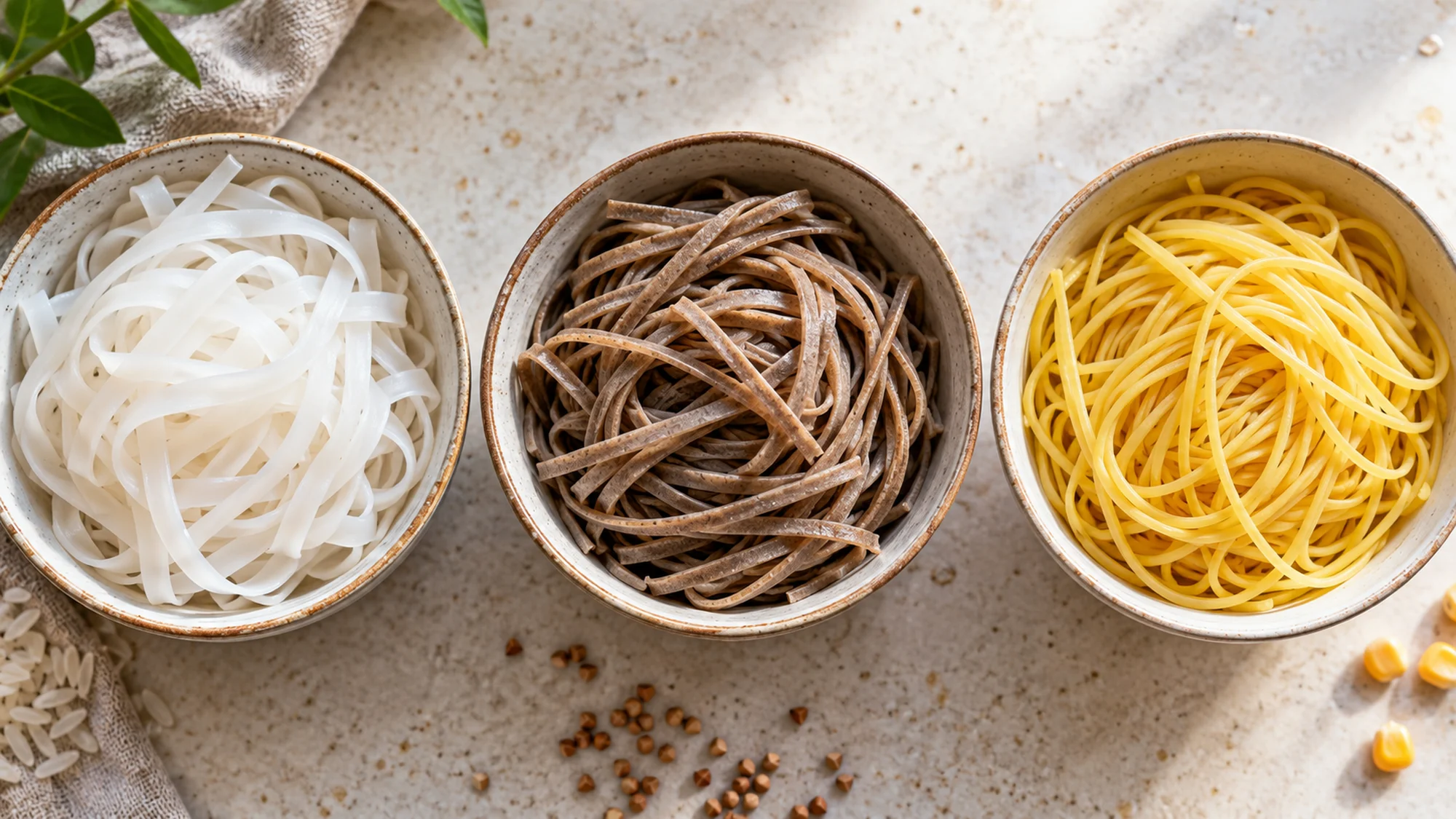
Which gluten free noodles fit your meal?
Rice, corn, buckwheat and beans can all provide gluten-free ingredients, but finished noodles may be blends. NIDDK’s celiac diet guidance recommends checking labels and avoiding uncertain products rather than judging them by appearance.
Use this table as a shopping starting point, not a safety certification. Check the actual package, including any seasoning sachet; a noodle and its accompanying sauce are two separate things to assess.
| Noodle style | Useful starting point | Check before buying |
|---|---|---|
| Rice noodles | Soups, salads or stir-fries | Rice-based does not rule out other ingredients. |
| 100% buckwheat noodles | Earthier flavor in hot or cold bowls | Some soba contains wheat. |
| Corn-and-rice pasta | Familiar pasta shapes and sauces | Look for a gluten-free claim. |
| Bean or lentil noodles | A different flavor and texture | Compare ingredient and nutrition labels. |
Read the label beyond the front of the bag
For FDA-regulated packaged foods in the United States, a gluten-free claim has defined requirements, including less than 20 parts per million of unavoidable gluten. It is a voluntary claim, not a promise that a food is more nutritious.
The FDA also cautions that a statement such as “no gluten-containing ingredients” alone should not be assumed to meet every requirement of a gluten-free claim. “Wheat-free” is not an adequate substitute either: gluten also comes from barley and rye.
- Read the ingredient list even when a product looks familiar; formulations can change.
- Check flavored noodles, soup bases and sauces separately.
- If you have a wheat allergy, assess that allergy independently; gluten-free and wheat-free are not identical labels.
- Contact the manufacturer when the labeling leaves a safety question unanswered.
Choose the product from its complete label, not its color, grain name or place on the shelf.
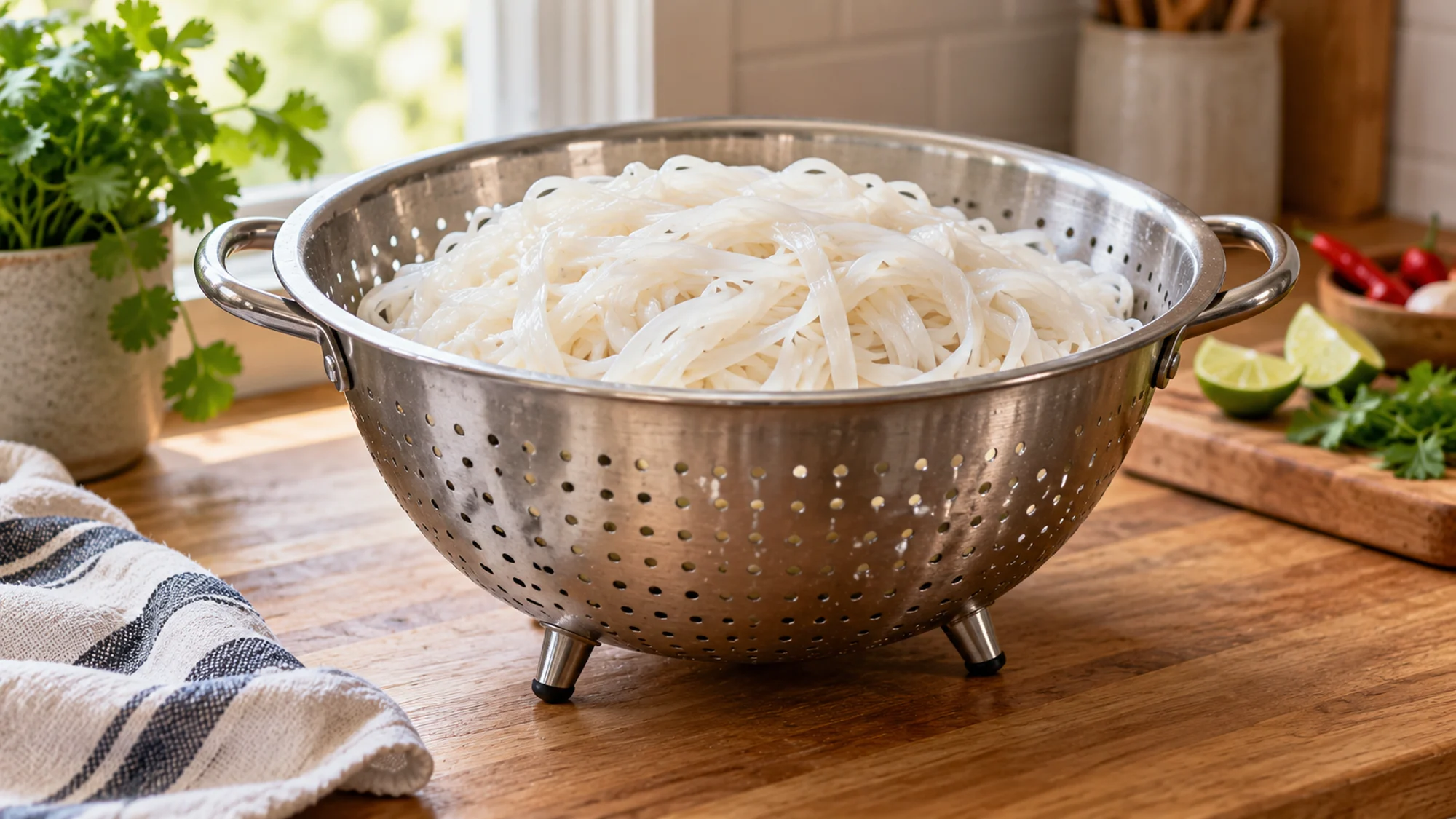
Cook the noodle you bought, not the one you remember
A single cooking time cannot cover thin rice vermicelli, thick rice ribbons and buckwheat noodles. Even a familiar product can change: Lotus Foods explains that a production change brought new package instructions for its millet and brown rice ramen.
For another concrete example, King Soba’s 100% buckwheat noodles have their own cooking directions. That timing belongs to that product, not every noodle labeled soba. I’d keep the bag beside the stove the first time rather than rely on memory.
- Decide whether the noodles will be served directly, tossed in a hot pan or added to broth.
- Start with the current product directions and a recipe suited to that noodle style.
- Check texture as they approach the stated time; look for a cooked center without a hard core.
- Drain when ready and handle delicate strands gently rather than stirring vigorously.
- Do not automatically rinse every noodle. Follow the method for the dish and product you are using.
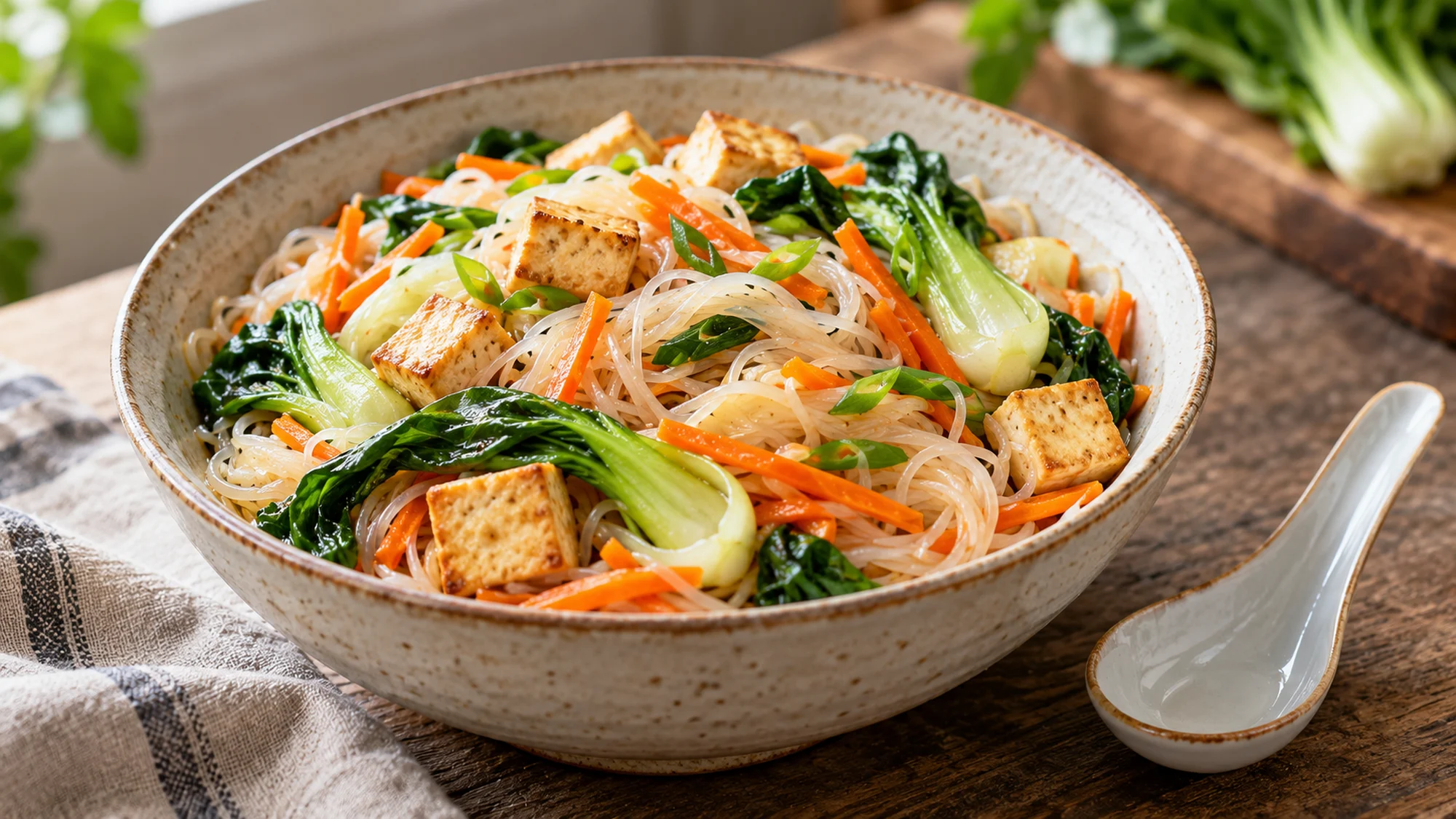
Keep the whole bowl gluten-free
Noodles can meet your needs and still pick up gluten during preparation. NIDDK describes cross-contact as gluten reaching otherwise gluten-free foods during handling, preparation or serving. A clean pot is only the beginning.
For celiac disease, plan the sauce and serving utensils before cooking. I’d rather simplify a topping than discover at the table that its ingredients were never checked. A plain noodle bowl is also an opportunity to add vegetables and a suitable protein, rather than expecting the noodles to supply the entire meal.
- Use clean water, cookware, colanders and serving utensils; do not reuse wheat-pasta cooking water.
- Check soy sauce, broth, marinades and crunchy toppings for gluten.
- Keep flour, bread crumbs and shared condiment utensils away from the prepared bowl.
- When eating out, ask about preparation and shared equipment, not just whether rice noodles are available.
Bottom Line
Start with a clearly suitable label, choose a noodle for the texture you want, and follow its current cooking method. Gluten-free does not mean one flavor, one cooking time or one nutrition profile. With the sauce and kitchen setup checked too, you can concentrate on making a bowl you genuinely want to eat.
For an optional technique, Pailin’s Kitchen demonstrates glass noodles in a rice cooker. This is not a universal method for every noodle; check all recipe seasonings separately for gluten.
Sources
- NIDDK: Eating, diet and nutrition for celiac disease
- FDA: Gluten-free labeling questions and answers
- Lotus Foods: Updated ramen preparation information
- King Soba: 100% buckwheat noodles

Hi, I’m Emily Pocker! I share recipes and food guides here at Recipes360 to help you find everyday meal inspiration and feel more confident in the kitchen. My goal is to make cooking approachable, enjoyable, and full of flavor.