
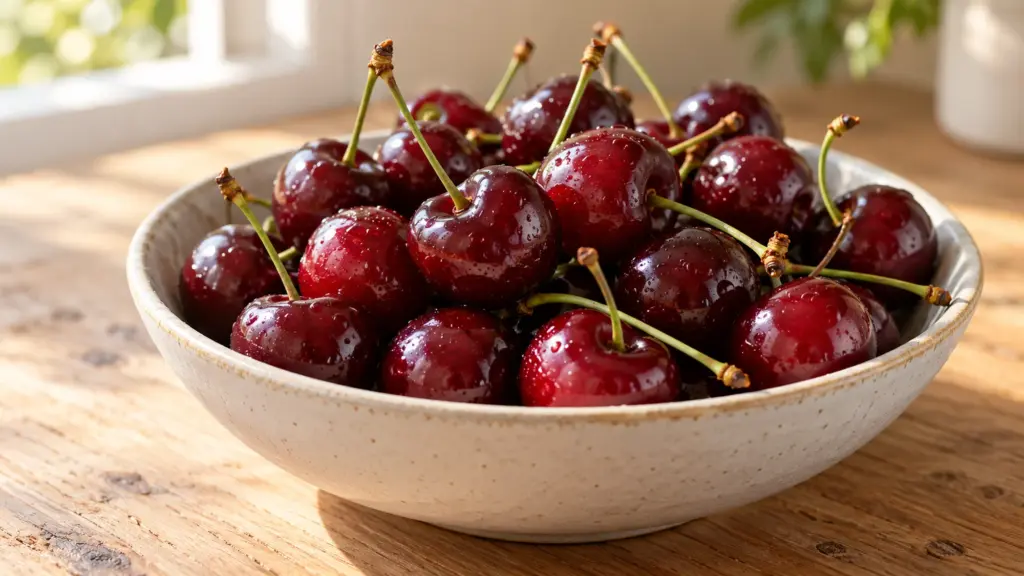
A bowl of glossy cherries can disappear surprisingly quickly, with a little pile of stems left behind. Are cherries good for you? Yes: whole cherries can be a useful, enjoyable part of a varied diet, offering fiber and vitamins alongside their sweet-tart flavor. The sensible next step is choosing the form that fits your meal—not expecting a handful to work like medicine.
Whole cherries are a nutritious fruit choice. Enjoy their flavor and fiber, and treat juice, sweetened dried fruit, and pie filling as different foods with different uses.
Are Cherries Good for You as an Everyday Fruit?
The USDA’s fresh-cherry guide identifies cherries as a source of fiber and vitamins, including vitamin C. Fiber supports normal bowel function, but cherries are not the only fruit that supplies it. A varied fruit bowl is more useful than promoting one ingredient to permanent “superfood” status.
I would choose cherries because they make fruit appealing: a firm skin, juicy flesh, and a sweetness that works without a drizzle of anything. That is a practical benefit, even before you start comparing nutrient lists. They can sit beside breakfast, become part of a snack, or add contrast to a savory salad.
- Keep the whole-food perspective: cherries contribute to a meal pattern; they do not replace the rest of it.
- Let appetite guide the serving: put some in a bowl rather than treating the entire bag as a required portion.
- Skip health promises: do not use cherries or cherry products in place of treatment for a medical condition.
You do not need a special health claim to make room for a fruit you enjoy.
Fresh, Frozen, Dried, or Juice: What Changes?
A cherry-flavored product is not automatically equivalent to whole cherries. USDA fruit guidance distinguishes whole fruit from juice, which contains less fiber, and recommends variety. For packaged choices, the ingredient list and Nutrition Facts panel tell you more than the front-of-package artwork.
| Form | Useful role | What to check |
|---|---|---|
| Fresh whole cherries | Snacks and salads | Remove pits before serving |
| Unsweetened frozen cherries | Oatmeal and yogurt | Follow package handling directions |
| Dried cherries | Small additions to oats or trail mix | Serving size and added sugar |
| Cherry juice or juice drink | A beverage, not a fiber substitute | Juice percentage and added sugar |
These options need not compete for one winner. Fresh cherries offer a pleasant bite; thawed cherries release juice that can swirl through yogurt. Dried fruit is easy to carry, while a drink serves a different purpose. I prefer buying for the use I have in mind rather than letting a health-sounding label decide.
Compare the product you will actually eat, not just the word “cherry” on the package.
Make Cherries Easy to Eat
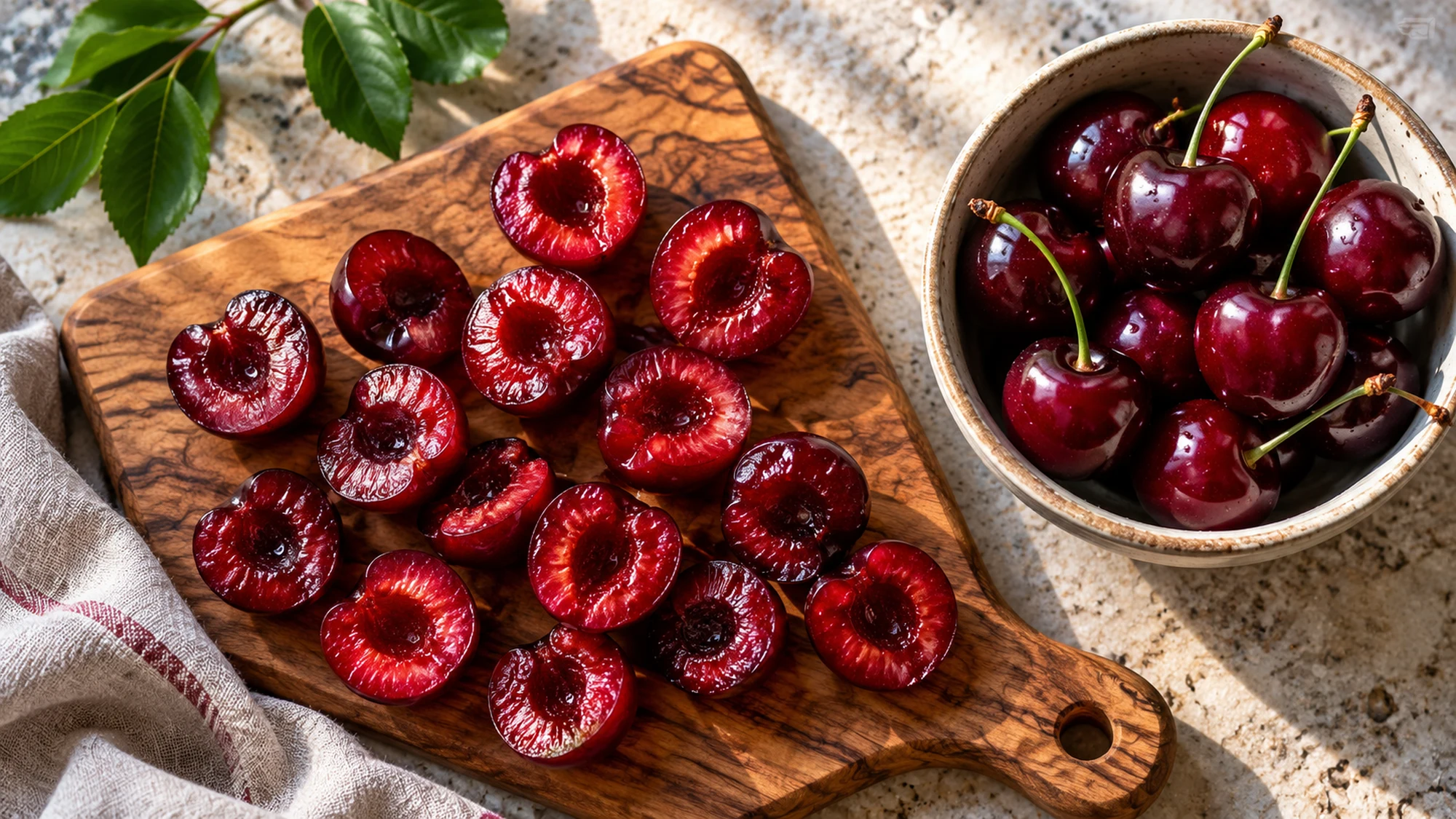
Pitting is the small preparation job that makes cherries more useful. Remove the stems, use a clean cherry pitter, and check the fruit afterward for any missed stones. Keep the fruit on a washable work surface; the juice has a talent for finding a pale sleeve.
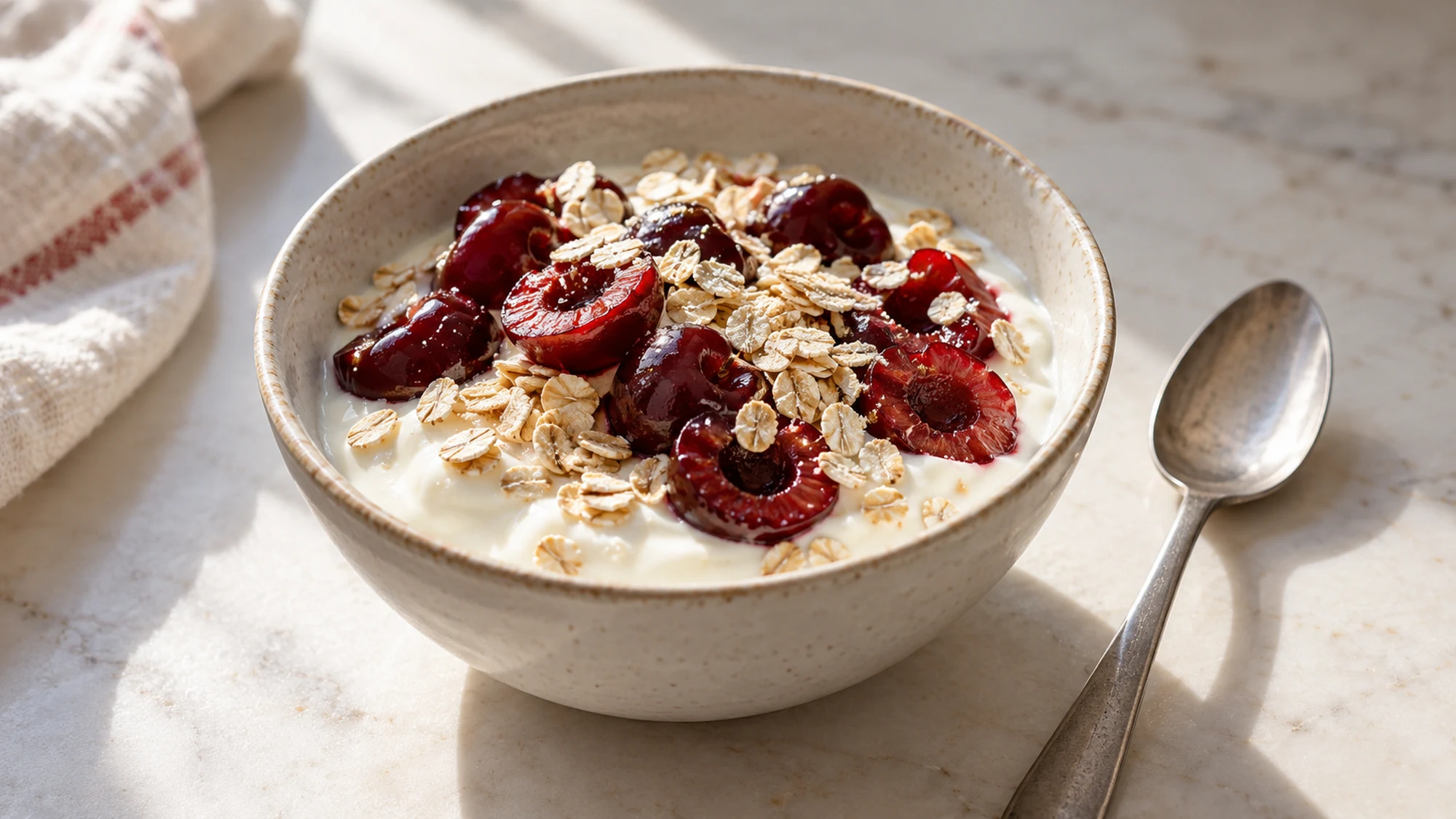
- For breakfast: stir pitted halves into plain yogurt or add them to oatmeal for sweetness and a juicy contrast.
- For lunch: combine them with leafy greens, a grain, and a protein you already enjoy.
- For a snack: serve them alongside nuts, yogurt, or another familiar food rather than building the whole snack around a nutrition claim.
- For baking: remember that cherries in a sweet dessert are part of the dessert, not a shortcut that makes the other ingredients disappear.
Choose sweet cherries for easy fresh eating and use tart cherries when you want more acidity in cooking. Taste before adding sweetener, especially when using an unfamiliar variety or a frozen package. If you have a food allergy or a prescribed diet, follow your individual guidance rather than a general fruit recommendation.
A few minutes of pitting turns cherries from a bowl on the counter into an ingredient ready for several meals.
Store Them Before They Lose Their Bite
Keep fresh cherries refrigerated and wash them shortly before eating. Utah State University Extension recommends using fresh cherries within three to five days and avoiding unnecessary moisture during storage. Buy an amount you can realistically use, and check the fruit rather than relying on a date alone.
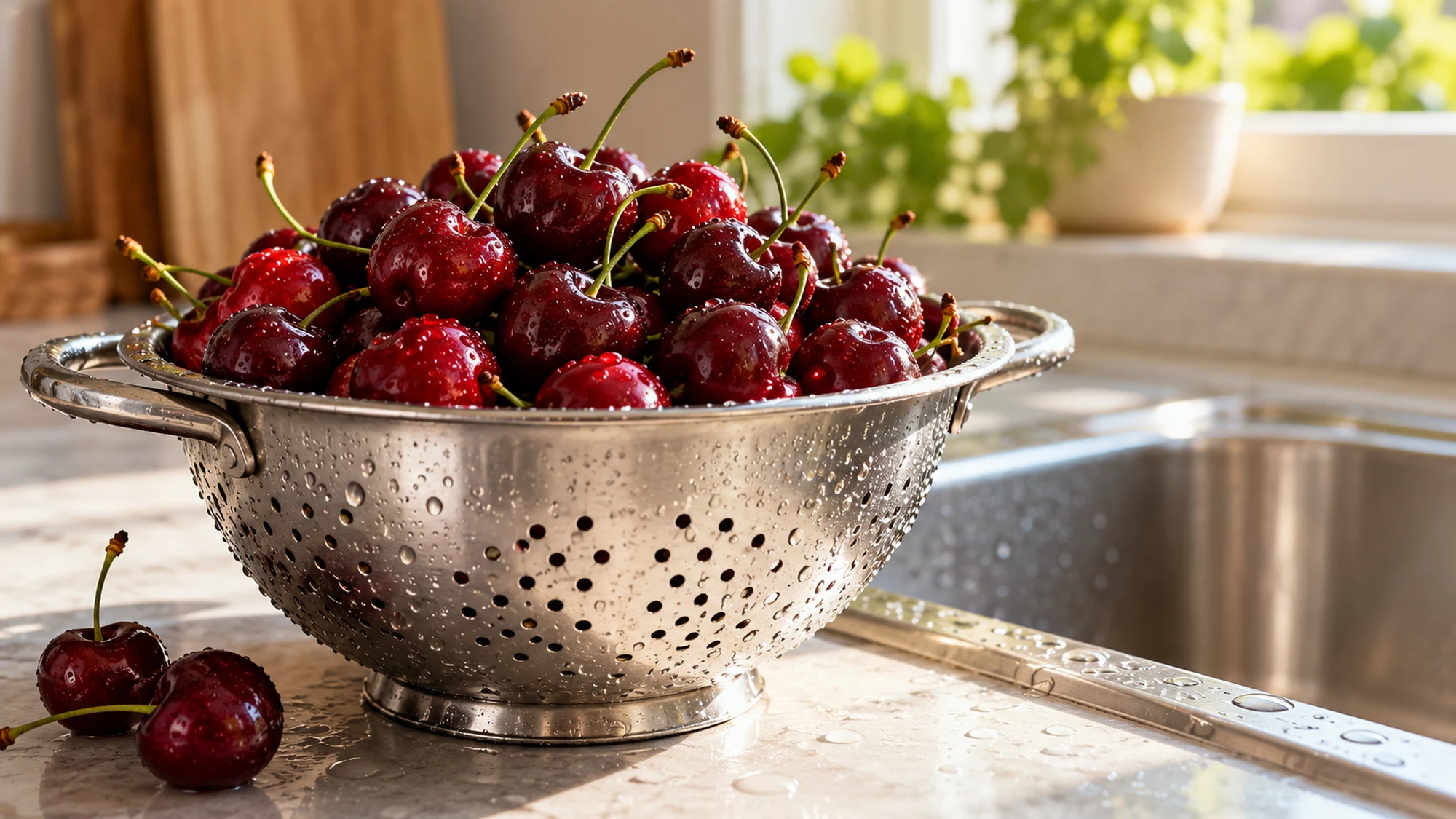
- Wash for eating: rinse gently under plain running water, as the USDA cherry guide advises.
- Freeze a surplus: wash, drain, and pit the fruit; spread it in a single layer before transferring the frozen cherries to freezer packaging.
- Keep the freezer cold: Oregon State University Extension recommends 0°F (−18°C) or below. Label the package so older fruit gets used first.
- Expect a texture change: thawed cherries are softer, which suits spoonable breakfasts and cooked dishes better than a crisp fruit platter.
Bottom Line
Cherries can be good for you without being a cure-all. Choose whole fruit often, compare packaged forms honestly, and store what you buy so its flavor reaches your plate.
DearMartiniKitchen’s demonstration below shows practical ways to remove cherry pits before cooking or serving.
Sources
- USDA: Fresh cherries household fact sheet
- USDA: Fruit guidance
- Utah State University Extension: Preserving cherries
- Oregon State University Extension: Freezing fruits and vegetables

Hi, I’m Emily Pocker! I share recipes and food guides here at Recipes360 to help you find everyday meal inspiration and feel more confident in the kitchen. My goal is to make cooking approachable, enjoyable, and full of flavor.