
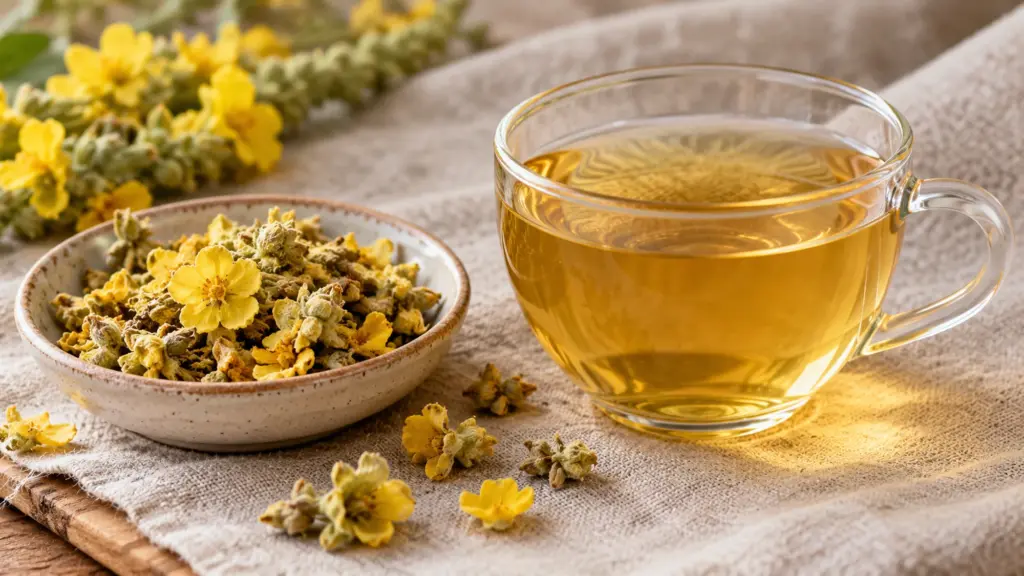
The words “lung cleanse” can make an ordinary bag of dried herbs sound surprisingly powerful. With mullein tea, the useful questions are quieter: which part of the plant is in the bag, what evidence applies to it, and is it suitable for you?
Mullein tea is not a proven lung detox or treatment for breathing problems. Traditional use of mullein flowers does not establish the benefits or safety of every leaf tea, extract or blend.
I’d read the back of the package before the bold promise on the front. The ingredient details tell you much more about what you are actually considering.
What is in mullein tea?
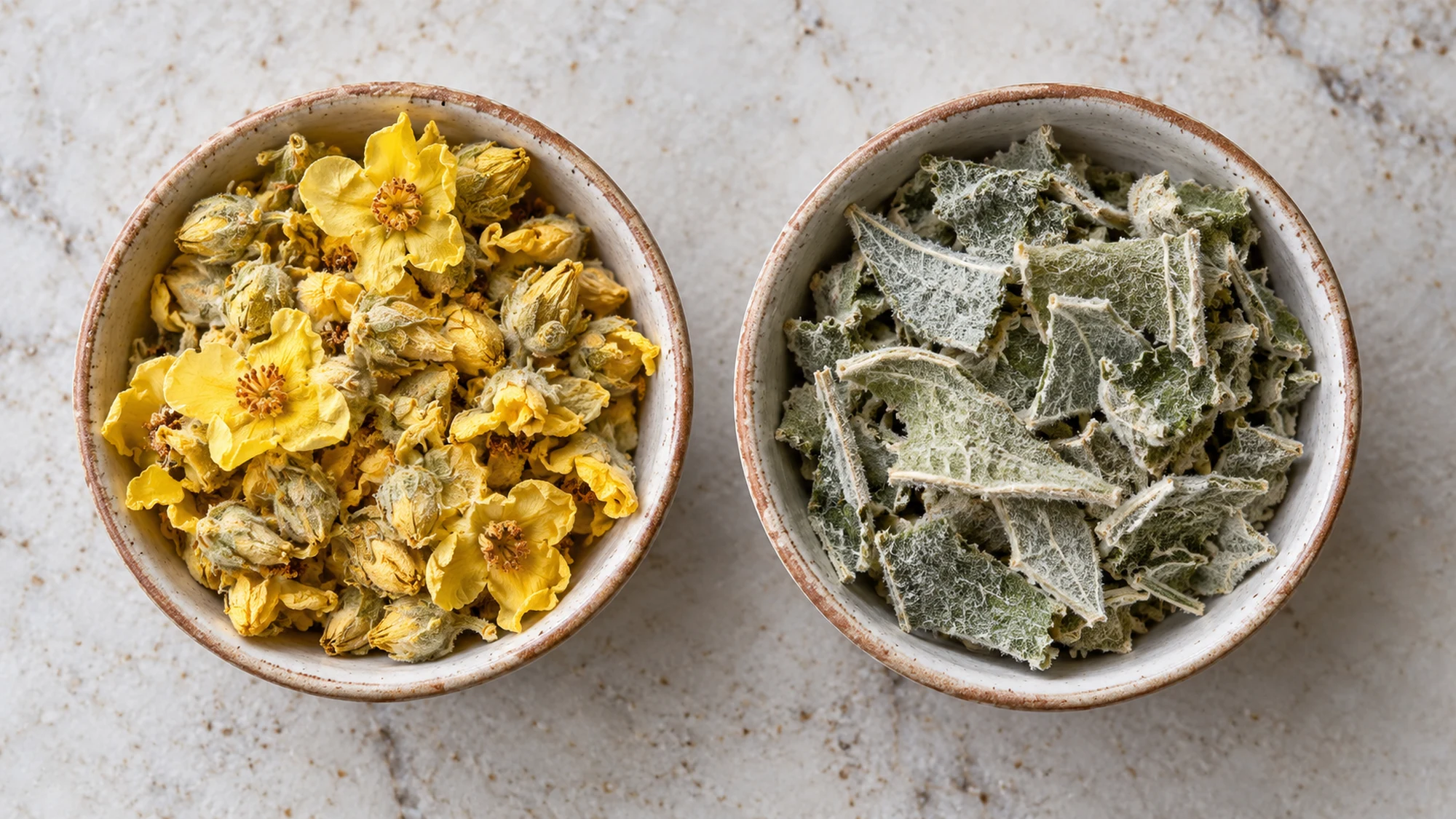
Mullein is a common name used for plants in the Verbascum genus. The European Medicines Agency’s mullein flower overview identifies flowers from specified species, including Verbascum thapsus, in its herbal-medicine assessment. It is not an assessment of every product sold under the word mullein.
A flower tea, a leaf tea and a concentrated extract are different preparations. Even two bags labeled “mullein” may contain different plant parts or additional herbs. Those differences matter more than whether the packaging looks traditional.
| Label detail | Why it matters |
|---|---|
| Flowers | The plant part covered by the EMA flower assessment. |
| Leaves | Do not assume flower-specific conclusions apply. |
| Several herbs | Each ingredient adds its own suitability questions. |
| Extract or tincture | Not equivalent to a brewed cup. |
| No plant part listed | Ask the supplier before choosing it. |
Traditional use is not the same as clinical proof
EMA recognizes a traditional use for certain mullein flower medicines for sore throat associated with a dry cough and cold. Its conclusion relies on long-standing use, while acknowledging insufficient clinical-trial evidence. That is a narrower statement than “mullein improves lung health.”
EMA’s explanation of European herbal monographs shows why the preparation and intended use belong together. A monograph informs particular medicinal products; it is not a blanket endorsement of all supplements or teas with a similar name.
- A history of use can explain why people choose an herb without proving that it works.
- A laboratory finding is not the same as a benefit demonstrated in people drinking tea.
- A claim to reverse smoking damage or treat asthma goes well beyond this traditional-use assessment.
- A warm drink should never delay evaluation of persistent cough or breathing difficulty.
Treat the evidence as specific to the preparation and use studied—not as permission to promise more.
Read, filter and store with care
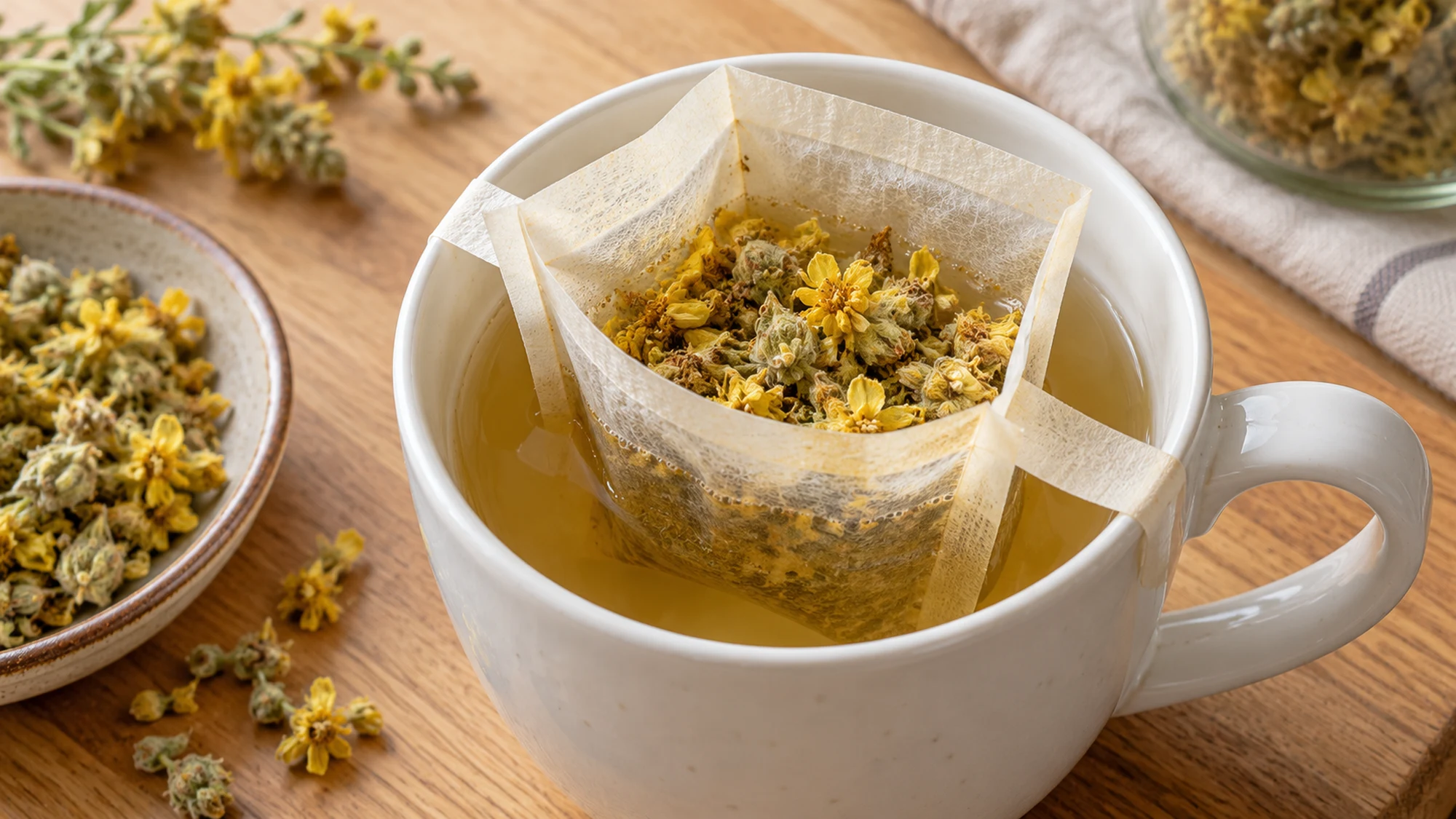
If a healthcare professional has confirmed suitability, use a food-grade product intended for drinking and follow its own preparation directions. I would not improvise with unidentified garden plants, increase the amount to chase a stronger effect, or substitute an extract for loose tea.
For leaf tea, the seller Alpine Apothecary’s preparation guidance recommends a paper coffee filter after the first strain to remove fine plant hairs. This is product-preparation advice, not evidence that the drink treats a condition.
- Keep the ingredient list and original directions, even if you transfer the herb to another container.
- Use clean utensils and a suitable heatproof cup; allow the drink to cool before sipping.
- Filter carefully rather than accepting loose plant material in the finished cup.
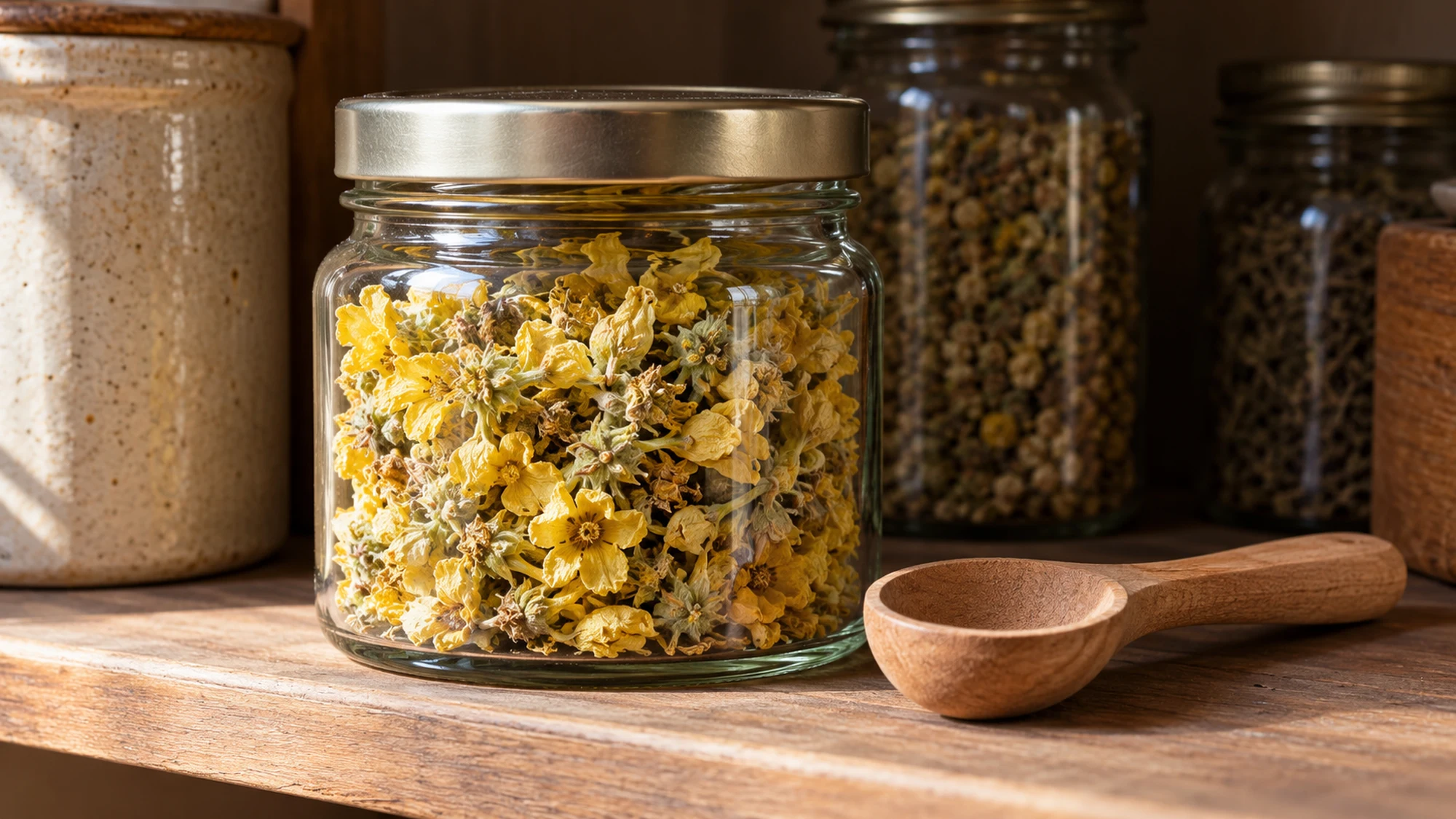
- Keep dried herbs dry and follow their package storage instructions. University Extension guidance recommends airtight storage for dried mullein.
- Choose a modest package you can use as directed instead of buying a large amount on the strength of a health claim.
Safety gaps deserve a clear answer
The EMA assessment report says pregnancy and breastfeeding safety has not been established and does not recommend use in those situations. Its flower-medicine guidance is for adults and adolescents over 12, not a reason to give an unspecified tea to young children.
Limited information about interactions is not proof that interactions cannot happen. The NIH Office of Dietary Supplements explains that botanical safety depends on the product and its use. Discuss medications and health conditions with a pharmacist or clinician before starting.
- Seek medical advice if symptoms worsen or continue beyond a week while using a mullein flower medicine, as EMA advises.
- Get prompt care for shortness of breath, fever or concerning sputum; do not simply brew another cup.
- Stop using a product that causes a reaction. Severe breathing trouble or throat swelling requires emergency help.
- Do not smoke the herb or treat an ear product as a drink. Different routes are not interchangeable.
Bottom Line
Mullein is an herb with a history, not a shortcut around uncertainty. Check the plant part, preparation and safety advice, and be wary of lung-detox promises. I’d put a clear label and a sensible suitability check ahead of any dramatic claim about what a cup can do.
This preparation demonstration is by Mountain Rose Herbs. It illustrates loose-herb brewing equipment, not a treatment or evidence of health benefits.
Sources
- EMA: mullein flower overview
- EMA: assessment report and precautions
- NIH: botanical supplements
- University Extension: dried mullein storage
- Alpine Apothecary: leaf-tea filtering

Hi, I’m Emily Pocker! I share recipes and food guides here at Recipes360 to help you find everyday meal inspiration and feel more confident in the kitchen. My goal is to make cooking approachable, enjoyable, and full of flavor.