
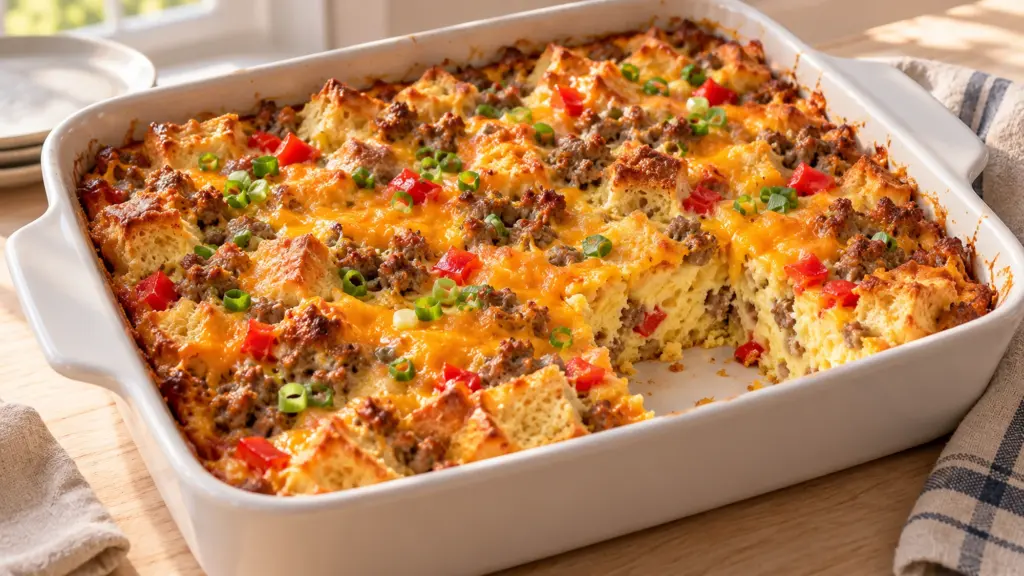
Breakfast for a group can turn into a race between the skillet and the toaster. A breakfast casserole moves the eggs, bread and sausage into one baking dish, with cheddar across the top and a little red pepper for sweetness. The bread absorbs the custard while the exposed edges toast.

Use sturdy bread, cook the sausage before assembly and give the custard time to soak in. Bake until the center reaches 160°F (71°C), then rest briefly so the squares hold together.
This is a savory bread-and-egg bake with a soft interior rather than a potato casserole. I’d choose a plain, slightly stale loaf over very soft sandwich bread: it gives the pieces more structure and keeps the baking dish easy to portion.
Serving Suggestions for Breakfast Casserole
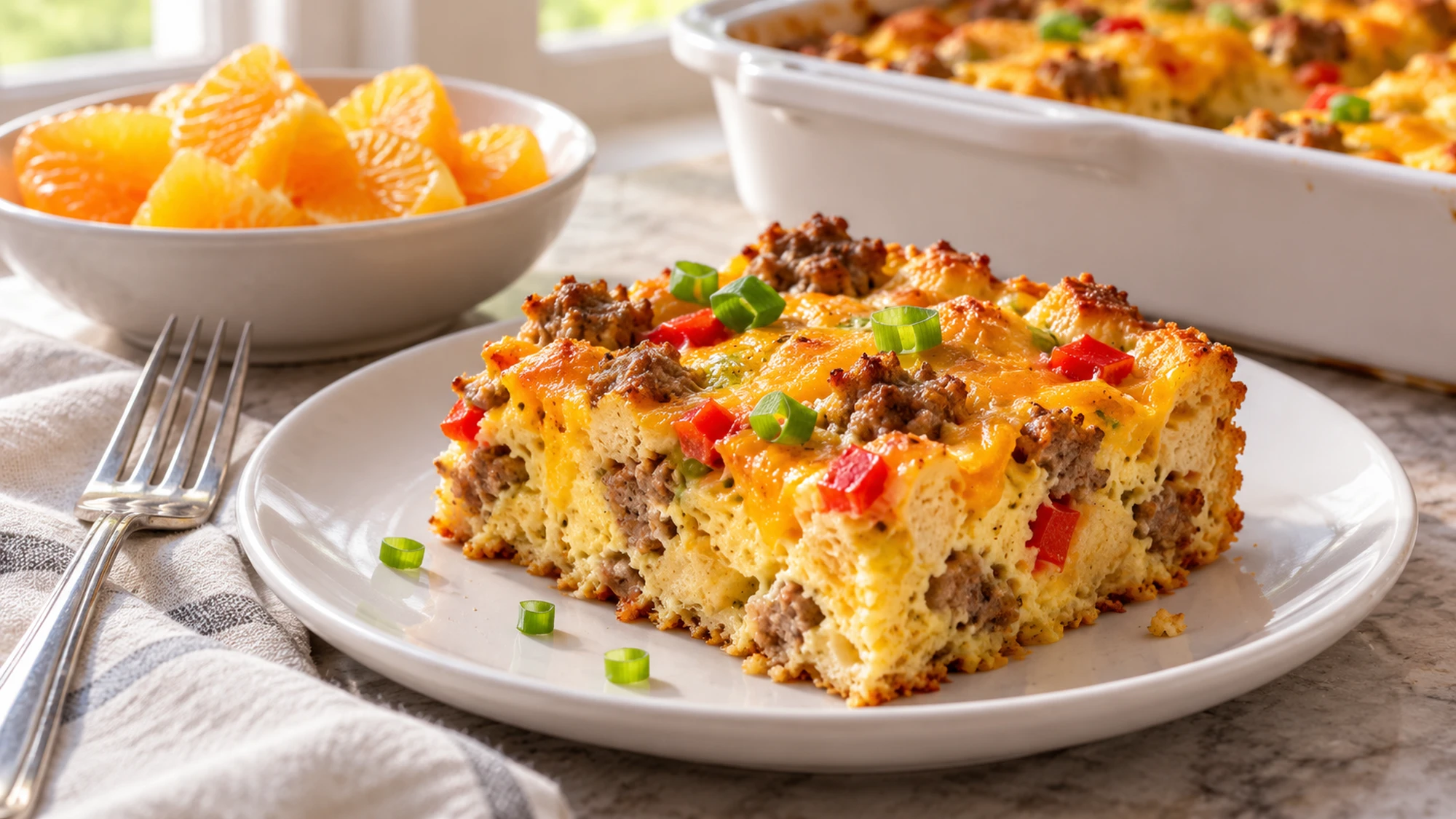
Let the pan stand for ten minutes before cutting. That pause makes serving cleaner and lets some steam escape; it does not mean leaving the dish on the counter throughout brunch. Cut eight portions and add a fresh accompaniment that does not need another burner.
Orange segments, berries or sliced tomatoes offer contrast to the cheese and sausage. I prefer something juicy and simple here. There is already plenty happening in the baking dish, and the fruit bowl deserves an easy morning too.
- For brunch: Serve with fresh fruit, coffee or tea and carrot ribbon salad if you want a savory side.
- For individual breakfasts: Chill the cooked casserole promptly in shallow portions, then reheat only what you need.
- For a buffet: Keep the casserole at 140°F (60°C) or warmer and use a food thermometer to confirm holding temperature.
Give the casserole a short rest, serve it in manageable portions and keep the accompaniments fresh and simple.
Variations That Keep the Custard Balanced
Bread type, extra vegetables and sausage choice all affect moisture. The card uses a measured amount of sturdy bread and milk, so treat major changes as a different formula rather than assuming every substitution behaves the same. A cup of watery raw vegetables can change the center more than a new seasoning will.
The choices below preserve the basic bread-custard approach. Keep the same pan size and begin checking near the stated time; the thermometer, not the color of the cheese, decides when the middle is cooked.
| Option | Expected change | Useful adjustment |
|---|---|---|
| Whole-grain bread | Heartier flavor and firmer crumb | Keep the bread weight the same |
| Monterey Jack | Milder cheese flavor | Use the same weight |
| Cooked mushrooms | More savory moisture | Cook off excess liquid first |
| Hot pork sausage | More heat | Keep the cooked meat quantity comparable |
- Make ahead thoughtfully: Assemble, cover and refrigerate for the stated soak or overnight. Keep the dish cold rather than leaving raw custard on the counter.
- Follow your bakeware instructions: A chilled glass or ceramic dish may need special handling to avoid sudden temperature changes.
- Watch the top: If the bread and cheese brown before the center sets, tent loosely with foil and keep baking.
Protect the bread-to-custard balance, remove excess vegetable moisture and judge the center independently of the golden top.
Health Benefits and a Useful Nutrition Estimate
Eggs, milk, sausage and cheddar contribute protein; dairy also provides calcium. NIH’s calcium fact sheet describes its role in bones and teeth and in normal muscle and nerve function. Those ingredients still bring different amounts of saturated fat and sodium, so the portion and the rest of the meal matter.
The estimate in the card is for one-eighth of the pan, with all listed ingredients included. Bread and sausage brands can shift the result substantially. Use your package labels when you need a closer calculation, especially for sodium, and remember that a fruit accompaniment is not included in the card values.
- Choose a portion deliberately: Cut the pan first rather than estimating repeated spoonfuls.
- Keep produce in the meal: Fresh fruit or vegetables add a different texture and broaden the plate.
- Respect allergens: This version contains eggs, milk and wheat; mustard and sausage may carry additional allergens depending on the brand.
Think of the casserole as the substantial part of breakfast, then use fresh produce and your preferred portion size to round out the meal.
Bottom Line
A useful breakfast casserole is soft in the center, lightly toasted at the edges and straightforward to serve. Cooking the sausage first and allowing a cold soak set up that contrast. I’d spend my attention on an evenly soaked layer of bread and a properly cooked center before adding more toppings.
Keep the formula simple, verify 160°F (71°C) in the center and rest ten minutes before slicing. Refrigerate leftovers promptly and reheat portions to 165°F (74°C).
Read the FDA’s buffet guidance for safe holding and reheating, and NIH’s calcium information for nutrient context.
Breakfast Casserole Recipe


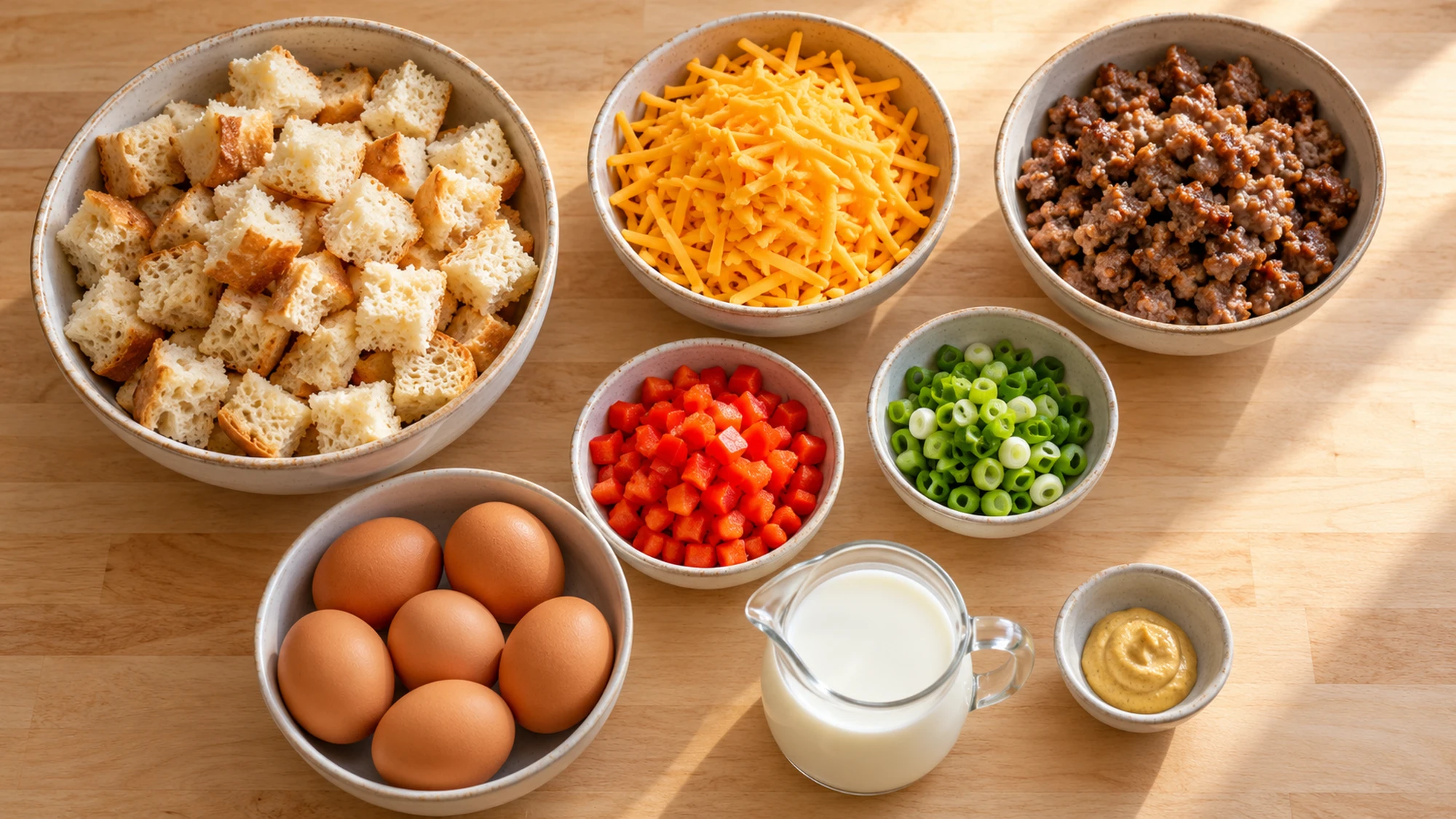
Ingredients
- 1 teaspoon olive oil for the dish
- 8 ounces raw pork breakfast sausage casings removed if needed
- 1 red bell pepper about 150 g; finely diced
- 3 scallions about 30 g; thinly sliced
- 240 g sturdy day-old bread cut into 3/4-inch cubes
- 6 large eggs
- 2 cups whole milk 480 ml
- 1 teaspoon Dijon mustard
- 1/4 teaspoon fine salt
- 1/4 teaspoon black pepper
- 6 ounces cheddar cheese 170 g, grated and divided
Equipment
- 9-by-13-inch baking dish
- Large skillet
- Mixing bowl and whisk
- Food thermometer
Instructions
- Oil a 9-by-13-inch baking dish. Cook the sausage in a skillet over medium heat, breaking it into small crumbles, until cooked through to 160°F (71°C), about 6–8 minutes. Add the bell pepper and cook 3 minutes to soften slightly; stir in the scallions. Drain excess fat.
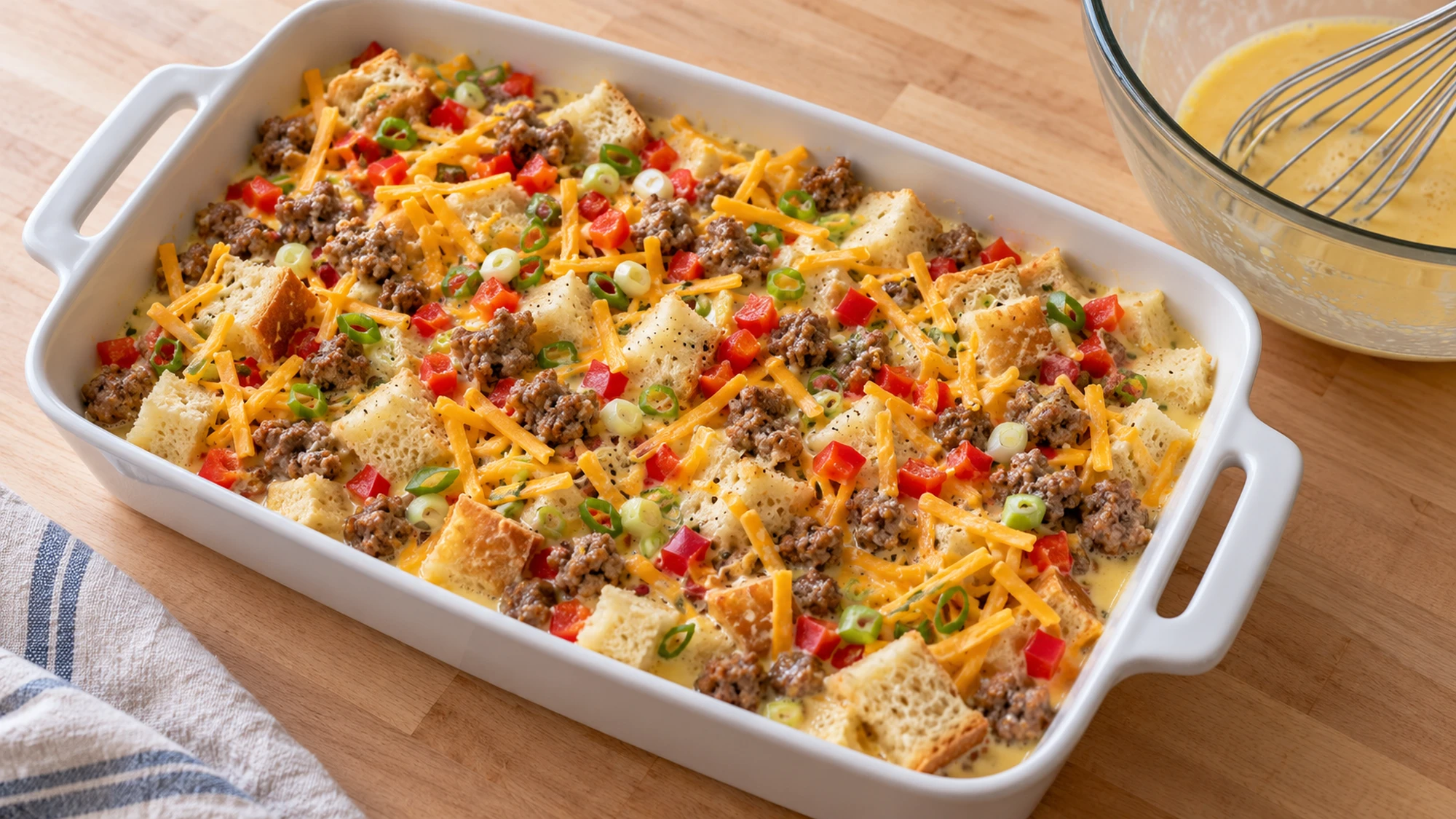
- Spread the bread in the baking dish. Scatter the sausage mixture and two-thirds of the cheese evenly over it.
- Whisk eggs, milk, mustard, salt and pepper until well combined. Pour evenly over the bread. Press protruding bread lightly into the liquid with a spatula, then scatter over the remaining cheese. Cover and refrigerate for 30 minutes, or overnight.
- Heat the oven to 350°F (175°C). Follow your bakeware manufacturer’s instructions for baking a chilled dish. Remove the cover and bake about 40–50 minutes until puffed and the center reaches 160°F (71°C) on a food thermometer. Tent loosely with foil if the top browns too quickly.
- Rest for 10 minutes, then cut into eight portions. Refrigerate leftovers in shallow containers within 2 hours, or 1 hour above 90°F (32°C).
Nutrition
Video
Notes
Tried this recipe?
Let us know how it turned out!Hi, I’m Emily Pocker! I share recipes and food guides here at Recipes360 to help you find everyday meal inspiration and feel more confident in the kitchen. My goal is to make cooking approachable, enjoyable, and full of flavor.