
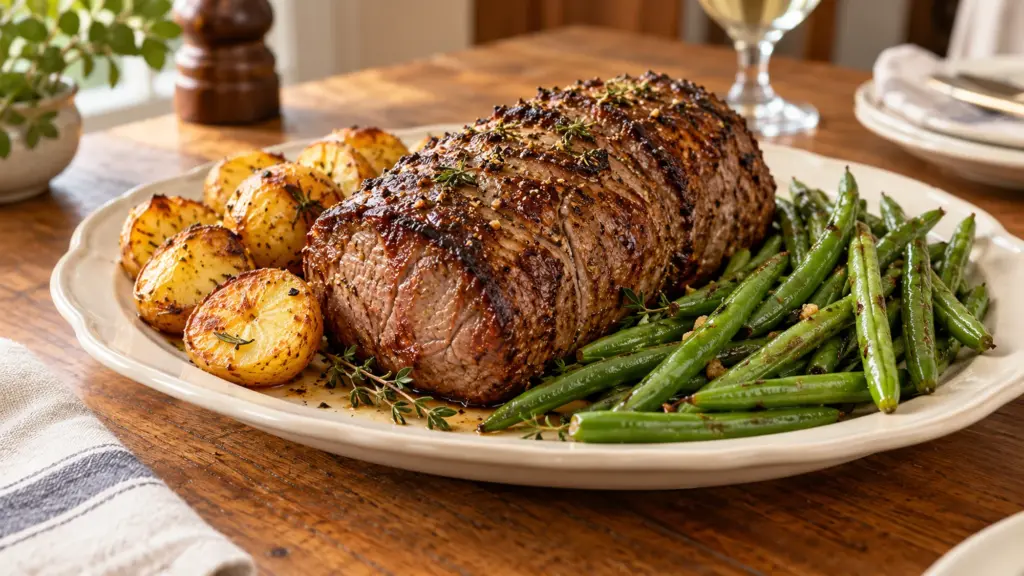
A butcher’s label saying chateaubriand can sound more complicated than the cut itself. For shopping purposes, it usually means a center-cut beef tenderloin roast: a short, fairly even piece that you cook whole and carve into servings. It comes from the same tenderloin that supplies filet mignon steaks, but the roast format changes your cooking plan.
Ask for a trimmed, center-cut beef tenderloin roast when buying chateaubriand. Confirm its weight and preparation with the butcher, use a thermometer rather than appearance, and follow USDA guidance: whole beef roasts should reach 145°F (63°C) before leaving the heat, followed by at least three minutes of rest.
What cut is chateaubriand?
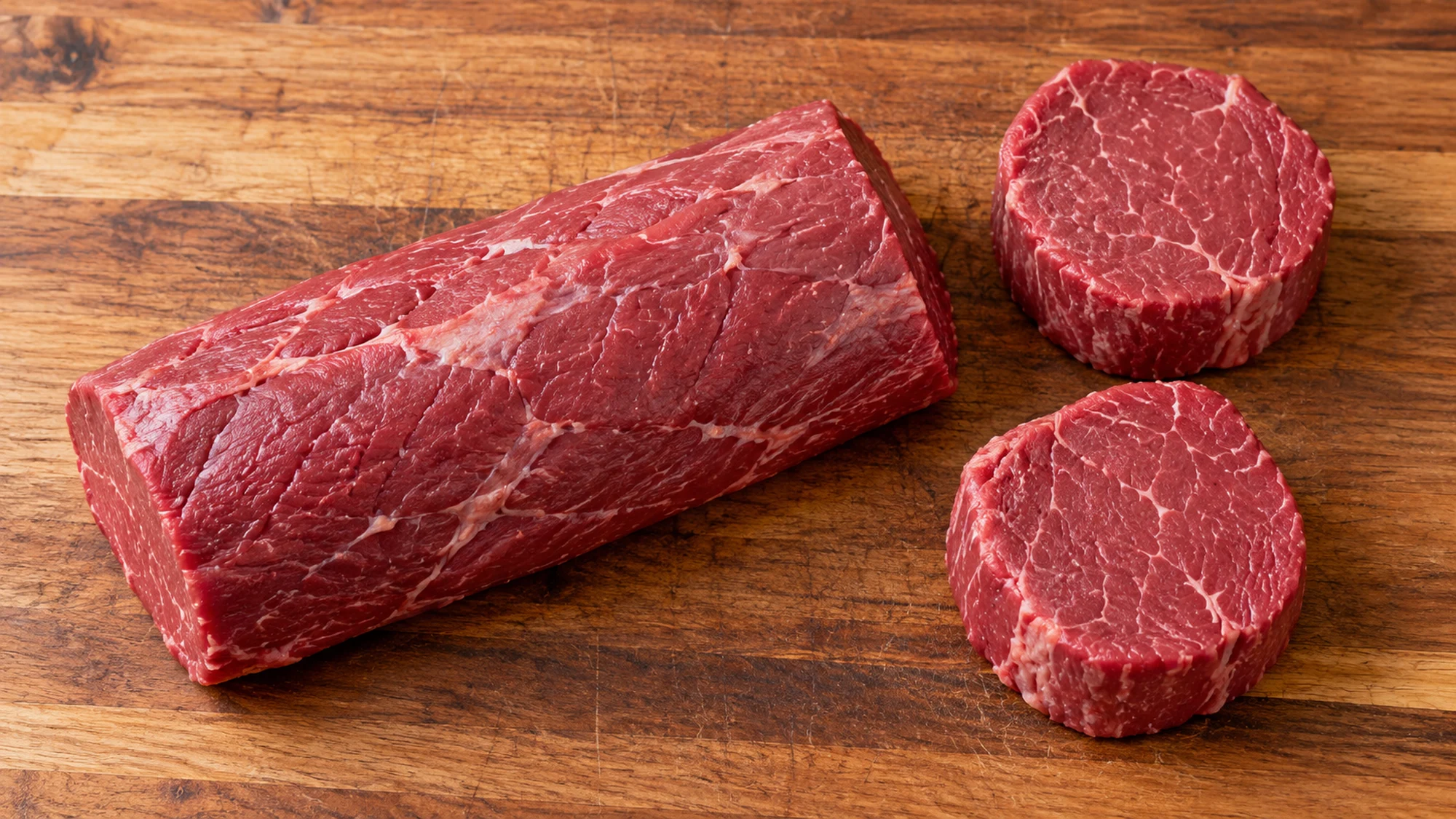
The beef industry’s Beef. It’s What’s For Dinner. cut guide lists center-cut tenderloin roast and filet mignon roast among the names for chateaubriand. Its filet mignon guide describes individual steaks cut from the tenderloin. They share an origin, but a steak recipe and a roast recipe are not automatically interchangeable.
| What you buy | Practical difference | Confirm at the counter |
|---|---|---|
| Whole tenderloin | A larger piece requiring a trimming and portioning plan | What has already been removed |
| Chateaubriand roast | Center section cooked as one roast | Weight, shape and trimming |
| Filet mignon steaks | Individual tenderloin portions | Thickness and number of steaks |
ChefSteps’ butchery guide calls the center or barrel the most uniform part of the tenderloin and describes it as trimmed of surface fat and silverskin. That even shape is a useful shopping detail. I’d prioritize a clearly specified cut over assuming that an impressive name guarantees the right size for dinner.
Buy the roast with a clear preparation plan
Ask whether the meat is trimmed, tied and ready for your chosen recipe. A whole tenderloin can require considerably more preparation than a finished center-cut roast. The Certified Angus Beef trimming demonstration shows the work involved; it is also reasonable to ask the butcher to do that work for you.
- Check the format: A roast is one piece, while a package of filets contains separate steaks.
- Check the weight: Plan servings around the actual purchase and accompaniments, not the name alone.
- Read the package: Follow specific handling and cooking instructions, especially if additional processing is identified.
- Plan thawing: USDA recommends refrigerator thawing as a slow, safe option; never thaw beef on the counter.
A frozen roast needs advance thought. USDA notes that whole roasts can take two days or longer to thaw in the refrigerator, depending on the piece. If a complete recipe assumes thawed meat, do not quietly replace that starting condition with a frozen center and keep the same timing.
Cook chateaubriand by temperature, then rest it
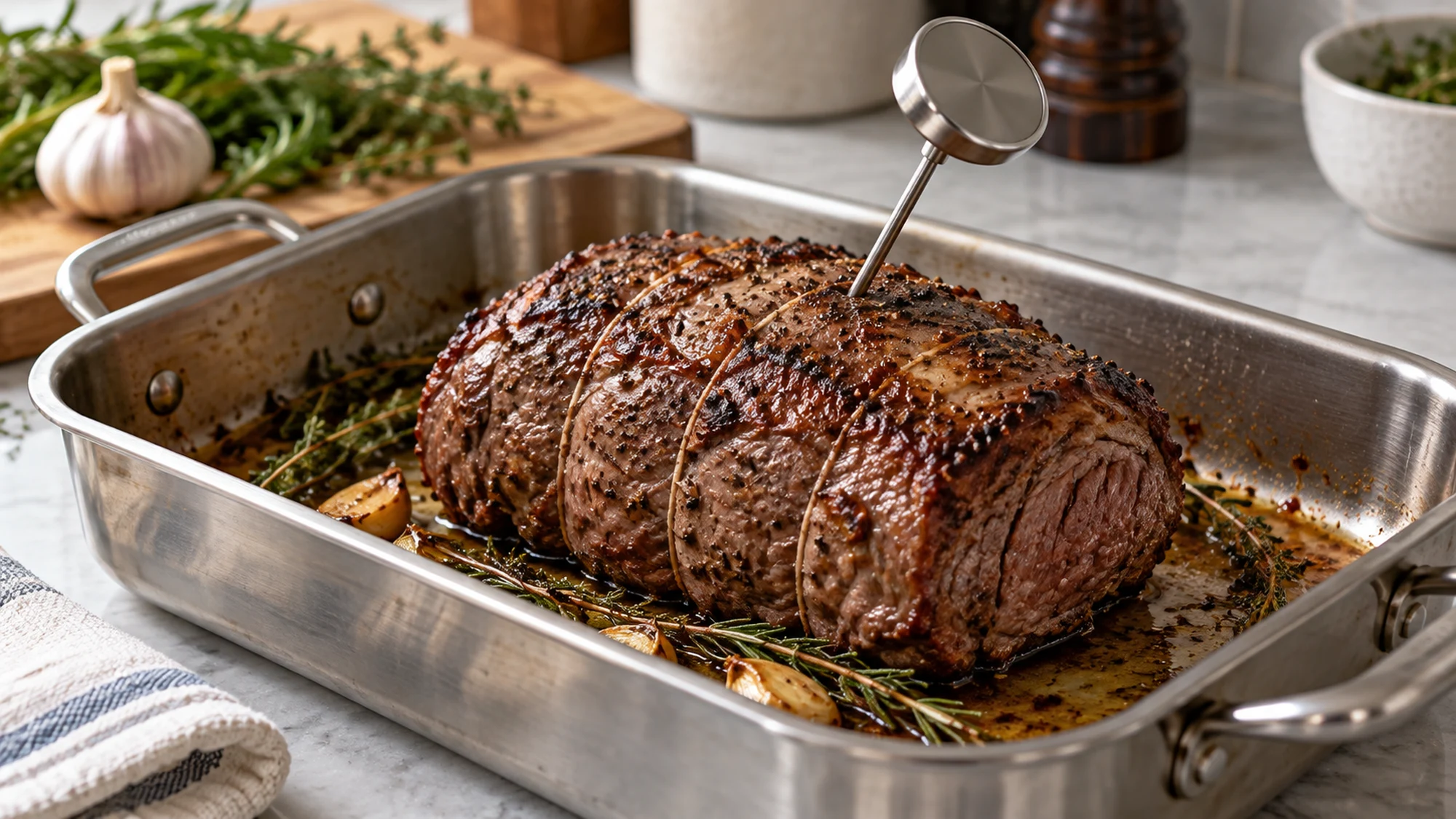
A browned outside does not measure the middle of a thick roast. The federal safe-temperature chart specifies 145°F (63°C) for beef roasts, with a three-minute rest. Reach that minimum before removing the beef from the heat; a hoped-for rise during resting is not a substitute for that instruction.
- Place the thermometer in the thickest part of the roast, avoiding fat or gristle, as USDA advises. Follow your thermometer’s instructions.
- Use a complete recipe matched to the roast’s size and preparation, and treat its timing as a guide to checking rather than proof of safety.
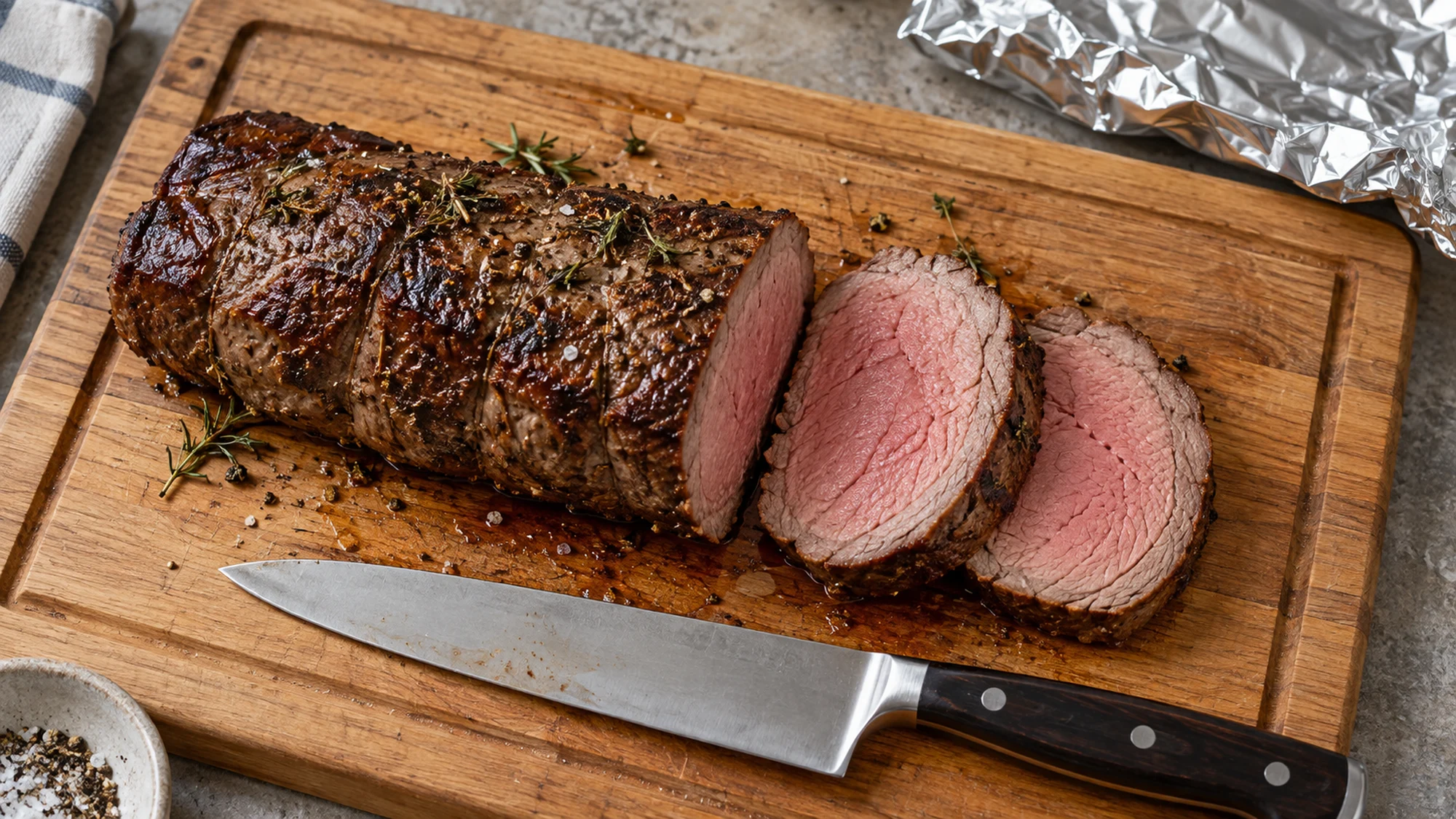
- Rest for at least three minutes before carving or eating. Keep the serving board and utensils separate from those used for raw beef.
Some restaurant doneness preferences and recipes use lower temperatures. Those preferences are different from the USDA minimum used here. I’d make the thermometer part of the plan from the beginning, rather than try to judge a costly roast by the color of one slice.
Serve simply and store the remainder promptly
A roast already gives the table a clear centerpiece. Potatoes, vegetables and a sauce served separately let diners adjust the balance. The site’s green beans with garlic and lemon offer a straightforward vegetable direction. Check the ingredients in any sauce or prepared accompaniment when allergies matter.
- For raw beef roasts, FoodSafety.gov lists three to five days refrigerated at 40°F (4°C) or below. Follow shorter package directions.
- After the meal, USDA advises refrigerating leftovers within two hours, or one hour when temperatures exceed 90°F (32°C). Divide into shallow containers.
- Use properly refrigerated leftovers within three to four days. The federal temperature chart recommends reheating leftovers to 165°F (74°C).
Bottom Line
Chateaubriand is easiest to shop for as a clearly specified center-cut tenderloin roast. Confirm the size and trimming, choose a matching recipe, measure the internal temperature and give it the required rest. Simple sides and prompt leftover storage complete the plan without making the name harder than the meal.
Sources
- Beef. It’s What’s For Dinner.: Chateaubriand roast
- Beef. It’s What’s For Dinner.: Filet mignon
- ChefSteps: Barrel-cut tenderloin
- FoodSafety.gov: Safe minimum temperatures
- USDA: Using a food thermometer
- USDA: Thawing beef
- FoodSafety.gov: Cold Food Storage Chart
- USDA: Handling leftovers safely

Hi, I’m Emily Pocker! I share recipes and food guides here at Recipes360 to help you find everyday meal inspiration and feel more confident in the kitchen. My goal is to make cooking approachable, enjoyable, and full of flavor.