
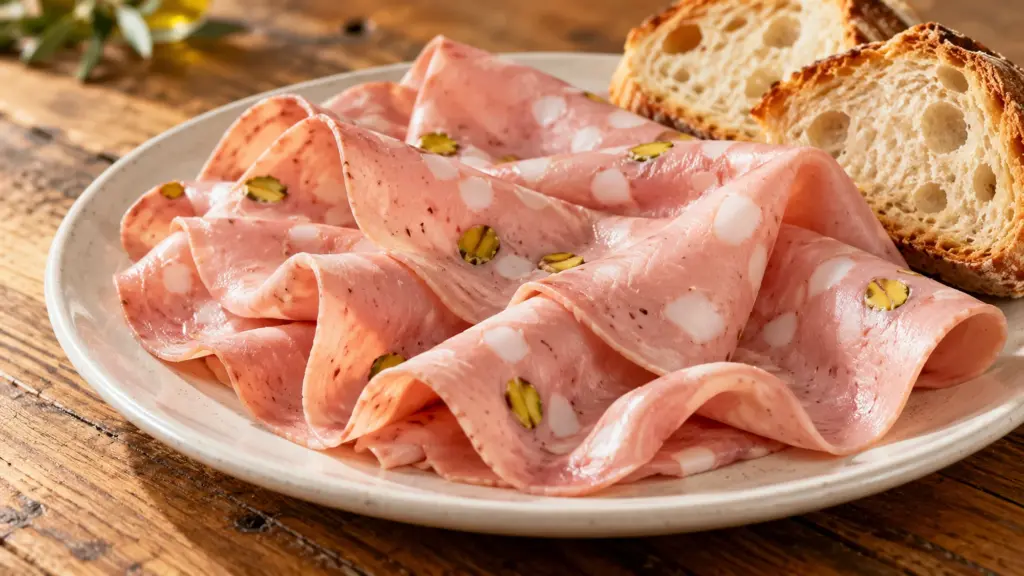
Those big pink slices with little white squares are mortadella: a finely ground, cooked sausage best known through Italy’s Mortadella Bologna. Its soft texture comes from the smooth meat mixture, while the visible white pieces are pork fat. Some versions contain pistachios, but those green flecks are optional, not the definition of the food.
Mortadella is cooked sausage, not a dry-cured salami. Choose thin slices for a soft sandwich filling or a thicker piece for cubes, read the ingredient label for pistachios and other allergens, and keep refrigerated deli mortadella cold according to its package and storage guidance.
What makes mortadella different from salami?
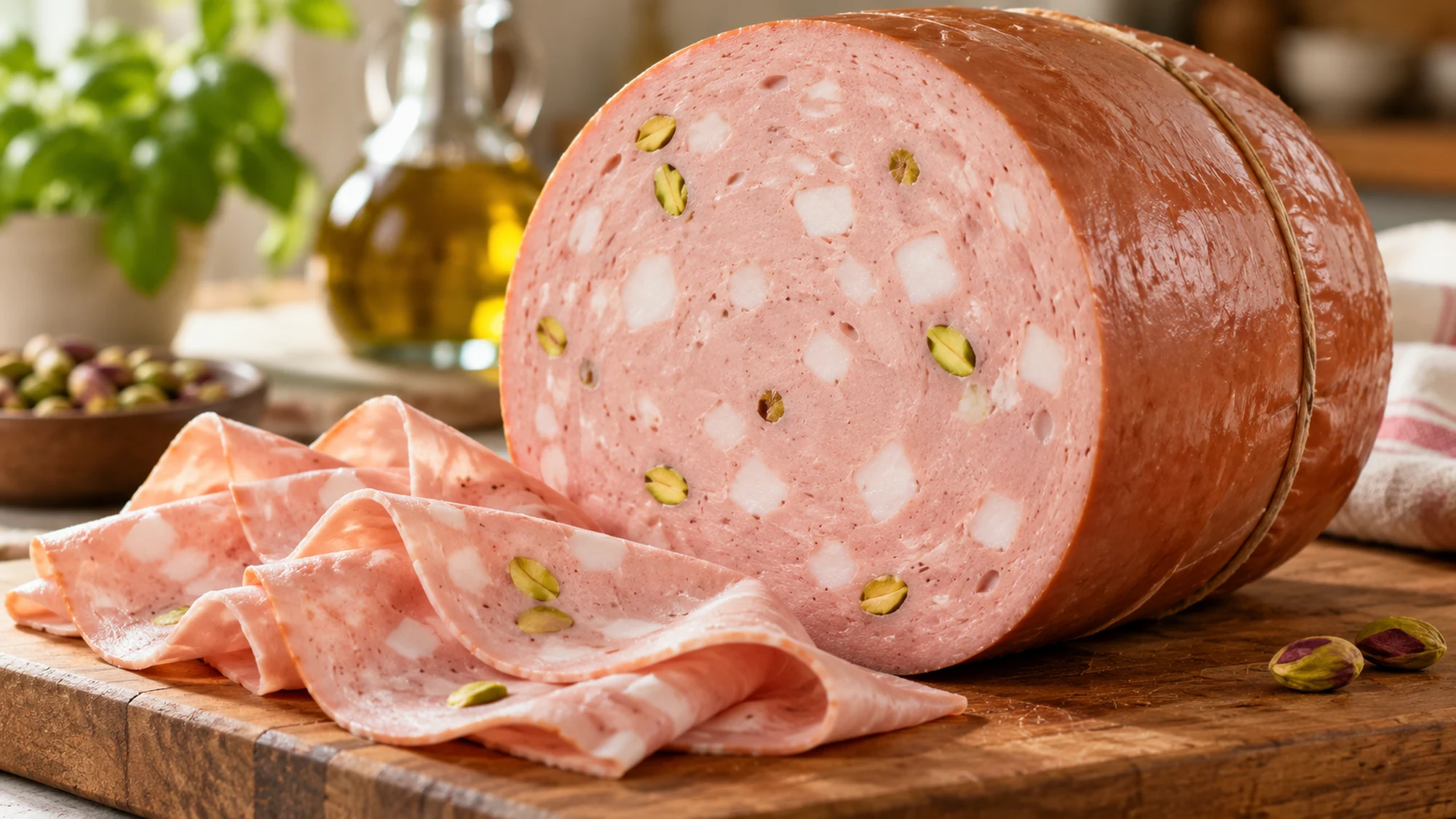
The distinction starts with processing. Emilia-Romagna’s agriculture department describes Mortadella Bologna IGP as pork meat and fat mixed, stuffed, cooked for a prolonged period in dry-air ovens, then cooled. The interior is smooth and evenly pink, with visible fat pieces, rather than the firmer texture you expect from a dry salami.
Calling it a salume or charcuterie does not make it an uncooked product. The important practical point is that a refrigerated cooked cold cut should not inherit the storage rules for a shelf-stable dry sausage. I’d start with that distinction before worrying about which bread to buy.
- Fine pink base: The meat is ground very finely, producing a uniform, soft slice.
- White pieces: These are deliberately included pork-fat cubes, not cheese.
- Green pieces: Pistachios appear in some products; read the label rather than relying on a glance.
Choose the mortadella that fits your plans
Mortadella Bologna IGP is a specific protected product, not a promise attached to every sausage called mortadella. The official consortium explains that its protected geographical indication is tied to designated Italian production areas and a production specification. Look for the actual product name and certification when that identity matters to you.
- For sandwiches: Ask for thin slices that fold easily. Buy an amount you can use within the refrigerated storage window.
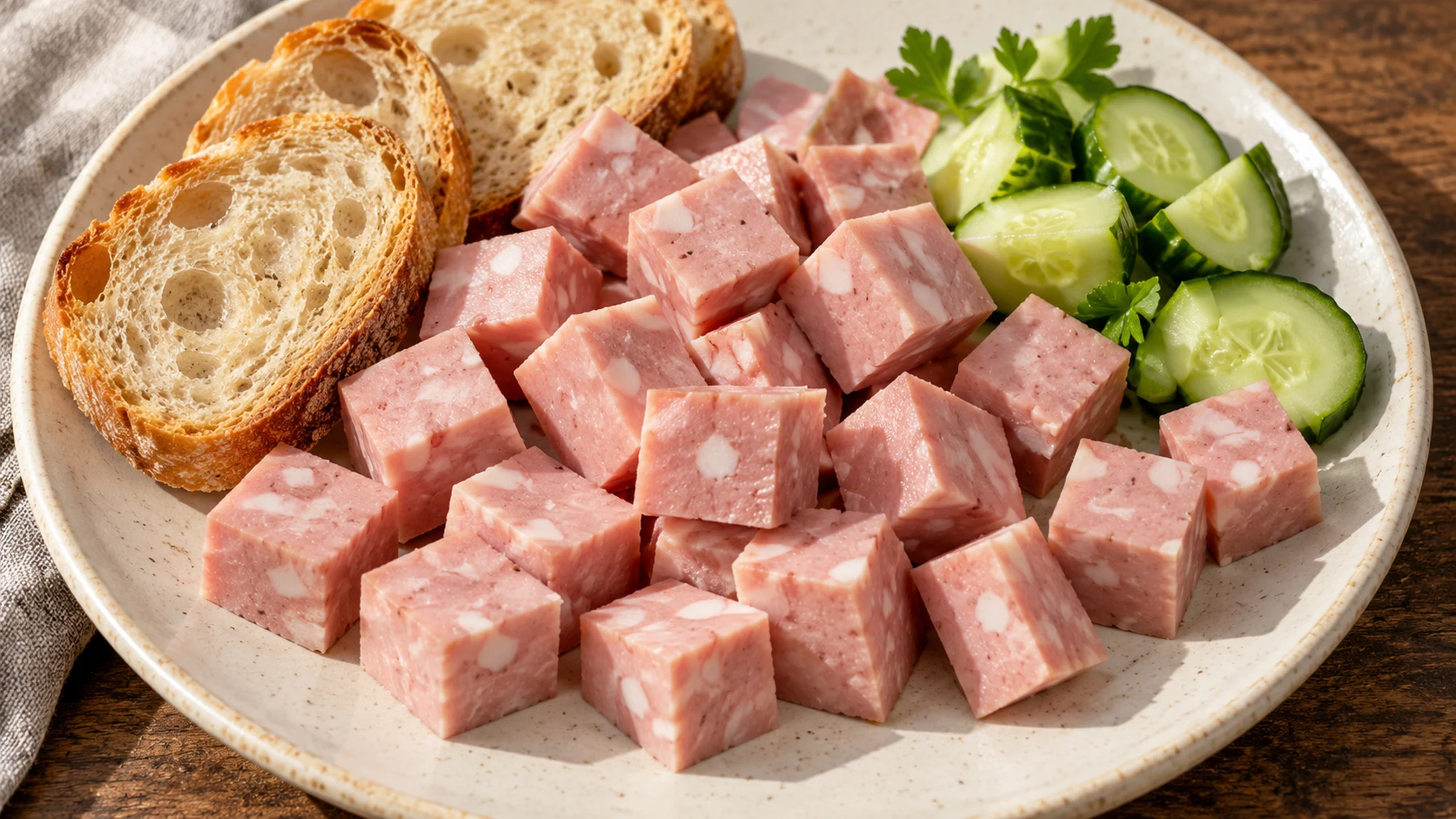
- For a snack plate: A thicker cut can be diced; keep cubes small enough to eat comfortably.
- For a particular recipe: Check whether it needs chopped meat, whole slices or a filling rather than assuming any cut will work.
The regional tourism authority confirms that pistachios are allowed but not compulsory. If nuts matter, ask about the exact product and shared slicing equipment. Absence of visible nuts is not evidence that a food is suitable for someone with an allergy; the FDA advises reading labels and avoiding the relevant allergen.
Serve it simply so the texture stays noticeable
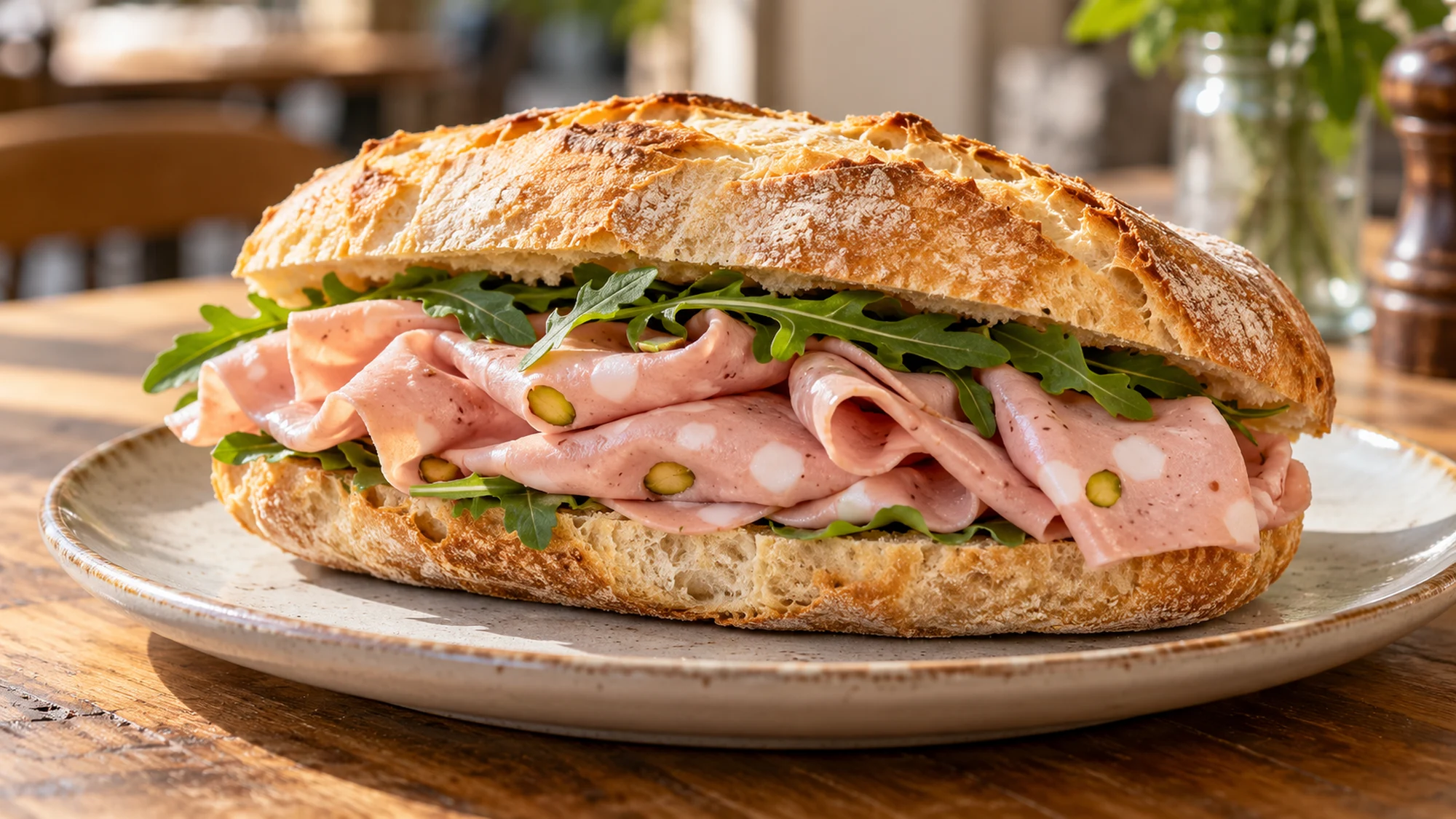
A sandwich gives the thin slices room to shine. Choose bread you can bite through without pulling all the filling out, then add a little crunch or acidity if you like. I’d keep the first combination restrained: bread, mortadella and a modest amount of greens are enough to understand what the sausage contributes.
- Fold rather than compress: Loose folds keep thin slices from becoming a dense slab in the middle of the bread.
- Use cubes for contrast: Serve a small dish beside vegetables or bread rather than making every bite identical.
- Check the whole plate: Bread, cheese, sauces and nuts bring their own ingredients and allergen considerations.
Mortadella also belongs in cooked preparations: Emilia-Romagna’s guide notes its use in tortellini filling and in spreads. Follow a complete recipe for those dishes, including their cooking and storage instructions. For another sandwich direction, the site’s grinder salad sandwich offers a different balance of crisp vegetables and rich filling.
Mortadella storage: keep the product state in view
For refrigerated sliced mortadella sold as luncheon meat, use the FoodSafety.gov cold-storage chart below. Follow any shorter package instruction. These are home-storage guidelines for the stated product forms, not an allowance to keep a warm deli purchase or damaged package for the full period.
| Refrigerated luncheon meat | Fridge: 40°F (4°C) or below | Freezer: 0°F (−18°C) or below |
|---|---|---|
| Unopened package | 2 weeks | 1–2 months for quality |
| Opened package | 3–5 days | 1–2 months for quality |
| Deli-sliced purchase | 3–5 days | 1–2 months for quality |
Keep the meat covered and refrigerated, and note when it was opened or sliced. Freeze portions before the refrigerated window expires if you will not use them in time. The listed freezer periods describe quality rather than a new safety deadline; the chart assumes continuously frozen food, not repeated warming and refreezing.
During pregnancy, follow the CDC’s deli-meat advice: heat cold cuts to 165°F (74°C) or until steaming hot. Mortadella’s original cooking step does not remove the later handling risk that this advice addresses. Use a thermometer when checking an internal temperature rather than relying only on browning.
Bottom Line
Choose mortadella for its smooth cooked texture and clearly visible fat cubes, then match the cut to the meal. Pistachios are optional, refrigeration matters, and pregnancy guidance for deli meat still applies. A simple sandwich can show the sausage clearly without an overloaded list of toppings.
Sources
- Emilia-Romagna agriculture department: Mortadella Bologna IGP
- Mortadella Bologna consortium: Protected designation
- Emilia-Romagna Tourism: Product, pistachios and uses
- FDA: Food Allergies
- FoodSafety.gov: Cold Food Storage Chart
- CDC: Safer Food Choices for Pregnant Women

Hi, I’m Emily Pocker! I share recipes and food guides here at Recipes360 to help you find everyday meal inspiration and feel more confident in the kitchen. My goal is to make cooking approachable, enjoyable, and full of flavor.