
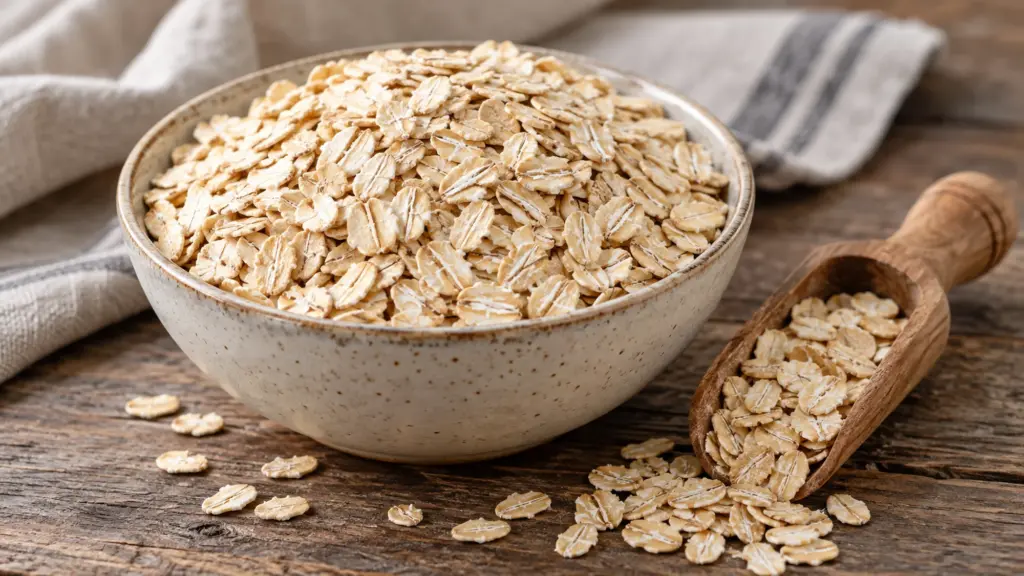
A recipe says rolled oats, while the pantry container says old fashioned oats. You can usually stop searching: those names refer to the familiar flat oat flakes. They are a useful middle ground between quick oats that soften rapidly and steel-cut oats that keep a chewier bite.
Old fashioned oats are rolled oat flakes. Choose them when you want recognizable oat texture in porridge, overnight oats or baking. Follow the package’s preparation directions, choose appropriately labeled gluten-free oats when needed, and refrigerate overnight mixtures rather than leaving them on the counter.
What Makes Old Fashioned Oats Different?
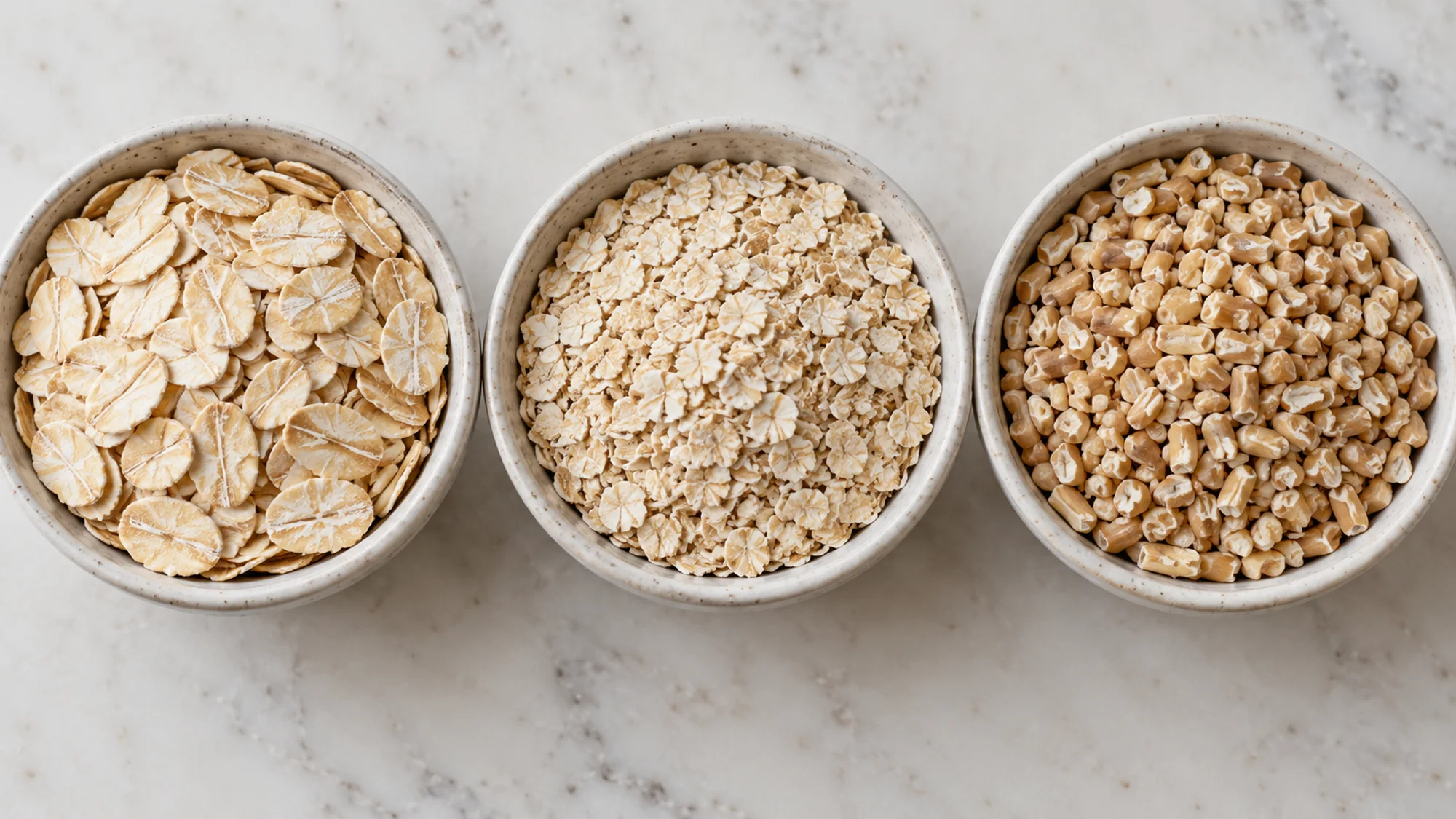
Bob’s Red Mill explains that rolled oats are made by steaming and rolling oat groats to the desired thickness. Steel-cut oats are cut into pieces instead. The shape changes how the oats behave in a bowl or batter; “old fashioned” describes a form of oats, not a special flavoring.
Quaker’s comparison of oat types describes old-fashioned oats as flat flakes, quick oats as thinner pieces, and instant oats as still finer pieces that soften readily. I’d start with the texture you enjoy instead of assuming the longest cooking time must make the best breakfast.
| Oat form | Shape and texture | Useful distinction |
|---|---|---|
| Old fashioned / rolled | Flat flakes; some texture after cooking | A versatile choice for porridge and baking |
| Quick rolled | Smaller, thinner flakes; softer result | Designed to cook faster |
| Instant | Very thin, finely cut pieces | Check whether the packet has added flavors |
| Steel-cut | Chopped groat pieces; chewier result | Different liquid and cooking needs |
Choose the Oats the Recipe Expects
Quick oats and old-fashioned oats share an ingredient, but they do not always give the same finished texture. Smaller pieces disappear more readily into a mixture, while larger flakes remain more noticeable. Steel-cut pieces are a much bigger change; swapping them into a rolled-oat recipe can leave you with the wrong texture.
For a hot bowl, use the instructions on your particular package. For example, Quaker’s traditional rolled oats and traditional steel-cut oats have different cooking directions. A quick-cooking steel-cut product is another variation, so the word “quick” alone does not identify a rolled oat.
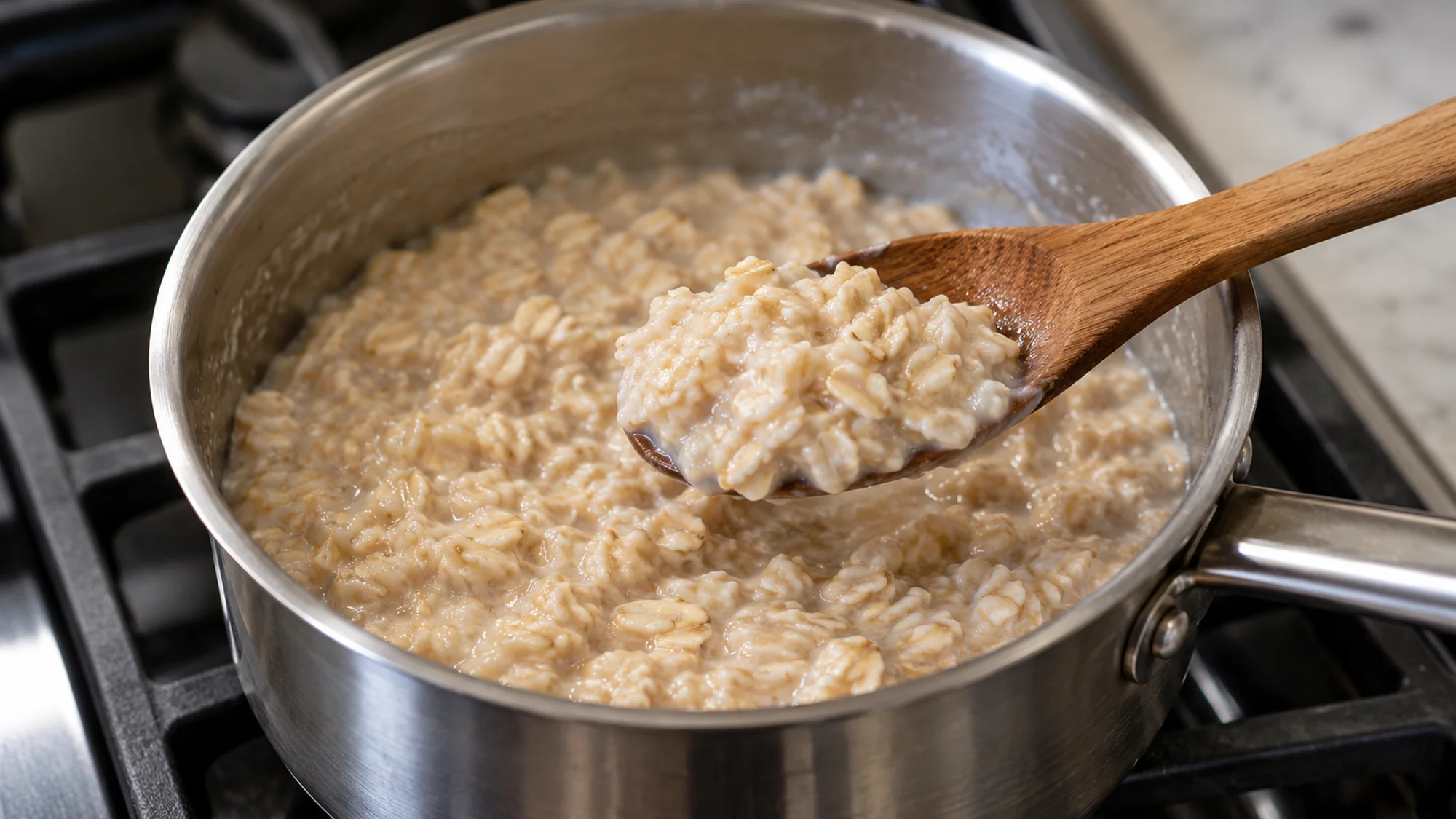
- Stovetop porridge: Quaker’s preparation guide gives about five minutes for its old-fashioned oats and 25–30 minutes for traditional steel-cut oats. These are product-specific reference times, not a promise for every brand.
- Baking: Follow the named oat type and measure as directed rather than changing both the oats and the liquid at once.
- For a baked example: Our apple cinnamon baked oatmeal uses rolled oats for a tender, scoopable or sliceable breakfast.
- For shopping: Plain oats and flavored instant packets deserve separate ingredient-list checks. Compare the actual products, including added ingredients.
Gluten-Free Needs a Label Check
Oats are not wheat, barley or rye, but shared growing, handling and processing can introduce gluten through cross-contact. An ordinary container marked “whole grain” or “old fashioned” does not establish that it is suitable for someone with celiac disease.
FDA’s gluten-free labeling guidance says oats bearing a gluten-free claim must contain less than 20 parts per million gluten. A third-party certification is not required by FDA for that claim. NIDDK recommends discussing oats with a doctor or registered dietitian when managing celiac disease.
- Buy for the person eating: Seek a gluten-free label when gluten avoidance is necessary, rather than relying on the oat shape or brand name.
- Protect the finished food: Use clean equipment and avoid cross-contact with gluten-containing ingredients.
- Check toppings too: Granola, flavored yogurt and other additions have their own ingredient lists and dietary considerations.
Keep Dry Oats Dry and Overnight Oats Cold
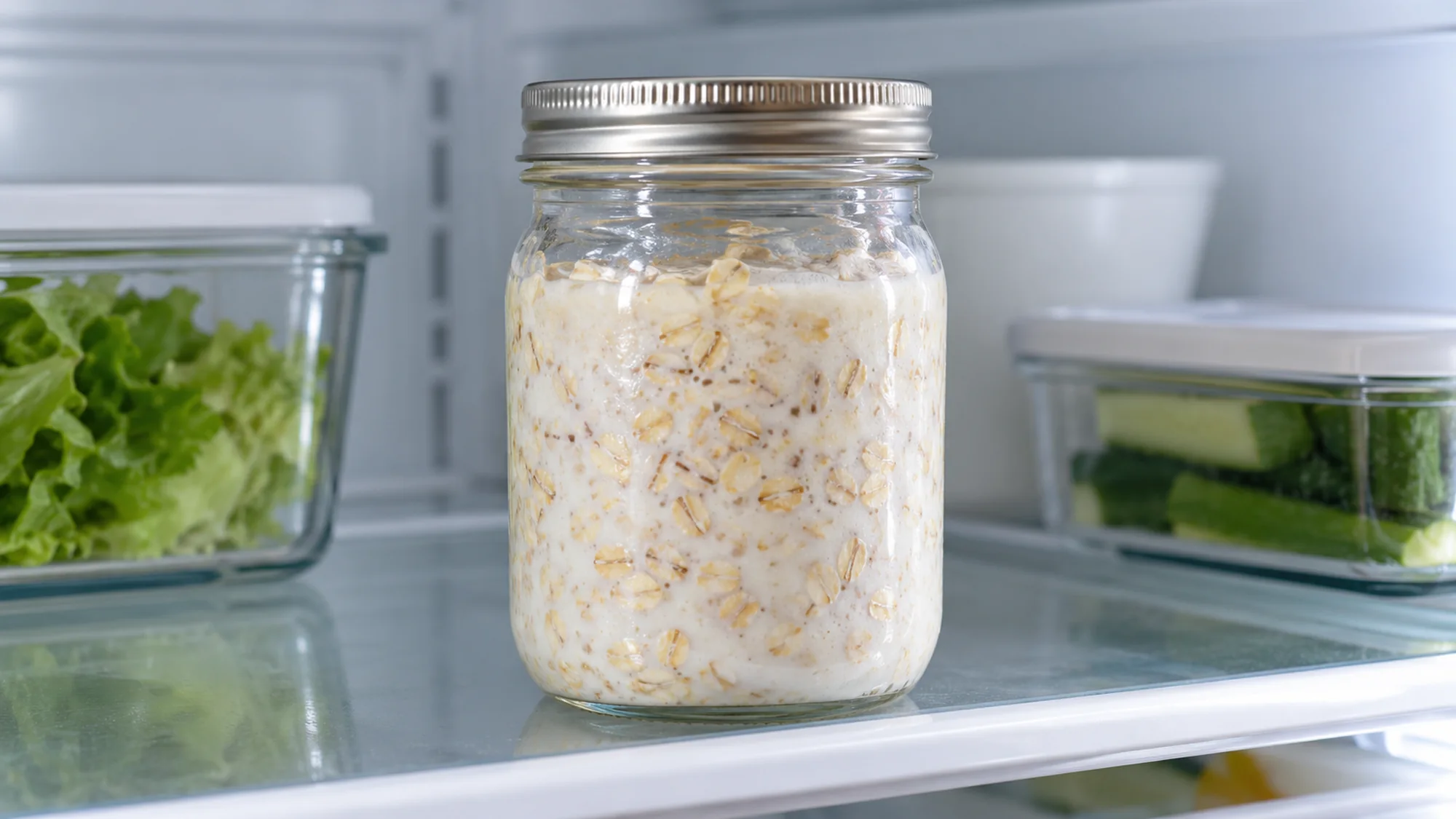
Close dry oats tightly after measuring and follow the package’s storage and date guidance. Keep them away from moisture and use a clean, dry scoop. Once mixed with milk or yogurt, they belong in the refrigerator; a shelf-stable dry ingredient does not make the finished breakfast shelf-stable.
Quaker’s overnight-oats guidance specifies a refrigerator at 40°F (4.4°C) or below and recommends enjoying that particular preparation within 24 hours. Oregon State Extension likewise directs readers to cover and refrigerate its oat mixture. Use a reliable recipe’s own storage guidance rather than assuming every combination keeps equally long.
- For a ready-to-use example, our overnight oats with yogurt and blueberries keeps the preparation in the refrigerator.
- The FDA’s refrigeration guidance says to refrigerate perishable foods within two hours, or one hour when the air is above 90°F (32°C).
- Keep chilled portions cold during travel and follow safe storage guidance for any milk, yogurt or fruit you use.
Bottom Line
Choose old fashioned oats for versatile flat flakes and a pleasantly noticeable texture. Match the oat type to the recipe, read gluten-free labels when relevant, and keep soaked mixtures refrigerated. I’d let texture and your morning schedule guide the choice, with food safety settled first.
Quaker’s stovetop-oatmeal video below illustrates one manufacturer’s preparation. Use your own package directions for the oats you have.
Sources
- Bob’s Red Mill: Rolled and cut oats
- Quaker: Differences between oat types
- Quaker: Preparation guidance
- FDA: Gluten-free labeling questions
- NIDDK: Celiac disease and diet
- Quaker: Refrigerated overnight oats
- Oregon State Extension: Overnight oatmeal
- FDA: Refrigeration guidance

Hi, I’m Emily Pocker! I share recipes and food guides here at Recipes360 to help you find everyday meal inspiration and feel more confident in the kitchen. My goal is to make cooking approachable, enjoyable, and full of flavor.