

A bottle beside the yogurt can be easy to overlook until you want something tangy enough to wake up breakfast. Kefir is a cultured beverage; the familiar dairy version is creamy, tart and pourable. Start by checking the kind of kefir and its ingredient list, because the name alone does not describe every product.
Milk kefir is a tangy cultured dairy drink you can sip or use in simple meals. Choose by flavor, milk-allergen information and the actual nutrition label, then keep it refrigerated according to the package.

What is kefir like?
Lifeway describes milk kefir as a cultured dairy beverage with a creamy consistency and tart taste. It can fill a different role from a thick spoonable yogurt: think of something you can pour into a glass, blend with fruit or stir into a cold dressing.
I’d try plain kefir first if the goal is to understand its flavor. A sweetened version can be a perfectly reasonable preference, but it makes it harder to separate the cultured tang from the added flavoring. You do not need to enjoy it straight to find a useful place for it.
- Check whether the base is milk or a different ingredient; similarly named products can have different nutrition and allergens.
- Do not assume that a kefir label describes the same texture as your usual yogurt.
- If a recipe specifies plain kefir, a sweet fruit flavor will change the result.
- A starter culture or packet of grains is a preparation ingredient, not the same purchase as a ready-to-drink bottle.
Read the kefir label before choosing
A real label is more useful than a category-wide promise. Lifeway’s plain lowfat kefir, for example, lists pasteurized lowfat milk, nonfat milk, pectin, vitamins A and D, and cultures. Its panel gives 10 grams of protein and no added sugar per one-cup serving. These figures describe that product, not every kefir.
| Label detail | Why it matters | Useful action |
|---|---|---|
| Milk or other base | Changes ingredients and allergens | Read the ingredient list |
| Serving size | Controls the comparison | Compare equal volumes |
| Added sugars | Different from total sugars | Read both lines |
| Fat and protein | Vary by formulation | Choose for your meal |
| Storage directions | Apply to that bottle | Keep the instructions |
The same product explicitly declares milk. A lactose-related claim does not make milk kefir suitable for a milk allergy: the FDA’s allergen guidance identifies milk as a major food allergen and emphasizes reading labels. Check every flavor separately, including any accompanying ingredients.
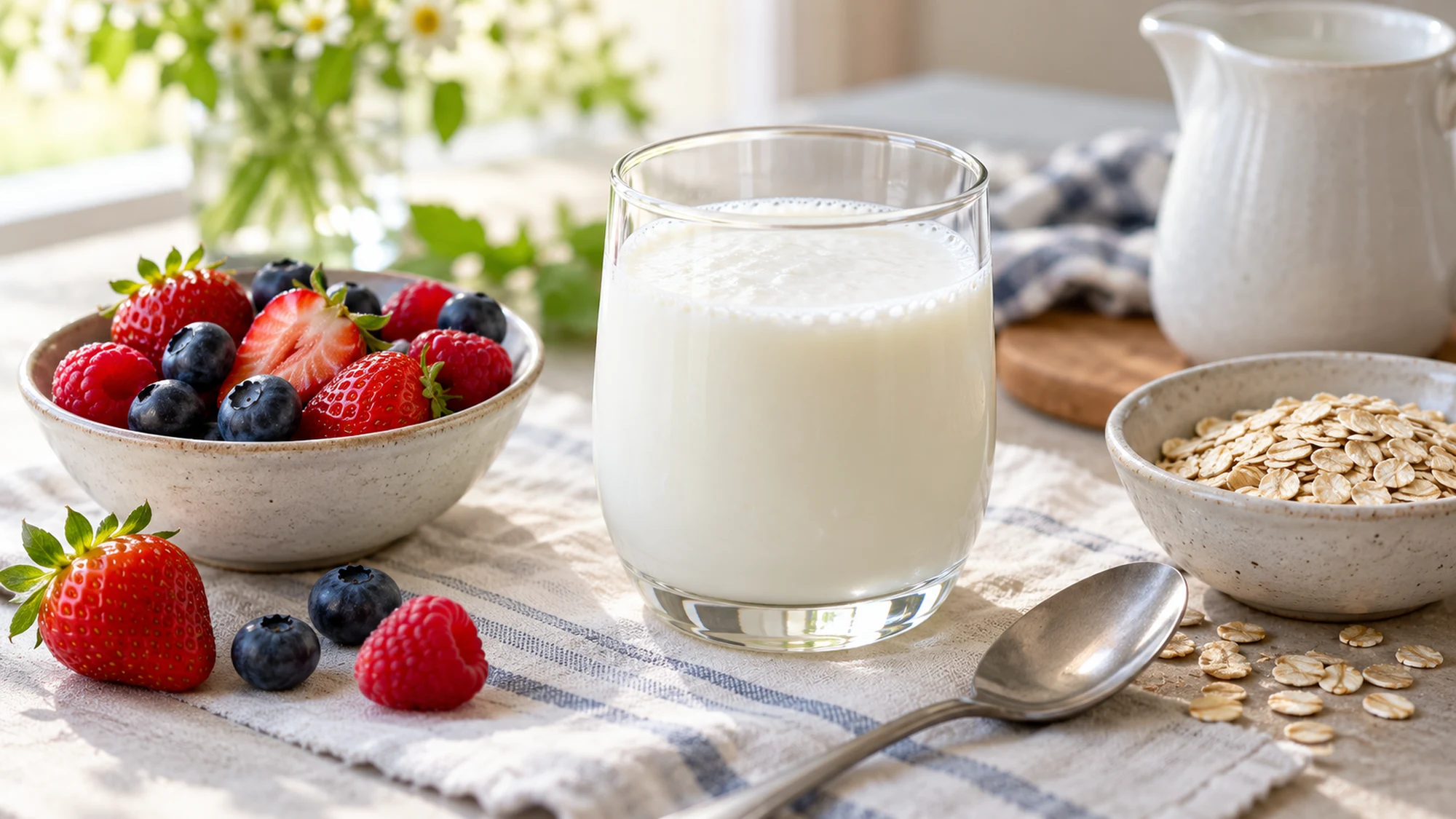
Simple ways to use a bottle
Kefir can be useful without becoming a whole kitchen project. I’d choose an approach that keeps its tang welcome: fruit for sweetness, herbs for a savory direction, or a small plain glass beside breakfast.
- Sip it: Pour a little into a clean glass and decide whether you enjoy it plain.
- Blend it: Use as the liquid base in a smoothie, accounting for any sugar already in the flavored kefir.
- Serve with breakfast: Pair it with fruit or use it in a recipe written for a pourable cultured dairy ingredient.
- Go savory: Try plain kefir in a cold herb dressing; sweetened berry kefir is a different proposition.
- Bake deliberately: Follow a recipe that specifies kefir rather than assuming it replaces every dairy ingredient in equal amounts.
Before buying the largest bottle, consider how you will finish it. A smaller container can be more practical when you are still deciding whether the texture suits you. The fridge is already crowded enough without an ambitious bottle waiting for a plan.
Cold storage and realistic culture claims
Keep refrigerated kefir cold and follow its package. FDA refrigeration guidance recommends 40°F (4°C) or below and refrigerating perishable food promptly. Do not leave a commercial bottle on the counter to imitate home fermentation. Use clean utensils, close the cap and discard a suspect product instead of tasting it to check safety.
- Buy a chilled product from a refrigerated display and get it home promptly.
- Check the date and any after-opening instruction on your particular bottle.
- Pour the amount you need instead of repeatedly drinking from a shared container.
- Use a complete, reliable method and the culture supplier’s current directions if you separately choose home culturing.
Live cultures are not a promise that every product treats the same condition. NCCIH explains that effects can differ between microorganisms and products, and evidence for one does not automatically apply to another. Our prebiotic versus probiotic guide explains the terminology; choose kefir as food rather than a replacement for medical care.

Bottom Line
Choose kefir for the flavor and role you want in a meal. Read the actual bottle for milk allergens, sugar, portions and storage, and keep it cold. A simple serving is enough; cultured food does not need an exaggerated health promise.
Sources
- Lifeway: Plain Lowfat Kefir label
- Lifeway: Kefir FAQs
- NCCIH: Probiotics, Usefulness and Safety
- FDA: Refrigerator Thermometers
- FDA: Food Allergies

Hi, I’m Emily Pocker! I share recipes and food guides here at Recipes360 to help you find everyday meal inspiration and feel more confident in the kitchen. My goal is to make cooking approachable, enjoyable, and full of flavor.