
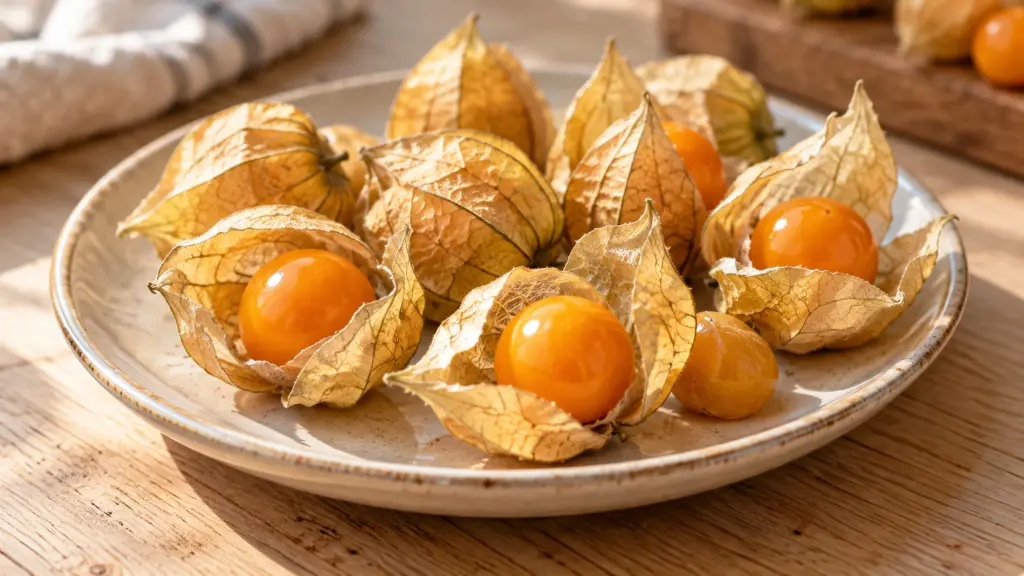
A papery husk in a fruit carton can look more like packaging than something grown on a plant. Physalis golden berries are small golden-orange fruits, also called cape gooseberries, with a bright, tart-sweet flavor. Peel away the husk, wash the ripe fruit and enjoy the berry whole or sliced.
Physalis golden berries are edible ripe fruits inside a papery husk. Choose golden-orange berries, remove the husks before eating, and use their tangy flavor wherever a little fruit brightness would help.
What are physalis golden berries?
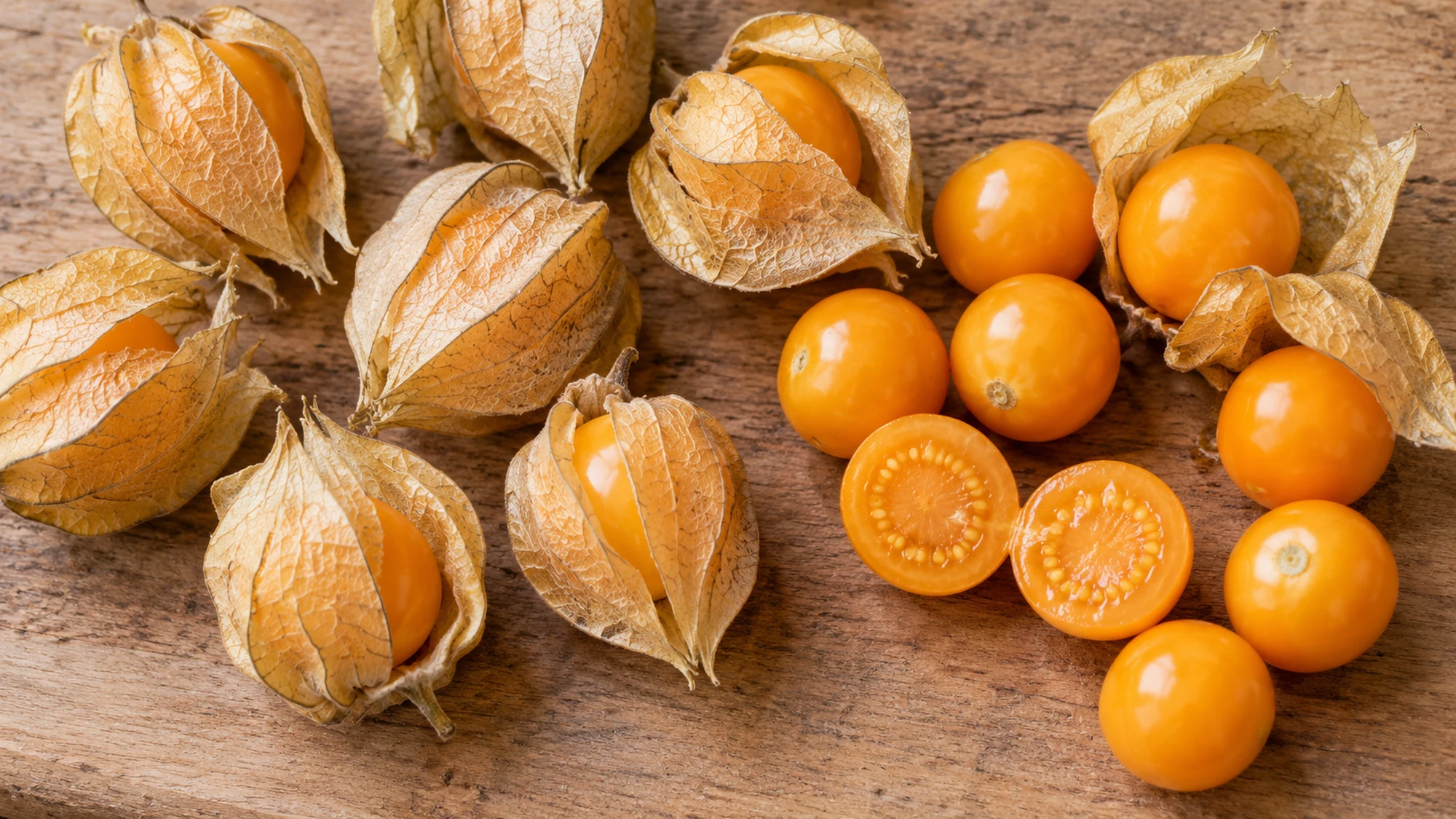
The fruit sold as goldenberry or cape gooseberry is Physalis peruviana. Singapore’s National Parks Board describes its smooth orange-yellow skin, numerous small seeds and edible fruit. The dry covering is the enlarged calyx, a flower part that grows around the berry.
The names can make shopping needlessly confusing. I’d look for a clearly identified produce package rather than use a common name to identify a wild plant. A supermarket fruit guide is useful at the counter; it is not a foraging identification key.
- Goldenberry or cape gooseberry: Names commonly used for this particular fruit.
- Physalis: A broader botanical genus, so the word alone does not identify every species.
- Fresh versus dried: Different forms with different textures and package instructions; check which one a dish calls for.
Choose ripe fruit and a useful package
Look for golden-orange fruit rather than green berries. Rutgers’ goldenberry production guide describes ripeness through fruit color and the fading, drying husk, and advises against eating unripe fruit. Do not assume a green berry will become edible simply because it has been sitting on the counter.
For a first purchase, a small carton is a sensible choice. Open one husk to see the fruit if the retailer allows it, and inspect the package for damage or mold. I’d spend more attention on the berries’ condition than on an especially dramatic display of lantern-like husks.
- Choose intact berries without leaking, collapsed or moldy areas.
- Keep the package’s identity and storage directions available after opening.
- Buy refrigerated precut fruit only from a cold display.
- Do not eat the husks, stems or leaves along with the fruit.
Preparing and storing physalis golden berries
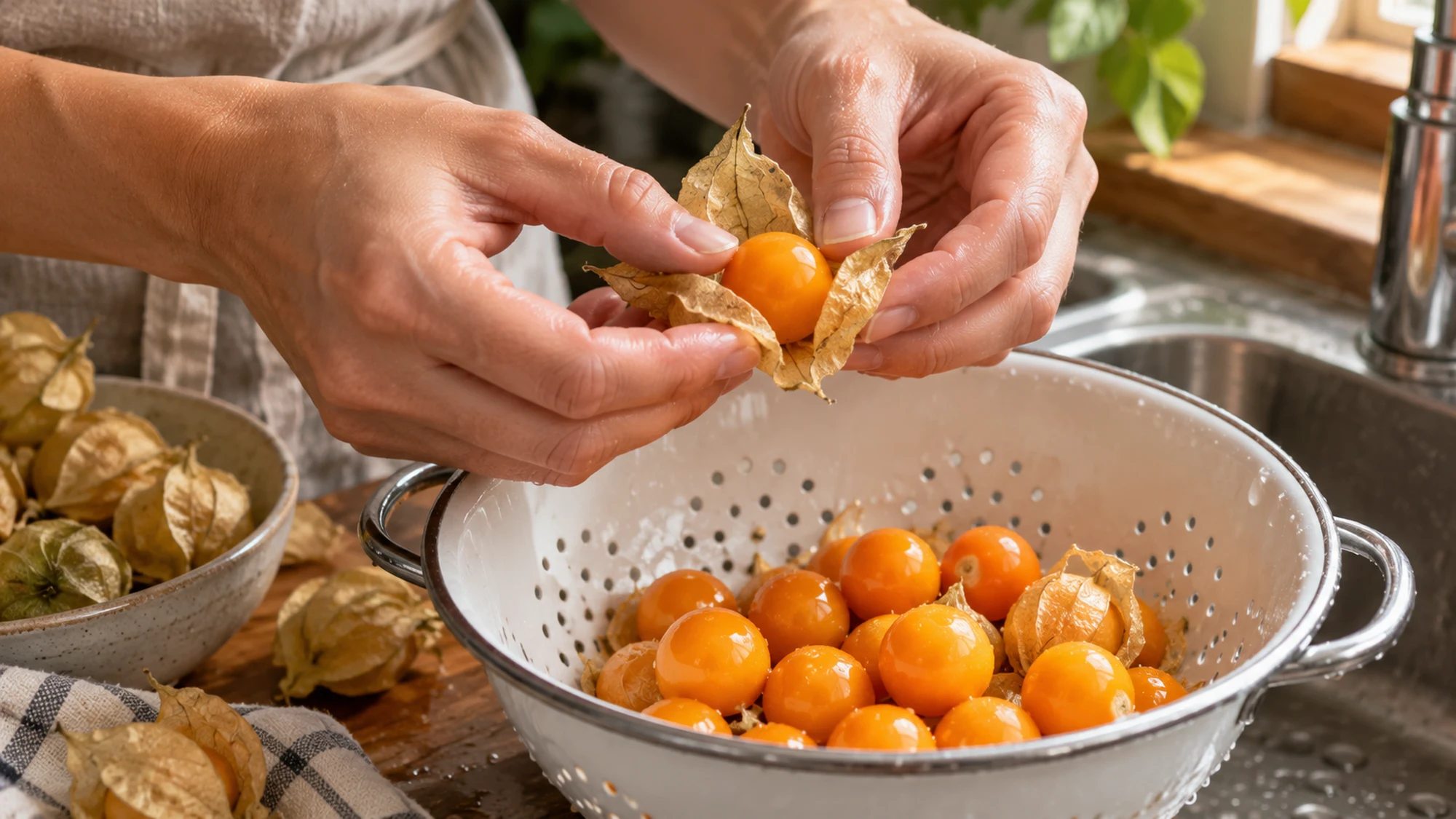
Separate the husk from each berry, then rinse the fruit under running water before serving. FDA produce guidance recommends clean hands and utensils, separation from raw meat, and washing without soap or produce detergent. A paper covering does not replace washing.
- Peel the husk back and detach the berry.
- Inspect it and discard spoiled fruit.
- Rinse under running water, then dry with a clean towel.
- Serve whole, or halve on a clean cutting board if that suits the meal.
Keep dry, intact husks on fruit you are storing, and follow the package’s directions. Rutgers notes that removing husks shortens keeping quality; its production guidance is not a guarantee for a carton of unknown age. Check regularly, use promptly after preparation, and refrigerate cut fruit. FDA recommends keeping perishable produce at 40°F (4°C) or below.
Simple ways to use their tart-sweet flavor
Start with one ripe berry to understand its flavor before adding a whole handful. Its acidity can provide contrast beside something creamy or sweet. These are serving ideas, so adjust them to the fruit you have rather than expect every carton to taste identical.
| Use | How to start | What to consider |
|---|---|---|
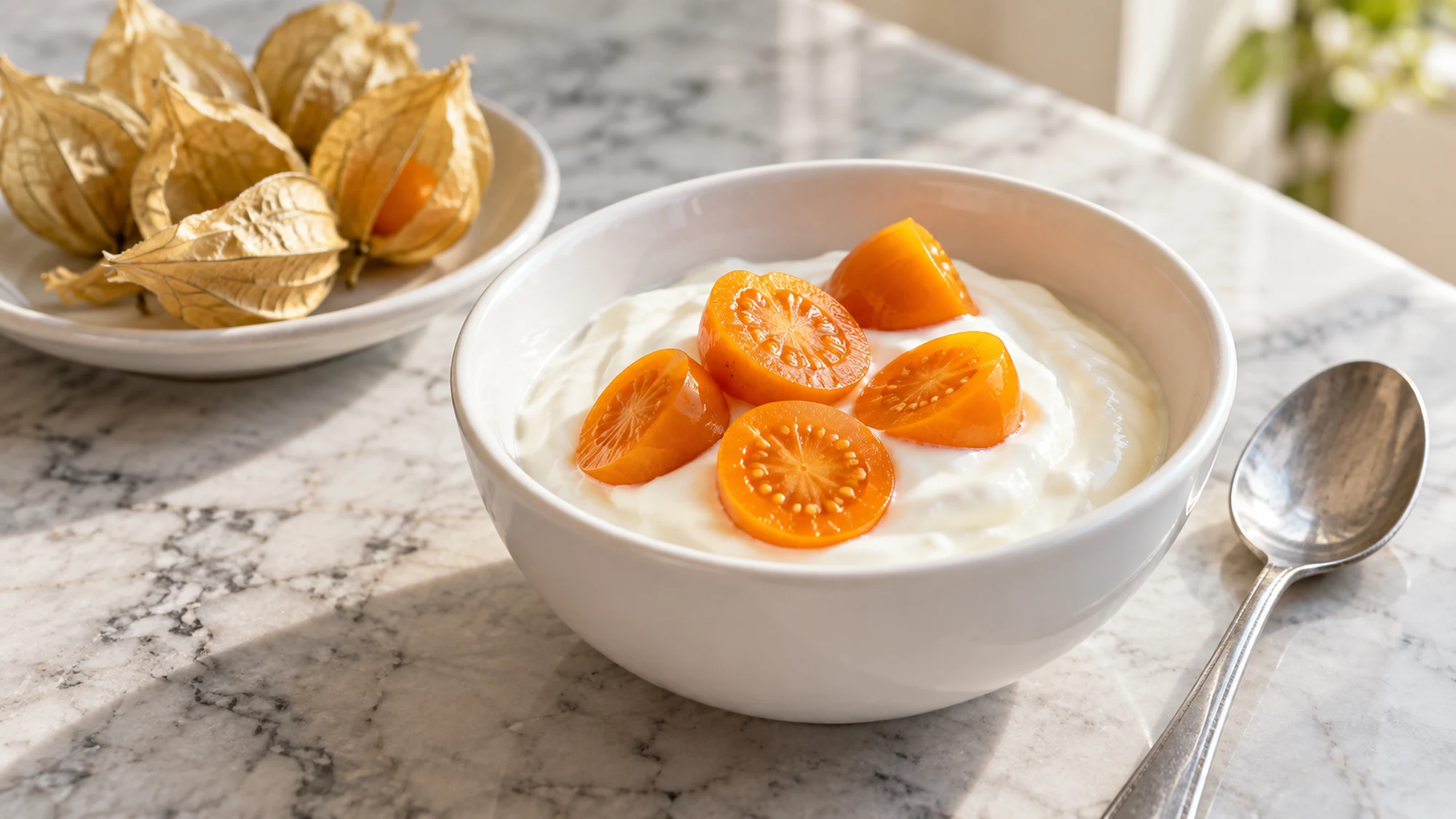
| Yogurt or oatmeal | Add a few halved berries | Tart fruit contrasts with a mild base |
| Fruit plate | Serve washed, husked fruit | Choose ripe fruit in good condition |
| Salad | Add slices as an accent | Taste before adding more acid |
| Dessert topping | Use whole or halved berries | Remove the husks before eating |
Plain yogurt makes an uncomplicated starting point, while a fruit plate lets the berries remain the main attraction. For a salad, consider the dressing before adding extra lemon or vinegar. The goal is a pleasant contrast, not a competition to see which ingredient can be sharpest.
- Use the fruit as one part of a varied meal rather than a promised health treatment.
- Check dairy, nuts and other accompaniments separately if allergies matter.
- Follow the label on dried or sweetened products instead of applying fresh-fruit assumptions.
Bottom Line
Choose ripe, clearly identified physalis golden berries, peel away the husks and wash the fruit. Their bright flavor works well in simple servings; careful selection and sensible storage matter more than elaborate preparation.
Sources
- National Parks Board: Physalis peruviana
- Rutgers: Sustainable Goldenberry Production
- FDA: Selecting and Serving Produce Safely

Hi, I’m Emily Pocker! I share recipes and food guides here at Recipes360 to help you find everyday meal inspiration and feel more confident in the kitchen. My goal is to make cooking approachable, enjoyable, and full of flavor.