
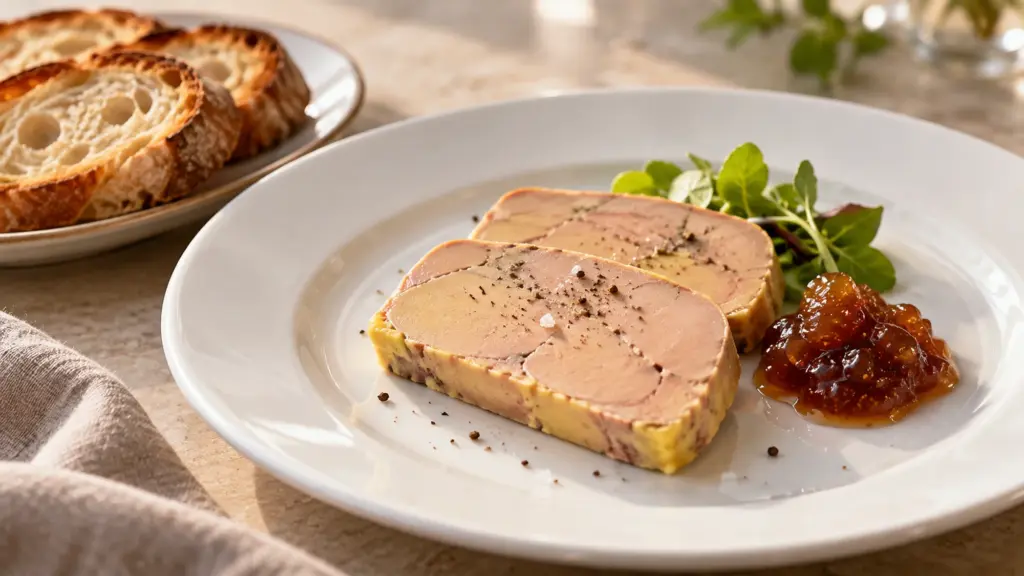
A restaurant menu may list seared foie gras, while a shop offers a chilled terrine or a neat little tin. What is foie gras, and are those all the same thing? It is the specially fattened liver of a duck or goose, sold in several raw and prepared forms.
Foie gras names the ingredient, not one universal spread. Check whether the product is raw or ready to eat, then look at its composition and storage instructions before choosing how to serve it.
The appeal is its rich, smooth texture and concentrated savory flavor. A cold slice and a hot preparation feel quite different, so I would decide how I want to serve it before comparing packages or prices.
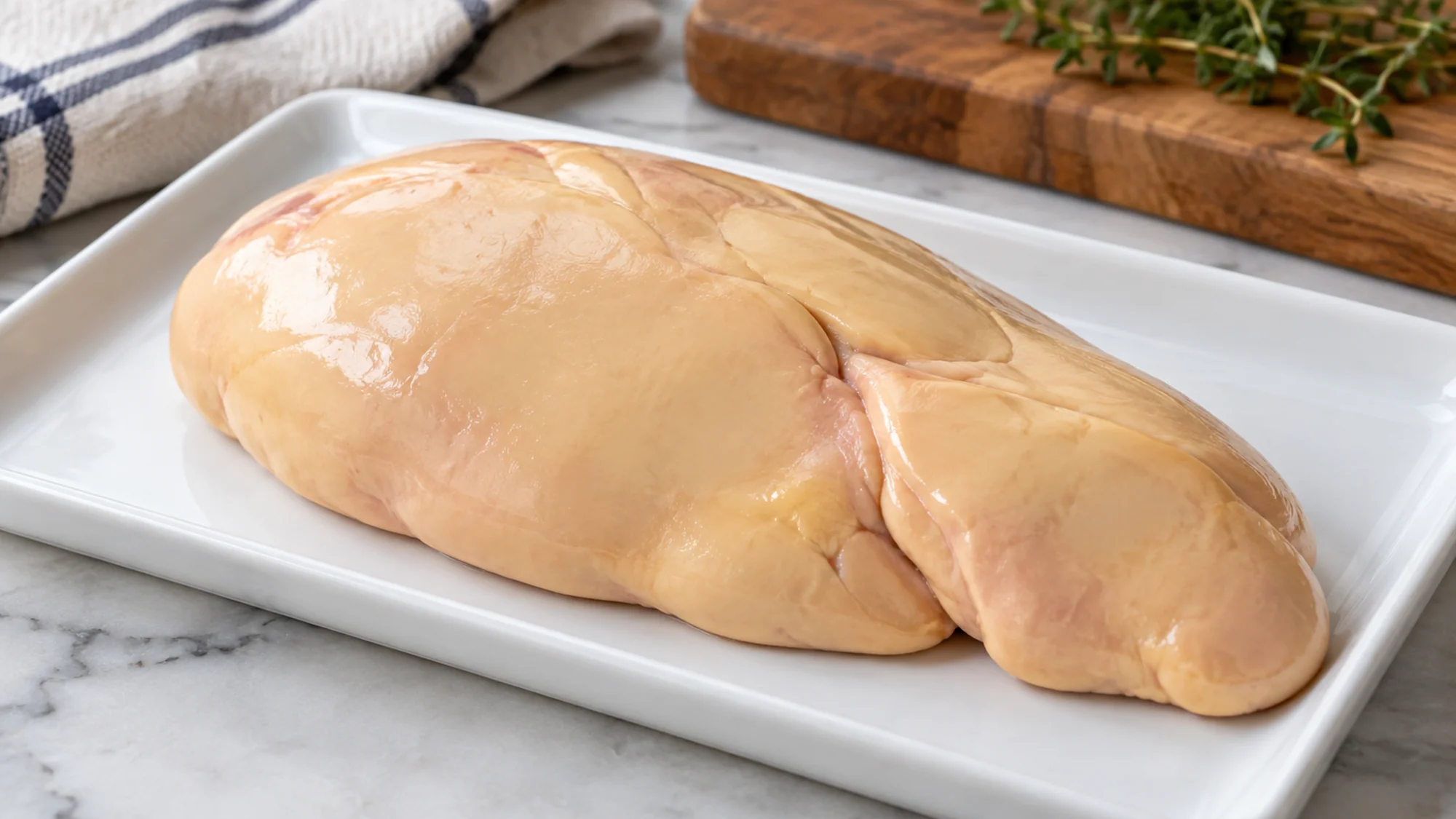
What is foie gras made from?
The French name literally means fat liver. France’s DGCCRF consumer guide describes foie gras as duck or goose liver from birds fattened by force-feeding, known as gavage. That production method is central to animal-welfare debate; it should not be hidden behind the food’s luxury image.
It is not the same ingredient as ordinary chicken liver, and the words pâté and foie gras are not interchangeable. Pâté can contain different meats, liver and other ingredients. A product containing some foie gras is not necessarily composed entirely of it.
- Duck or goose identifies the bird; it does not tell you whether the product is cooked.
- Whole lobes, assembled pieces and smooth preparations describe different structures.
- Terrine usually describes a preparation or the vessel used for it, not a guarantee of a particular foie gras percentage.
My useful shopping question is simple: what exactly is inside, and what preparation has already been done? That tells you more than elaborate packaging.
Whole, pieces or bloc: read the product name
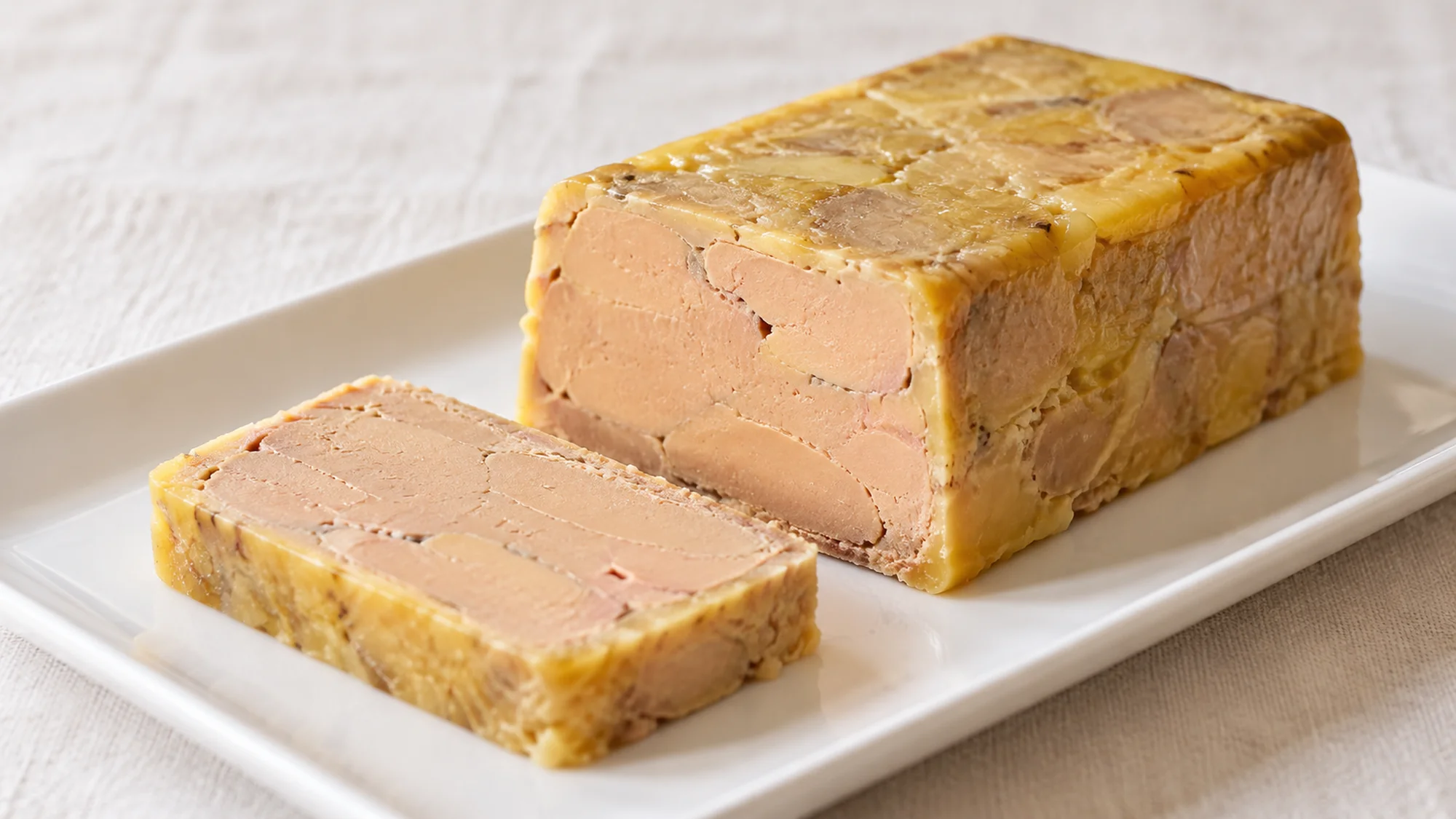
French labeling distinguishes several preparations. The following comparison summarizes the DGCCRF’s explanation of French product definitions; do not assume every label in another country uses identical terminology. Read the full ingredient statement and local label.
| Label term | Basic structure | Practical distinction |
|---|---|---|
| Foie gras entier | Whole liver or whole lobes, seasoned | Look for the lobe’s natural structure |
| Foie gras | Assembled pieces of lobes, seasoned | Pieces rather than a single intact form |
| Bloc de foie gras | Reconstituted foie gras, seasoned | More uniform texture |
| Mousse or pâté with foie gras | A preparation that may contain other ingredients | Check the stated percentage and ingredients |
These names describe composition, not whether you can leave the package on a shelf. Raw, chilled and shelf-stable products require different handling, and a decorative tin is not proof of room-temperature storage.
Choose a serving style that suits the product
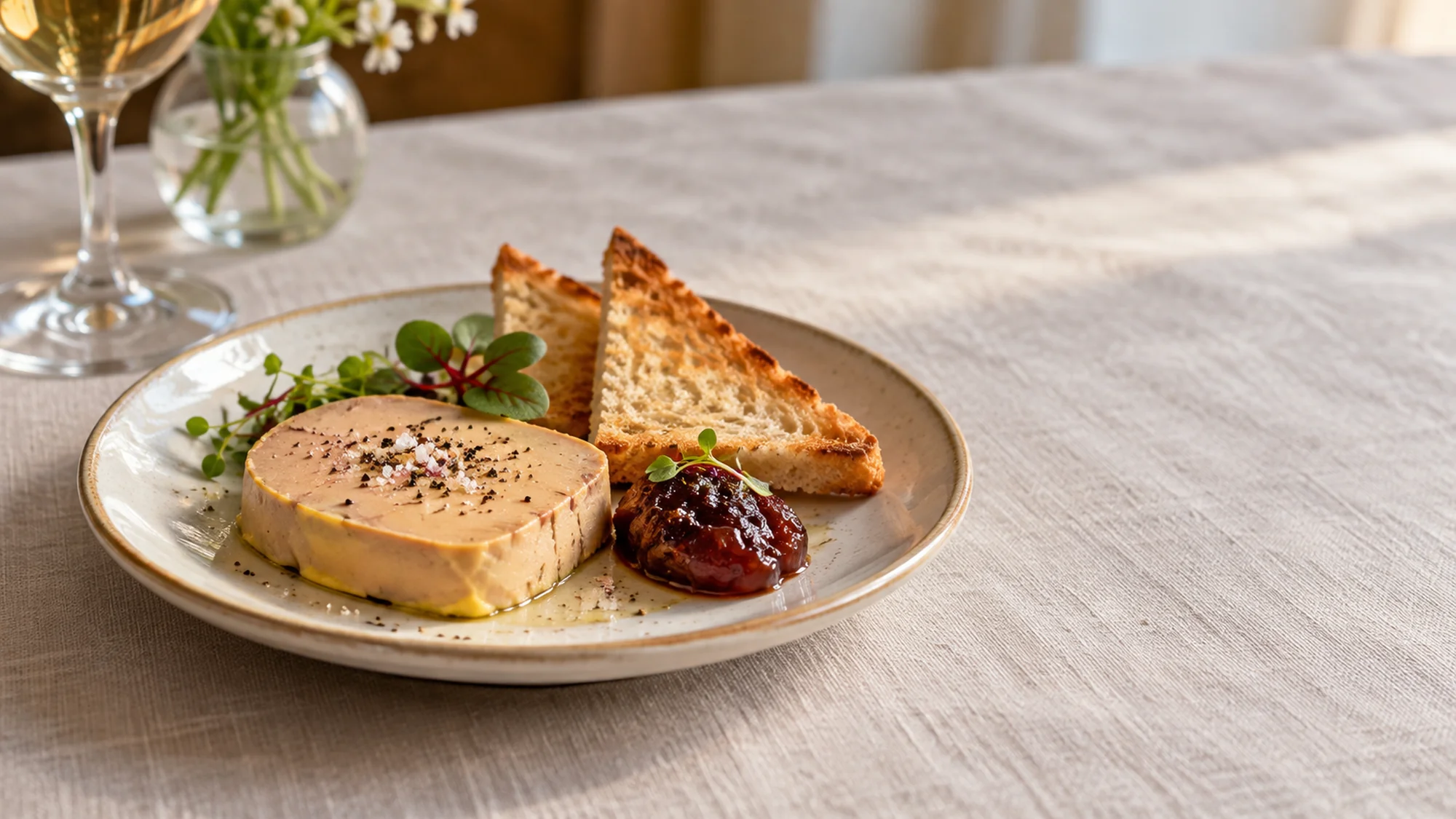
Prepared terrine or torchon is commonly served chilled with bread and a fruit accompaniment. Producer D’Artagnan’s serving guide illustrates these ready-to-eat styles. Its culinary suggestions are not independent evidence about nutrition or animal welfare.
- For a first taste, keep the plate simple: a small slice, crisp toast and a modest spoonful of tart fruit preserve.
- Let the foie gras remain the focus. Too much sweet chutney can dominate the rich, savory flavor.
- Use a clean knife for neat slices and follow the producer’s serving directions rather than guessing from another product.
- If you bought raw liver, use a reliable preparation method with appropriate food-safety guidance; do not treat it as ready-to-eat terrine.
I would put the fruit on the side, not over the whole slice. It lets each person choose the balance, and the contrast between crisp bread and a soft center is part of the pleasure.
Storage and safety are separate from presentation
Read the package before purchase, including refrigeration, use-by and after-opening instructions. Keep chilled products cold during transport and serving, and use clean utensils. There is no single safe storage time that applies to every raw lobe, homemade terrine and unopened shelf-stable tin.
People at increased risk of listeriosis should avoid refrigerated pâté and meat spreads, according to the CDC’s Listeria prevention guidance. That includes pregnant people, adults 65 or older and people with weakened immune systems. Shelf-stable sealed products are a different category, but individual dietary advice still matters.
- Do not judge safety by aroma, color or how expensive the product was.
- Do not move a refrigerated product to a pantry just because it comes in a jar.
- Ask the producer about unclear preparation or storage information before serving it.
- If production practices matter to you, request specific sourcing information rather than assuming a premium label answers every question.
There is no need to present foie gras as a wellness food or a necessary part of a diet. It is an optional culinary choice, and choosing not to eat it is equally straightforward.
Bottom Line
Foie gras is duck or goose liver with a distinctive rich texture, not a synonym for every pâté. Choose the composition and ready-to-eat status you actually want, keep accompaniments simple, and let the label—not the packaging—guide storage and serving.
Meilleur du Chef’s French-language demonstration with Éric Léautey shows the ingredient and terrine preparation. It is useful visual context; follow current product-specific handling and food-safety advice rather than treating this guide as a cooking recipe.
Sources
- DGCCRF: Understanding foie gras products
- D’Artagnan: Serving prepared foie gras
- CDC: Preventing Listeria infection

Hi, I’m Emily Pocker! I share recipes and food guides here at Recipes360 to help you find everyday meal inspiration and feel more confident in the kitchen. My goal is to make cooking approachable, enjoyable, and full of flavor.