
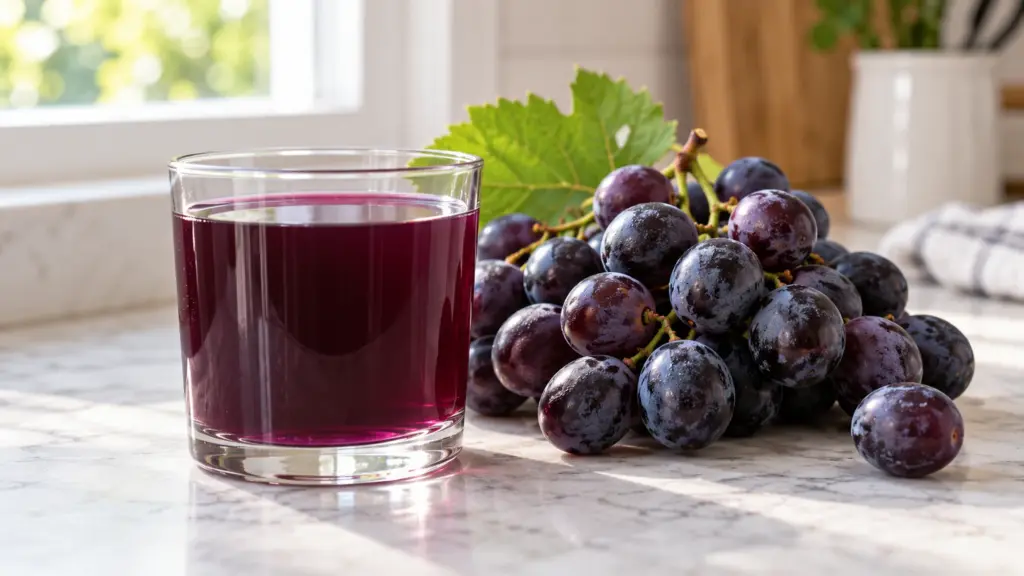
Two purple bottles can look similar while offering quite different drinks. One may contain only grape juice; another may be a grape-flavored beverage or a blend. Start with what the bottle says it contains, then look at the serving rather than letting the color make the decision.
Grape juice can be 100% juice and still contain substantial naturally occurring sugar. Check the juice percentage, ingredients and serving size, choose pasteurized or otherwise treated juice, and keep whole fruit in the picture.
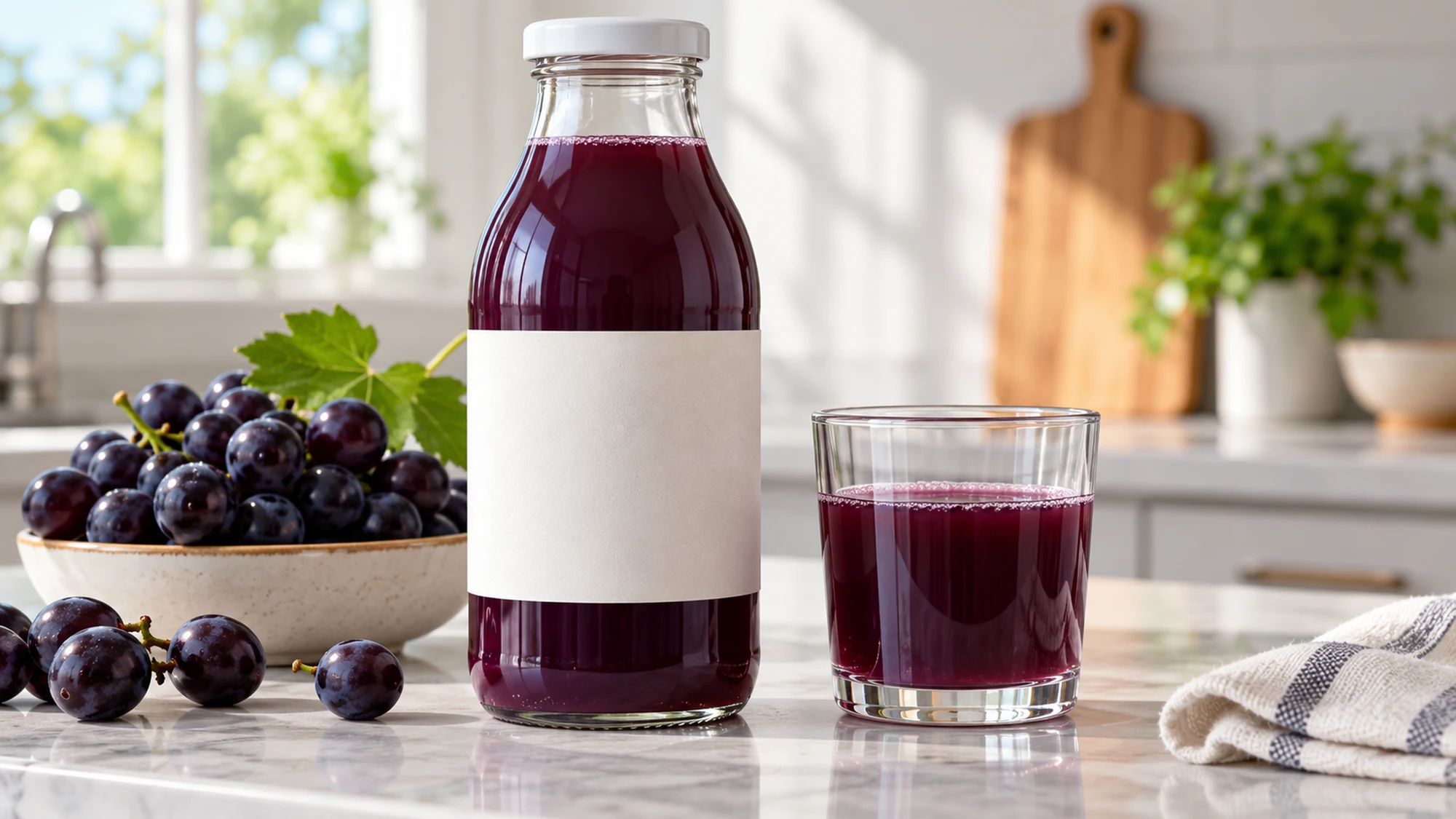
Read the Grape Juice Name and Ingredients Together
Look for the stated percentage of juice and read the ingredient list. A blend may combine grape juice with other fruit juices, while a juice drink may contain water, sweeteners or other ingredients. The label tells you more than the size of the grape picture on the front.
For a concrete example, Lakewood Organic Pure Concord Grape Juice lists organic Concord grape juice as its single ingredient and states that it has no added sugar. That is information about this exact product, not a rule for every purple drink on the shelf.
- 100% grape juice: check that the ingredients match the product you want.
- Juice blend: read which fruits contribute to the drink.
- Grape juice drink: check the juice percentage and added ingredients.
- Concentrate: follow the preparation directions; do not compare concentrate with a ready-to-drink glass.
No Added Sugar Does Not Mean Sugar-Free
Fruit brings its own sugars to juice. FDA distinguishes total sugars from added sugars: total sugars include naturally occurring sugars as well as any that were added. Read those lines separately without adding them together.
| Lakewood Concord label example | Per 8 oz serving | Practical meaning |
|---|---|---|
| Calories | 160 | The drink provides energy |
| Total carbohydrate | 38 g | Relevant when comparing carbohydrate |
| Total sugars | 36 g | No added sugar is not sugar-free |
| Bottle size | 32 oz; 4 servings | The bottle contains several servings |
I’d start with the amount I intend to pour and then use that product’s label. A tall glass is not a measurement, and another brand may list different values. If you manage carbohydrate for a medical reason, include the drink in the plan recommended by your healthcare team.
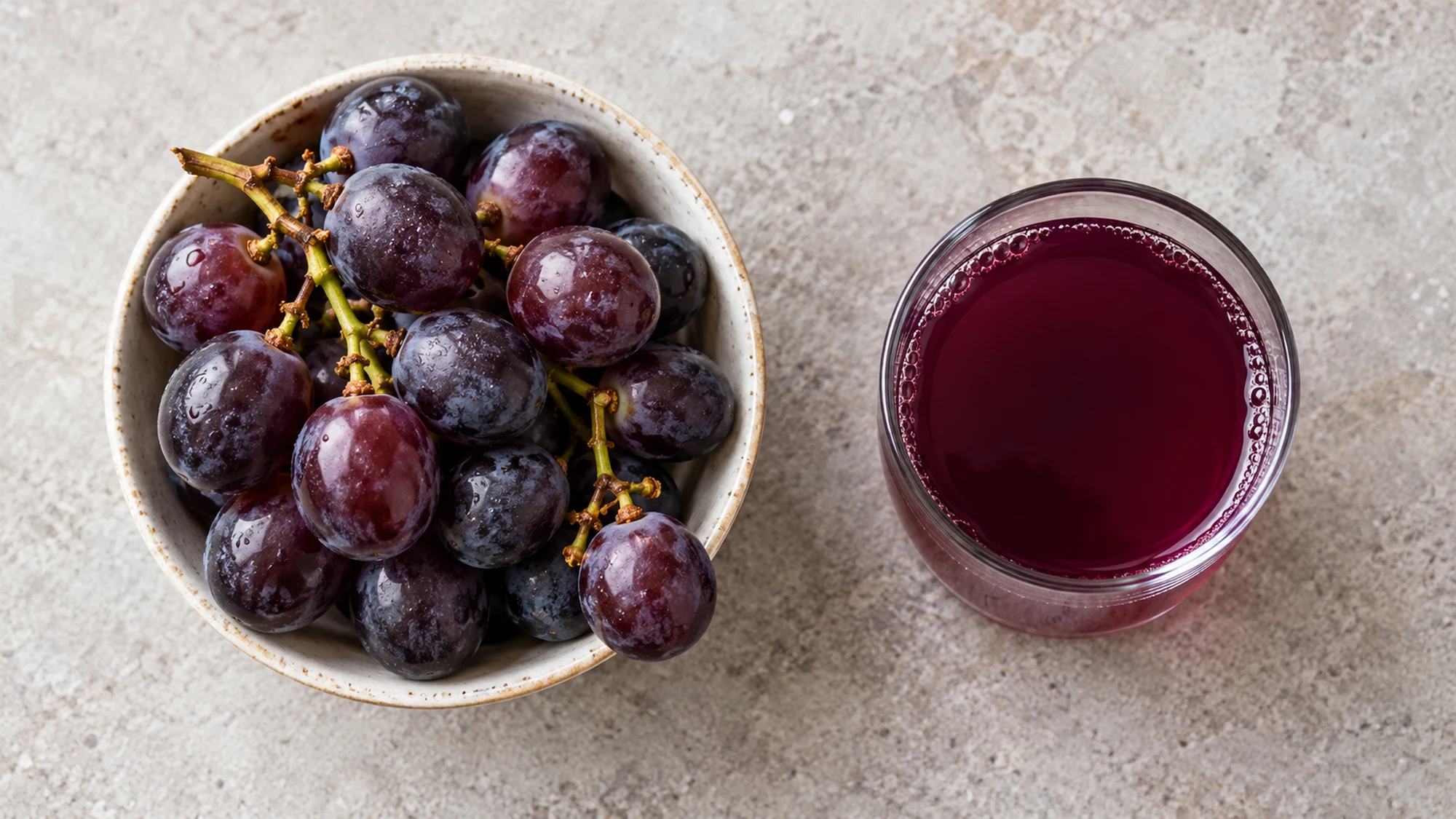
Keep Juice and Whole Grapes in Different Roles
Juice does not provide the same fiber experience as eating the whole fruit. Mayo Clinic explains that most juicing removes much of the fiber. A glass of juice and a bowl of grapes offer different eating experiences; the site’s banana carbohydrate guide gives another whole-fruit portion example.
- Choose whole grapes when you want the fruit itself and its chewing texture.
- Choose juice for its drinkable grape flavor, while keeping the serving visible.
- Do not treat a deep purple color as proof of a particular health outcome.
- Avoid using juice as a promised detox or treatment; a normal food choice does not need a medical claim.
For a less intense drink, you can combine a measured amount of juice with plain sparkling water. That changes the flavor and concentration in the glass; it does not remove the sugar from the amount of juice used. I’d choose the balance for taste rather than call it a new health benefit.
Buy Treated Juice and Follow Its Storage Directions
Fresh-squeezed does not automatically mean safer. FDA warns that untreated juice can carry harmful bacteria, with greater risks for children, pregnant people, older adults and people with weakened immune systems. Choose pasteurized or otherwise appropriately treated products and ask when the information is unclear.
- A juice sold by the glass may not carry the warning required on packaged untreated juice.
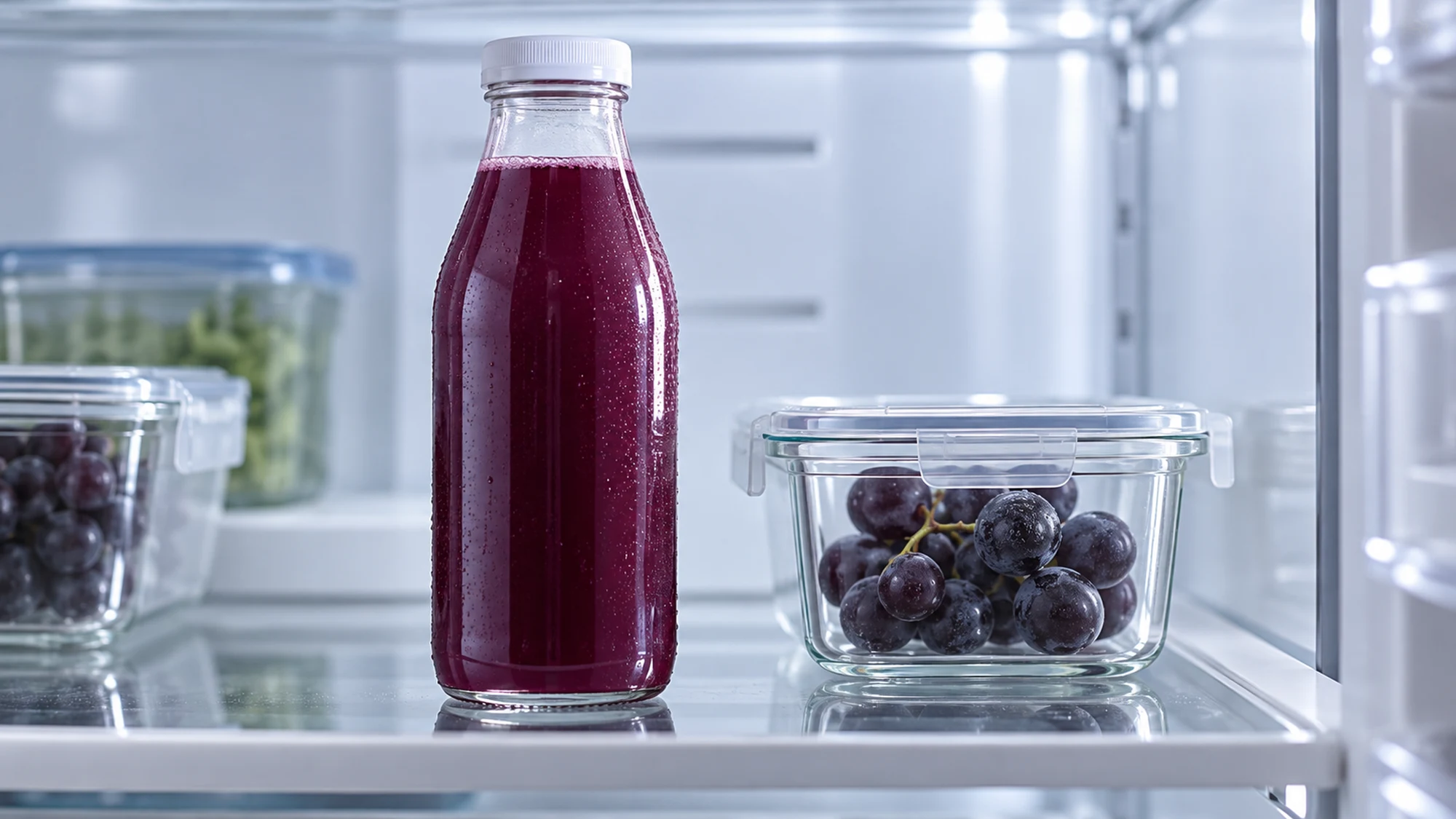
- Refrigerate after opening when the label directs it; an unopened shelf-stable bottle has different storage needs.
- Use the manufacturer’s time guidance for that product. Lakewood, for example, directs refrigeration and use within two weeks for best quality.
- If storage has been unsafe, do not rely on a normal smell to establish safety.
Keep the bottle where you will notice it and note when it was opened. FDA’s storage guidance explains why temperature and handling matter even when a food looks normal. A smaller bottle may be the more practical choice if a large one routinely sits unfinished.
Bottom Line
Choose grape juice by its ingredients, juice percentage and serving size. No added sugar does not mean no sugar, whole grapes offer a different eating experience, and treated juice with proper storage is the safer choice.
Mayo Clinic’s “Best way to get your fruits” video explains why whole fruit and juice have different roles. It provides general fruit guidance rather than endorsing a grape-juice brand.
Sources
- Lakewood: Pure Concord Grape Juice Label and Storage
- FDA: Total and Added Sugars
- Mayo Clinic: Juicing and Whole Fruit
- FDA: Juice Safety
- FDA: Safe Storage

Hi, I’m Emily Pocker! I share recipes and food guides here at Recipes360 to help you find everyday meal inspiration and feel more confident in the kitchen. My goal is to make cooking approachable, enjoyable, and full of flavor.