
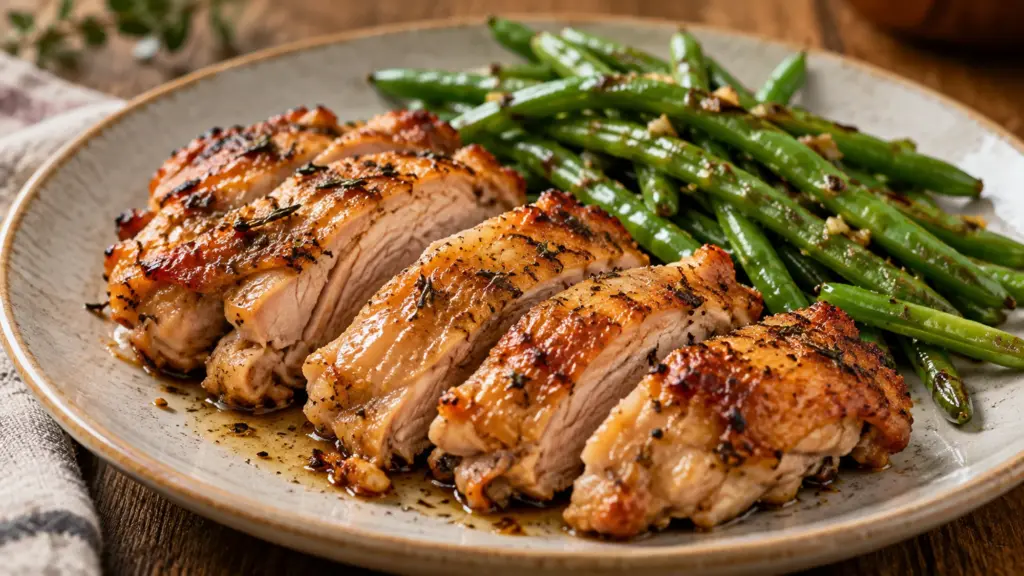
Two calorie listings for chicken thighs can look contradictory even when both are accurate. One may describe uncooked boneless meat, another a cooked skin-on portion. Chicken thigh calories depend on the product, edible weight and preparation, so the first useful step is matching the number to what is on your plate.
There is no universal calorie count for one chicken thigh. As specific uncooked examples, two Tyson boneless skinless products list 160 and 140 calories per 4 ounces (112 grams). Cooked portions, skin, sauces and added fat need their own matching information.
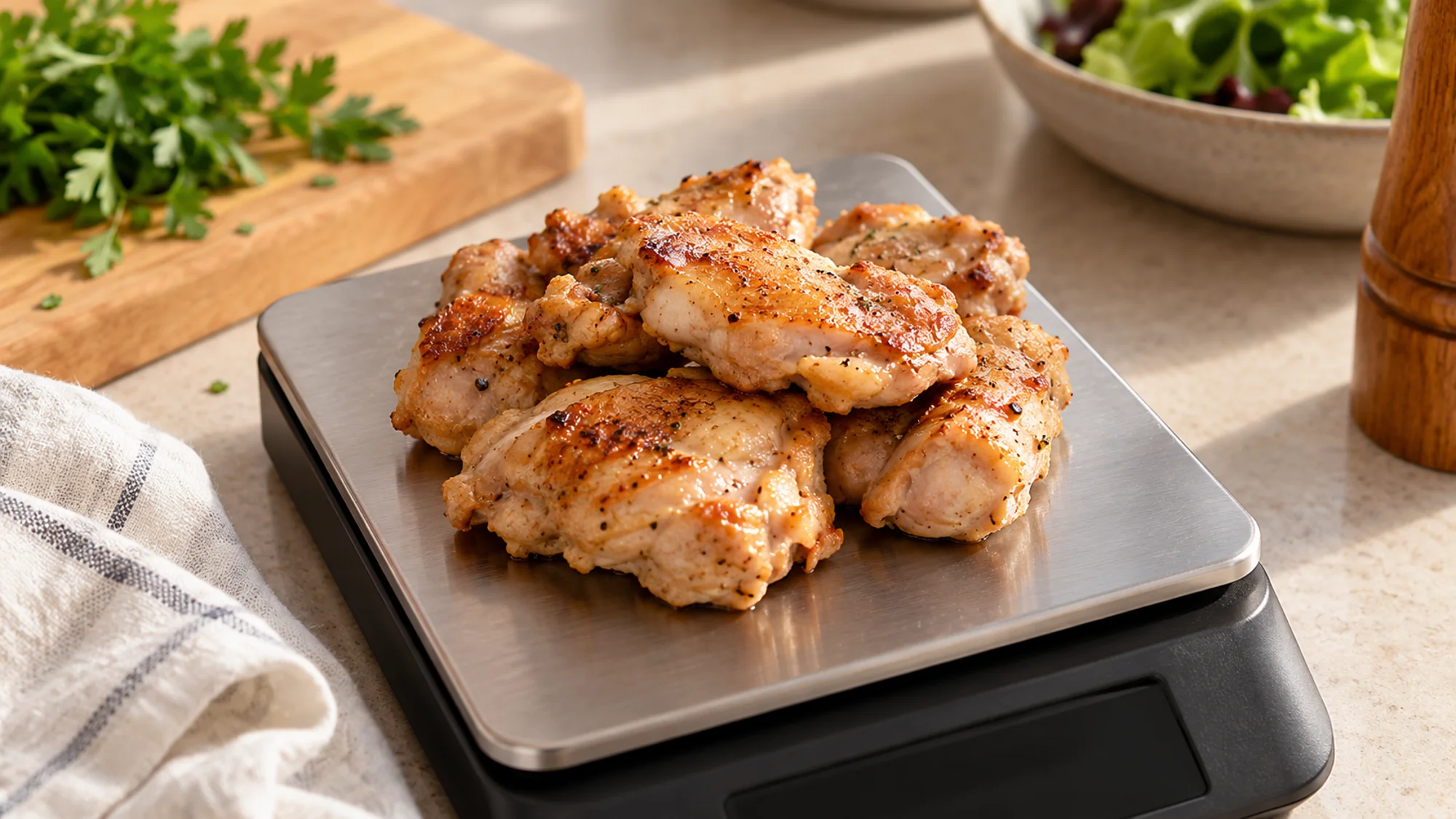
Compare chicken thigh calories on the same basis
The label for Tyson’s fresh boneless skinless thighs lists 160 calories per 112 grams and an ingredient list of chicken thighs. Its individually frozen uncooked product lists 140 calories for the same weight, but includes added broth, salt and flavorings. These are examples of specific products, not a calorie range covering every chicken thigh.
I would reach for the package label before a generic “one thigh” entry. Thighs vary in size, and a piece weighed with its bone includes material you will not eat. Comparing the same edible weight is more useful than comparing two pieces simply because both are called thighs.
| Uncooked product example | Serving weight | Calories |
|---|---|---|
| Tyson fresh, boneless and skinless | 4 oz (112 g) | 160 |
| Tyson frozen/uncooked, with added broth | 4 oz (112 g) | 140 |
| Half serving of the fresh example | 2 oz (56 g) | 80, calculated |
| Double serving of the fresh example | 8 oz (224 g) | 320, calculated |
The calculated rows scale the fresh product’s label proportionally. They do not estimate a cooked thigh of the same weight. Check your current package because products and labels can change.
Keep raw and cooked weights separate
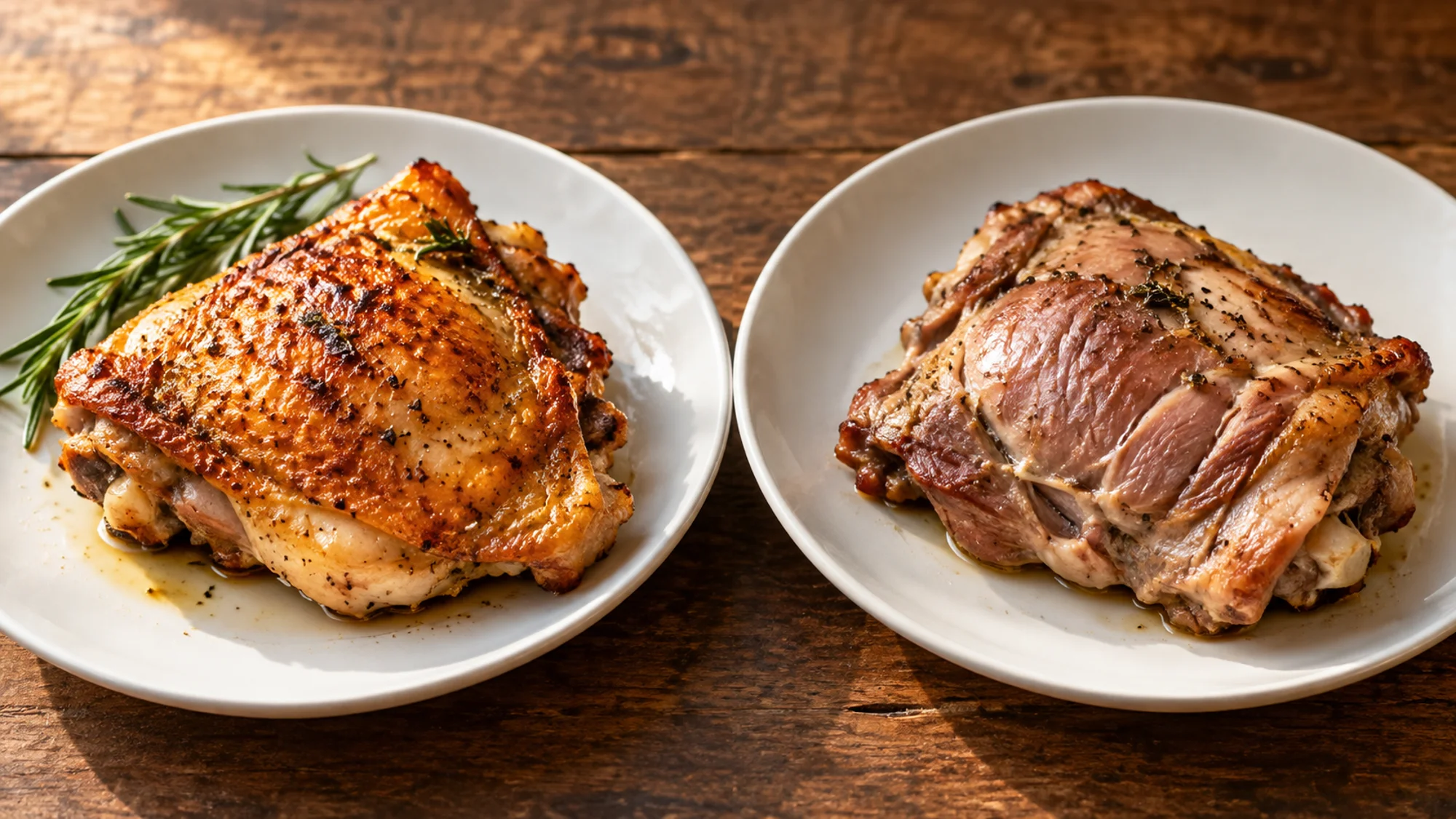
Cooking changes the weight of meat as moisture and some fat leave it. That means 112 grams weighed before cooking is not interchangeable with 112 grams weighed afterward. A cooked portion needs a nutrition entry that identifies its cooked preparation, including whether the skin is included.
The FDA explains that serving sizes describe the amount behind the label’s numbers; they are not a recommendation for how much you personally should eat. If you cook a package as a batch, keep track of the amount used and divide the finished dish consistently rather than switching between raw and cooked entries halfway through.
- Using an uncooked label? Measure the portion before cooking, following its stated basis.
- Using cooked-food data? Match skin, cooking method and edible cooked weight.
- Eating a bone-in piece? Do not treat its full bone-in weight as boneless meat.
- Adding a sauce? Use its label and the amount actually added.
Consistent measurement beats a very precise number attached to the wrong food.
Account for skin, oil and the rest of dinner
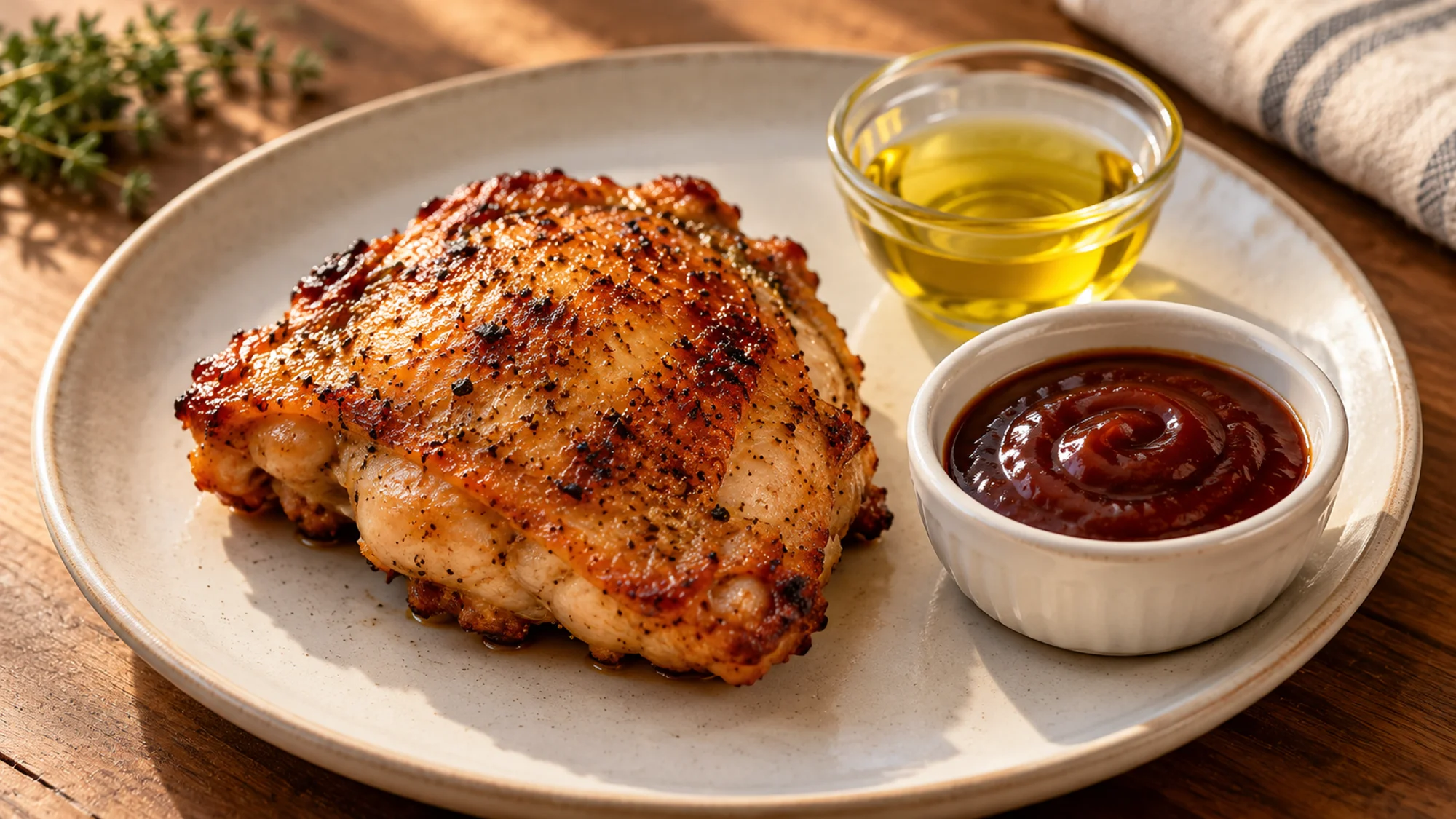
Skin changes the composition of a portion, while breading, oil and sauces add ingredients beyond the meat. A plain roasted thigh and a battered fried thigh should not share one calorie entry. An air fryer is a cooking appliance, not a nutrition label; what goes into it still matters.
For a homemade dish, total the ingredients actually used and divide by the servings produced. Treat the result as an estimate when the amount of fat or sauce left behind is uncertain. I prefer a clearly described estimate to a confident-looking number that pretends every drop in the pan ended up on the plate.
- Keep vegetables, grains and dressings in the calculation when estimating a whole meal.
- Use tablespoons or grams consistently for added ingredients.
- Do not assume a skinless product is unseasoned: read the ingredient list.
- Avoid choosing a portion solely to match a round calorie target; appetite and the rest of the meal matter too.
Cook safely while making your comparison
Calorie estimates cannot determine doneness. FoodSafety.gov sets 165°F as the safe minimum for chicken. Use a food thermometer in the thickest meat, away from bone. A browned surface, pinkness or a calorie-tracking entry cannot confirm the temperature inside.
Keep raw poultry refrigerated and separate from ready-to-eat foods. The federal storage chart lists one to two refrigerator days for raw chicken pieces at 40°F or below, and three to four days for cooked poultry leftovers. Freeze what you cannot use within the appropriate window.
Bottom Line
Read chicken thigh calories with three details beside the number: serving weight, raw or cooked state, and preparation. Start with the exact product label, account for skin and additions, and keep the food-safety checks separate from the nutrition calculation.
America’s Test Kitchen demonstrates grilled chicken thighs with mustard and tarragon below. It illustrates a particular preparation; its sauce and cooking ingredients are not included in the uncooked product examples above.
Sources
- Tyson: Fresh boneless skinless chicken thigh label
- Tyson: Frozen/uncooked chicken thigh label
- FDA: Serving sizes and Nutrition Facts
- FoodSafety.gov: Safe cooking temperatures
- FoodSafety.gov: Cold storage times

Hi, I’m Emily Pocker! I share recipes and food guides here at Recipes360 to help you find everyday meal inspiration and feel more confident in the kitchen. My goal is to make cooking approachable, enjoyable, and full of flavor.