
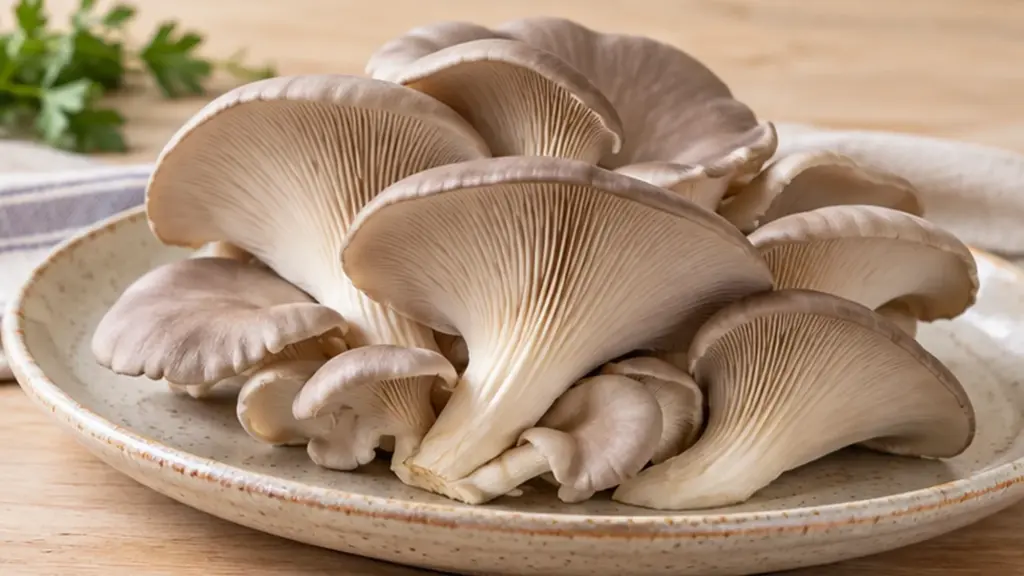
A ruffled cluster of mushrooms can look more like a small bouquet than something for a frying pan. Oyster fungus is another name used for the oyster mushroom, especially Pleurotus ostreatus. For the kitchen, think tender fan-shaped caps, short side stems and a mild savory flavor that becomes more interesting with browning.
Buy oyster mushrooms from a reputable food supplier, trim the tough cluster base and cook them thoroughly. This is a guide to a culinary ingredient, not a way to identify a wild mushroom as safe.
I’d start with a simple sauté so the texture has room to shine. You do not need a complicated sauce to make the delicate edges worth noticing.
What oyster fungus means in the kitchen
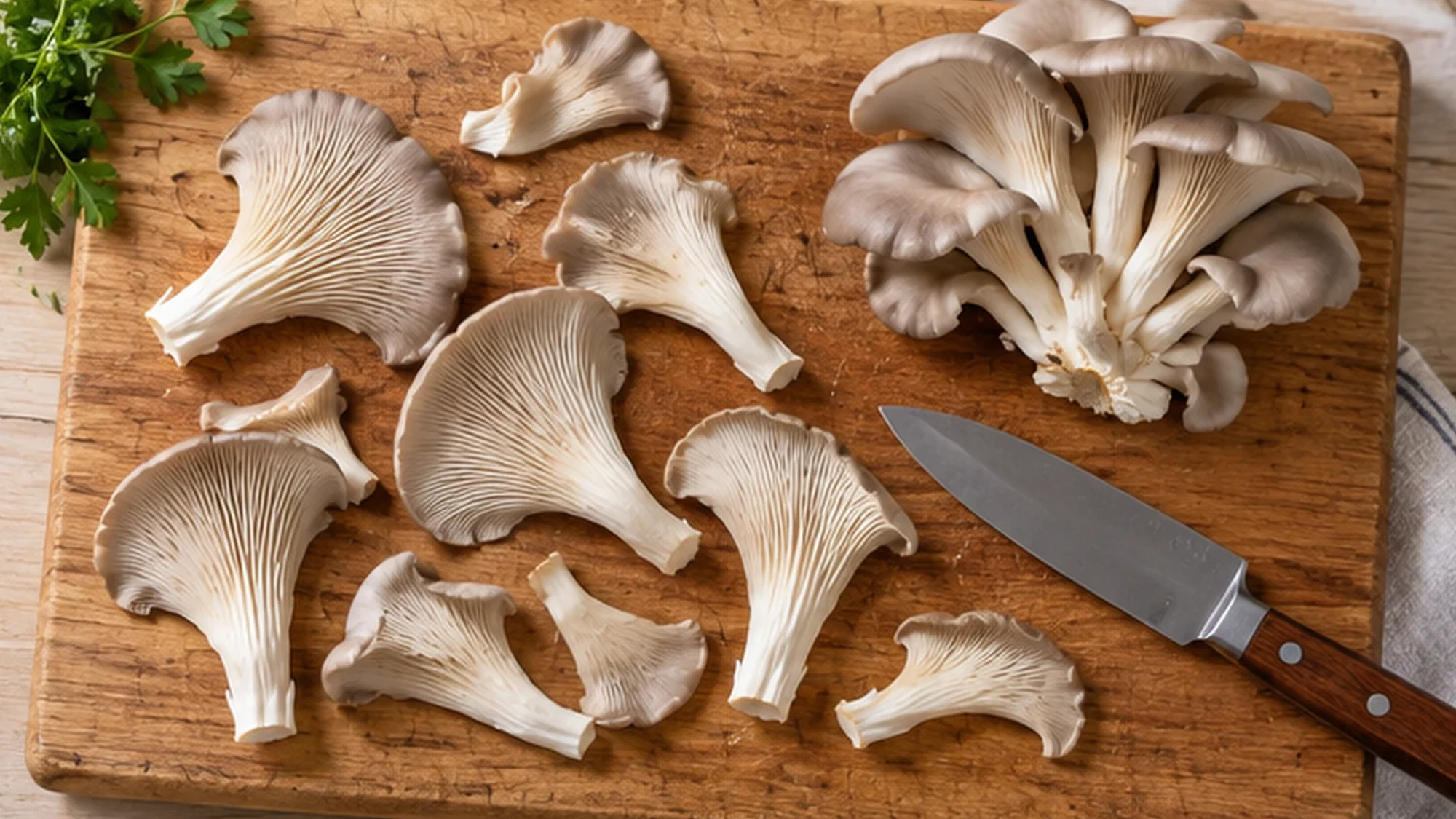
The Mushroom Council describes oyster mushrooms as clustered mushrooms that can be separated into smaller pieces or cooked as a cluster. The name refers to their shape, not to shellfish in the ingredient. Plain oyster mushrooms are fungi; an oyster-mushroom dish may still contain other allergens in its sauce or coating.
Common oyster mushrooms and king oyster mushrooms are related culinary ingredients, but they are not the same cut of food. Thick king oyster stems need different preparation from the thin, spreading caps discussed here. Check the package name instead of assuming every recipe with “oyster” will cook identically.
| What you have | Useful feature | Preparation choice |
|---|---|---|
| Common oyster cluster | Thin fan-shaped caps joined at a base | Trim the tough base and separate |
| Large oyster caps | Broad pieces with uneven thickness | Tear into similar-sized pieces |
| Small oyster caps | Tender, relatively compact pieces | Keep whole if they cook evenly |
| King oyster mushrooms | Thick substantial stems | Use a method written for king oysters |
Buy and store oyster fungus with care
Look for fresh, plump mushrooms rather than a wet, collapsed cluster. The Mushroom Council’s storage guidance recommends the original packaging or a porous paper bag in the refrigerator. Buy an amount you can cook soon instead of treating delicate mushrooms as a long-term pantry item.
Keep the safety question separate from the quality check. A nice-looking wild mushroom is not automatically edible, and a photograph, app or brief description cannot establish that it is safe. Choose cultivated mushrooms for this cooking approach; never eat an unidentified mushroom.
- Check the source: buy mushrooms sold as food by a reputable retailer or grower, not an unidentified cluster someone found.
- Keep them cold: put fresh mushrooms in the refrigerator after shopping and follow the package’s storage advice.
- Avoid trapped moisture: a wet, tightly sealed bag is not the goal. Keep the mushrooms protected without soaking them.
- Do not rescue spoilage: discard mushrooms that are slimy, moldy or smell unpleasant. Cooking is not a way to make spoiled ingredients suitable.
Prepare them for a better pan
The Mushroom Council’s preparation advice allows a brief rinse followed by drying; prolonged soaking is unnecessary. Clean gently, then remove the firm base where the cluster is attached. Preserve the tender caps rather than chopping everything into tiny fragments.
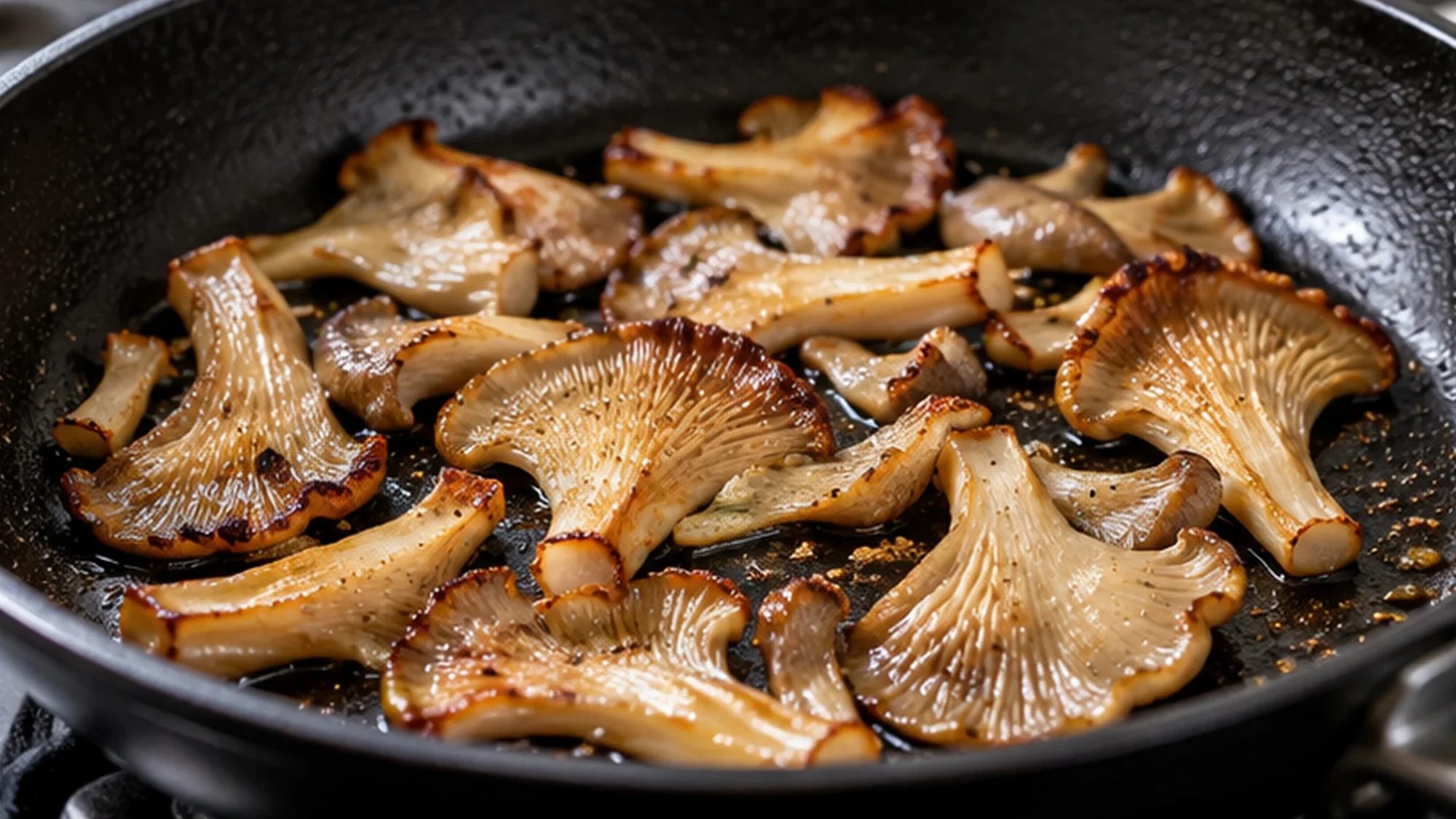
For cooking, University of Guam Extension’s culinary guidance describes thoroughly cooking oyster mushrooms until much of their water has evaporated and they become lightly brown. Use the actual texture and the recipe’s method, not one universal stopwatch setting.
- Make the pieces comparable: separate small caps and tear very large ones so the thickest pieces do not lag behind.
- Give the pan room: a single layer makes it easier for moisture to escape. Cook a crowded quantity in batches.
- Allow browning: wait for a golden surface before constantly moving every piece. Turn as needed rather than leaving one side to burn.
- Finish thoughtfully: garlic, herbs or a small splash of acid can add interest. Adjust seasonings after you see how concentrated the mushrooms have become.
Use the texture without making health promises
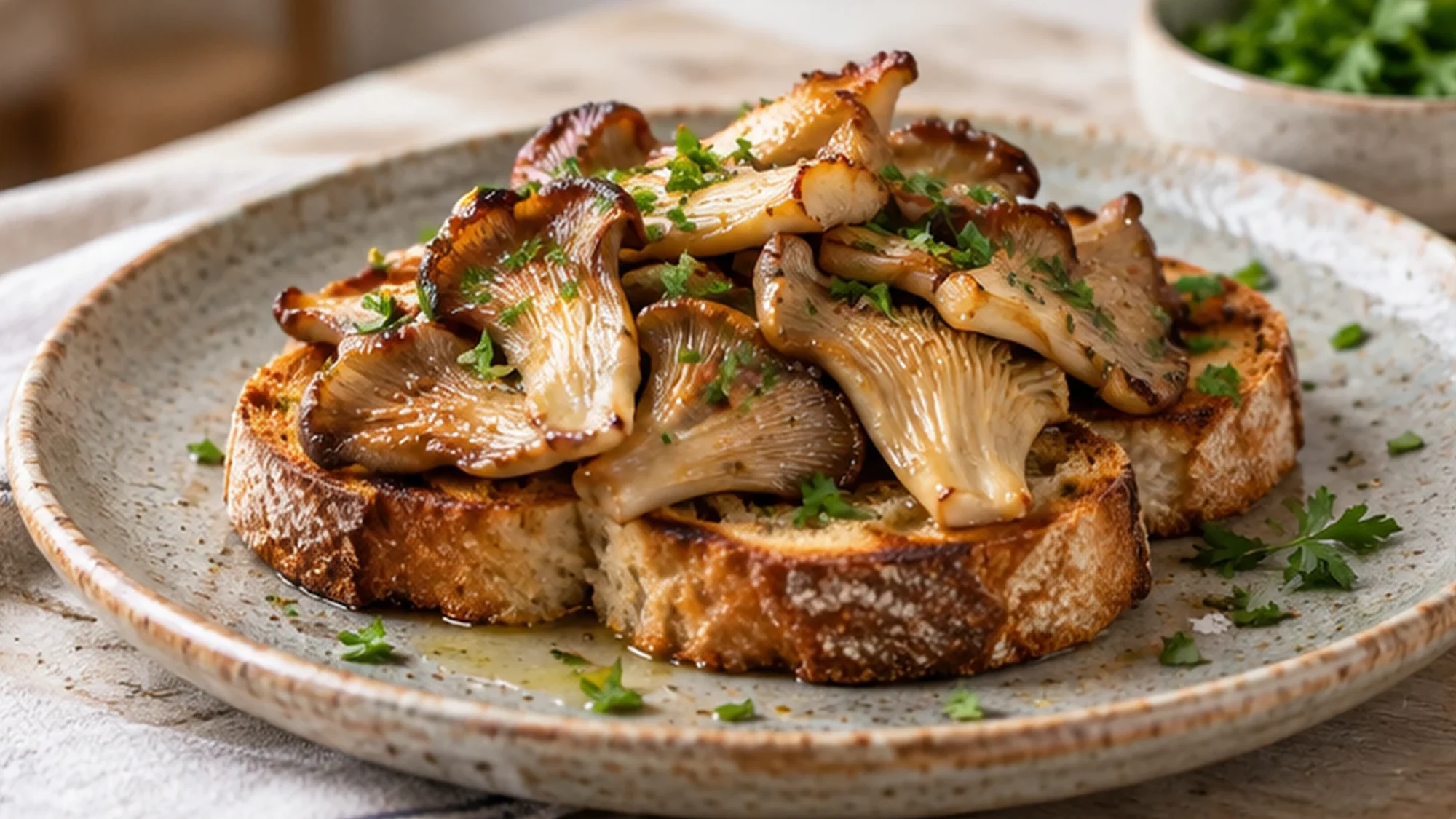
Cooked oyster mushrooms work as a topping for toast, a component in noodles or a savory addition to a grain bowl. I would pair crisp edges with something softer, or add them late enough that a thick sauce does not hide all their texture.
Mushrooms are food, not a replacement for medical care. Memorial Sloan Kettering notes that human research is limited; laboratory findings do not show that a serving of mushrooms treats disease. A pleasant dinner does not need a medicinal sales pitch.
- For a simple plate: serve cooked caps over a soft base, with herbs or a bright dressing suited to the rest of the meal.
- For a plant-based main: include a suitable protein source, such as beans or tofu, rather than assuming a meat-like texture means equivalent nutrition.
- For another cooking method: use a reliable recipe. A blanch-and-stir-fry approach, like the video below, is different from a dry-pan sauté; neither needs to be forced into the other’s timing.
Our soft polenta guide offers one possible base for a mushroom topping. Choose the combination for contrast, and keep the mushrooms visible rather than burying them.
Bottom Line
Oyster fungus belongs on the shopping list as a clearly identified culinary oyster mushroom, not a wild guess. Buy it from a food supplier, handle it gently, and give the pieces enough space and cooking time for tender centers and browned edges.
Maangchi demonstrates a Korean stir-fried oyster-mushroom dish, including its own preparation method and seasoning.
Sources
- Mushroom Council: oyster mushroom varieties and uses
- Mushroom Council: selecting and storing mushrooms
- Mushroom Council: cleaning and preparation questions
- University of Guam Extension: oyster mushroom culinary guidance
- Memorial Sloan Kettering: oyster mushroom evidence and limitations

Hi, I’m Emily Pocker! I share recipes and food guides here at Recipes360 to help you find everyday meal inspiration and feel more confident in the kitchen. My goal is to make cooking approachable, enjoyable, and full of flavor.