
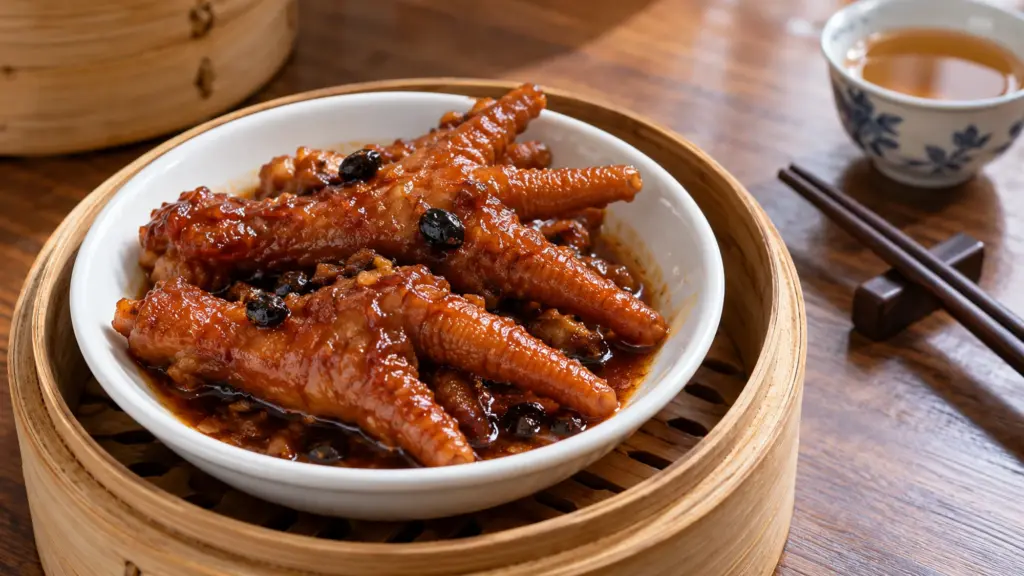
A dim sum menu listing chicken feet promises something quite different from a plate of wings. The appeal is soft, slightly springy skin and connective tissue around small bones, with a sauce that carries much of the flavor. Knowing that texture in advance makes the first order much easier.
Chicken feet are an edible poultry ingredient used in dishes such as Cantonese dim sum and in stock. They need careful raw-poultry handling and thorough cooking; their collagen-rich texture is a culinary feature, not proof of a skin or joint treatment.
What chicken feet taste and feel like
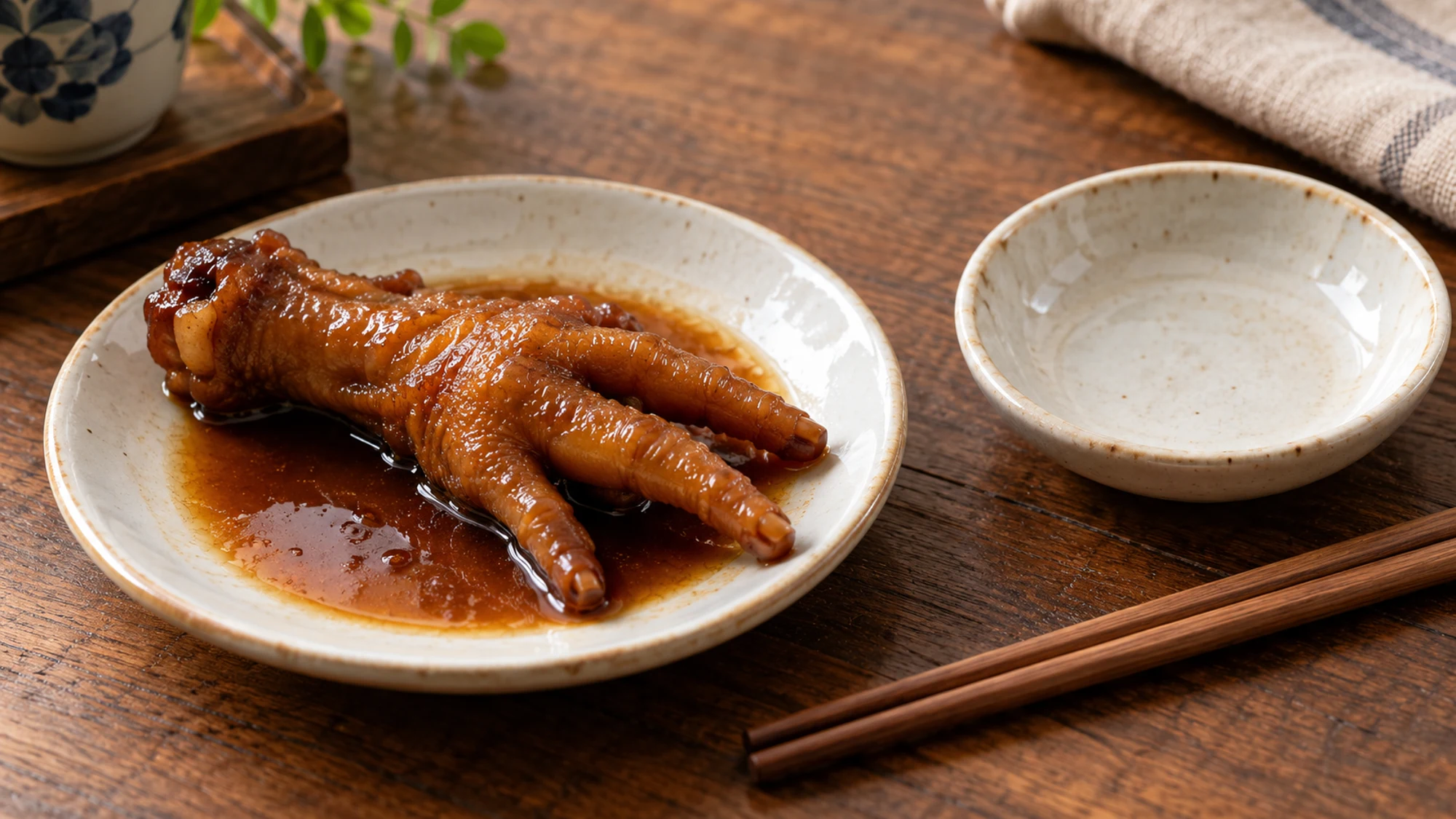
Think tender skin and tendons rather than a mouthful of breast meat. Made With Lau’s chicken feet guide describes the distinctive chewy texture of the dim sum preparation. Braising and steaming can soften the connective tissue, while different sauces create very different finished dishes.
I’d start with a small restaurant portion if the texture is unfamiliar. There is no prize for ordering an enormous bowl before you know what you like. The useful question is whether you enjoy soft, gelatinous textures, not whether this food should taste like the chicken dishes you already know.
- Expect bones: work the edible tissue away carefully and put small bones aside rather than swallowing them.
- Ask about seasoning: a sweet, savory, spicy, or black-bean sauce changes the experience.
- Check dietary needs: ask about the actual sauce ingredients and cross-contact rather than assuming a poultry dish has no other allergens.
Buy prepared feet and handle them as raw poultry
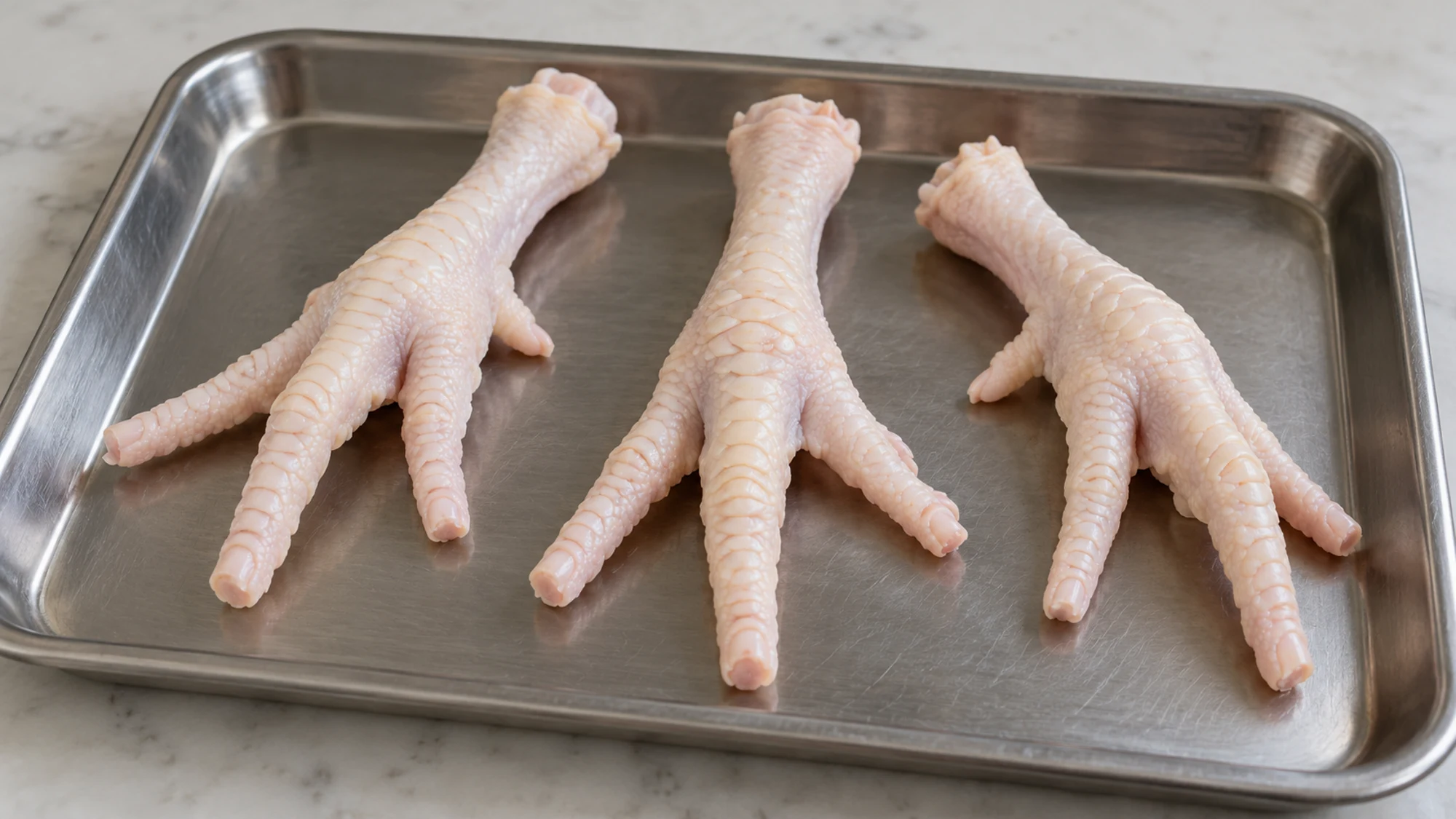
Choose feet sold for human food by a reputable butcher or grocery retailer. Ask whether the outer skin and nails have already been removed. Commercial preparation reduces the amount of fiddly trimming at home, but a clean appearance does not make raw poultry ready to eat.
- Keep them separate: use a sealed container so raw juices cannot drip onto ready-to-eat food. Wash hands and clean utensils and work surfaces afterward.
- Skip the rinse: USDA advises against washing raw poultry, because splashes can spread bacteria. Rinsing, vinegar, and a quick soak are not substitutes for cooking.
- Thaw safely: use the refrigerator rather than the kitchen counter. Follow the package directions.
- Use a tested method: a recipe’s blanching or frying stage is part of that culinary method, not a reason to ignore safe handling.
Some traditional demonstrations include washing steps. Keep current food-safety guidance separate from those demonstrations: the video below is a visual explanation of a dim sum style, while the handling advice here follows food-safety authorities.
Cooking and storage checks that matter
FoodSafety.gov specifies 165°F (74°C) for poultry. A recipe may need longer for tenderness, but a soft feel or brown sauce alone cannot establish safety. Use a suitable food thermometer in the thickest tissue without touching bone; thin, bony pieces need particular care with probe placement.
| Stage | Practical safety check |
|---|---|
| Raw storage | 40°F (4°C) or below; cook within 1–2 days or freeze |
| Cooking | At least 165°F (74°C), checked with a thermometer |
| Cooked leftovers | Refrigerate promptly; use within 3–4 days |
| Serving | Do not leave perishables out over 2 hours; 1 hour above 90°F (32°C) |
These storage limits follow USDA’s chicken guidance; the serving limits follow CDC’s refrigeration advice. Divide leftovers into shallow containers for prompt chilling. A large pot left on the stove to cool is not a safe storage plan.
Collagen explains texture, not a promised health result
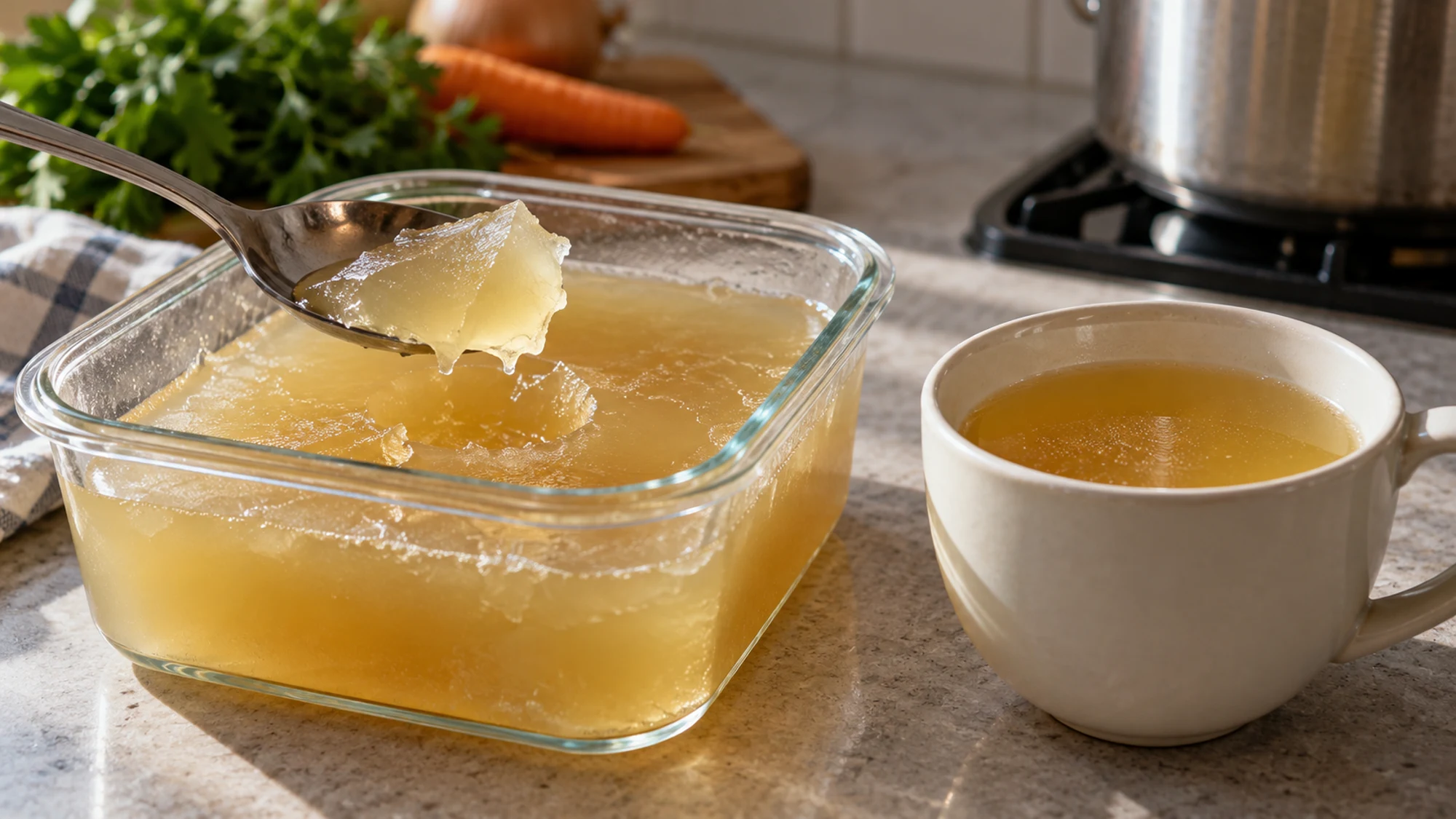
The Harvard Nutrition Source’s collagen review explains that cooked connective tissues can yield gelatin. That helps explain a silky stock that sets when chilled. It does not tell you an exact collagen dose, protein content, or health effect for an unmeasured homemade batch.
Research on a defined collagen supplement cannot simply be transferred to a serving of chicken feet. Harvard notes limited evidence that eating collagen directly benefits skin or joints. I’d choose this ingredient for the dish and texture it brings, with the rest of the meal in view.
- Sauce, added salt, frying, and portion size all affect the finished food.
- A gelled stock is a cooking observation, not a medical test.
- Enjoy it as food; do not use it to replace treatment for a joint or skin condition.
Bottom Line
Chicken feet offer a distinctive soft, gelatinous texture in dim sum and stock. Buy food-grade prepared feet, handle them as raw poultry, cook thoroughly, and separate small bones carefully. Treat collagen claims with more caution than a glossy food photo.
Chinese Cooking Demystified demonstrates a restaurant-style dim sum preparation in this video, which adds useful visual context to the texture discussion.
Sources
- Made With Lau: chicken feet texture and serving
- USDA: do not wash raw poultry
- FoodSafety.gov: safe minimum internal temperatures
- USDA: refrigerated chicken storage
- CDC: clean, separate, cook, and chill
- Harvard Nutrition Source: collagen evidence and gelatin

Hi, I’m Emily Pocker! I share recipes and food guides here at Recipes360 to help you find everyday meal inspiration and feel more confident in the kitchen. My goal is to make cooking approachable, enjoyable, and full of flavor.