
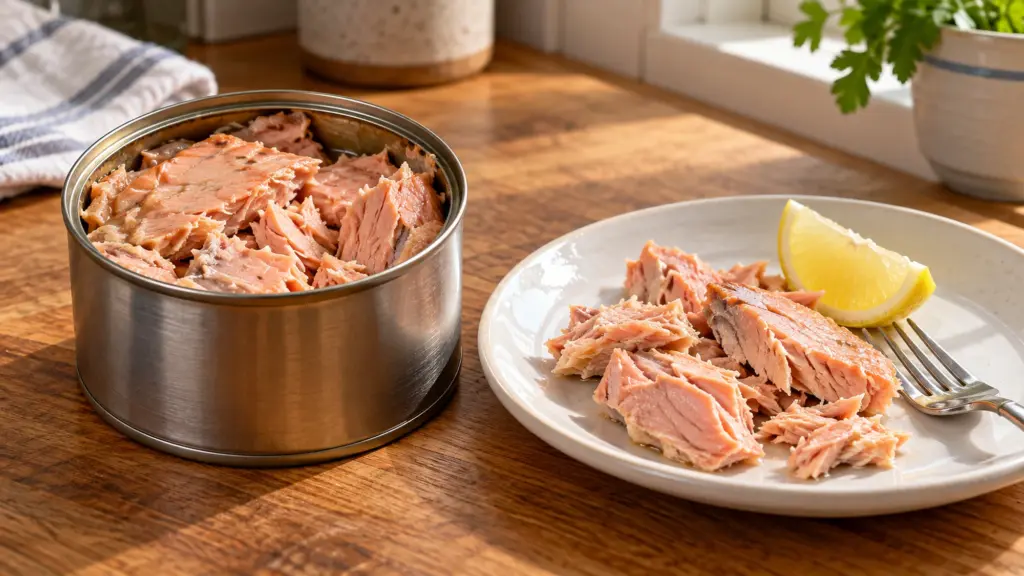
An open can of salmon can look different from the tidy fillet pictured on the shelf: loose flakes, darker skin, perhaps a few soft bones. None of those details tells the whole story. Canned salmon is cooked fish, and choosing the right pack makes a quick lunch much easier.
Canned salmon is ready to eat from an intact commercial can. Choose the species and pack style you enjoy, compare the actual nutrition label, and refrigerate leftovers promptly after opening.
Choosing canned salmon: species and pack style
Pink and sockeye are both common choices, but they do not taste identical. The Alaska Seafood Marketing Institute’s canned-salmon guide describes pink salmon as milder and sockeye as richer, with a deeper color. I’d choose pink when the dressing should lead and sockeye when the fish should stand out.
| Choice | What changes | Best starting point |
|---|---|---|
| Pink salmon | Milder flavor, lighter color | Salads and mixed dishes |
| Sockeye salmon | Deeper color, stronger flavor | Fish-forward toppings |
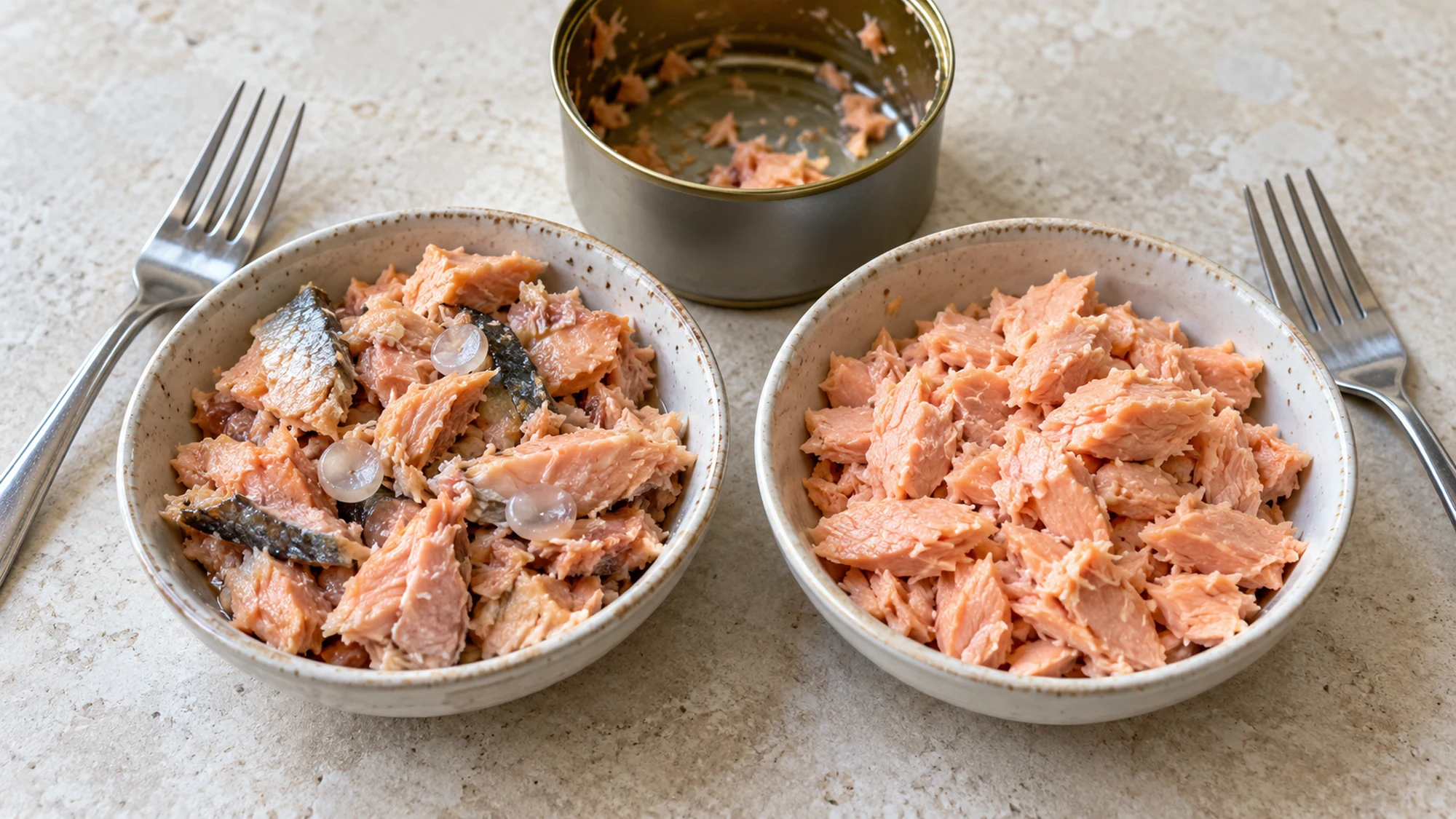
| Traditional pack | Includes skin and soft bones | Mash bones into a spread |
| Skinless, boneless | More uniform flakes | Quick assembly |
Traditional packs may include edible skin and bones softened during pressure cooking. Mash the soft bones thoroughly with a fork if you want them blended into the fish; removing them is also a texture preference. Skinless, boneless packs save that sorting step. Neither description tells you whether salt was added, so turn the can around.
Read the label before comparing nutrition
There is no single nutrition panel for every can. For example, Chicken of the Sea’s 5-ounce skinless, boneless pink salmon lists 110 calories, 22 grams of protein and 240 milligrams of sodium per 113-gram serving. Its ingredients are pink salmon, water and salt. Those figures describe that product, not all canned salmon.
- Match the serving: compare equal gram weights, and check whether the panel refers to drained fish.
- Check the pack: bone-in salmon can contribute calcium; boneless fish should not automatically be credited with the same amount.
- Look at sodium: compare the actual milligrams rather than assuming every plain can is unsalted.
- Check allergens: salmon is fish. Flavored products need their own ingredient and allergen review.
The FDA/EPA fish-advice chart places salmon among its lower-mercury “Best Choices.” That is useful selection guidance, especially during pregnancy and for children, rather than a reason to eat unlimited fish or promise a particular health result. Variety and age-appropriate portions still matter.
Put the flakes to work without drying them out
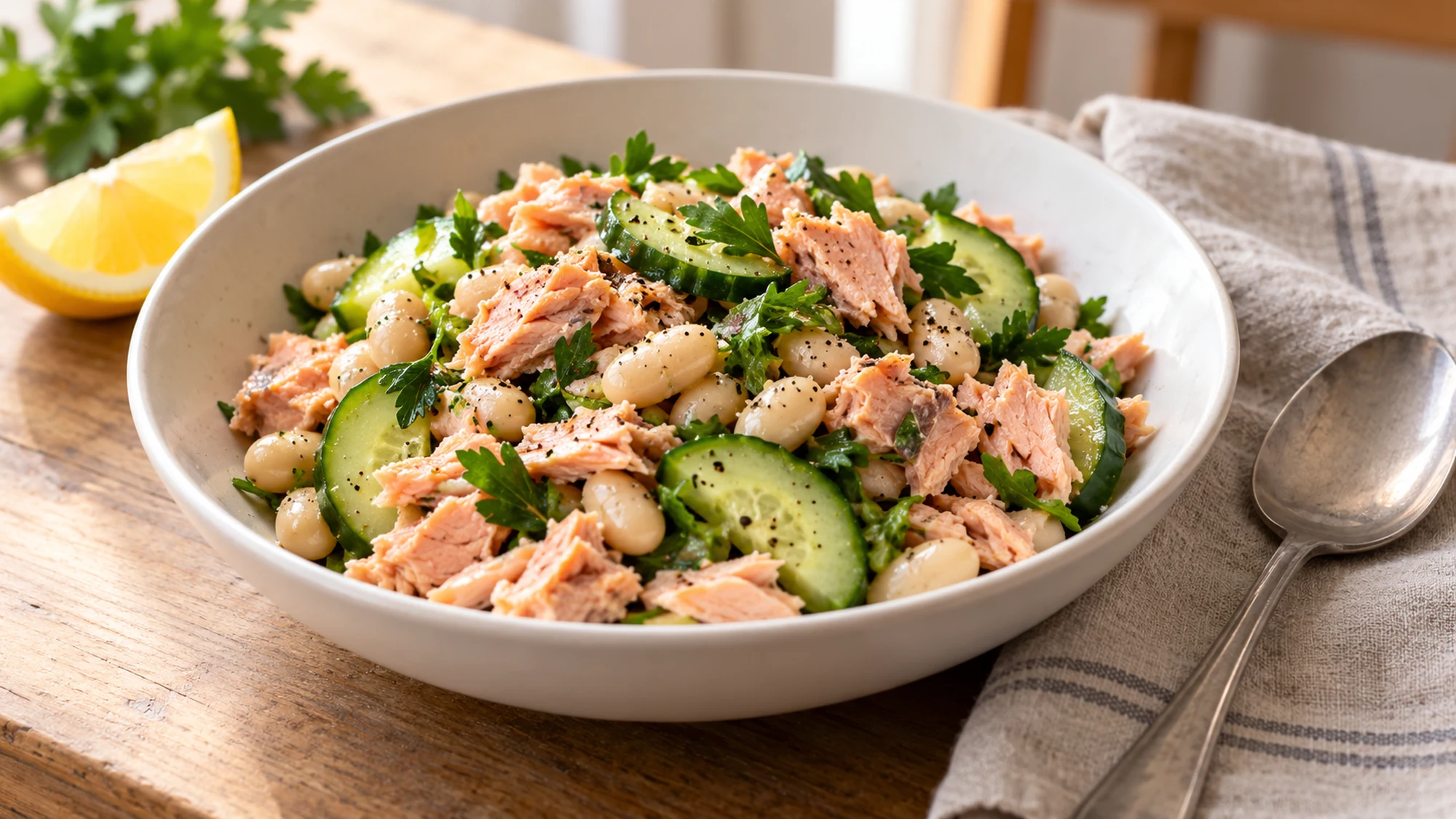
Drain according to the dish, then separate the fish gently. For a salad, leave some larger pieces rather than stirring everything into paste. For a sandwich spread, smaller flakes are useful. I prefer adding a little moisture before adding more seasoning; dry fish does not always need more salt.
- Cold lunch: pair with white beans, cucumber and a lemon dressing for a soft-and-crisp contrast.
- Warm pasta: fold the flakes into the finished sauce so they warm without prolonged stirring.
- Toast or baked potato: add a creamy element and something fresh, such as herbs or chopped celery.
- Rice dish: the site’s salmon sushi bake includes a canned-fish variation; follow its full assembly and safety directions.
These are serving directions, not a promise that every salmon product swaps into every recipe unchanged. Smoked or strongly seasoned cans can dominate a delicate dish. Taste sound, ready-to-eat fish before adding salty extras such as capers, soy sauce or cheese.
Store the can safely, then watch the opening date
An unopened shelf-stable can belongs in a cool, dry place. Avoid damaged, leaking or bulging cans. Health Canada’s canned-food safety guidance explains that dangerous contamination may not change food’s smell or taste, so do not sample a suspect can to decide whether it is safe.
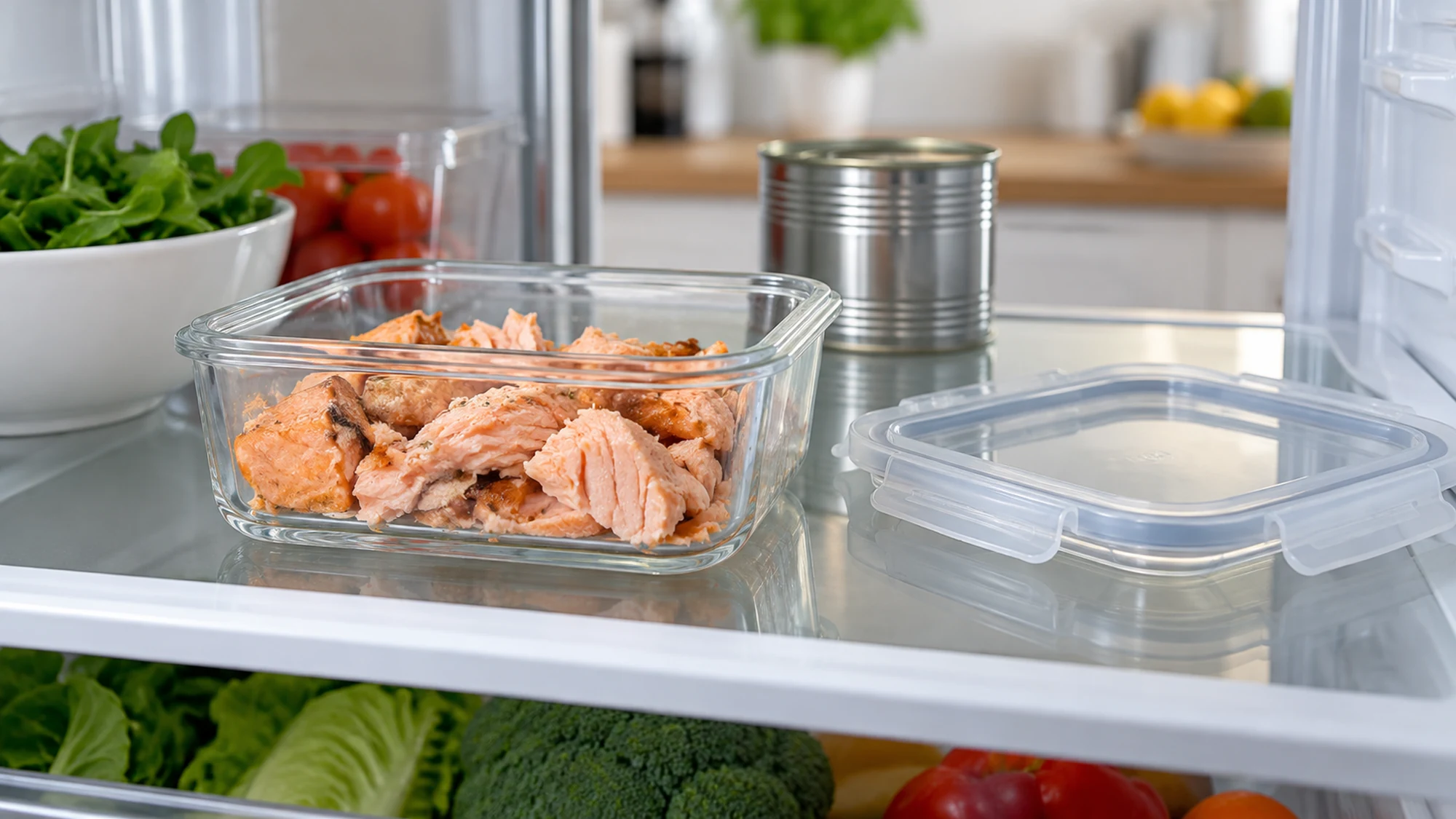
- After opening: transfer unused fish to a clean covered container and refrigerate promptly.
- Use promptly: the FDA food-safety reference lists three to four refrigerated days for opened canned seafood.
- Keep track: write the opening date on the container and follow any shorter manufacturer instruction.
- Separate home canning: a homemade jar requires a tested pressure-canning process; these buying tips are not processing instructions.
A smaller can may be the more practical purchase if a larger one repeatedly leaves leftovers. Compare usable quantity and your next meal before treating a bigger package as better value.
Bottom Line
Choose canned salmon for the meal you actually want: mild or richer-flavored, traditional or boneless. Let the label guide nutrition comparisons, keep some texture in the flakes, and treat opened fish as a refrigerated perishable.
Sources
- FDA/EPA: Advice About Eating Fish
- Chicken of the Sea: skinless, boneless pink salmon label
- Alaska Seafood Marketing Institute: canned salmon guide
- Health Canada: canning and canned-food safety
- FDA: food-safety reference and storage chart
- Alaska Seafood: video source

Hi, I’m Emily Pocker! I share recipes and food guides here at Recipes360 to help you find everyday meal inspiration and feel more confident in the kitchen. My goal is to make cooking approachable, enjoyable, and full of flavor.