
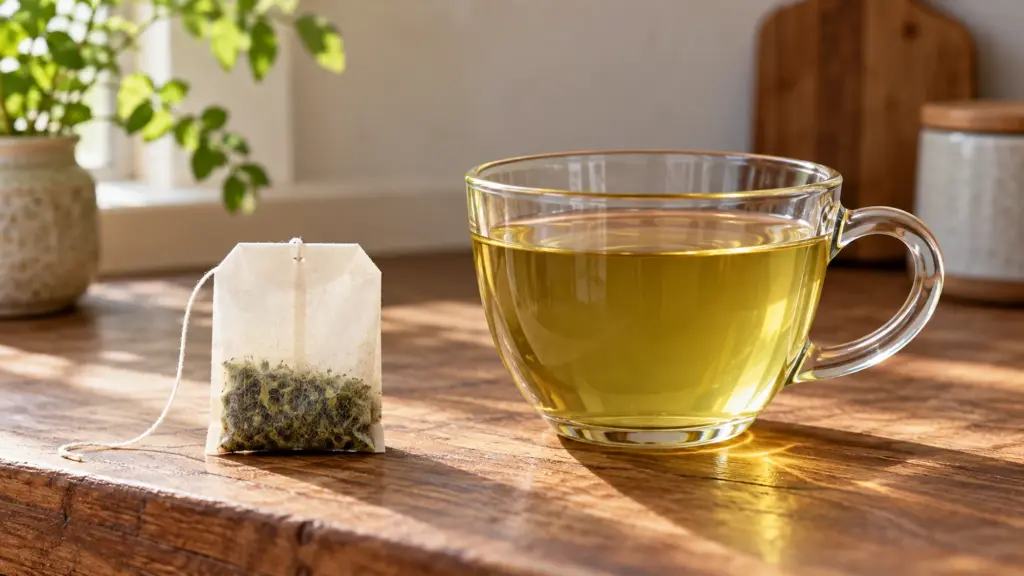
Green tea bags are a convenient way to make a cup of green tea without measuring loose leaves or washing a strainer. The biggest difference between an enjoyable cup and a harsh one is often how you brew it—not whether the box looks premium.
Start with the instructions on your green tea bags, time the steep, and remove the bag when the flavor suits you. More brewing time does not automatically mean a better cup.
My preference is a practical one: buy a small box first and learn how that particular tea behaves in your everyday mug. There is no reason to commit to a cupboard full of a blend you have not tasted.
Choosing green tea bags that suit your taste
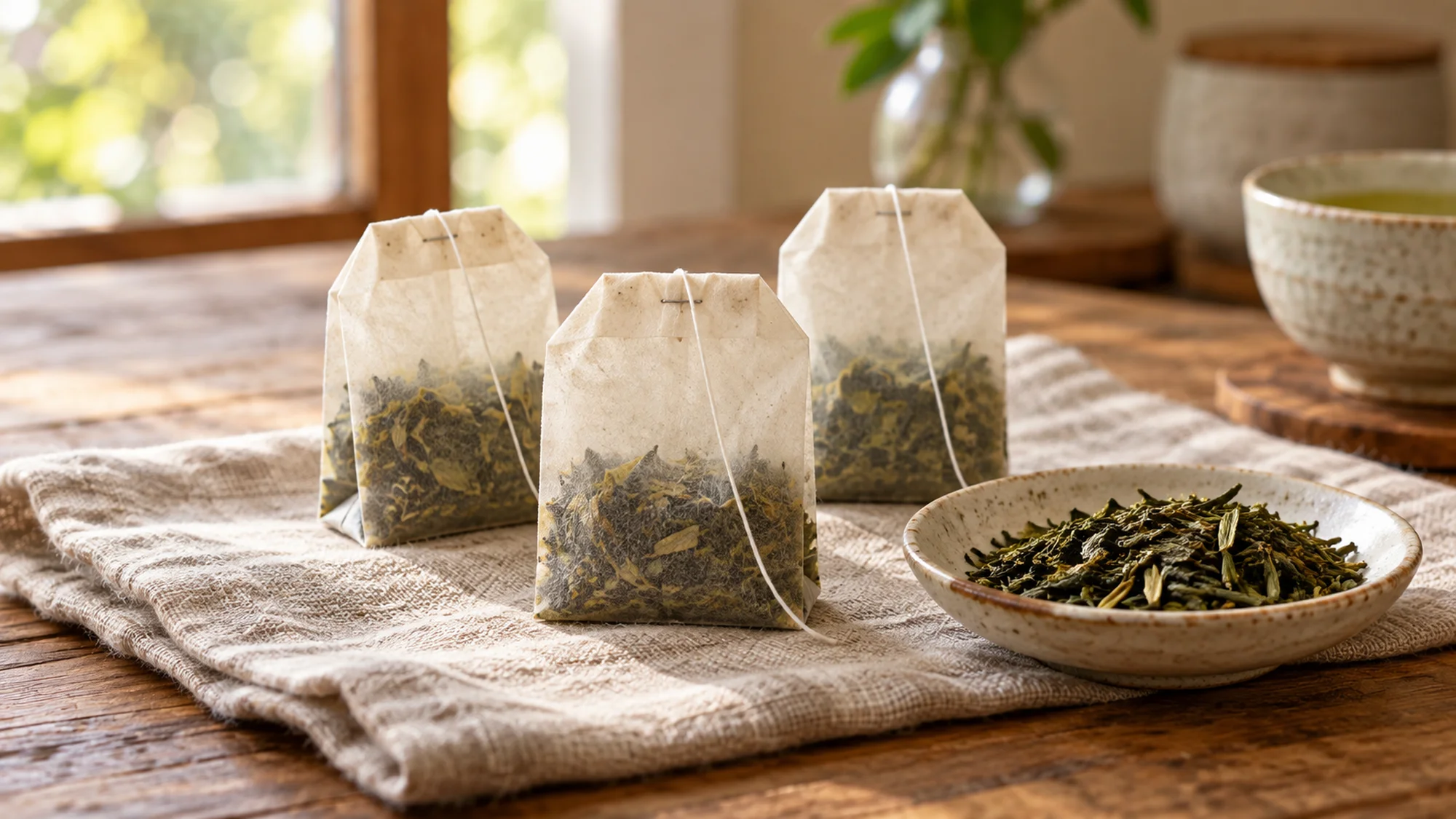
Green tea comes from Camellia sinensis, the same plant used for black and oolong tea, but its processing is different. A bag may contain plain green tea or a blend with other ingredients. Read the ingredient list if you want a straightforward tea flavor rather than fruit, mint or added flavorings.
Package shape alone does not tell you whether you will like the tea. Compare the leaf or blend description, serving instructions and number of bags, then consider cost per cup. I would prioritize clear information and a flavor you enjoy over vague promises of cleansing or transformation.
- Choose plain green tea when you want to learn its base flavor.
- Check ingredients in flavored blends, especially if you avoid particular foods.
- Read the suggested water amount; a large travel mug may need a different approach.
- Buy a small pack before choosing a bulk box.
How to brew green tea bags more gently
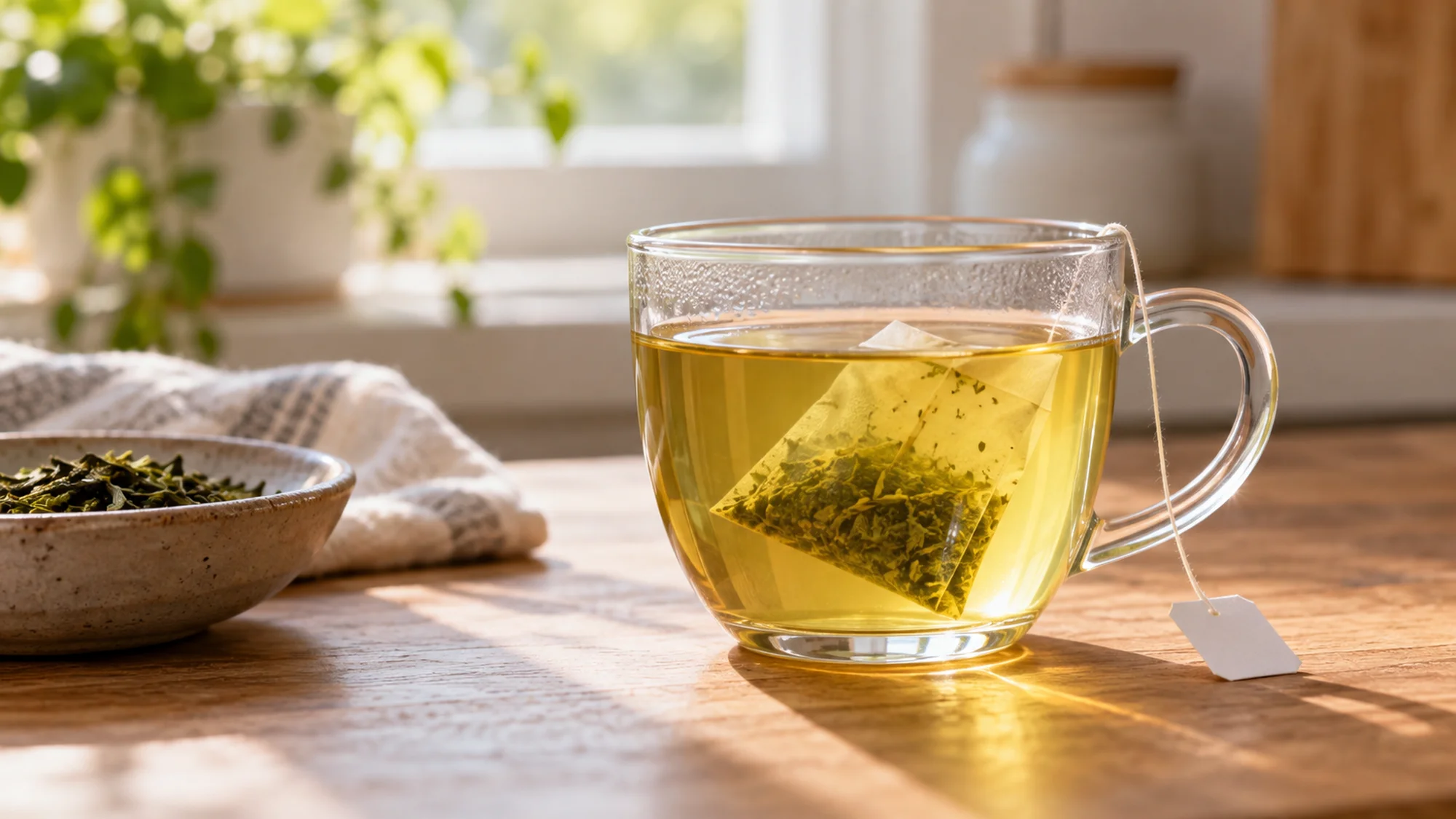
Follow the specific box first because manufacturers formulate blends differently. As one reference point, Twinings Canada’s brewing chart suggests 80°C water and two minutes for green tea. That is a useful starting example, not a universal rule for every product.
Use a clean cup, set a timer and taste before extending the steep. If the first cup is too sharp, try a shorter steep or cooler water next time, changing one thing at a time. If it is weak, check the mug size and bag-to-water directions before leaving the same bag in indefinitely.
| What you notice | Check first | Next small adjustment |
|---|---|---|
| Harsh or bitter cup | Water temperature and steep time | Shorten the steep or cool the water |
| Weak flavor | Cup size versus package directions | Use the recommended water amount |
| Flavor changes between cups | Whether you time the steep | Keep time and water amount consistent |
| Stale or unfamiliar aroma | Storage and blend ingredients | Use a fresh, properly stored bag |
Caffeine and health claims need perspective
Green tea is not automatically caffeine-free. The National Center for Complementary and Integrative Health notes that green tea contains caffeine and that firm conclusions are still lacking for many promoted health uses. A bagged cup is not a detox treatment or a guaranteed weight-loss tool.
Concentrated green tea extracts are also not equivalent to ordinary brewed tea; uncommon liver injury reports have primarily involved extracts. If you take medicines, are pregnant or breastfeeding, or need to limit caffeine, discuss your situation with a qualified clinician. Do not use this guide to replace prescribed care.
Storage, value and making the cup your own
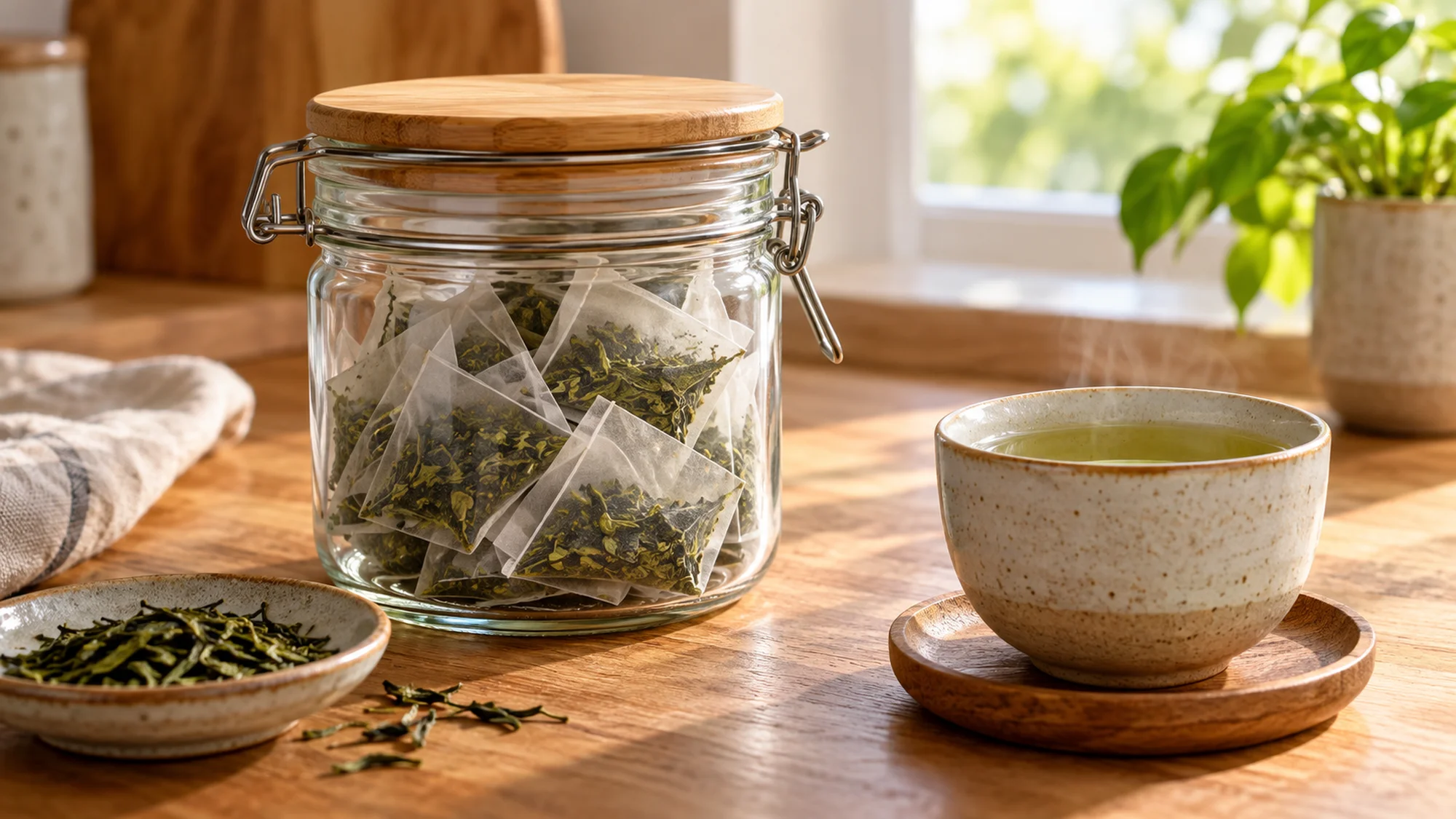
Keep unopened bags according to the package directions and protect opened tea from moisture and strong kitchen smells. A closed container in a dry cupboard is more useful than leaving a torn box beside the kettle. Keep the label so you can check the blend, best-before information and brewing instructions later.
I like the idea of tasting a new tea plain first, then deciding whether it needs anything. Adding a little sweetness is a preference, not a failure; it simply changes the drink. For a chilled option, our iced tea guide covers the broader method, while the green tea package should still guide the initial brew.
Check disposal instructions for your exact bag and wrapper rather than assuming all tea bags share one material. A paper-looking bag is not proof that every component belongs in home compost. Packaging claims can differ between formats and markets, so the current manufacturer’s directions matter more than a general rule.
- Use the same mug while comparing brewing times.
- Keep a short note of the time and temperature you prefer.
- Avoid buying a large assortment just to chase a promised benefit.
- Store tea where it stays dry, not above a steaming appliance.
Bottom Line
Good green tea bags make an everyday cup easier, but thoughtful brewing still matters. Start with the package, time the steep and adjust gradually for taste. Enjoy the flavor and convenience without expecting medical results, and keep caffeine and personal health needs in the picture. The best purchase is a tea you actually want to drink.
Sources
- Twinings Canada: Brewing times and temperatures
- NCCIH: Green tea evidence and safety
- Twinings: Product and packaging questions

Hi, I’m Emily Pocker! I share recipes and food guides here at Recipes360 to help you find everyday meal inspiration and feel more confident in the kitchen. My goal is to make cooking approachable, enjoyable, and full of flavor.