

A small can of evaporated milk can make a pantry feel surprisingly useful. It pours more slowly than fresh milk, brings a gently cooked dairy flavor, and can add body to a soup or filling. The important part is knowing what it replaces—and what it does not.
Evaporated milk is milk with some water removed, not milk sweetened with sugar. Use it according to your recipe, distinguish it from sweetened condensed milk, and refrigerate the remainder once the can is open.
I’d start with the front of the can rather than its size. Whole, low-fat, and fat-free versions do different jobs, and a nearly identical can of sweetened condensed milk can send a savory dinner in the wrong direction.
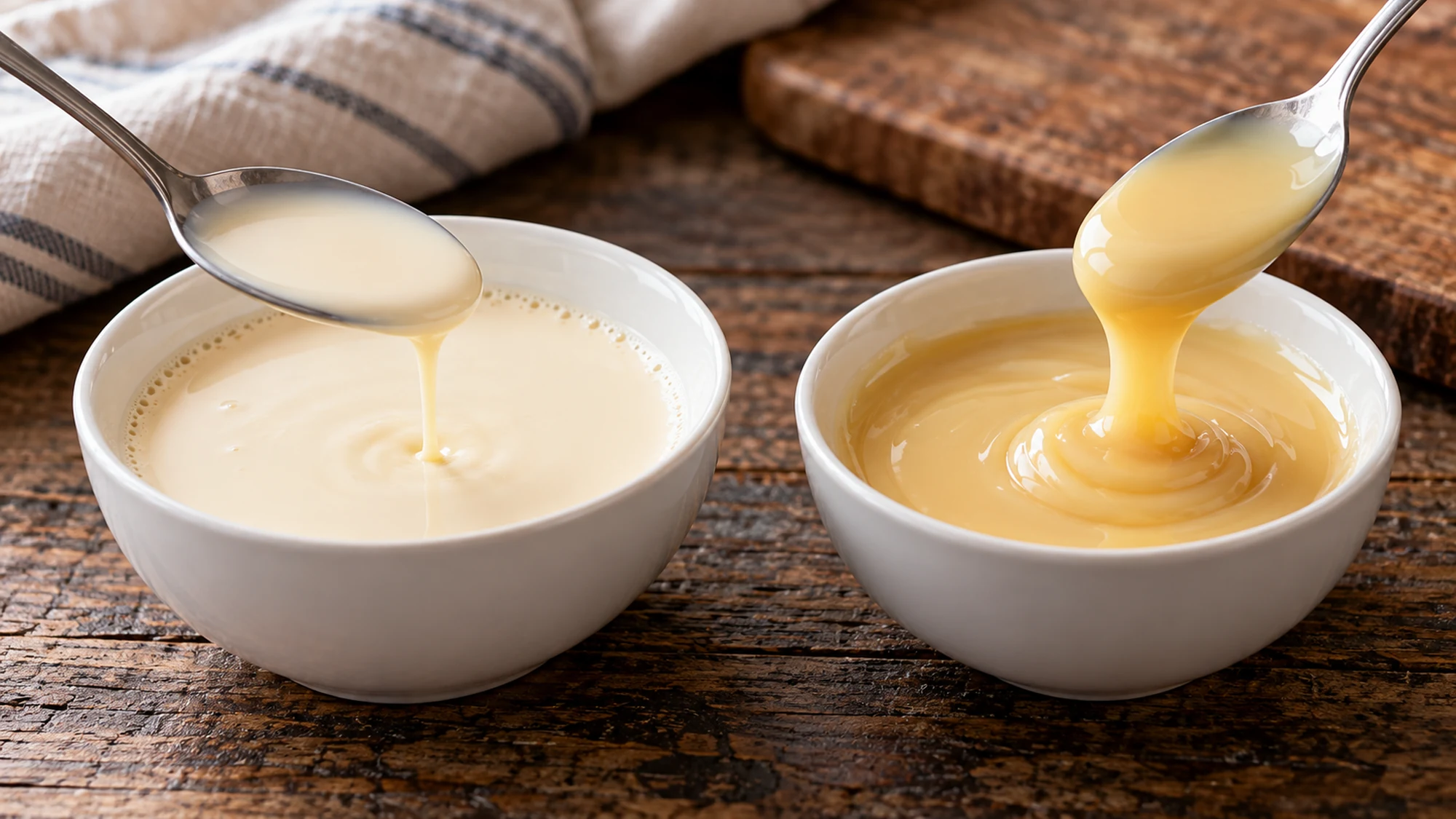
What Makes Evaporated Milk Different
Montana State University Extension distinguishes evaporated milk from sweetened condensed milk: one is concentrated milk, while the other has added sugar and a much thicker, sweeter consistency. Both contain milk, but they are not interchangeable ingredients.
Concentration is only part of the process. The Canadian Dairy Commission explains that commercial evaporated milk is packaged and heat-sterilized after concentration. That treatment helps explain its shelf-stable unopened form, slight cooked flavor, and cream-colored appearance. Homemade reduced milk has not undergone the same canning process; it belongs in the refrigerator, not on a pantry shelf.
| Milk form | What to expect | Best first check |
|---|---|---|
| Evaporated milk | Concentrated dairy flavor; no added sugar in plain versions | Fat level and the recipe’s dilution instructions |
| Sweetened condensed milk | Thick, concentrated milk with added sugar | Whether the dessert specifically calls for it |
| Fresh milk | More water and a lighter consistency | The recipe’s stated fat level |
| Heavy cream | A substantially different fat balance | Whether the recipe depends on whipping or richness |
The word “unsweetened” does not mean sugar-free: milk naturally contains lactose. Nor does concentration remove milk allergens. If you need a dairy-free ingredient, choose a recipe developed around one rather than assuming the can is suitable.
Choose the Swap by the Recipe
Carnation’s U.S. instructions recommend equal parts evaporated milk and water when a drinking-milk consistency is wanted. For example, half a cup of each makes one cup. Follow the directions on your specific product, especially when baking depends on a measured liquid balance.
- For a recipe calling for evaporated milk: measure it as written; do not automatically dilute the can first.
- For a milk substitution: decide whether the recipe needs ordinary milk consistency or a deliberately richer result.
- For sweetened condensed milk: do not simply exchange cans. Added sugar affects sweetness and the finished texture.
- For whipped toppings: do not expect evaporated milk to behave exactly like heavy cream. Use a tested method designed for the ingredient.
I’d be most cautious with a special-occasion custard or cake. A substitution that sounds close on paper can still change how a filling sets. When the ingredient is doing structural work, keeping to the original formula is usually the calmer choice.

Where the Can Earns Its Place
Think of evaporated milk as an ingredient, not a finished sauce. A measured amount can be useful in a creamy soup, mashed vegetables, a baked pudding, or a recipe-developed cheese sauce. The dish still needs its own balance of seasoning, liquid, and heat.
Plan the remainder before opening the can. If dinner uses only a few tablespoons, choose another suitable dish for the next few days rather than leaving an anonymous container behind the refrigerator door. Measuring what you need first also keeps utensils and other ingredients out of the stored milk.
For nutrition comparisons, use the actual product label. The FDA recommends checking serving size alongside the nutrients listed. Comparing a splash of evaporated milk with a full cup of fresh milk tells you more about portion size than the products themselves. Look at the amount you will actually add, particularly when comparing whole and fat-free versions.

Store the Remainder Like Refrigerated Dairy
Keep an unopened can in a cool, dry place and follow its label. Once opened, cover and refrigerate promptly. University of Nebraska–Lincoln lists four to five refrigerated days for opened canned milk; follow a shorter manufacturer instruction when provided. Write the opening date on the container instead of relying on memory.
- Keep it cold: the FDA recommends a refrigerator at 40°F or below and prompt refrigeration of perishable foods.
- Check the can: avoid leaking, swollen, badly rusted, or seriously damaged packaging. Do not taste suspect contents to test them.
- Separate safety from texture: a product’s normal cream color is not a reason to ignore unsafe storage.
- Do not count on freezing: Carnation advises against freezing its unused evaporated milk because the thawed texture can become watery.
Bottom Line
Use evaporated milk when concentrated dairy flavor fits the dish, and keep sweetened condensed milk separate in your shopping plan. Measure carefully, follow the product’s directions, and make a plan for the opened can.
Sources
- Montana State University Extension: Milk
- Canadian Dairy Commission: Evaporated milk
- Carnation: Cooking and storage questions
- FDA: Understanding the Nutrition Facts label
- University of Nebraska–Lincoln: Home food storage
- FDA: Are you storing food safely?

Hi, I’m Emily Pocker! I share recipes and food guides here at Recipes360 to help you find everyday meal inspiration and feel more confident in the kitchen. My goal is to make cooking approachable, enjoyable, and full of flavor.