
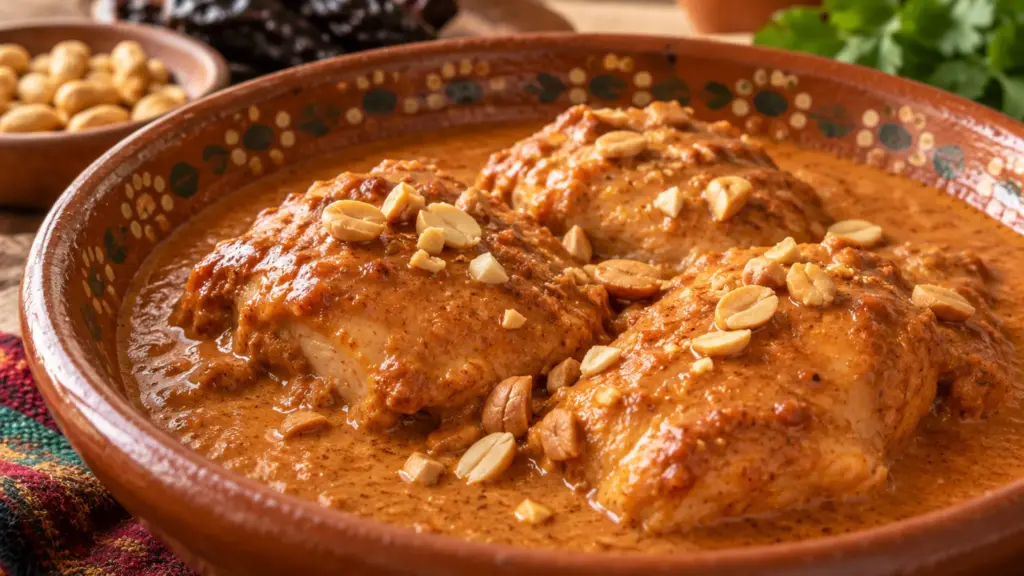
Pollo encacahuatado brings chicken and peanuts together in a warm, savory sauce that coats the spoon without needing cream. Tomatoes give this version acidity and body, while ancho chiles add a rounded, earthy flavor. The sauce should taste of toasted peanuts first, with the spices sitting behind them rather than taking over.
Blend the peanut sauce until smooth, then simmer it gently: a little water is more useful than extra oil when the pan starts to look dry.
This is a practical boneless-thigh adaptation, not a claim to the only traditional method. I would choose thighs for their forgiving texture and keep the heat moderate once they enter the sauce. Six portions make it useful for a shared dinner, with rice or warm tortillas offered separately.
Building the pollo encacahuatado sauce
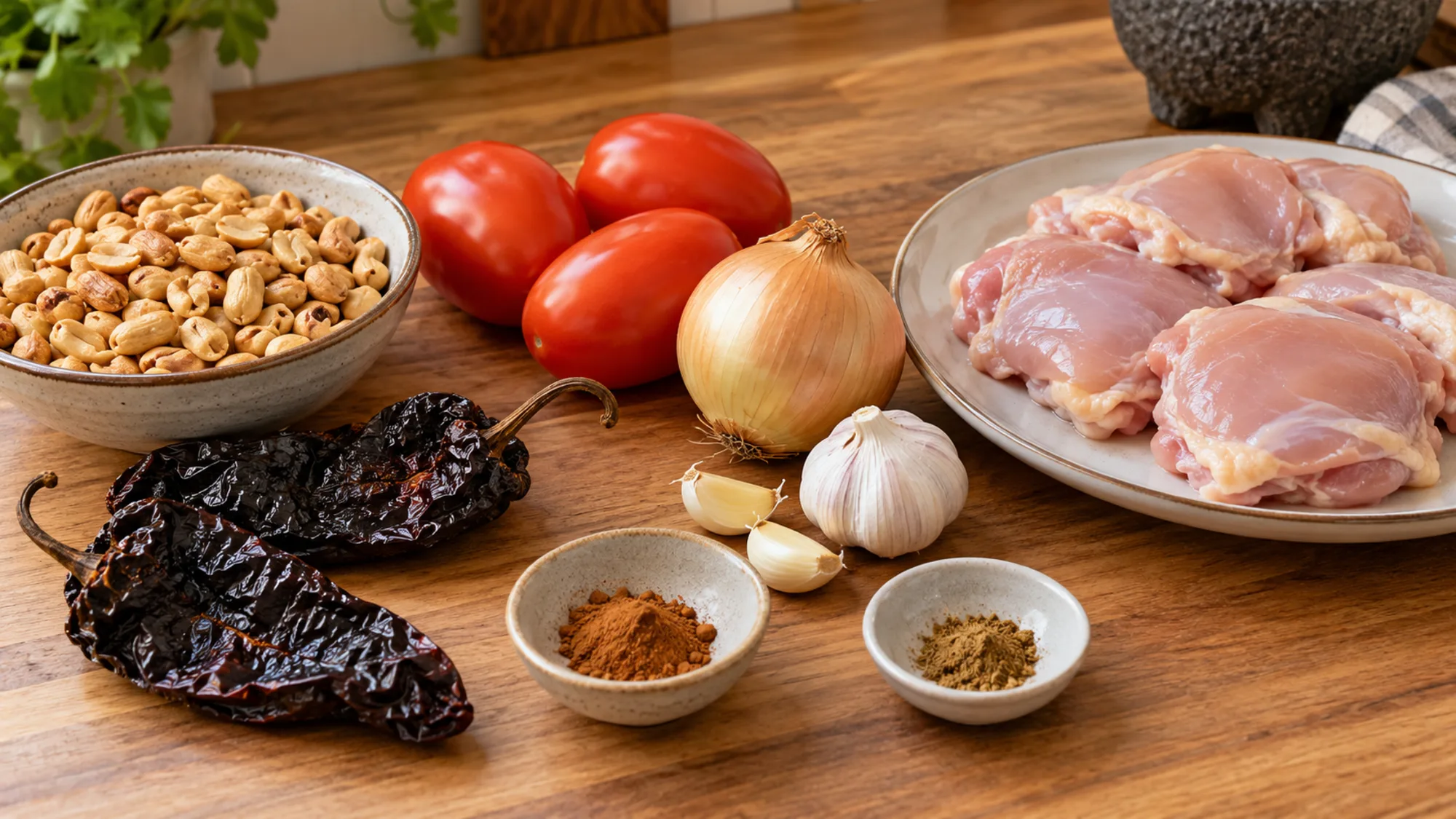
Start with unsalted roasted peanuts, ripe tomatoes, onion, garlic, and dried ancho chiles. Sweetened peanut butter would change both flavor and texture, so it is not a direct swap here. Remove the chile stems and seeds, then toast the opened chiles only briefly; blackened patches can make the whole sauce bitter.
Soaking softens the chiles for blending. Meanwhile, brown the cut vegetables in a dry skillet and let them cool until warm before they enter the blender. The sauce should be smooth enough that you do not feel peanut grit on the tongue. Add only the measured water initially, then loosen it during simmering if needed.
- Toast chiles until fragrant, not smoky. Discard any burned pieces before continuing.
- Reserve a spoonful of the peanuts for the final garnish; blend the rest into the sauce.
- Never tightly seal steaming liquid in a blender. Cool the ingredients first and follow the appliance instructions.
Cook the chicken gently
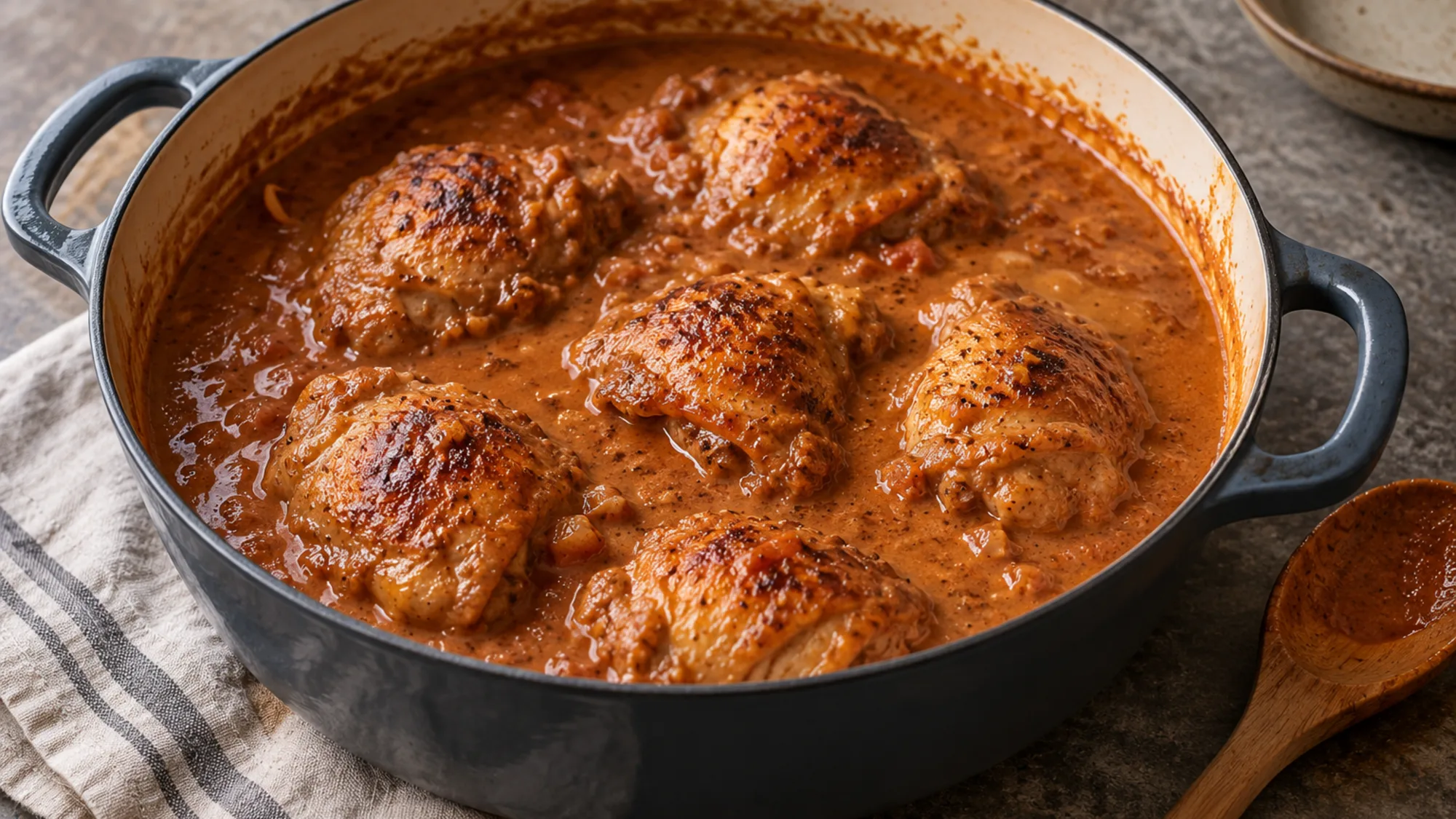
Brown the thighs in batches so they develop color instead of steaming in a crowded pan. They will still be raw inside at this stage. Finish them in the sauce and check the thickest part of each piece with a thermometer: poultry must reach 165°F, regardless of how brown the outside looks.
| What you notice | Small adjustment |
|---|---|
| Sauce drags across the pan | Stir in a splash of water and reduce the heat. |
| Sauce looks thin | Simmer uncovered briefly after the chicken reaches safe doneness. |
| Chicken pieces differ in size | Check each thick piece rather than relying on one reading. |
Keep the simmer low enough that the peanut mixture does not spit aggressively. Stir around and beneath the chicken when you turn it. My preference would be a pourable sauce that settles around the meat, not a thick paste that leaves the rice dry.
Serving suggestions
Plain rice gives the sauce somewhere to go, while warm corn tortillas are useful for the last spoonful. Add a crisp cabbage salad or sliced cucumber for contrast. Neither side is included in the recipe’s nutrition estimate. Keep extra chopped peanuts separate if some guests prefer a smoother plate.
If you want another chicken dinner for a different night, apricot chicken takes a tangier direction. For a rice-centered main rather than a separate side, browse the chicken and chorizo paella; its seasoning profile is different, so it is not a substitute for this sauce.
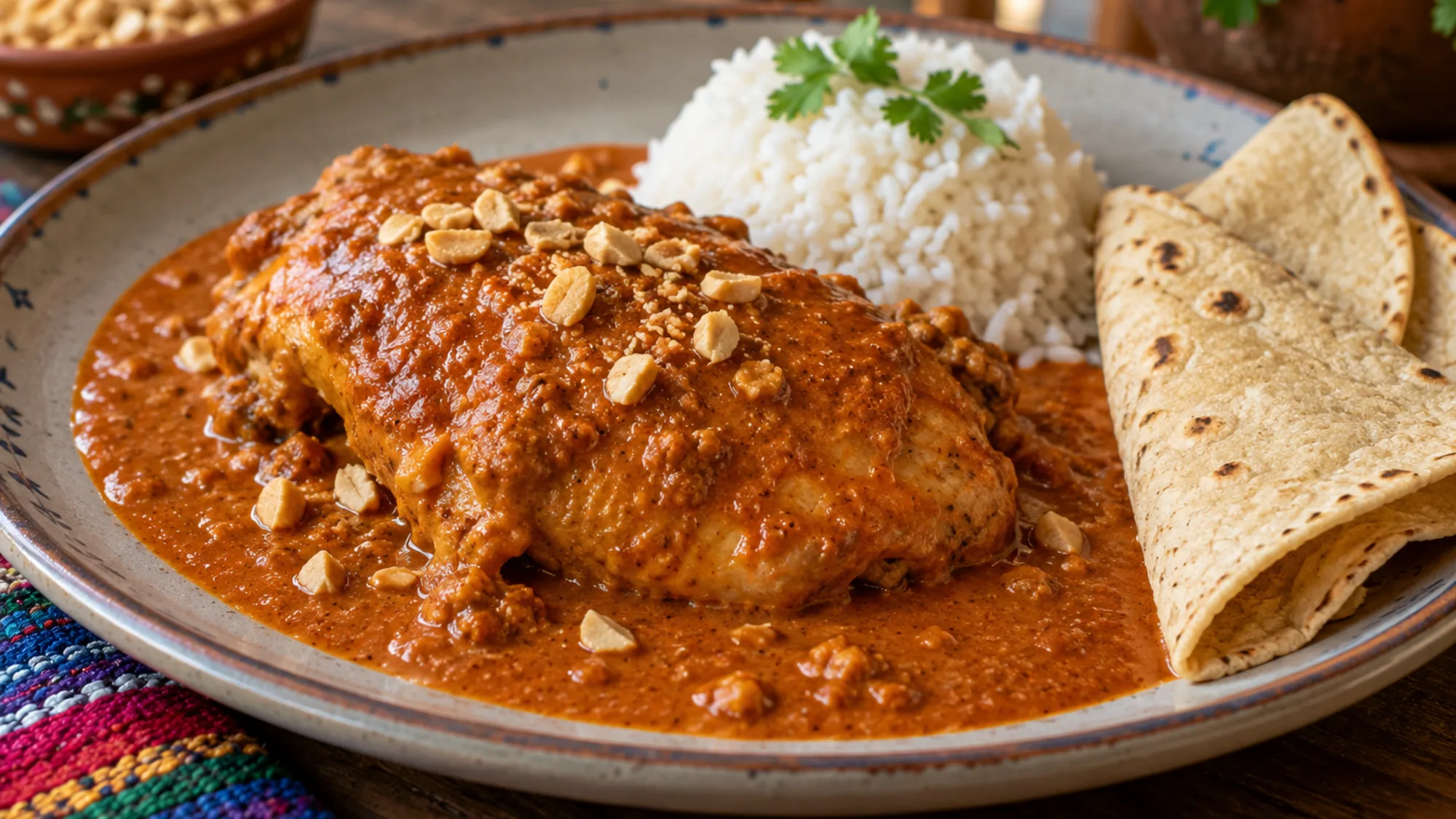
Variations
- More heat: add a small amount of chipotle to the blended sauce, then taste; do not assume every ancho has identical heat.
- Less cinnamon: use a pinch if you want the peanut flavor to stand further forward.
- Bone-in chicken: allow additional cooking time and verify 165°F in the thickest meat without touching bone. The card’s timing is for boneless thighs.
Peanuts are central to this dish and a major allergen. A nut-free swap would create a different sauce, so I would choose another recipe rather than present a casual substitution as safe for someone with a peanut allergy.
Health benefits
Chicken contributes protein, and peanuts contribute protein and fat. The rounded card estimate uses the fresh chicken thigh label and unsalted peanut label, plus the other measured ingredients, divided by six. It includes all sauce and cooking oil, not rice or tortillas; brands and portion sizes change the result.
Storage and reheating
Refrigerate in shallow containers within two hours and use within three to four days. Reheat to 165°F, stirring water into the sauce as needed. For longer storage, freeze promptly rather than waiting until the refrigerated leftovers are already old.
Bottom Line
A smooth blend and a gentle simmer make this peanut sauce manageable. Use the thermometer for the chicken and your spoon for the sauce texture. The Jauja Cocina Mexicana video in the card offers another preparation; follow this boneless version’s quantities and timing rather than mixing the two methods halfway through.
Pollo Encacahuatado Recipe
Pollo Encacahuatado Recipe

Ingredients
- 900 g boneless skinless chicken thighs about 2 pounds, thawed
- 140 g unsalted dry-roasted peanuts reserve 1 tablespoon for garnish
- 400 g ripe tomatoes halved
- 150 g white onion cut into wedges
- 3 cloves garlic peeled, about 9 g
- 2 dried ancho chiles about 20 g total; stems and seeds removed
- 500 ml water plus extra for soaking chiles and thinning sauce
- 1 tablespoon neutral oil
- 1 teaspoon ground cumin
- 1 teaspoon dried Mexican oregano
- 1/4 teaspoon ground cinnamon
- 6 g fine salt about 1 teaspoon, divided
- 1 tablespoon chopped cilantro optional garnish
Equipment
- 1 Large deep skillet with lid
- 1 Heat-safe blender
- 1 Instant-read thermometer
- 1 Heatproof bowl
Instructions
- Briefly toast the opened ancho chiles in a dry skillet over medium heat, about 10 seconds per side, just until fragrant. Do not blacken. Cover with hot water in a bowl for 15 minutes, then drain and discard the soaking water.
- In the same dry skillet, cook tomatoes cut-side down and onion wedges over medium heat for 7–9 minutes, turning as they develop browned patches. Add garlic for the final 2 minutes. Transfer to a plate and let cool until warm, not steaming.
- Pat the chicken dry without rinsing it. Season with half the salt. Heat oil in the skillet over medium-high heat. Brown thighs in two batches for about 3 minutes per side; transfer to a clean plate. They are not cooked through yet.
- Blend the warm vegetables, drained chiles, peanuts except the reserved tablespoon, 500 ml water, cumin, oregano, cinnamon and remaining salt until very smooth. Never seal steaming ingredients in a blender; let them cool first and follow the blender’s hot-liquid instructions.
- Pour sauce into the skillet carefully and stir over medium-low heat for 5 minutes. Return chicken and accumulated juices. Cover partly and simmer gently for 18–25 minutes, turning once and stirring the sauce around the pieces. Add water a splash at a time if it catches or becomes paste-like. Every thigh must reach at least 165°F (74°C) in its thickest part; continue cooking if necessary.
- Taste the cooked sauce and adjust seasoning if needed. Divide chicken and sauce into six equal servings. Sprinkle with reserved peanuts and optional cilantro. Rice and tortillas are optional sides, not included in the nutrition estimate.
Nutrition
Video
Notes
Tried this recipe?
Let us know how it turned out!Hi, I’m Emily Pocker! I share recipes and food guides here at Recipes360 to help you find everyday meal inspiration and feel more confident in the kitchen. My goal is to make cooking approachable, enjoyable, and full of flavor.