
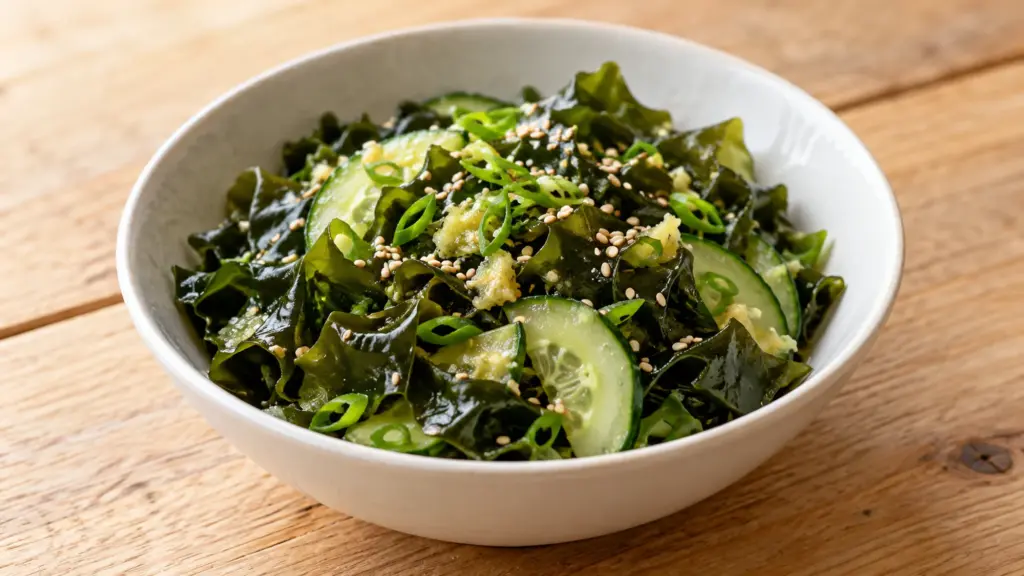
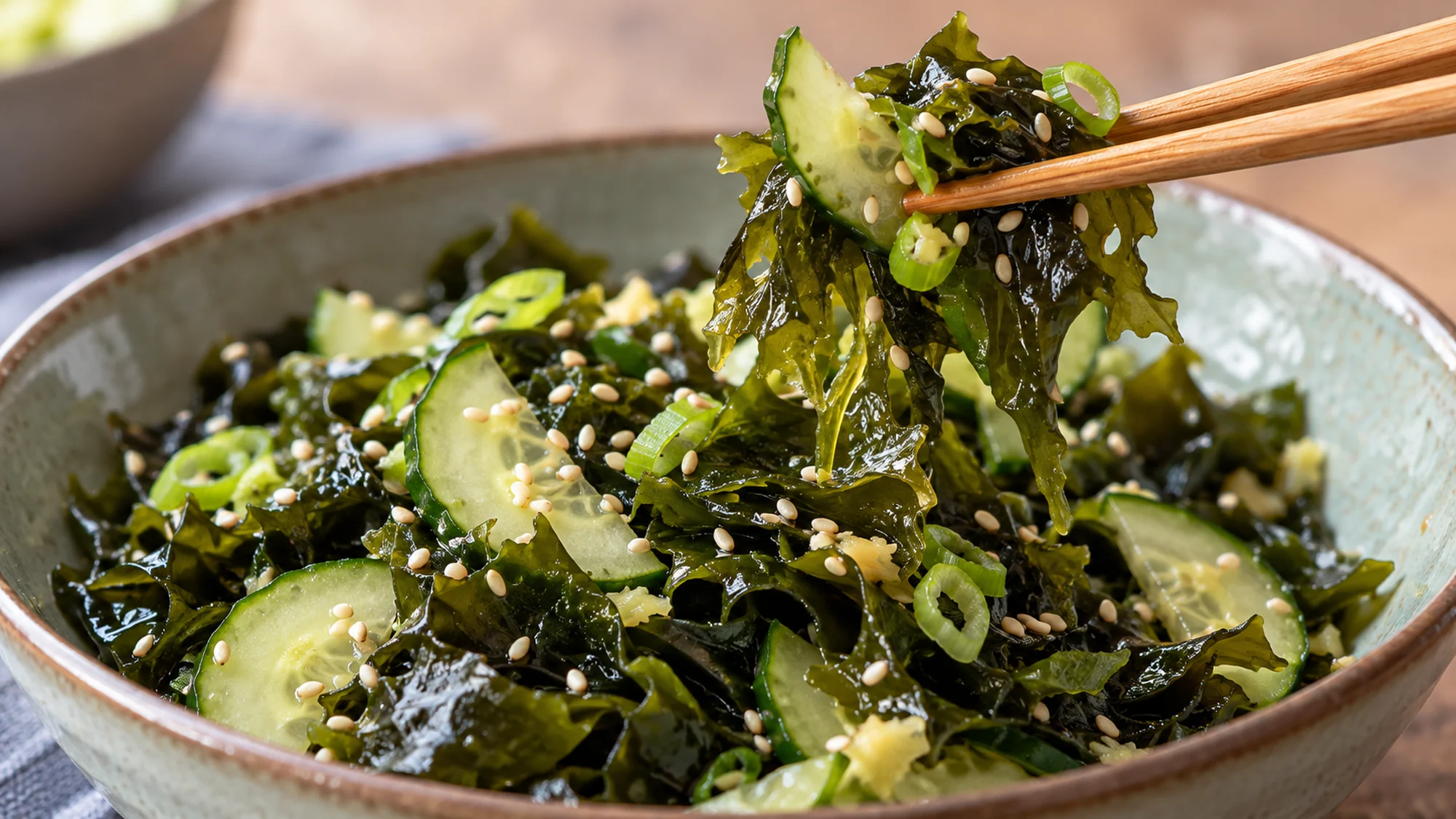
A small packet of dried wakame can expand into a bowlful of soft, rippled leaves, which is part of the appeal of homemade seaweed salad. Cucumber adds crunch, sesame brings a nutty note, and rice vinegar keeps the dressing lively. The color is naturally olive to dark green, rather than the vivid neon strands of some prepared salads.
Prepare food-grade wakame according to its packet, drain it thoroughly, and squeeze excess water from the cucumber before dressing. Those two draining steps keep the ginger-sesame flavor from disappearing into a watery bowl.
I’d weigh the dried seaweed rather than pack it into a spoon: small flakes and broad pieces occupy very different volumes. Choose dried wakame intended for salads and soups, not kombu sheets or a pre-seasoned frozen salad. Those products need different preparation and will not behave like a direct swap.
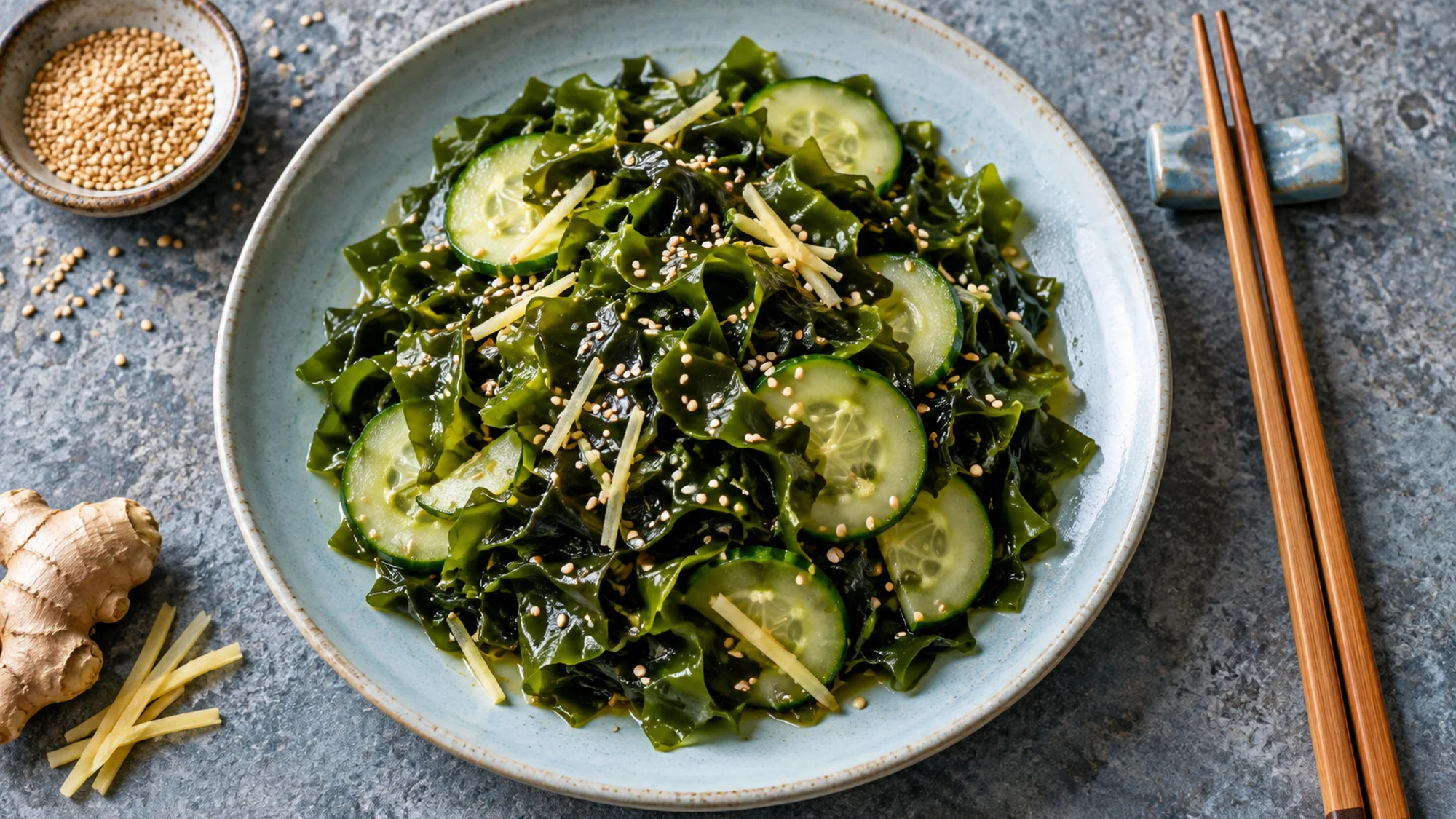
Serving Suggestions for Seaweed Salad
Treat this as a small side dish. Its slippery-tender seaweed and crisp cucumber sit well beside a warm main course, and the light coating of dressing should complement rather than flood the food. Serve it cool in a small bowl or as one component of a larger plate.
Because soy sauce and seaweed bring their own saltiness, keep the rest of the meal relatively simply seasoned. I’d pair it with plain rice and grilled fish or crispy baked tofu, then offer any additional sauces separately. That way a small side does not have to carry all the seasoning for dinner.
- With a rice bowl: Add a small portion beside cooked salmon, tofu or chicken, keeping the salad separate from hot rice until serving.
- With a light lunch: Pair with edamame and rice or a sandwich with a mild filling for a contrast in texture.
- With a shared meal: Serve in individual small bowls so the dressing stays with the salad rather than spreading across the table’s other dishes.
- For make-ahead preparation: Keep the drained components and dressing chilled separately, then combine shortly before the meal for the clearest cucumber crunch.
A small, cool portion works best beside a warm main dish and a plainly seasoned starch.
Variations and Ingredient Choices
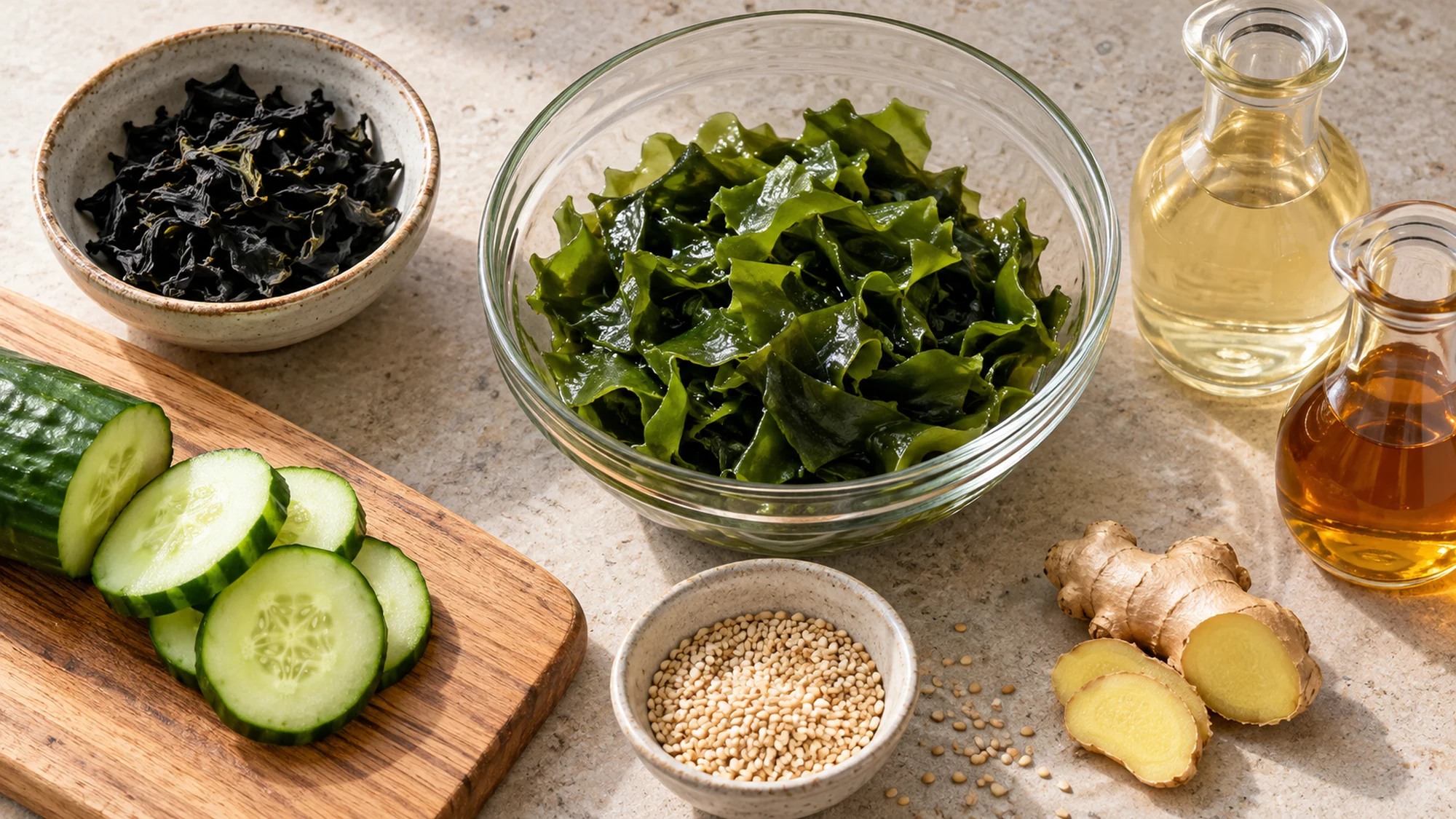
Wakame is the center of this version, but cucumber carries much of its fresh crunch. Thin rounds are easy to eat; thicker pieces feel more substantial but take longer to shed water. After salting, squeeze gently and taste a slice. A quick rinse can remove excess surface salt before another squeeze if needed.
The table gives practical changes without turning the salad into a different recipe. Toasted sesame oil has a strong aroma, so measure it rather than pouring freely. If you use seasoned rice vinegar, remember that it already contains sugar and salt; the dressing will need a different balance.
| Choice | What changes | Practical adjustment |
|---|---|---|
| Gluten-free tamari | Different seasoning profile | Check the label; taste before adding more |
| Less sugar | Sharper vinegar flavor | Reduce gradually rather than omitting blindly |
| Thin radish slices | Adds peppery crunch | Use as a small addition to cucumber |
| Chile flakes | Adds heat | Start with a small pinch |
Keep the seaweed and cucumber well drained, then make small changes to the dressing after tasting.
Health Benefits and Iodine Awareness
Seaweed can contribute fiber and minerals, including iodine, but the amount varies with the species and product. The NIH iodine fact sheet explains that iodine is needed to make thyroid hormones and that too much can also be harmful. This salad is food, not a thyroid treatment or a reliable way to measure an iodine dose.
Use modest portions and a varied diet rather than assuming a larger bowl is automatically better. Anyone advised to limit iodine should follow that guidance. Soy sauce and some dried seaweed products also contribute considerable sodium. Draining and rinsing may change the amount, but this recipe does not claim a precise sodium reduction.
The estimated nutrition uses a dried-wakame product as a reference, including its stated fiber, together with the measured dressing and vegetables. Brands and preparation differ, so the result is approximate. Sesame and soy are allergens, and ordinary soy sauce often contains wheat; check the labels for your household.
Enjoy the texture and flavor in a modest side portion, with attention to iodine, sodium and the ingredients on the label.
Bottom Line
Homemade seaweed salad is mostly a lesson in water management. Give the wakame the preparation its packet calls for, squeeze the cucumber and dress only after draining. The payoff is a tidy bowl of tender leaves, clean cucumber crunch and a sesame-ginger finish that still tastes distinct.
Measure the dried wakame, drain carefully and serve small portions as part of a varied meal.
Seaweed Salad Recipe

Ingredients
- 10 grams dried wakame seaweed food-grade, intended for rehydrating for salads; follow packet preparation
- 1 small English cucumber 200 g, thinly sliced
- 1/8 teaspoon fine salt for cucumber
- 1 scallion 15 g, thinly sliced
- 2 teaspoons toasted sesame seeds 6 g
- 2 tablespoons unseasoned rice vinegar 30 mL
- 2 teaspoons toasted sesame oil 9 g
- 1 tablespoon reduced-sodium soy sauce 15 mL
- 1 teaspoon granulated sugar 4 g
- 1 teaspoon finely grated fresh ginger 2 g
Equipment
- 1 Digital kitchen scale
- 2 Mixing bowls
- 1 Fine-mesh strainer
- 1 Small whisk
- 1 Knife and cutting board
Instructions
- Prepare the dried wakame exactly as its packet directs for salad use, including any required cooking. For a product labeled for cold-water rehydration, soak until expanded and tender, typically about 10 minutes. Drain in a fine-mesh strainer, rinse if the packet directs, and gently squeeze out excess water. Cut very long pieces into bite-sized lengths.
- While the seaweed prepares, toss sliced cucumber with the salt. Let stand 10 minutes, then gently squeeze out released liquid. Taste a slice; if very salty, rinse briefly and squeeze again.
- Whisk rice vinegar, sesame oil, reduced-sodium soy sauce, sugar and grated ginger in a bowl until the sugar dissolves.
- Add the drained wakame, cucumber and scallion. Toss gently to coat, then fold in sesame seeds. Refrigerate for 10 minutes and divide into four small side servings.
Nutrition
Video
Notes
Tried this recipe?
Let us know how it turned out!Hi, I’m Emily Pocker! I share recipes and food guides here at Recipes360 to help you find everyday meal inspiration and feel more confident in the kitchen. My goal is to make cooking approachable, enjoyable, and full of flavor.