
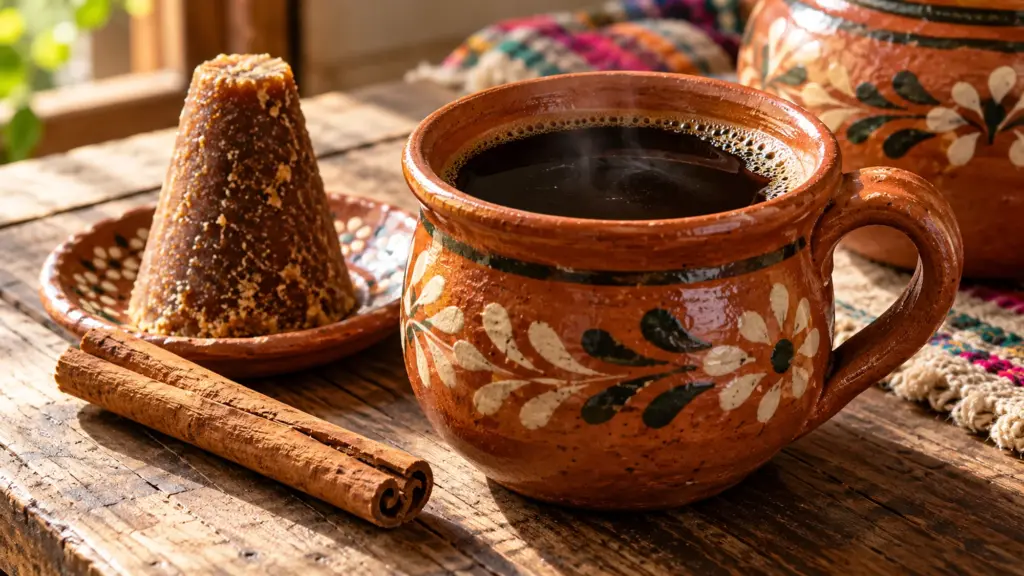
Cinnamon should announce itself before the first sip, while the coffee still tastes unmistakably like coffee. Café de olla combines those aromas with piloncillo, the dark cane sugar sold in cones or blocks. This version makes four small cups with a saucepan and strainer.

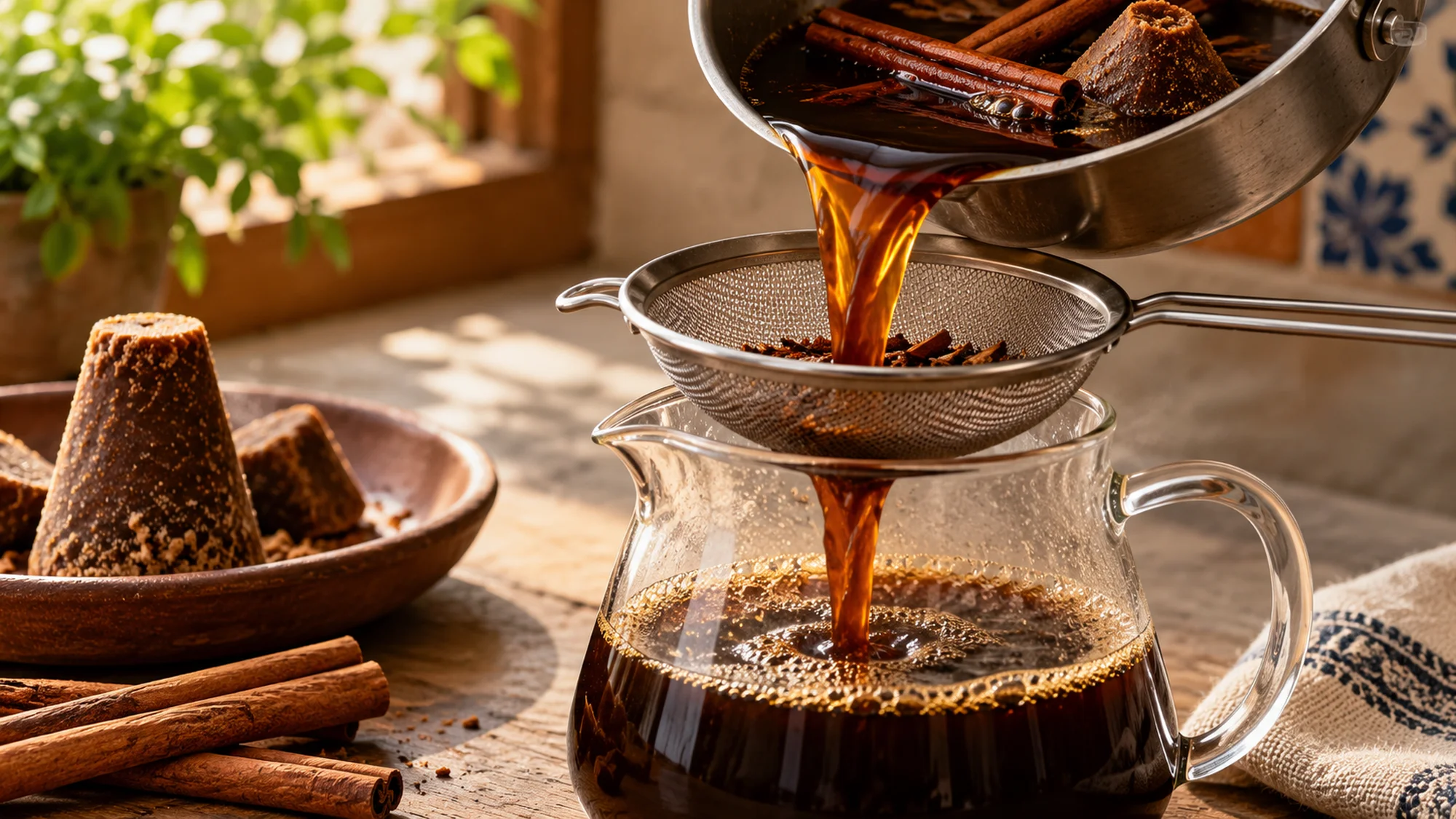
Dissolve the piloncillo with cinnamon first, take the pot off the heat, then steep the ground coffee briefly and strain. Separating the spice simmer from the coffee steep gives you more control over bitterness.
I’d choose Mexican canela for its delicate, woody fragrance. A stainless saucepan works if you do not have a suitable cooking olla. You do not need new cookware to enjoy the combination of coffee, cinnamon and molasses-like sweetness.

Serving Suggestions for Café de Olla
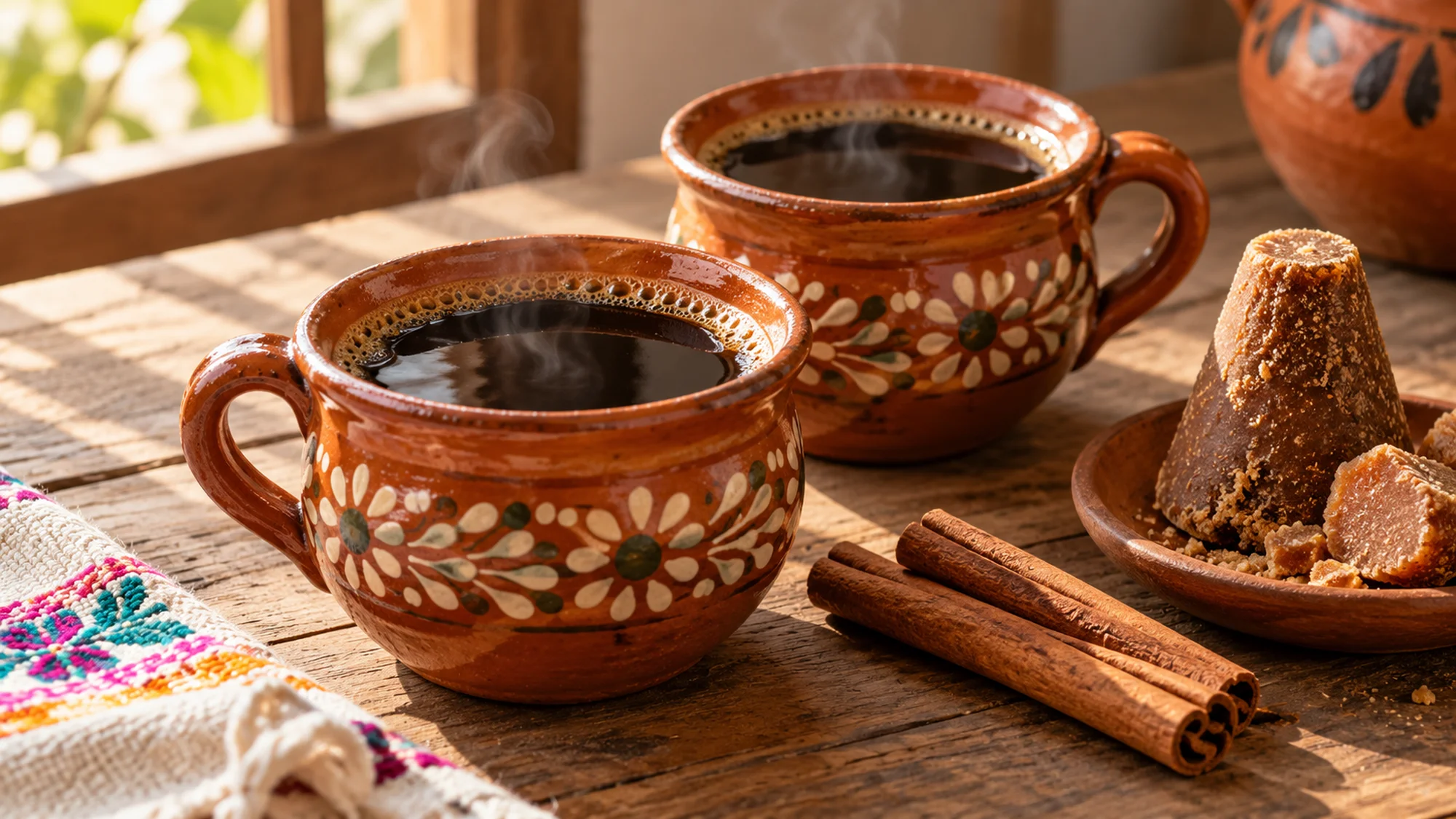
Serve in small heatproof cups while the coffee is freshly strained. A fine-mesh strainer catches larger grounds and cinnamon; a paper coffee filter gives a cleaner cup but takes longer. Warm the serving jug first if filtering slowly, and handle the hot pot carefully.
The piloncillo already sweetens the drink, so a plain breakfast or a modest piece of pastry makes sense beside it. For a richer dessert pairing, a small square of apple fritter cake brings another cinnamon note. I’d taste the coffee before putting an extra sugar bowl on the table.
| Pair with | Serving approach |
|---|---|
| Plain toast | A simple partner that lets the spiced coffee lead. |
| Sweet bread | Use a smaller piece because the drink is already sweetened. |
| Fruit dessert | Keep both portions modest rather than doubling the sweetness. |
- Strain the whole batch once the steep is finished; grounds left in the pot keep extracting.
- Choose cups meant for hot drinks, with enough room to carry them safely.
- Serve milk separately if desired; this recipe and its nutrition estimate are for black coffee.
- For an iced serving, cool the strained coffee promptly and pour over ice; dilution will soften its flavor.
Serve small, freshly strained cups and let the coffee’s existing sweetness guide what goes alongside.
Café de Olla Variations Without Losing the Coffee
Piloncillo contributes sweetness and a darker flavor than white sugar. If a cone is too hard to chop safely, soften it in the measured hot water instead of forcing a knife through it. The recipe uses weight because a loose pile of shaved sugar and a solid chunk occupy very different volumes.
A cinnamon stick perfumes the water without the sediment ground cinnamon leaves behind. More spices are optional: star anise and cloves appear in some versions, but a little goes a long way. The National Center for Complementary and Integrative Health’s cinnamon overview distinguishes culinary flavoring from unproven treatment claims; more spice does not make the drink a remedy.
- Brown sugar: use the same starting weight in place of piloncillo; the flavor will be softer and less distinctive.
- Coffee strength: choose a medium or medium-dark roast and adjust the grounds on a later batch if you prefer a different balance.
- Decaf: substitute your preferred decaffeinated coffee; it can still contain a little caffeine.
- Extra spice: one clove or a small piece of star anise can join the cinnamon during the water simmer; remove it with the strainer.
- Sweetness: reduce the sugar if you prefer, recognizing that the final cup will taste more coffee-forward.
Begin with cinnamon and piloncillo, then adjust one element at a time so the coffee stays recognizable.
Health Benefits and Caffeine Awareness
Coffee and cinnamon make a fragrant drink, but adding spice does not cancel the sugar. This recipe contains about 15 grams of piloncillo per serving before any optional milk or extra sweetener. Treat it as a sweetened coffee rather than a health treatment, and keep the rest of your day’s drinks in mind.
Caffeine content varies with the coffee, amount of grounds and extraction. The FDA’s caffeine guidance stresses that individual sensitivity varies. Its commonly cited 400-milligram daily reference applies to most adults, not to every person or every situation; this recipe has no laboratory caffeine measurement.
- Consider the cup size: four small servings are different from two large mugs.
- If pregnant, breastfeeding or managing a condition or medication affected by caffeine, ask your clinician about your own limits.
- Keep decaf in perspective: lower caffeine does not mean none.
- Nutrition is estimated for the black drink, primarily from the piloncillo; milk and accompaniments add their own nutrients and energy.
- Use cinnamon for aroma, without making blood-sugar or other therapeutic claims.
Enjoy the flavor while counting the added sugar and considering your own caffeine tolerance.
Bottom Line
Café de olla rewards a simple sequence: give the cinnamon time in the water, dissolve the piloncillo and let the coffee steep off the heat. Strain before serving so the last cup is not harsher than the first. With a regular saucepan and a little attention to the sweet-spice balance, the drink can stay warm and inviting without becoming syrupy.
Café de Olla Recipe

Ingredients
- 4 cups water 946 ml
- 60 g piloncillo broken into small pieces; or dark brown sugar
- 1 Mexican cinnamon stick about 3 inches
- 32 g ground roasted coffee medium-coarse, about 6 level tablespoons depending on grind
Equipment
- 2-quart saucepan
- Fine-mesh strainer
- Heatproof serving jug
- Kitchen scale
Instructions
- Place water, piloncillo and cinnamon in a saucepan. Bring to a gentle boil, stirring to dissolve the sugar. Reduce heat and simmer gently 8–10 minutes. If using a solid cone, let it soften in the hot water and stir until dissolved rather than chopping it with force.
- Remove the pan from the heat. Stir in the ground coffee, cover and steep 4 minutes. Do not keep boiling the coffee.
- Pour carefully through a fine-mesh strainer into a heatproof jug. For less sediment, line the strainer with a paper coffee filter. Discard grounds and cinnamon.
- Divide among four small heatproof cups and serve hot. Taste before adding extra sweetener. Optional milk is served separately and is not included in the nutrition estimate.
Nutrition
Video
Notes
Tried this recipe?
Let us know how it turned out!Hi, I’m Emily Pocker! I share recipes and food guides here at Recipes360 to help you find everyday meal inspiration and feel more confident in the kitchen. My goal is to make cooking approachable, enjoyable, and full of flavor.