
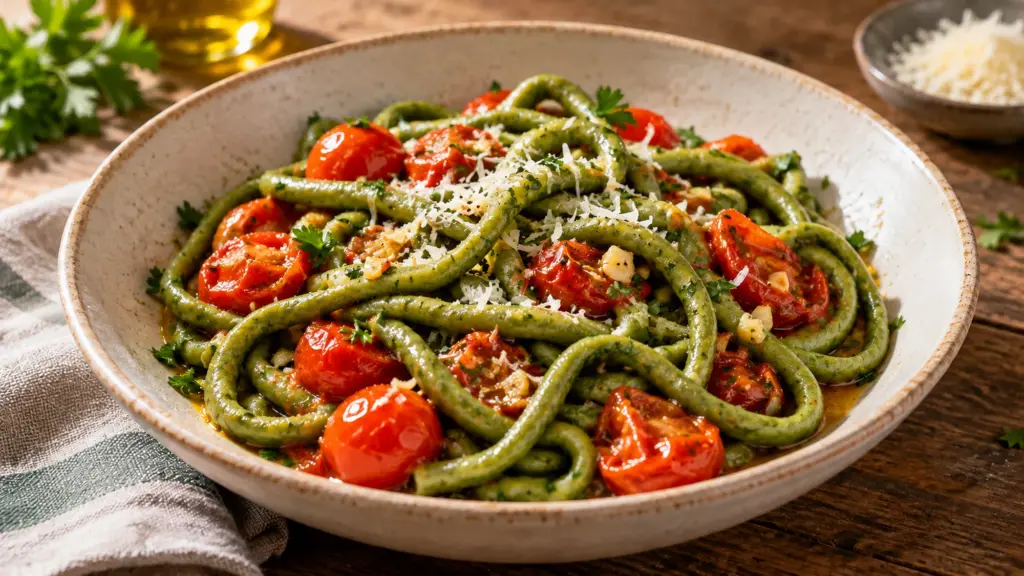
Spinach pici pasta begins with a green dough and a clear patch of counter. There is no pasta machine to adjust: small pieces roll beneath your palms into long, uneven strands. Fresh spinach supplies color and moisture, while a quick cherry-tomato sauce gives the finished noodles something juicy to catch.
Aim for roughly even thickness rather than perfectly matching lengths; the thickest part of each strand determines when it finishes cooking.
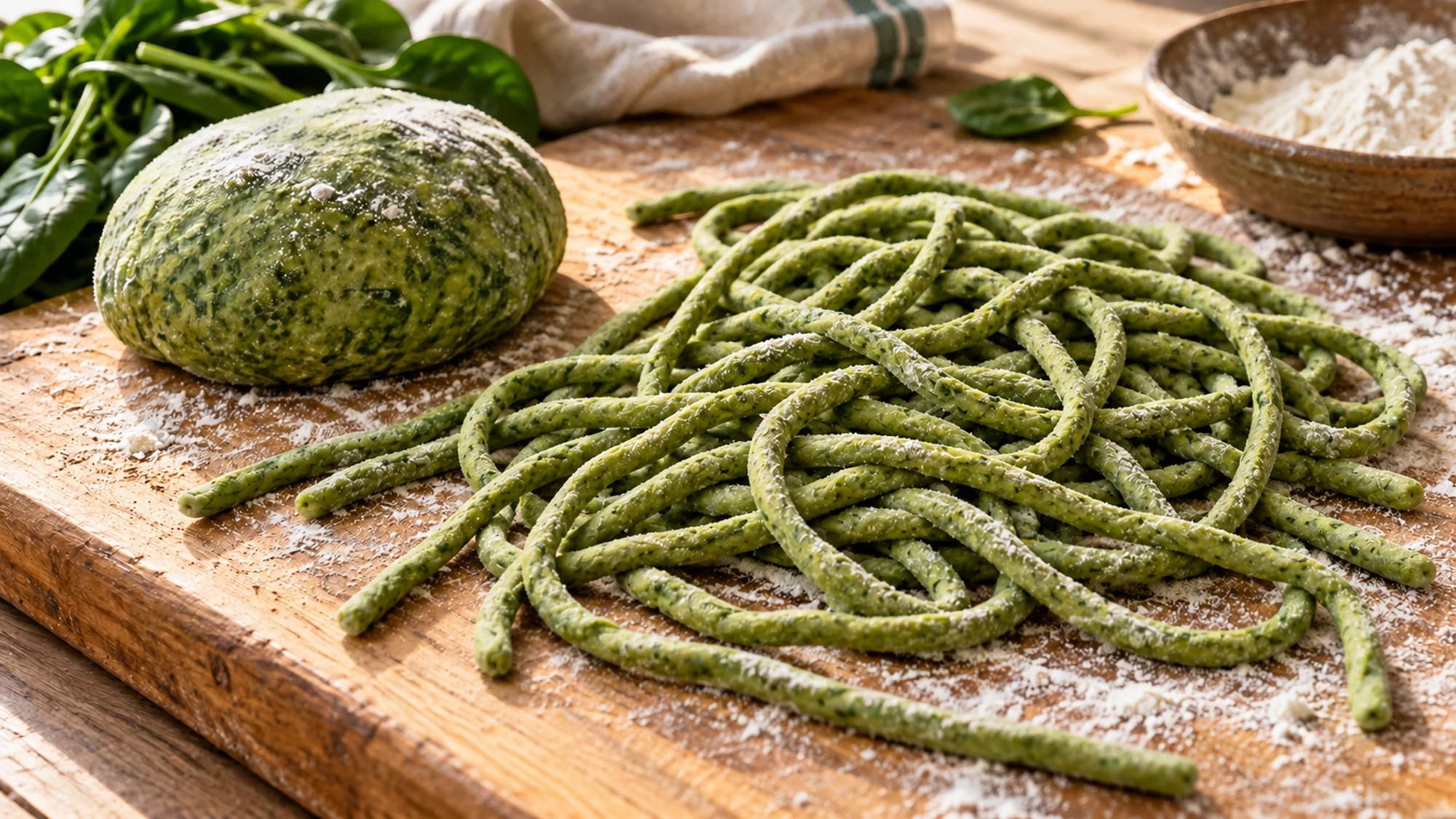
A food processor brings the spinach and flour together, then a short rest makes rolling easier. The dough should feel pliable and hold its shape without leaving a wet smear on the board. I’d spend the extra attention on the strands rather than adding more sauce ingredients. If one piece becomes a thick rope, roll its middle a little more; a short, evenly shaped noodle is more useful than a long one with a stubborn center.
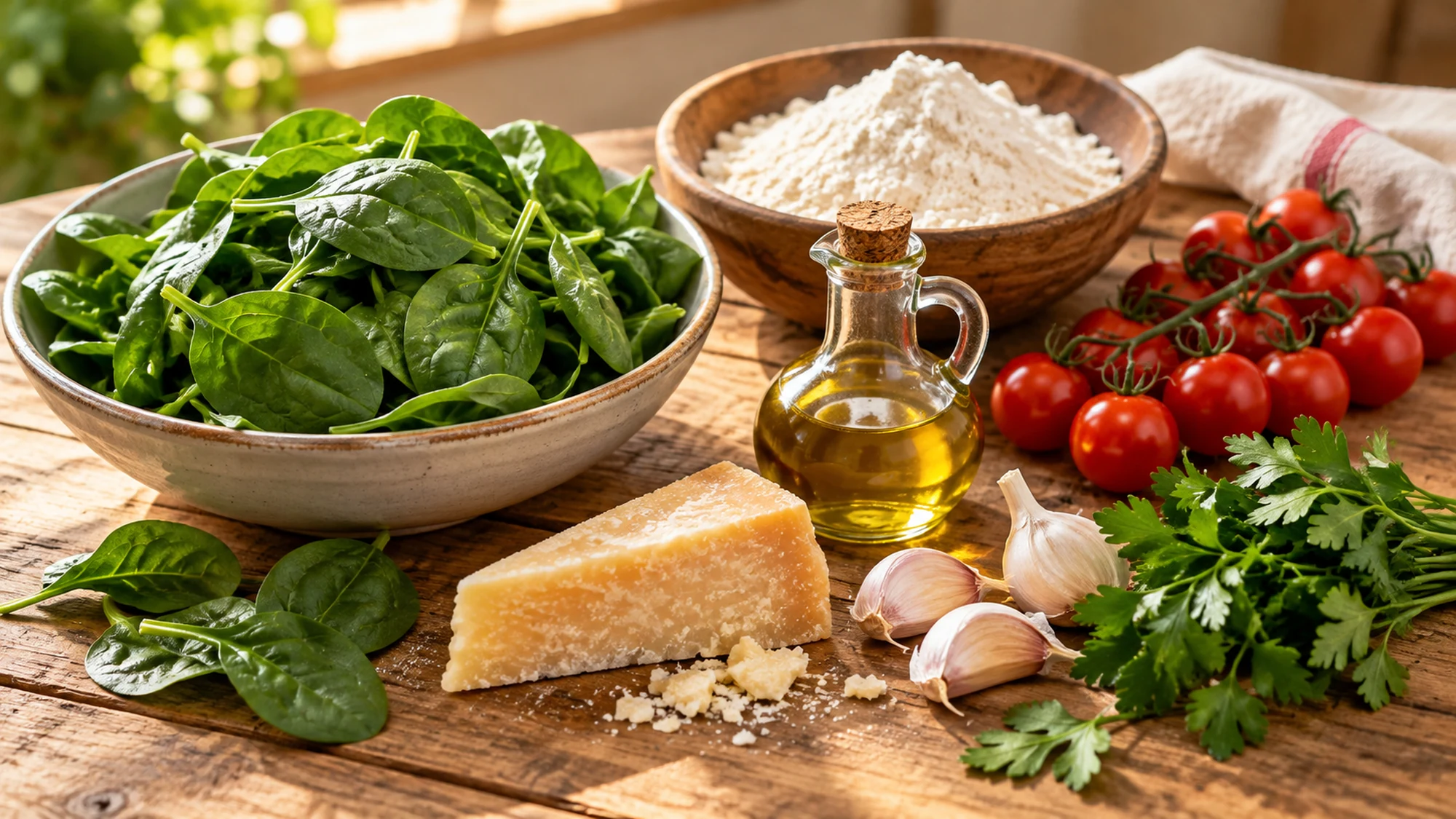
Serving spinach pici pasta
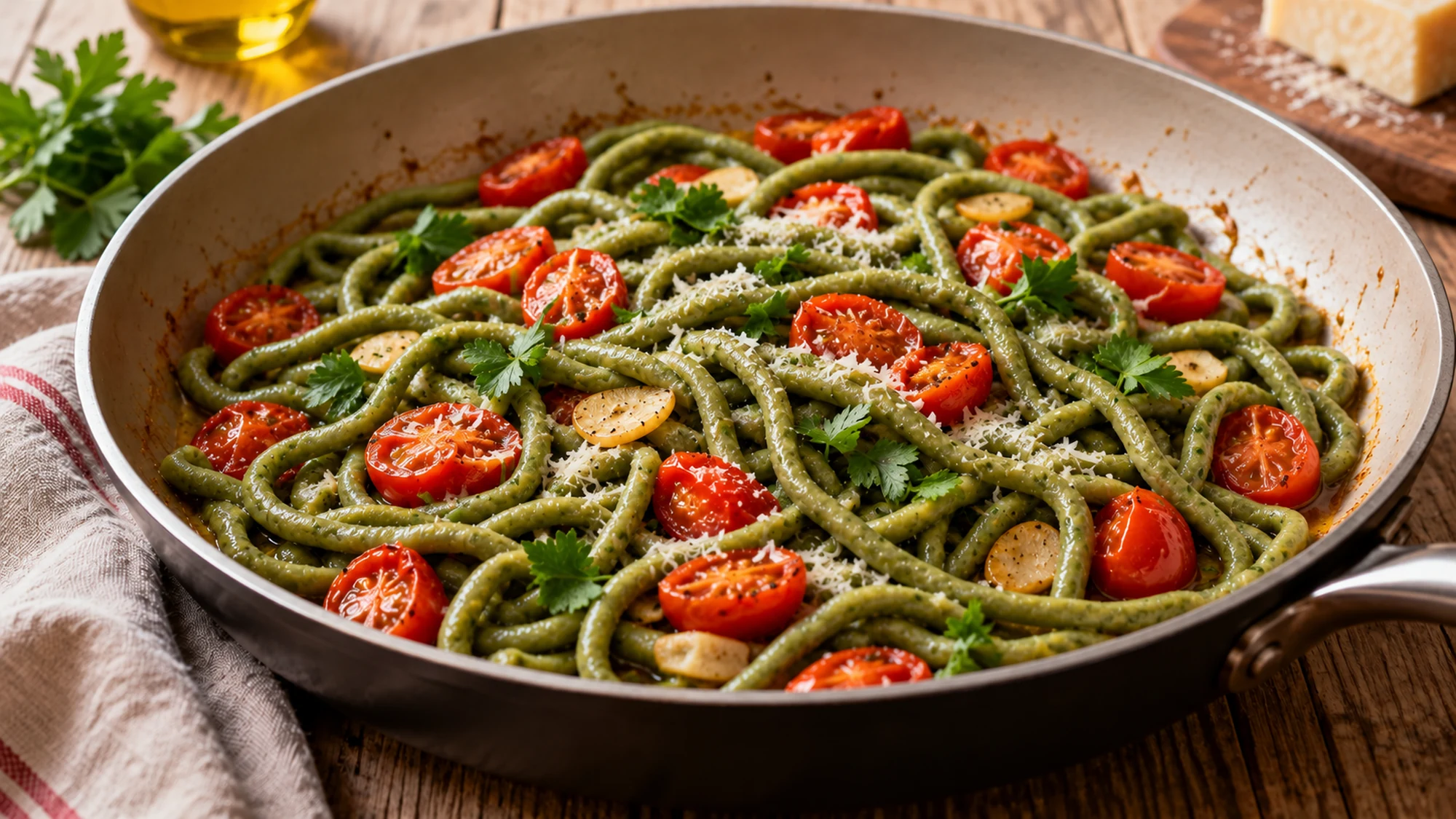
Bring the sauce together before the noodles finish boiling. Transfer the cooked pici straight into the skillet with a little clinging water, then toss gently. The water helps the oil and tomato juices coat the pasta, while the cheese adds a modest savory finish rather than a heavy sauce. Reserve a mug of that water before emptying the pot; it is harder to retrieve afterward.
Divide the finished pan into four main-course portions. A crisp green salad or the blog’s lemon and garlic green beans can sit alongside. Keep extra cheese separate so each person can adjust the plate without changing the whole batch.
| Choice | What to expect |
|---|---|
| Light tomato coating | Toss with a small splash of cooking water before adding more oil. |
| Family-style serving | Use a warm platter and serve promptly; thick noodles firm as they cool. |
| Packed leftovers | Expect a softer noodle after reheating rather than a freshly rolled texture. |
Have the skillet ready before draining; freshly cooked pici are easiest to coat while they are still hot and loose.
Variations for the dough and sauce
Fresh baby spinach is the starting point for this dough. Very wet leaves can make it sticky, so drain them well after washing. If the processor produces dry crumbs, squeeze a handful before adding water: the mixture may bind once pressed. Any needed water should go in by the teaspoon.
- If the dough sticks badly, knead in a little flour, then pause before adding more; extra flour changes both yield and tenderness.
- For a dairy-free plate, omit the Parmesan and finish with parsley. The nutrition estimate then changes, and the result tastes less salty.
- Use basil in place of parsley for a different herb note, keeping the same small measured amount.
I’d keep a first batch close to the listed flour and spinach before trying other greens. Frozen spinach has a different water content after thawing and squeezing, and gluten-free flour does not build the same dough structure. Neither is a direct, predictable substitution here.
Make one adjustment at a time, and judge the dough by its feel before adding another spoonful of flour or water.
Health benefits and portion notes
One-quarter of the recipe is estimated at about 410 calories, with 14 grams of protein and 4 grams of fiber. The calculation includes the listed flour, spinach, tomatoes, oil, garlic, parsley, and Parmesan divided by four. It excludes extra dusting flour, dough adjustments, and salt absorbed from the cooking water.
Spinach adds vegetables to the dough, but the noodles still contain wheat flour and are not gluten-free. Parmesan adds milk. The FDA’s food-safe cooking guidance cautions against tasting raw dough because raw flour can carry harmful bacteria.
- Use clean equipment and wash fresh produce under running water, following FDA produce guidance.
- Refrigerate cooked leftovers within two hours, use within three to four days, and reheat to 165°F/74°C, following Illinois Extension guidance.
- Budget about US$6.40 for the recipe, or US$1.60 per portion, counting only the ingredient amounts used. Local prices vary.
The useful nutritional picture is the whole portion, including its measured oil and cheese, rather than the green color alone.
Bottom Line
Spinach pici pasta rewards steady hand-rolling and a ready skillet. Keep the strands similar in thickness, cook a piece to check the center, and loosen the tomato coating with pasta water before reaching for extra oil.
Spinach Pici Pasta Recipe

Ingredients
- 200 g fresh baby spinach washed and well drained
- 300 g all-purpose flour plus a little for dusting; dusting amount excluded from estimates
- 1/4 tsp fine salt about 1.5 g
- 400 g cherry tomatoes halved
- 2 tbsp olive oil 28 g total
- 4 garlic cloves about 12 g, thinly sliced
- 40 g Parmesan finely grated
- 10 g fresh parsley chopped
- 1/8 tsp black pepper
Equipment
- 1 Food processor
- 1 Large pasta pot
- 1 Wide skillet
- 1 Kitchen scale
Instructions
- Pulse the drained spinach in a food processor until finely chopped. Add the 300 g flour and salt. Process until the mixture clumps and holds together when squeezed. If very dry, add water 1 teaspoon at a time; if wet and sticky, add flour a little at a time. Knead briefly until pliable, cover, and rest for 10 minutes.
- Keep most of the dough covered. Pinch off small pieces and roll on a lightly floured clean surface into irregular pici strands about 3–4 mm thick. Keep the thickness fairly even and lay the strands apart on a lightly floured tray.
- Bring a large pot of water to a boil. Meanwhile warm the measured oil in a wide skillet over medium heat. Cook the garlic for 30–60 seconds without darkening, then add the tomatoes and pepper. Cook for 6–8 minutes, stirring, until some tomatoes soften and release juice.
- Cook freshly rolled pici in the boiling water for about 5–7 minutes, stirring gently to separate. Test the thickest strand: it should be cooked through with a pleasant bite and no raw flour center. Thickness and dough moisture affect the time. Reserve a mug of cooking water.
- Transfer the cooked noodles to the tomato skillet. Toss with a small splash of cooking water, adding only enough to make a light coating. Remove from the heat, fold in parsley and the measured Parmesan, and divide into four portions.
Nutrition
Video
Notes
Tried this recipe?
Let us know how it turned out!Hi, I’m Emily Pocker! I share recipes and food guides here at Recipes360 to help you find everyday meal inspiration and feel more confident in the kitchen. My goal is to make cooking approachable, enjoyable, and full of flavor.