
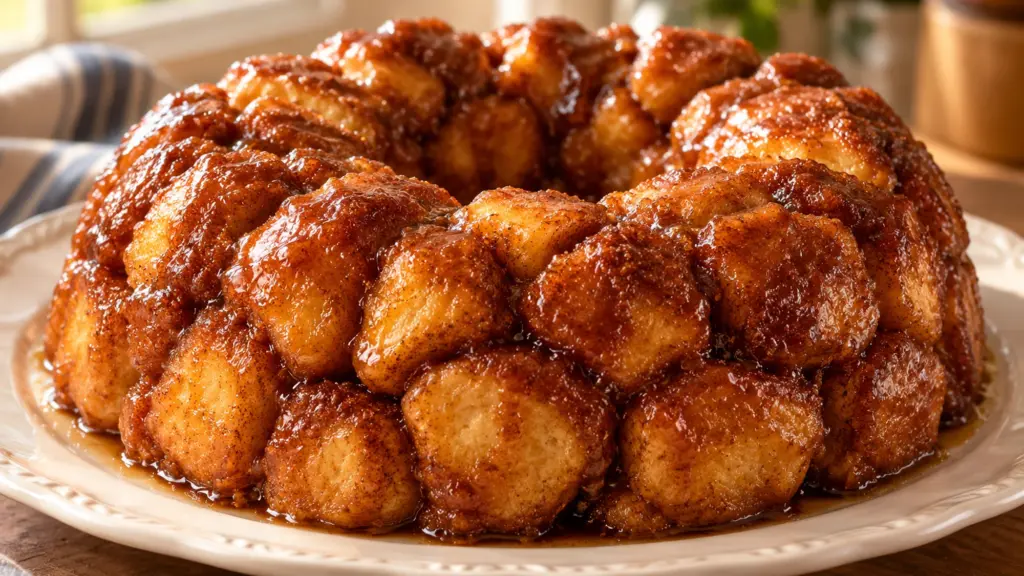
A pan of little cinnamon-coated dough balls looks almost too simple to become a centerpiece. Then it comes out of the oven with a glossy brown-sugar crust, and suddenly the question is who gets the first warm piece. This monkey bread recipe uses a soft homemade yeast dough, not canned biscuits, for a fluffy pull-apart middle.
The key is to let the shaped dough become visibly puffy before baking, then give the finished bread a short rest before turning it out. Cinnamon sugar supplies the seams; brown-sugar butter brings the sticky finish.
I prefer a light coating over a deep pool of sauce: the bread should still taste like bread. A sturdy 10–12-cup Bundt pan gives the pieces support and leaves a center opening that helps them bake more evenly. This is a leisurely baking project, with most of the time devoted to rising rather than hands-on work.
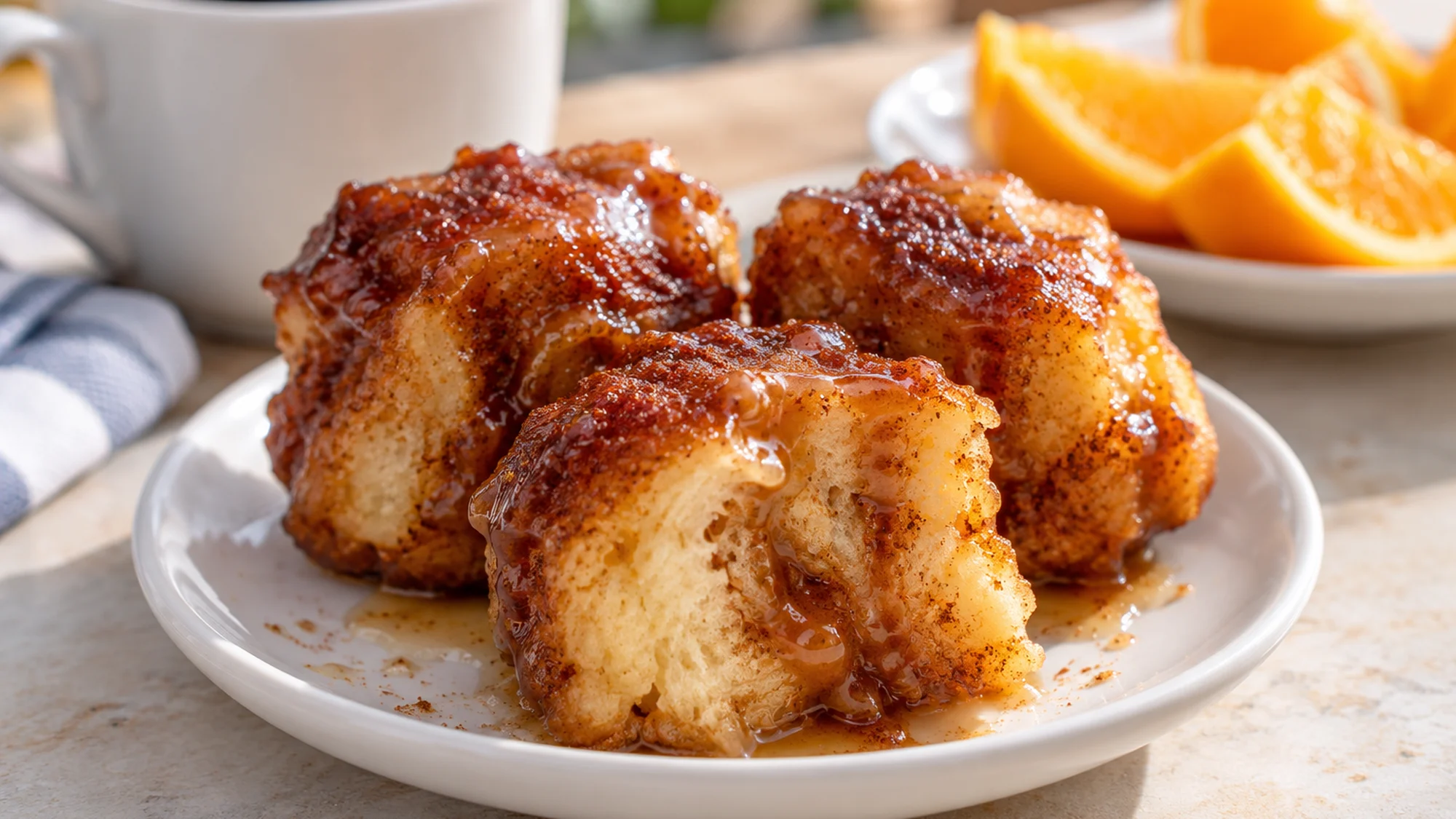
Serving this monkey bread recipe while it is warm
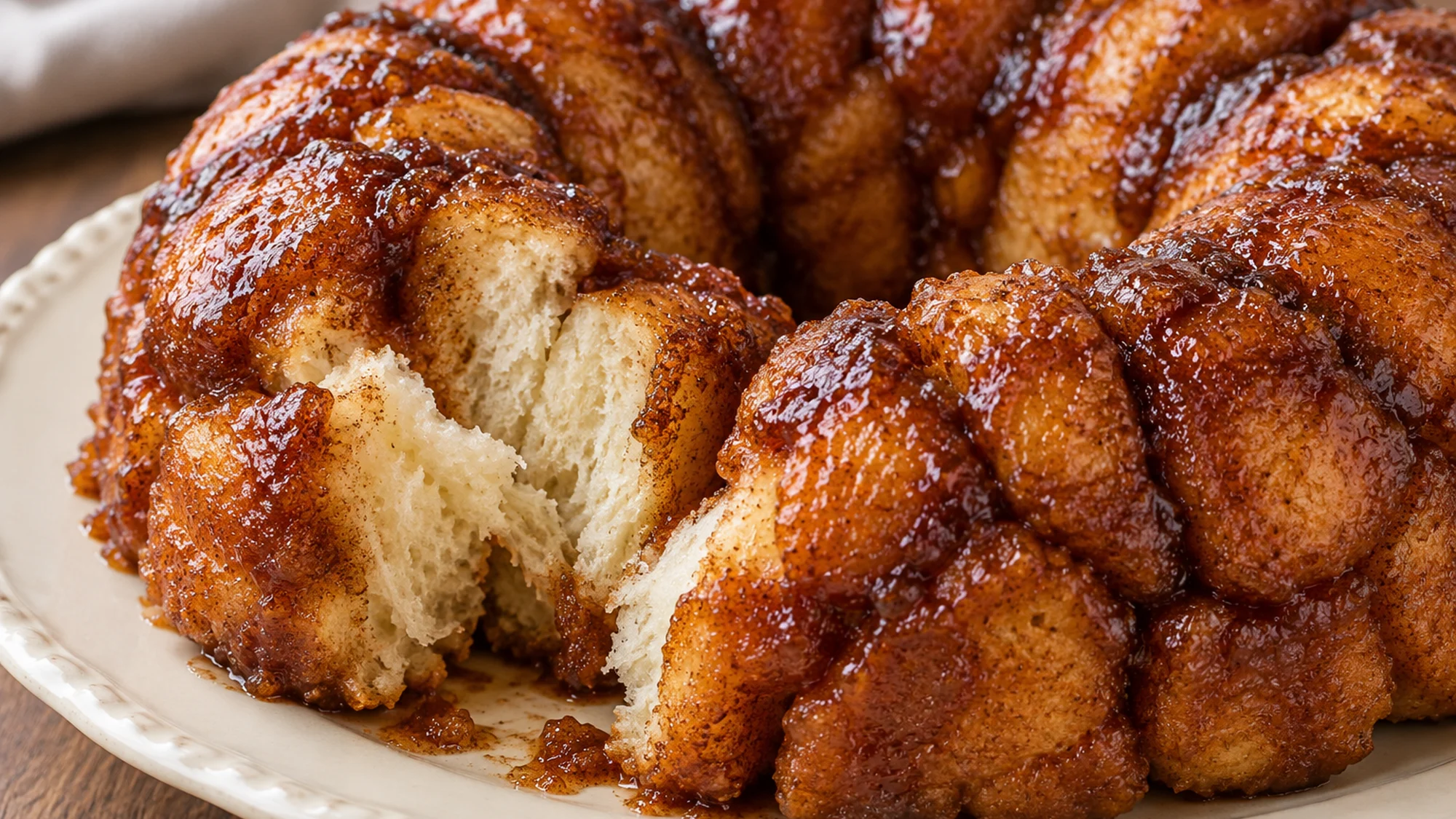
Set the inverted loaf on a large rimmed platter so stray butter-sugar glaze stays on the tableware, not the table. Pull off small clusters rather than cutting thick wedges; the cinnamon seams are meant to separate. Let the bread cool enough that the sticky coating cannot burn fingers, especially when children are helping themselves.
- For brunch, offer plain yogurt, berries or orange wedges alongside the bread. They add contrast without another sweet glaze.
- For dessert, serve a modest cluster with unsweetened tea or coffee. Extra caramel is optional, not necessary.
- For a make-ahead gathering, bake earlier the same day and warm individual portions gently rather than repeatedly reheating the whole loaf.
The bottom becomes the top when you invert the pan, so use oven mitts and commit to one steady turn. I would rather wait the full ten-minute rest than attempt that maneuver while the syrup is still fiercely bubbling. Leaving it in the pan until cold, however, lets the coating firm up and makes release harder.
Serve warm rather than scorching, and let the pull-apart shape do the portioning. A rimmed platter makes the sticky part considerably friendlier.
Variations that keep the dough dependable
Make the base dough as written before changing its flour or liquid. A little tackiness is normal; adding flour until the dough feels dry can produce a heavy loaf. If you are choosing between flavor changes, adjust the coating first. That leaves the yeast dough’s moisture and structure intact.
| Choice | What changes | Useful approach |
|---|---|---|
| Orange zest | Brighter aroma | Add finely grated zest to the cinnamon sugar. |
| Ground cardamom | A warmer spice note | Replace a small part of the cinnamon, not all of it. |
| Chopped pecans | Crunch and a nut allergen | Scatter a small handful between the dough layers. |
| Dark brown sugar | Stronger molasses flavor | Use the same measured amount in the butter topping. |
- Keep dough pieces roughly similar in size so the interior does not contain a few oversized, underbaked centers.
- If your kitchen is cool, judge the rise by puffiness rather than forcing the shortest listed time.
- Use a single-piece Bundt pan. A removable-bottom pan can leak the melted sugar mixture into the oven.
For another cinnamon-adjacent baking project, the chocolate-swirl loaf offers a sliceable alternative. Neither format needs an elaborate finish to look inviting. Here, the irregular little bumps are part of the charm, not a decorating problem to solve.
Change the spice or a small garnish before changing the dough formula. Evenly sized pieces and a properly completed rise matter more than a perfect-looking arrangement.
Health benefits and an honest look at sweetness
This is a sweet bread, not a health food disguised by cinnamon. Flour and milk contribute nutrients, but butter and the two sugars also contribute substantial energy. The FDA’s label guidance distinguishes added sugars from the sugars naturally present in foods such as milk; that distinction is useful when comparing a serving with other breakfast choices.
- Treat the card’s nutrition as an ingredient-based estimate, not a laboratory analysis or a guarantee for every slice.
- The recipe contains wheat, milk and egg. Check any added nuts and other ingredient labels for your household’s needs.
- Choose the portion that suits the meal. Fruit or yogurt can accompany it without turning the bread itself into a low-sugar product.
Enjoy the cinnamon, soft crumb and shared-table appeal without assigning them a medical benefit. A clear portion is more useful than a vague healthy label.
Bottom Line
A good monkey bread recipe rewards patience at the rising stage and restraint with extra flour. Give the pieces room to puff, bake the center through, and turn the loaf onto its platter while the coating is still supple. The result is a warm, cinnamon-scented bread designed for sharing.
Recipe Card
Monkey Bread Recipe

Ingredients
- 3 1/2 cups all-purpose flour 420 g, plus a little for dusting
- 2 1/4 teaspoons instant yeast 7 g
- 1 cup whole milk 240 ml, lukewarm not hot
- 1/4 cup granulated sugar 50 g
- 1 large egg
- 3 tablespoons unsalted butter 42 g, melted and cooled
- 1 teaspoon fine salt
- 1/2 cup granulated sugar 100 g
- 2 teaspoons ground cinnamon
- 6 tablespoons unsalted butter 85 g, melted
- 1/2 cup packed light brown sugar 100 g
- 1 teaspoon vanilla extract
Equipment
- 1 10–12-cup single-piece Bundt pan
- 1 Large mixing bowl
- 1 Kitchen scale
- 1 Instant-read thermometer
Instructions
- Stir the flour, yeast and salt together. Add the lukewarm milk, ¼ cup sugar, egg and 3 tablespoons melted butter. Mix to a shaggy dough, then knead on a lightly floured surface for 8–10 minutes until smooth and elastic. It should feel soft and slightly tacky; add flour only a teaspoon at a time if it is unmanageably sticky.
- Place in a lightly greased bowl, cover, and let rise in a warm draft-free spot for about 60–90 minutes, until doubled. Grease a 10–12-cup single-piece Bundt pan generously.
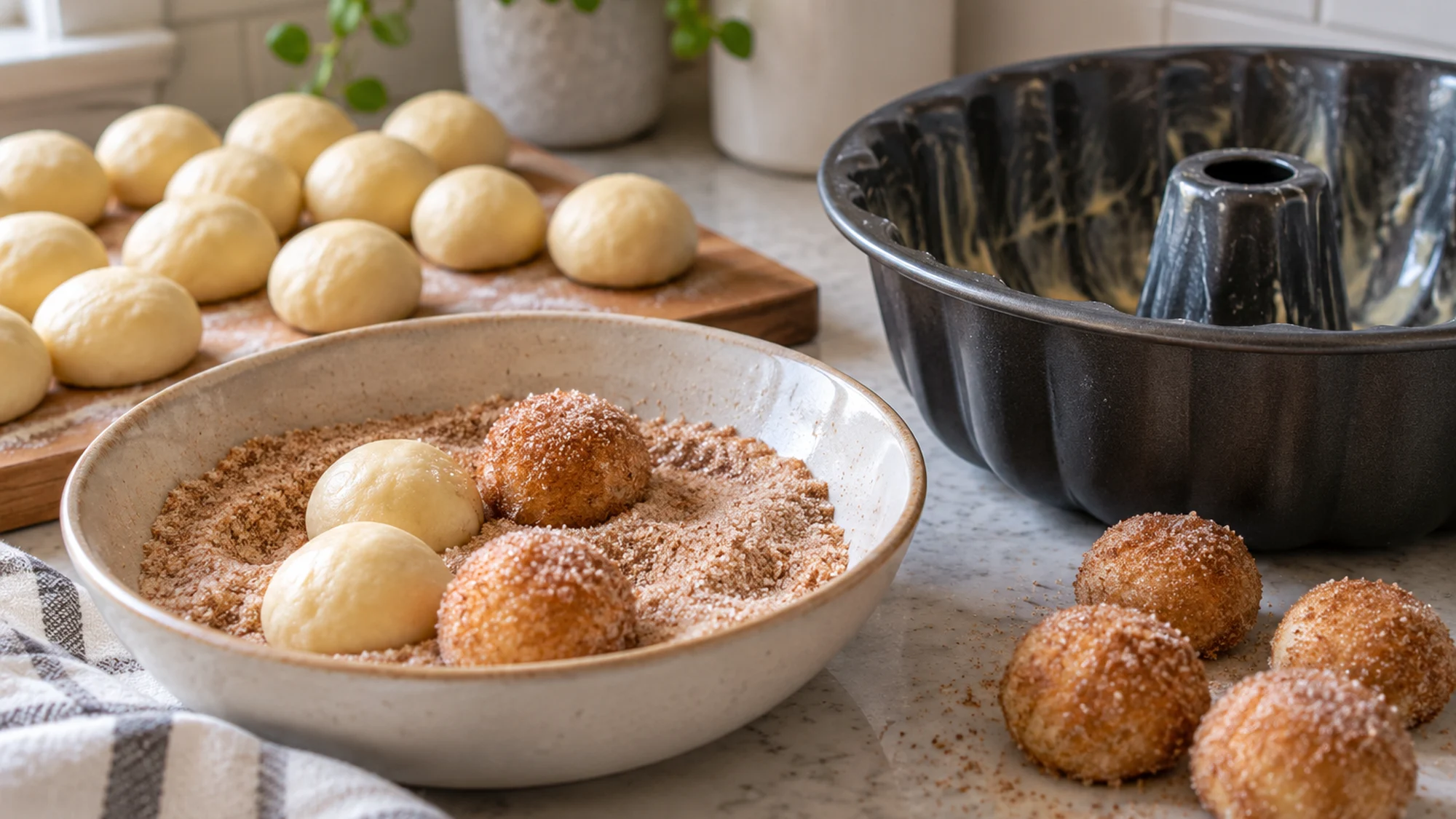
- Combine the ½ cup granulated sugar and cinnamon in one bowl. Divide the dough into about 48 roughly equal pieces and roll into small balls. Dip each in the 6 tablespoons melted butter, then roll in cinnamon sugar. Arrange loosely in the prepared pan. Mix any remaining butter with the brown sugar and vanilla, then distribute over the dough.
- Cover and let rise for 35–45 minutes, until the pieces are visibly puffy. Toward the end of the rise, heat the oven to 350°F (175°C), with a rack in the lower-middle position.
- Set the pan on a rimmed baking sheet and bake for 30–40 minutes. The top should be deeply golden and a thermometer inserted into the bread, not a sugar pocket, should reach about 190–195°F. Loosely tent with foil if it browns before the center is baked.
- Rest in the pan for 10 minutes. Wearing oven mitts, place a large rimmed platter over the pan and invert carefully. Lift off the pan and cool another 10 minutes before serving warm. The melted sugar is very hot.
Nutrition
Video
Notes
Tried this recipe?
Let us know how it turned out!Hi, I’m Emily Pocker! I share recipes and food guides here at Recipes360 to help you find everyday meal inspiration and feel more confident in the kitchen. My goal is to make cooking approachable, enjoyable, and full of flavor.