
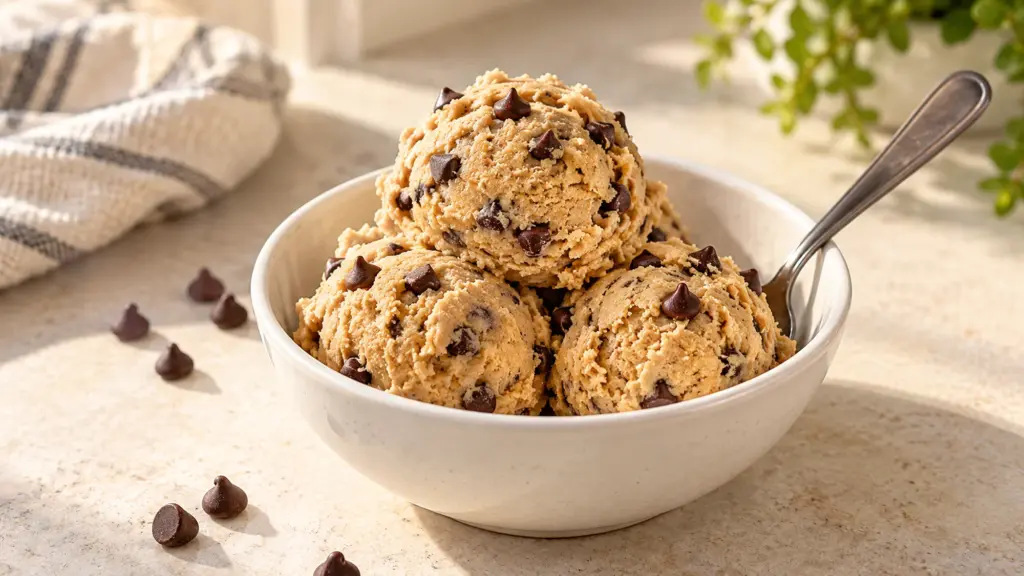
The appealing part of cookie dough is the buttery brown-sugar flavor and those little pieces of chocolate. If you want to know how to make edible cookie dough, start with the flour label: this egg-free version requires commercially processed flour specifically intended for eating without baking.

Use only flour the manufacturer identifies as ready to eat, along with other ready-to-eat ingredients. Do not substitute ordinary raw flour or try to make it safe by heating it at home. Once the ingredient choice is settled, softened butter and a little milk give the dough a scoopable texture.
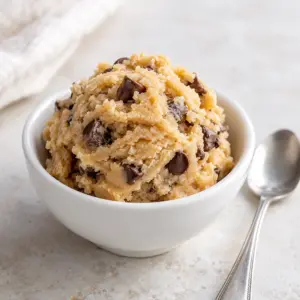
The card makes twelve small dessert portions. I’d choose little chocolate chips over large chunks here; they distribute through the soft dough and fit more comfortably on a spoon. There is no egg or leavening in this formula because it is made for eating as a chilled dessert.
Serving Suggestions: How to Make Edible Cookie Dough a Dessert
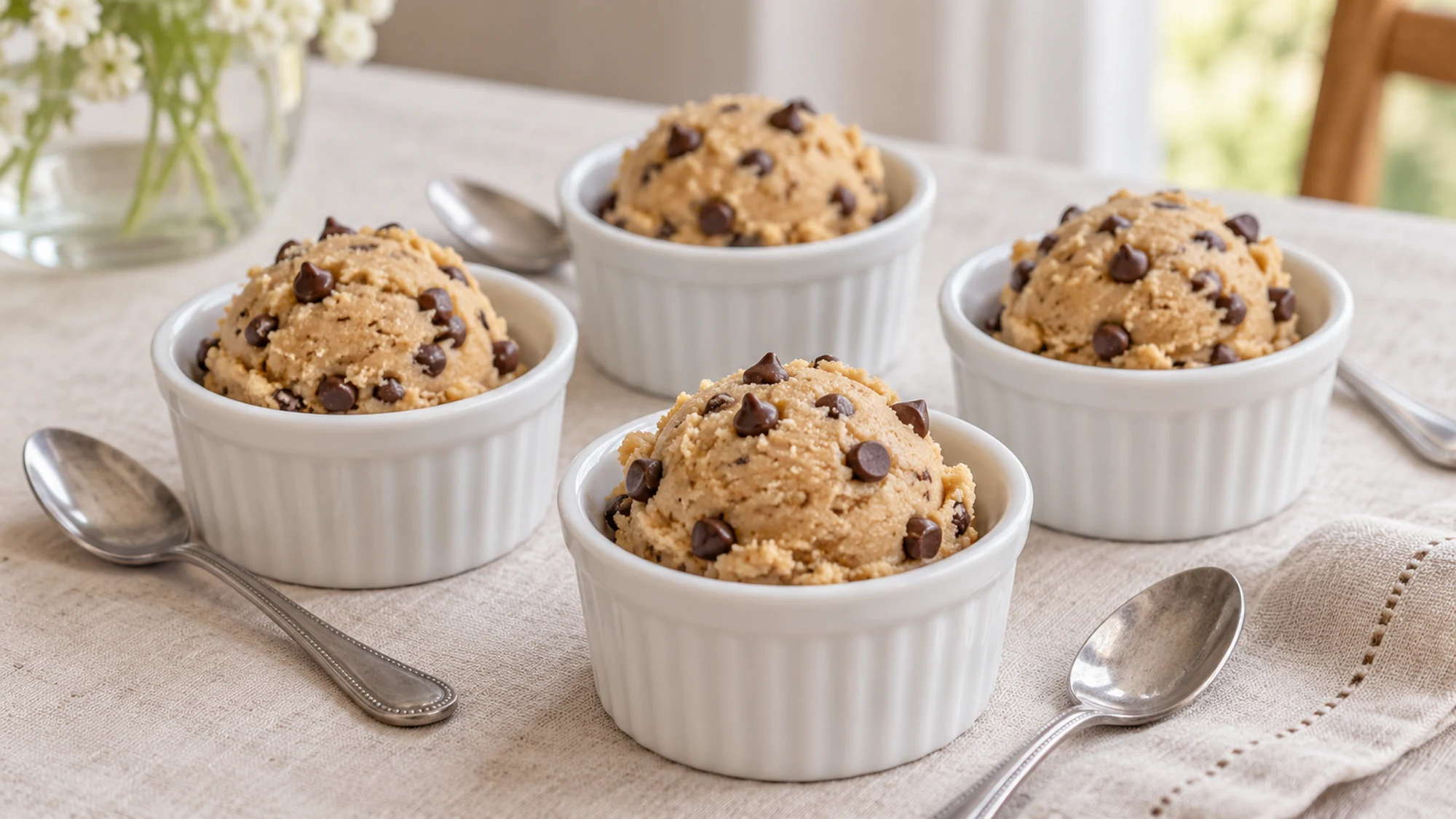
Spoon a modest portion into a small bowl and use a clean teaspoon for each person. The dough is rich, so it can sit alongside fresh fruit without needing a large scoop. Keep the main container refrigerated and take out only the amount you are serving.
Chilling firms the butter and makes the dough easier to portion. Give a refrigerated serving a brief moment to soften if it is too firm to scoop comfortably, while keeping the rest cold. Avoid leaving a shared bowl on the table throughout a gathering.
- For a small dessert: Serve a little mound with sliced strawberries or apple wedges.
- For separate portions: Divide into small covered containers before chilling, using clean utensils.
- For a different base: Our chickpea cookie dough uses cooked beans and peanut butter rather than this butter-and-flour formula.
Small portions and separate serving spoons keep this easy to enjoy. Refrigerate the batch promptly rather than letting the whole bowl sit out.
Variations and Texture Adjustments
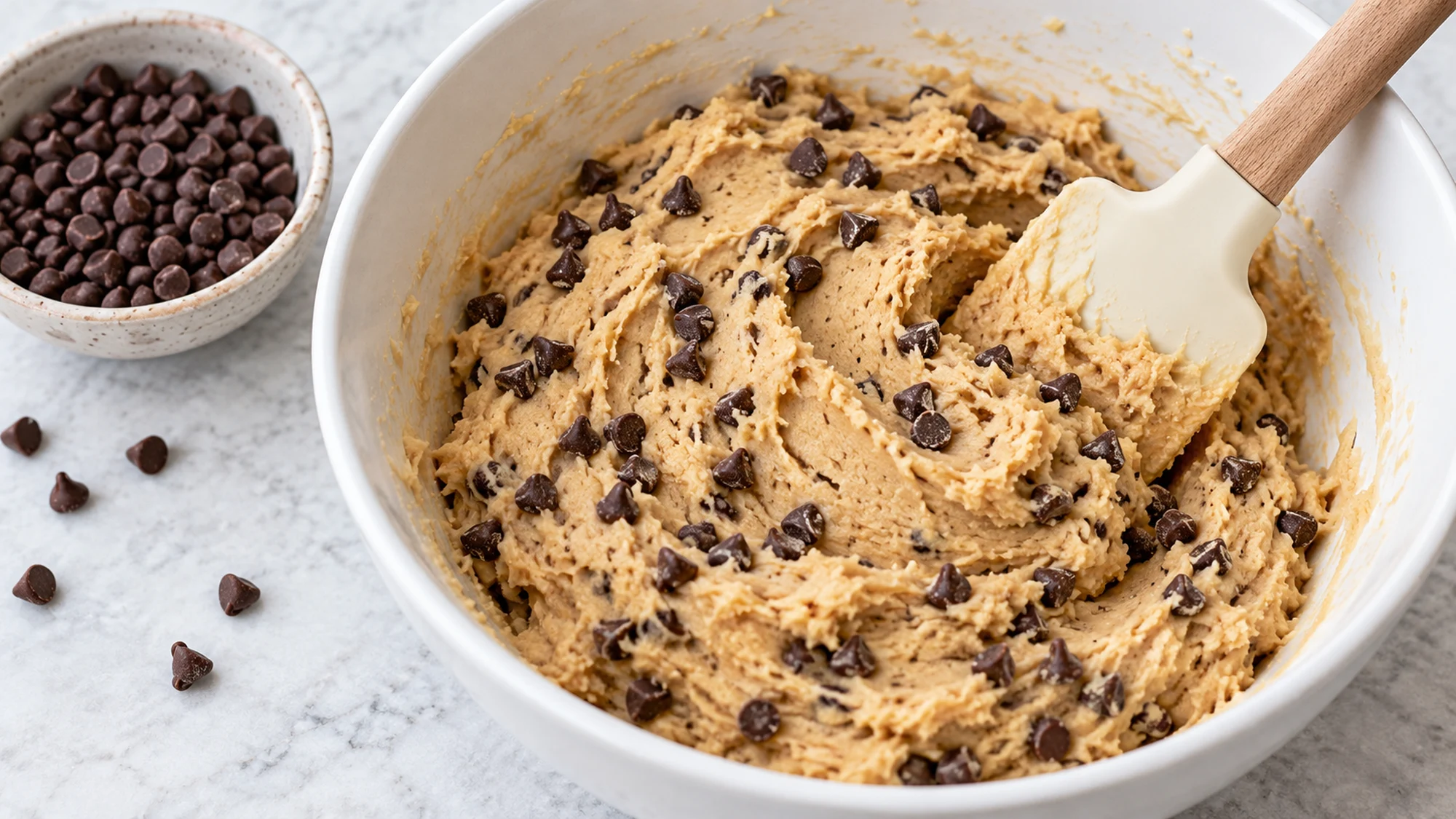
Softened butter should yield to a spoon without looking oily or melted. That texture helps it blend with the sugar before the flour goes in. I prefer a thick, gently yielding dough rather than a loose mixture that runs off the spoon; add milk gradually instead of trying to fix too much liquid afterward.
Commercial ready-to-eat flours can differ in absorption. Follow the manufacturer’s handling directions and use the weighed amount as your starting point. A dry clump needs a small adjustment, while a warm, greasy mixture often needs chilling rather than more flour.
| What you notice | Useful adjustment | Keep in mind |
|---|---|---|
| Dough crumbles apart | Mix in milk 1 teaspoon at a time | Use pasteurized milk and clean utensils |
| Dough looks greasy | Chill briefly before adding anything | Melted butter changes the texture |
| Chips dominate each spoonful | Use smaller ready-to-eat chips | Keep the chocolate weight comparable |
| Different flour blend | Check ready-to-eat suitability first | Ordinary gluten-free flour can also be raw |
- For a dairy-free version: A suitable plant-based butter and ready-to-drink milk alternative will change texture and nutrition.
- For other mix-ins: Choose ingredients sold for eating as they are; do not add raw cake mix or untreated flour.
- For baked cookies: Use a recipe designed for baking rather than assuming this egg-free dessert will produce the same result.
Change one texture variable at a time. Every ingredient added to this uncooked dessert must be suitable for ready-to-eat use.
Health Benefits and Food-Safety Perspective
This is a portioned dessert with carbohydrate from flour and sugar and fat from butter and chocolate. The card estimate is for one-twelfth of the batch, not an entire serving bowl shown in a presentation photo. Ingredient labels are the better guide when a particular allergen or nutrient matters.
The essential distinction is food handling. FDA’s flour guidance advises against home heat treatment. South Dakota State University Extension explains why commercially processed, validated ready-to-eat flour is different. Simply removing eggs does not address ordinary raw flour.
- Read the flour packaging before starting: If ready-to-eat suitability is unclear, do not use it for this recipe.
- Check allergens: Wheat and milk are present, and chocolate chips may contain soy or other allergens.
- Keep it cold: Follow ingredient storage directions and refrigerate the finished dough promptly at 40°F (4°C) or below.
The ready-to-eat ingredient choice comes before mixing. Refrigeration and clean handling still matter after the dough is made.
Bottom Line
The mixing is straightforward once you have the right ingredients. Cream the softened butter and sugars, adjust the milk sparingly and fold in the chocolate. I’d keep the first batch simple so you can judge the texture before experimenting with extra flavors.
Use verified commercially ready-to-eat flour, omit eggs and refrigerate promptly. If you cannot obtain suitable flour, wait rather than substituting raw or home-treated flour.
How to Make Edible Cookie Dough Recipe

Ingredients
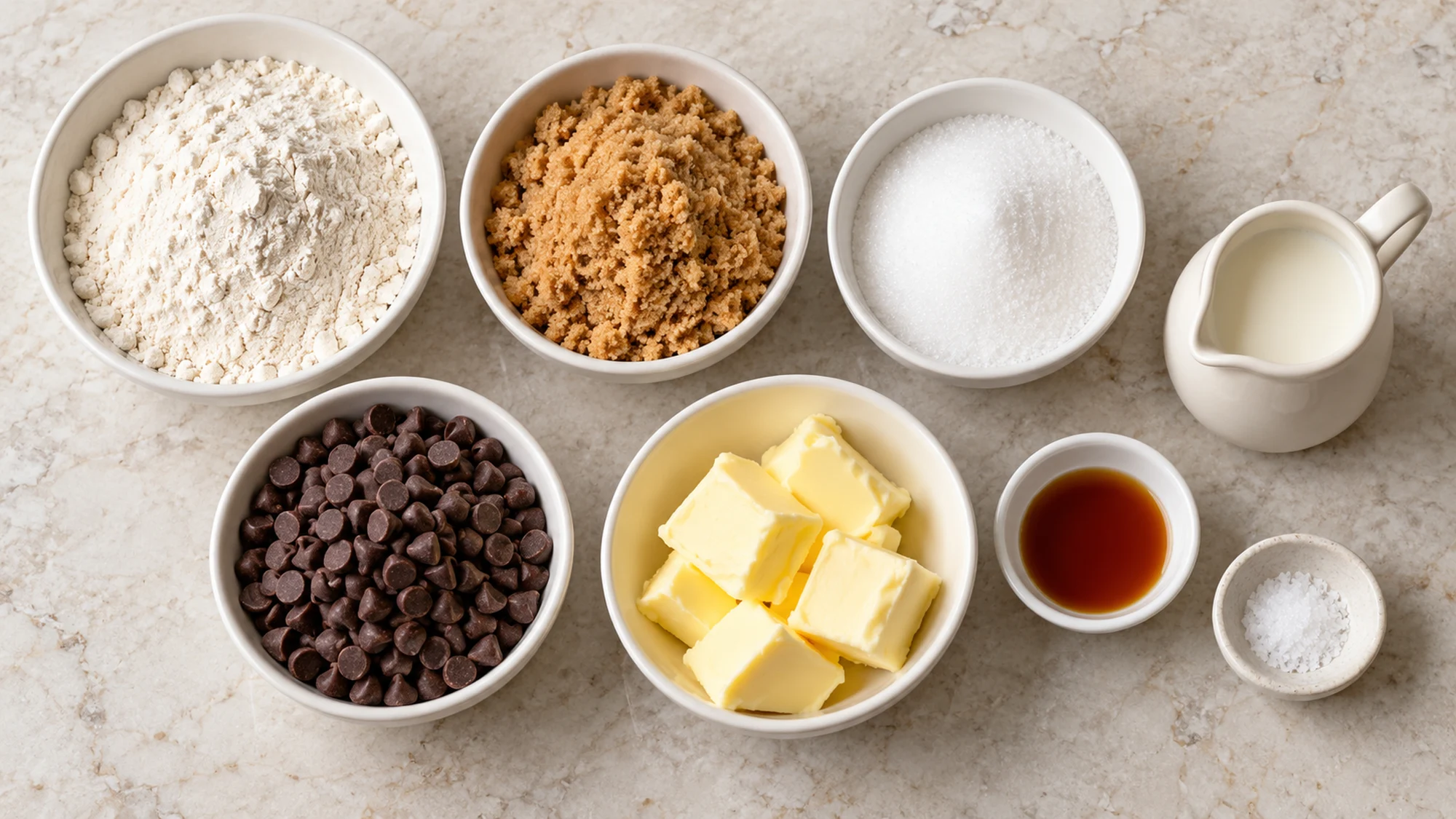
- 120 g commercially processed all-purpose flour labeled ready to eat manufacturer must specifically permit eating without baking; never use ordinary raw flour or flour heated at home
- 85 g unsalted butter made from pasteurized cream, softened, not melted
- 80 g light brown sugar
- 25 g granulated sugar
- 2 tablespoons pasteurized milk 30 ml; add gradually, with 1 teaspoon extra only if necessary
- 1 teaspoon vanilla extract suitable for ready-to-eat use
- 1/4 teaspoon fine salt
- 85 g small semisweet chocolate chips ready to eat
Equipment
- Mixing bowl
- Hand mixer or sturdy spoon
- Kitchen scale
- Spatula
- Covered refrigerator container
Instructions
- Before starting, confirm that the flour is commercially processed and specifically labeled by its manufacturer for ready-to-eat use without baking. If that cannot be confirmed, do not make this recipe with that flour. Do not heat-treat ordinary flour at home as a substitute. Use ready-to-eat ingredients, clean equipment and washed hands.
- Beat the softened butter, brown sugar, granulated sugar and salt in a bowl until creamy, about 2 minutes. Scrape down the sides. Mix in the vanilla and 1 tablespoon of the milk.
- Stir in the ready-to-eat flour just until evenly incorporated. Add the remaining tablespoon of milk gradually to make a thick, scoopable dough. If still crumbly, add at most another teaspoon of milk at a time as needed; the flour’s absorption may vary.
- Fold in the chocolate chips. Cover and refrigerate for about 20 minutes to firm slightly. Divide into twelve small portions with a clean spoon and serve chilled.
- Refrigerate the remaining dough promptly at 40°F (4°C) or below, following the shortest applicable ingredient storage directions. Freeze portions you will not use soon. Do not keep the serving bowl unrefrigerated beyond 2 hours, or 1 hour above 90°F (32°C).
Nutrition
Video
Video credit and flour safety: The Cooking Foodie demonstrates the mixing technique. Watch the creaming, mixing and folding only; skip the video’s home flour-heating step. This recipe requires commercially processed flour labeled ready to eat and contains no eggs. Follow this card’s quantities and handling directions.
Notes
Tried this recipe?
Let us know how it turned out!Hi, I’m Emily Pocker! I share recipes and food guides here at Recipes360 to help you find everyday meal inspiration and feel more confident in the kitchen. My goal is to make cooking approachable, enjoyable, and full of flavor.