
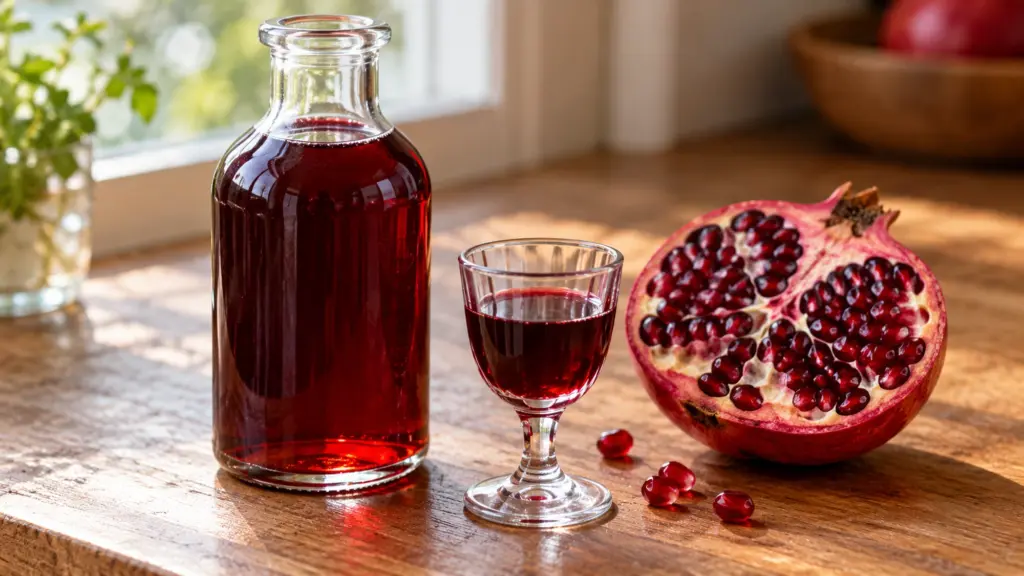
A little dark red syrup can change a plain glass of sparkling water, but grenadine should bring more than color. This version starts with pomegranate juice and uses a restrained touch of orange blossom water. The result is a pourable, sweet-tart mixer with real fruit character, made in a small saucepan rather than reduced into a thick dessert sauce.
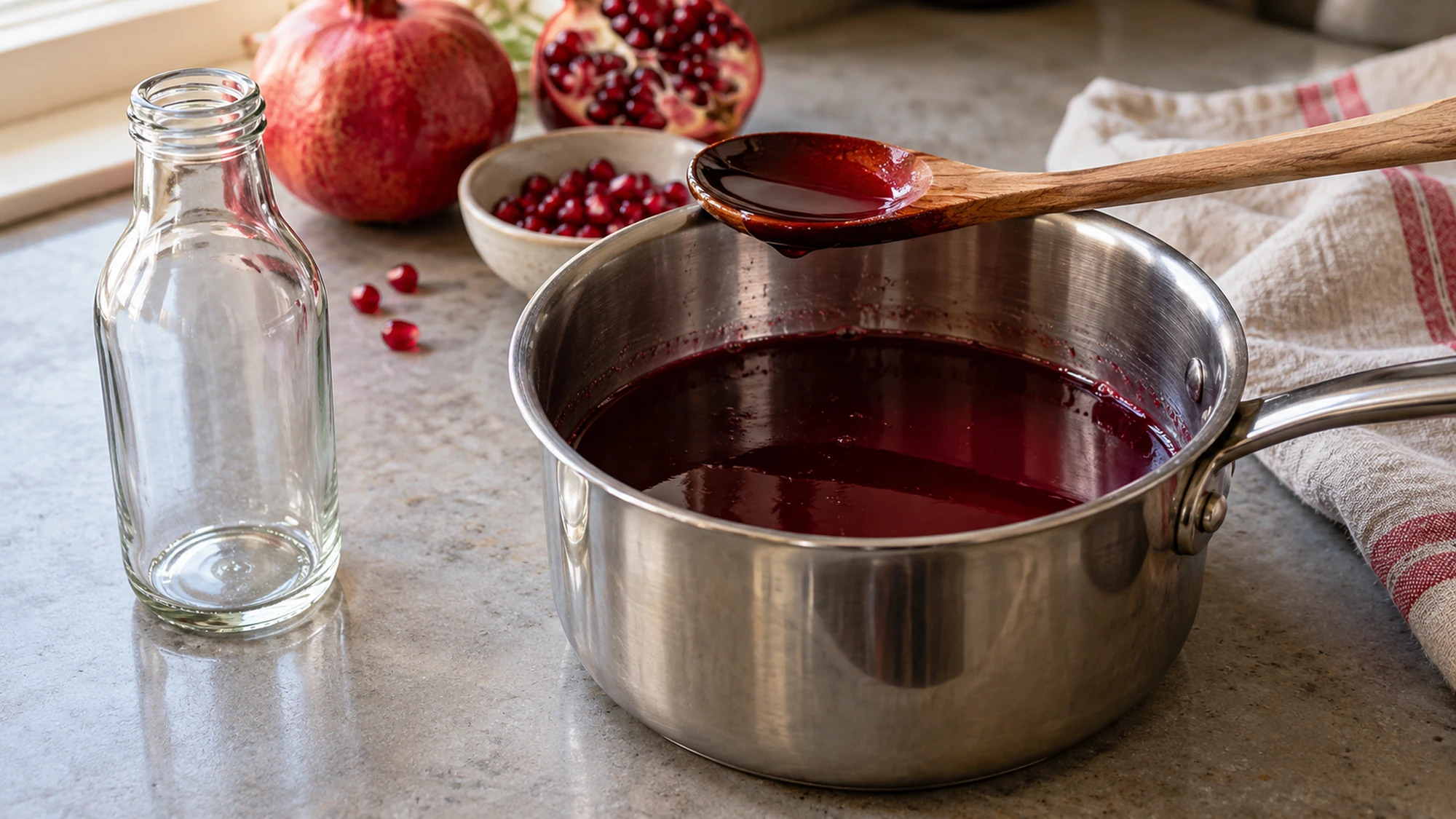
Warm the juice and sugar only until the crystals dissolve, then add lemon juice and a little floral water off the heat. Chill the finished syrup and measure small amounts into drinks. Its natural color is deep garnet rather than neon red, and the cooled texture is the useful guide when deciding how much to pour.
Serving Suggestions for Grenadine
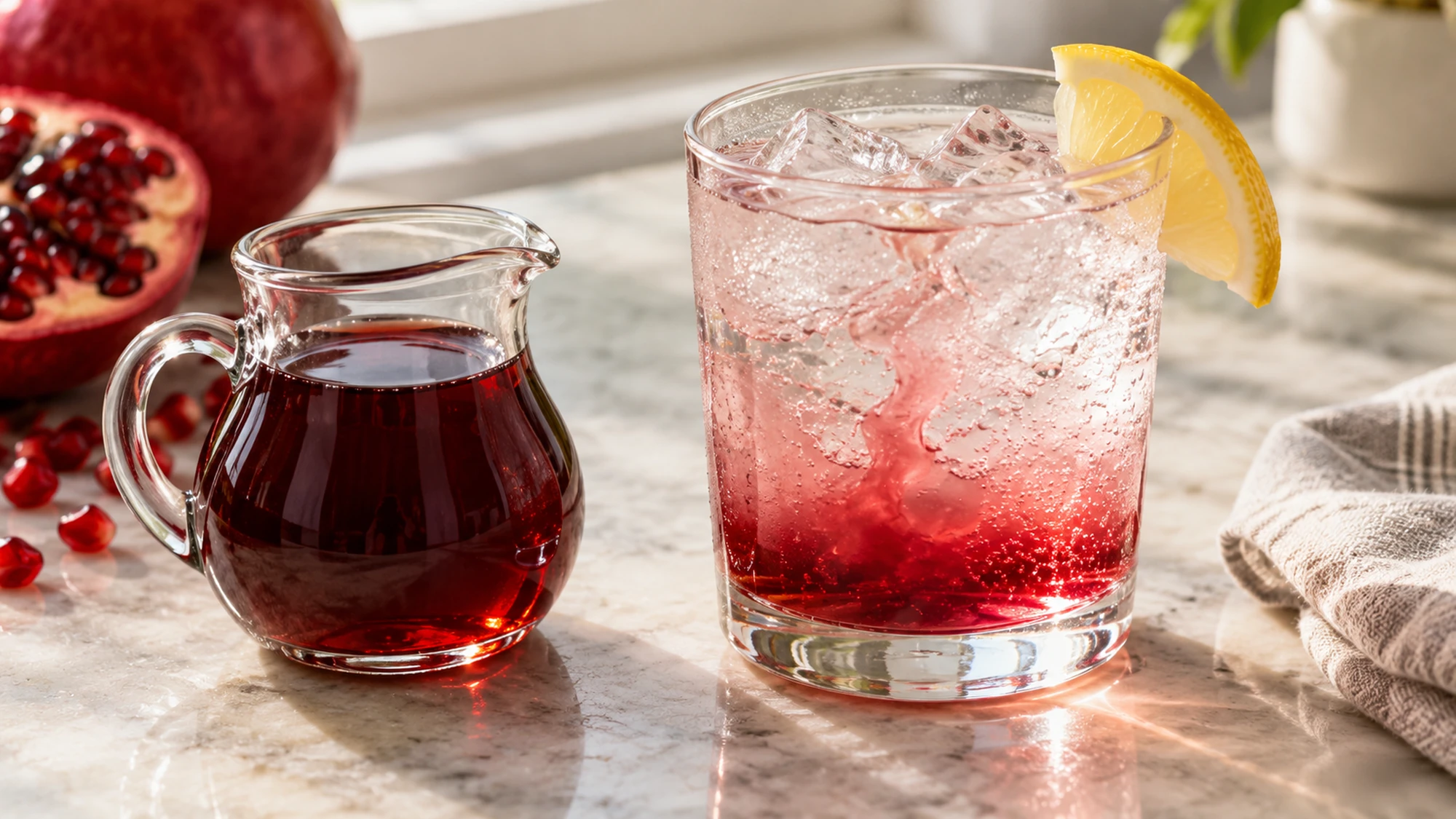
Start with a teaspoon or two in a glass, add the cold drink and stir, then taste before adding more. Ice and sparkling water dilute the syrup, while sweetened lemonade brings sugar of its own. Those differences explain why a fixed large pour can overwhelm one drink and seem modest in another.
I’d use a measuring spoon for the first glass rather than trusting a narrow bottle to pour slowly. A little syrup can also sweeten plain yogurt, but stir it through instead of leaving a concentrated puddle at the bottom. For another spoonable breakfast, chia pudding with an even texture gives you a different base to adjust.
- For soda: add syrup gradually and stir before judging sweetness.
- For yogurt: count the syrup separately from the plain base.
- For storage: use clean pouring utensils and keep the bottle refrigerated.
Keep the syrup separate until serving if you are preparing a pitcher ahead. That lets each drink receive a measured amount and keeps ice from quietly changing the concentration. A small bottle is easier to use cleanly than dipping used drink spoons into a large jar; return it to the refrigerator after pouring.
Variations and Grenadine Sweetness
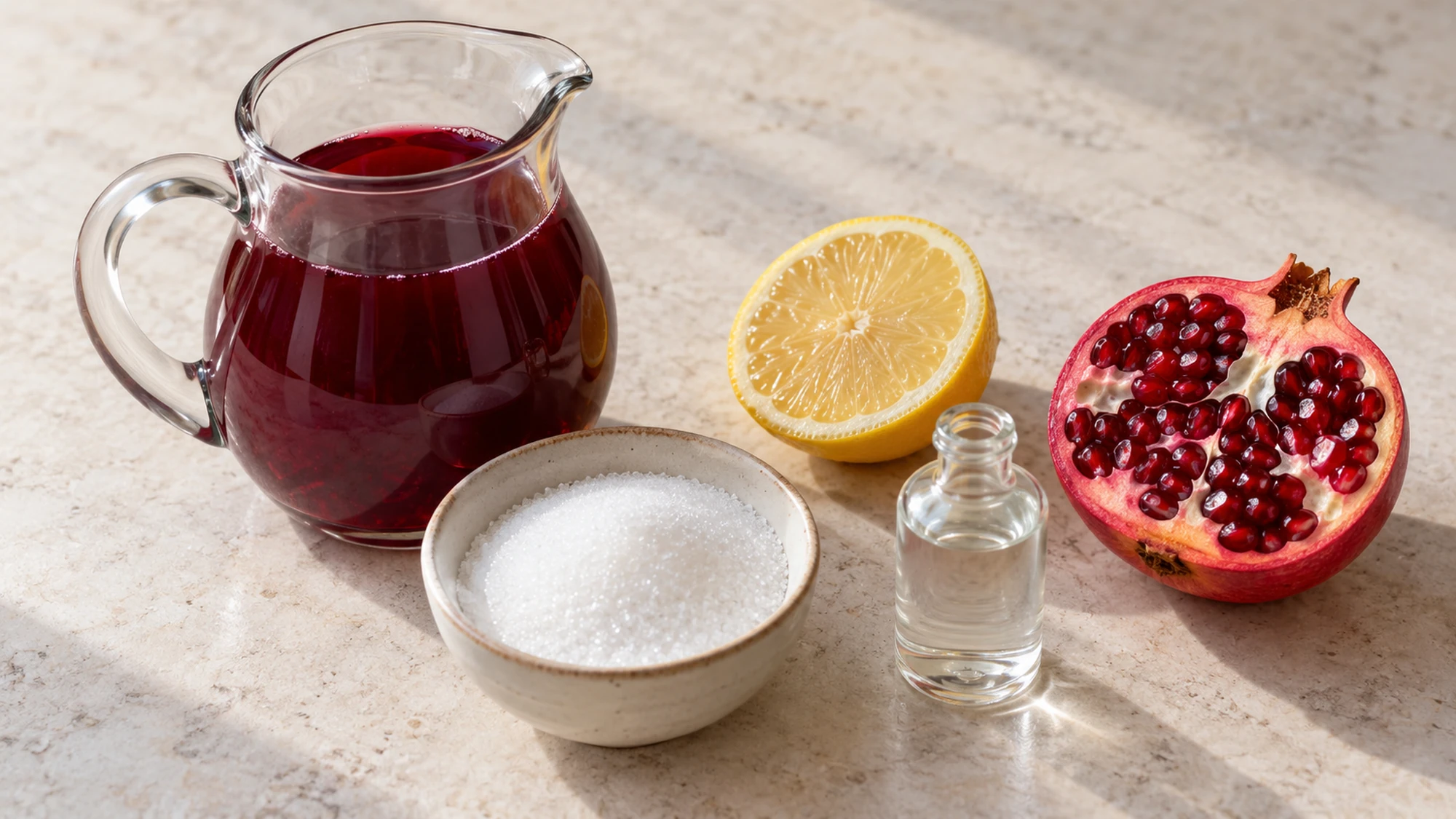
Choose 100% pomegranate juice with no added sweetener, and check whether the product is a juice blend. Apple or grape juice in the blend changes both flavor and sweetness. Cloudiness or a darker color can come from the juice itself, so judge the ingredient label rather than expecting every batch to look identical.
Orange blossom water is a flavoring, not orange juice or orange extract. I prefer a small amount because its perfume can become the main event very quickly. Leave it out for a plain pomegranate syrup, or add only a few drops more after tasting a diluted spoonful rather than the concentrated syrup alone.
Changing the sugar changes viscosity as well as sweetness. Do not simply halve it and keep the same drink measurements or assume the same keeping quality. Pomegranate molasses is another distinct ingredient: it is concentrated and often quite tart. Adding it would make a deeper, more intense mixer, not a color-only adjustment.
| Choice | Flavor effect | Practical adjustment |
|---|---|---|
| Plain pomegranate | Clear fruit character | Omit floral water |
| Orange blossom water | A light floral aroma | Add sparingly off heat |
| Pomegranate molasses | More concentrated tartness | Rebalance the finished drink |
| Sweetened drink base | More sweetness overall | Start with less syrup |
Health Benefits and Portion Balance
Pomegranate juice supplies flavor and some natural sugars; the measured white sugar is added sugar. A tablespoon of this syrup contributes only a small quantity of juice, so it is not equivalent to eating a serving of fruit. There is no need to attach detox or medicinal promises to a useful drinks ingredient.
The FDA guide to added sugars explains why sweeteners in syrups count toward the day’s total. Measure the amount that tastes right for the complete drink. The card estimates a tablespoon of syrup, excluding soda, juice, alcohol or any other ingredient subsequently poured into the glass.
Use pasteurized juice and clean equipment. The FDA’s juice-safety advice explains that untreated juice can carry harmful bacteria; gentle syrup warming is not a validated pasteurization process. As the syrup preparation guidance emphasizes, keep homemade syrups cold and use clean bottles rather than treating them as permanent pantry stock.
Bottom Line
Make grenadine in a quantity you can use, stop heating when the sugar is dissolved and let the pomegranate remain recognizable. I’d taste it in a small diluted drink before changing the floral note or sweetness. That gives a much clearer answer than sampling a concentrated spoonful and adding several competing flavors to fix it.
Grenadine Recipe

Ingredients
- 300 ml 100% pomegranate juice pasteurized; no added sugar
- 210 g granulated sugar
- 15 ml lemon juice
- 1/8 tsp orange blossom water food grade; optional
Equipment
- Small saucepan
- Spoon or whisk
- Measuring jug
- Clean heat-safe bottle or jar
Instructions
- Wash and rinse the bottle or jar, lid and utensils thoroughly, then let them drain. Combine the pomegranate juice and sugar in a small saucepan.
- Warm over low heat, stirring, for about 5 minutes until the sugar has completely dissolved. Avoid a hard boil or prolonged reduction.
- Remove from the heat. Stir in the lemon juice and optional orange blossom water. Let cool until comfortably warm, then transfer to the clean heat-safe container.
- Refrigerate promptly. The yield is about 450 ml but varies with evaporation; measure the actual batch if precise portions matter. Use within 2 weeks as a conservative refrigerator plan, or freeze small portions. Discard the whole batch if it develops mold, unexpected fizz or an off smell.
- For serving, start with 1–2 teaspoons in a glass of cold sparkling water or another drink, stir and adjust. The nutrition estimate is for one tablespoon of syrup alone.
Nutrition
Video
Notes
Tried this recipe?
Let us know how it turned out!Hi, I’m Emily Pocker! I share recipes and food guides here at Recipes360 to help you find everyday meal inspiration and feel more confident in the kitchen. My goal is to make cooking approachable, enjoyable, and full of flavor.