
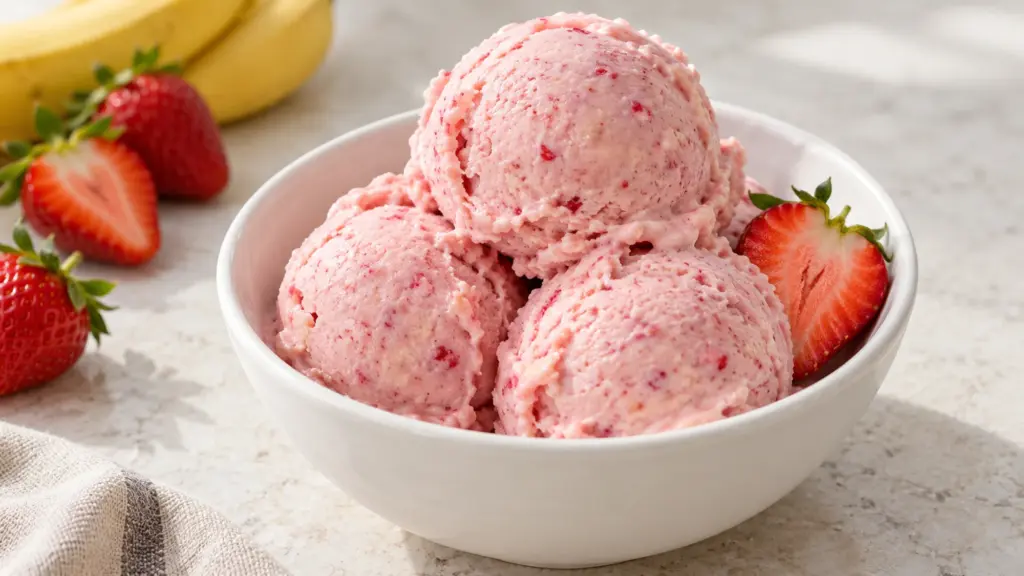
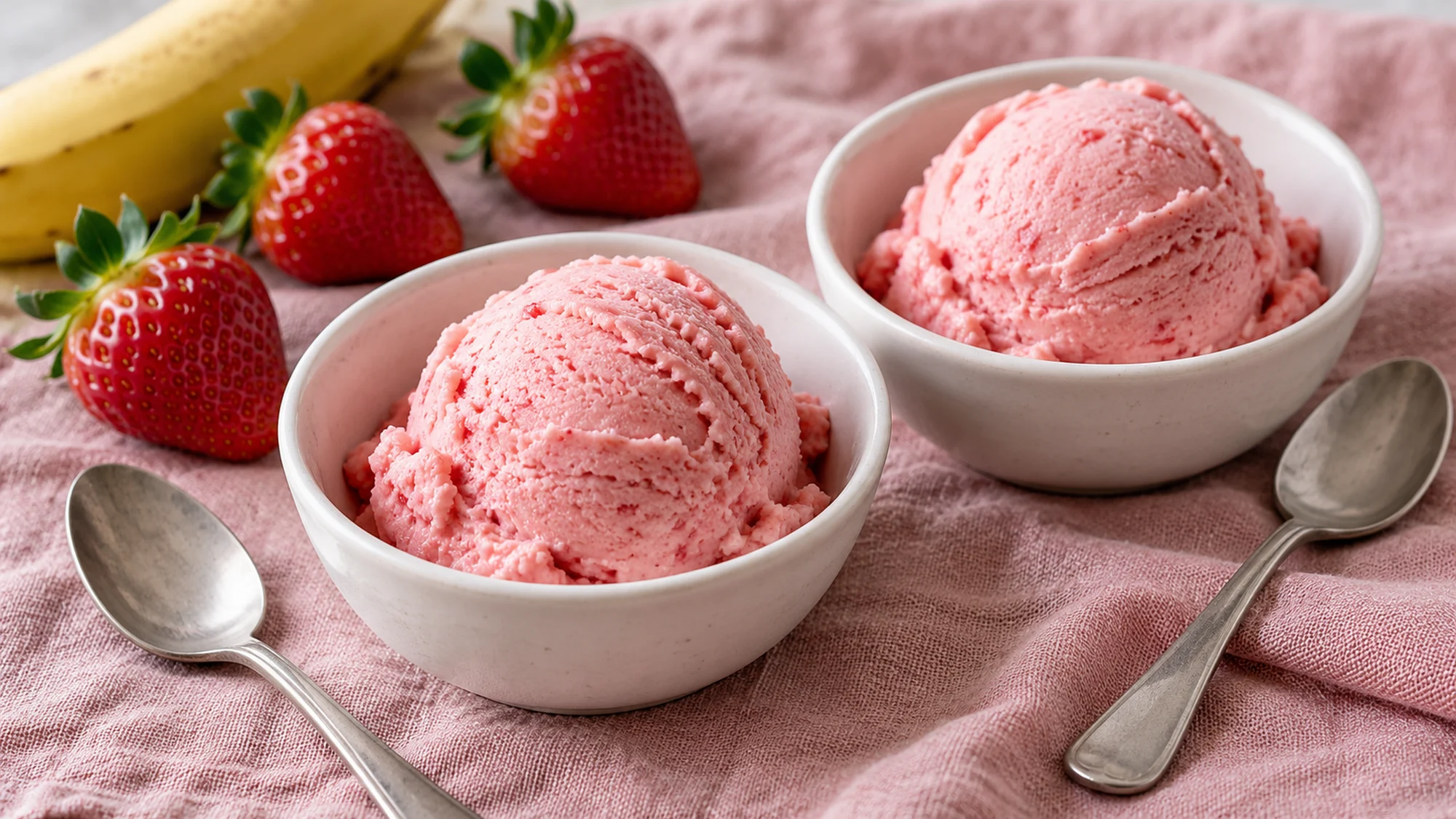
The food processor can turn frozen fruit into something much more inviting than a pile of icy pieces. If you are looking for low calorie ice cream, these strawberry-banana yogurt scoops offer a simple alternative: bright berry flavor, gentle banana sweetness, and a soft texture you can eat straight from the bowl.
This recipe is a fruit-and-yogurt frozen dessert, not traditional cream-based ice cream. Frozen banana provides body, strawberries bring flavor, and a little yogurt helps everything blend without an ice cream machine.
Expect approximately 100 calories per one-quarter batch before toppings, not a calorie-free treat. The phrase low calorie ice cream describes the recipe you may be searching for; this is not a claim that the dessert meets the regulated “low calorie” food-label definition. The serving size and ingredients still matter.
Serving These Low Calorie Ice Cream Scoops
I would serve the mixture immediately when the texture is soft and the strawberry flavor is easiest to notice. It firms up in the freezer, but it also becomes harder and less creamy than a commercial ice cream with more fat and sugar. A short rest before scooping is more useful than forcing a spoon through a solid block.
- For soft-serve bowls: divide the freshly blended mixture between four small bowls.
- For firmer scoops: spread it in a shallow freezer-safe container and freeze briefly, checking until it is firm enough to scoop.
- For toppings: choose sliced strawberries, a spoonful of chopped nuts or a little grated chocolate if you enjoy them. Those additions are separate from the card’s nutrition estimate.
- For advance preparation: freeze the fruit in individual pieces rather than one large clump.
If you are comparing this with a packaged dessert, our healthy ice cream guide explains why the front-of-pack wording is only one part of the decision.
Choose the texture you enjoy and portion it before adding toppings.
Variations and Texture Fixes
Ripe banana is important because it supplies sweetness as well as body. A green, starchy banana will not give the same result, while very watery additions can push the mixture toward a smoothie. My first adjustment would be a pause and scrape of the bowl, not a generous pour of milk.
| What you notice | What to do | Why it helps |
|---|---|---|
| Mixture is crumbly | Stop, scrape the bowl, then process again | Frozen pieces often need redistribution |
| Processor will not turn freely | Let fruit soften very briefly; add milk a teaspoon at a time | A small amount of moisture helps without flooding the mixture |
| Dessert is too soft | Transfer to a shallow container and freeze until scoopable | The cold mixture can firm without extra ingredients |
| Flavor is too tart | Use a riper banana next time or add a little sweetener to taste | Fruit sweetness varies; added sweetener changes nutrition |
- Dairy-free variation: use an unsweetened plant-based yogurt and matching milk alternative. Flavor, protein and calories will depend on the products.
- Berry change: another frozen berry can replace strawberries by weight, but seeds and tartness will differ.
- Vanilla: keep it modest so it supports the fruit rather than covering the strawberry flavor.
- No banana? do not simply leave it out. The remaining mixture will be sharper and icier, so it needs a separately balanced recipe.
Add liquid gradually and stop as soon as the fruit becomes smooth. You are aiming for a spoonable dessert, not a drink.
Health Benefits Without the Hype
Fruit contributes fiber, and plain Greek yogurt supplies protein. That does not make this dessert a weight-loss treatment or a substitute for a varied diet. It contains naturally occurring sugars from fruit and milk; using no added sweetener does not mean sugar-free.
- Read the yogurt label: sweetened varieties change the recipe’s sugar and calorie totals. The estimate uses plain nonfat Greek yogurt.
- Keep portions comparable: compare equal amounts when looking at another frozen dessert. NIDDK distinguishes a portion from a labeled serving, a useful reminder when the scoop size changes.
- Handle fruit safely: wash fresh fruit before cutting and freezing it. Follow any cooking instructions on purchased frozen fruit rather than assuming freezing makes it ready to eat.
- Store cold: keep the finished dessert at 0°F (−18°C) or below. FoodSafety.gov explains the difference between freezer safety and quality; this low-fat mixture is best enjoyed promptly for texture.
The useful benefit is a straightforward fruit-and-yogurt option with clear ingredients and a defined serving, not a promise about your body.
Bottom Line
For a low calorie ice cream search, this strawberry-banana version gives you a practical homemade starting point. Use properly frozen fruit, keep the milk minimal, and accept that soft-serve texture is its strength. Make a small batch, enjoy the fruit flavor, and adjust the next one to your preferences.
A patient blend makes a spoonable dessert.
Low Calorie Ice Cream Recipe

Ingredients
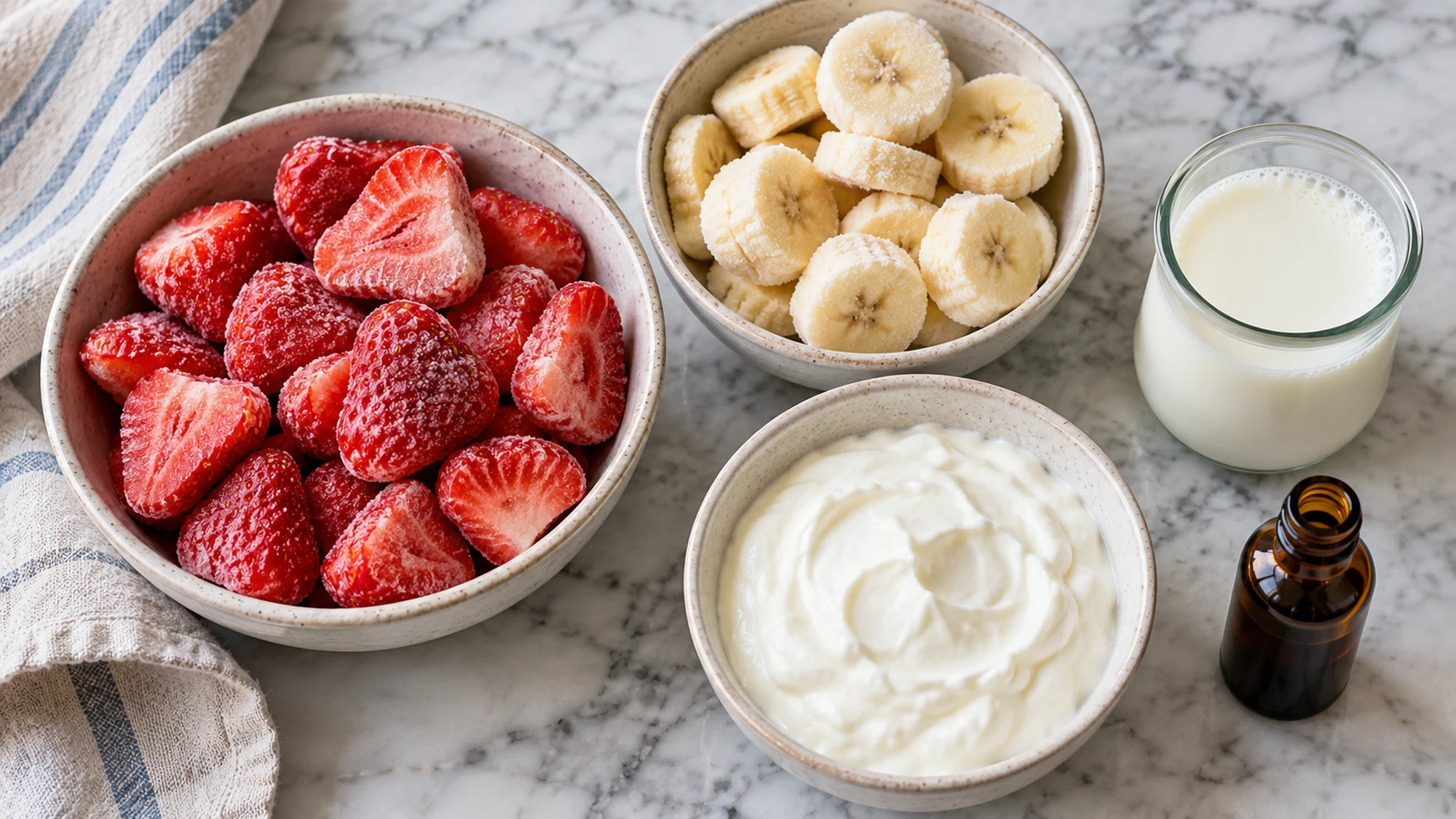
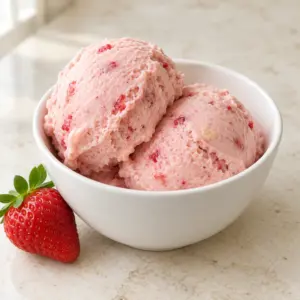
- 200 g ripe banana peeled, sliced and frozen
- 300 g strawberries unsweetened, frozen; use ready-to-eat fruit
- 170 g plain nonfat Greek yogurt
- 30 ml 2% milk add gradually; 2 tablespoons total
- 1/2 teaspoon vanilla extract
Equipment
- 1 Food processor
- 1 Freezer-safe tray
- 1 Freezer-safe container
Instructions
- If starting with fresh fruit, wash and hull the strawberries, peel the banana and slice both into processor-friendly pieces. Freeze in a single layer until solid, about 4 hours. If using packaged frozen fruit, follow its label and use fruit intended to be eaten without cooking.
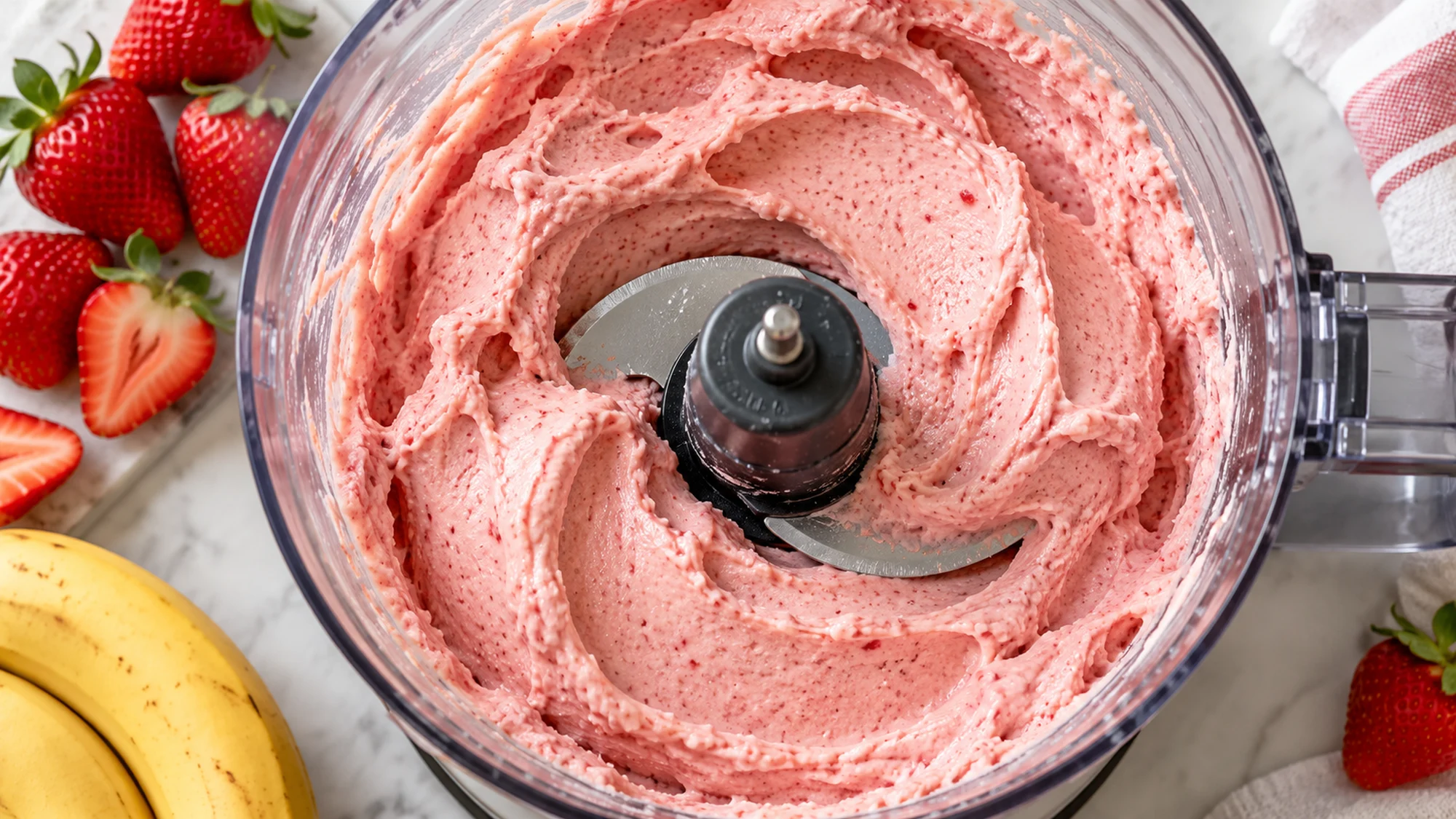
- Place the frozen fruit, yogurt and vanilla in a food processor. Pulse until broken into small pieces, stopping to scrape the bowl with the motor off. Let extremely hard fruit soften for a few minutes if your machine struggles.
- Add the milk a teaspoon at a time while processing until thick and smooth, up to the listed 30 ml. Stop and scrape as needed. Do not pour in a large amount of liquid at once or it will become a smoothie.
- Divide the batch into four equal servings, about 175 g each. Serve immediately as soft-serve, or transfer to a shallow covered container and freeze for 30–60 minutes for a firmer scoop. Overnight freezing makes it harder; soften briefly before scooping.
Nutrition
Video
Notes
Tried this recipe?
Let us know how it turned out!Hi, I’m Emily Pocker! I share recipes and food guides here at Recipes360 to help you find everyday meal inspiration and feel more confident in the kitchen. My goal is to make cooking approachable, enjoyable, and full of flavor.