
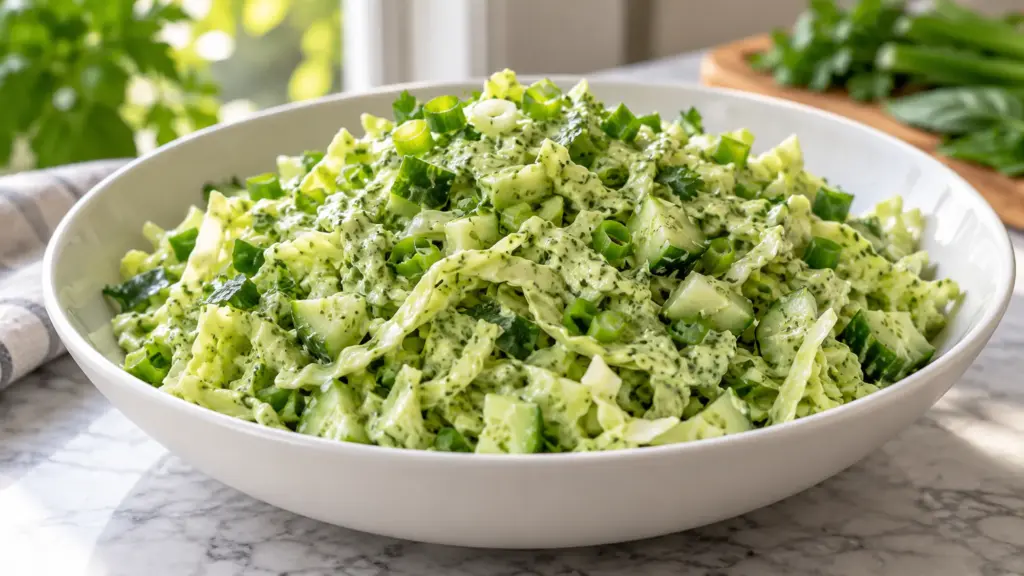
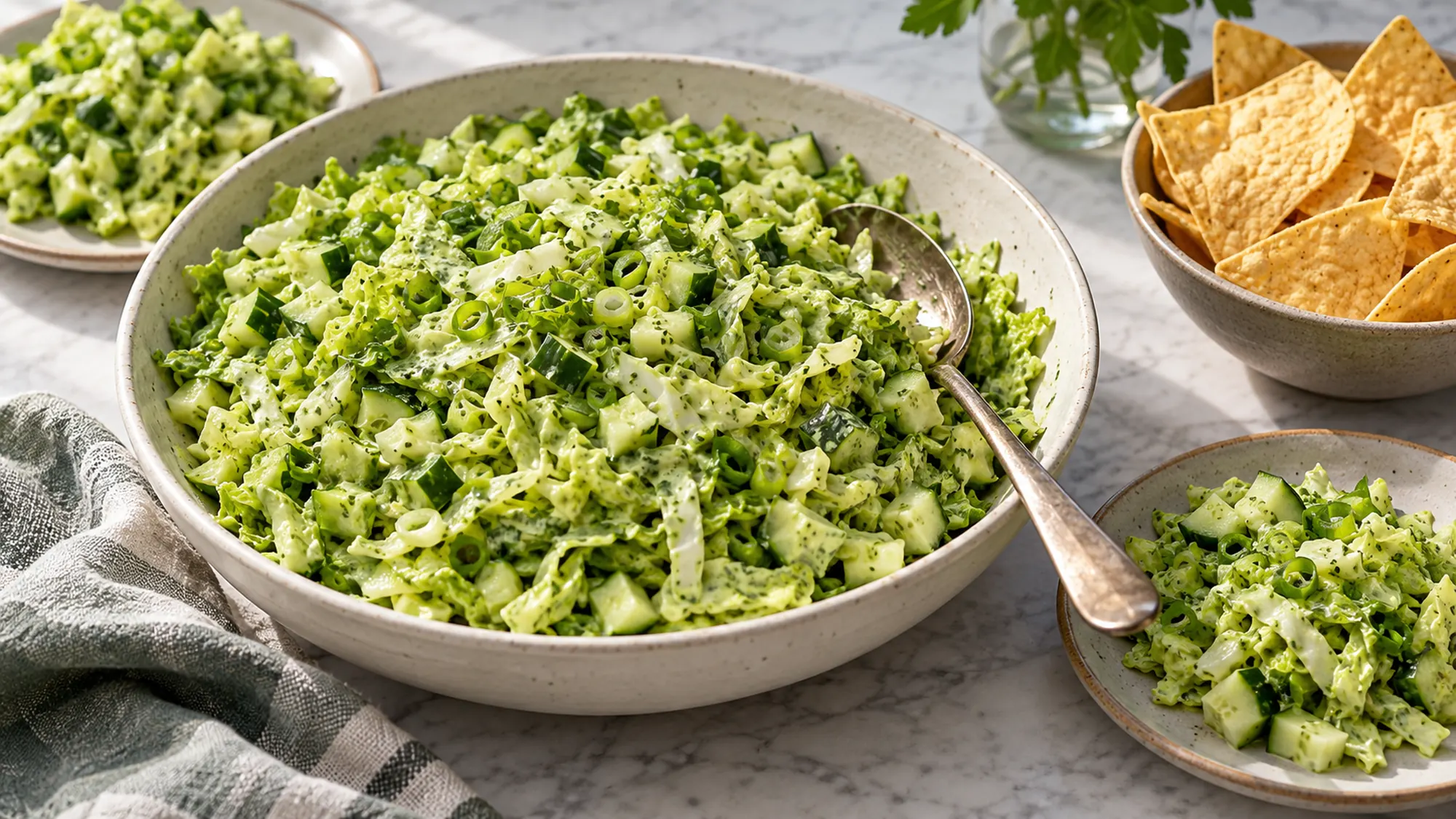
Green goddess cabbage salad turns a pile of everyday vegetables into a finely chopped, spoonable salad. Cabbage supplies sturdy crunch, cucumber brings freshness, and a basil-and-parsley dressing coats the small pieces. Greek yogurt and tahini make this version creamy, with lemon juice keeping the flavor bright. It works as a side dish or a scoopable snack.
Small, even pieces are the key. Chop the cabbage and cucumber finely enough that each spoonful carries vegetables and dressing together.
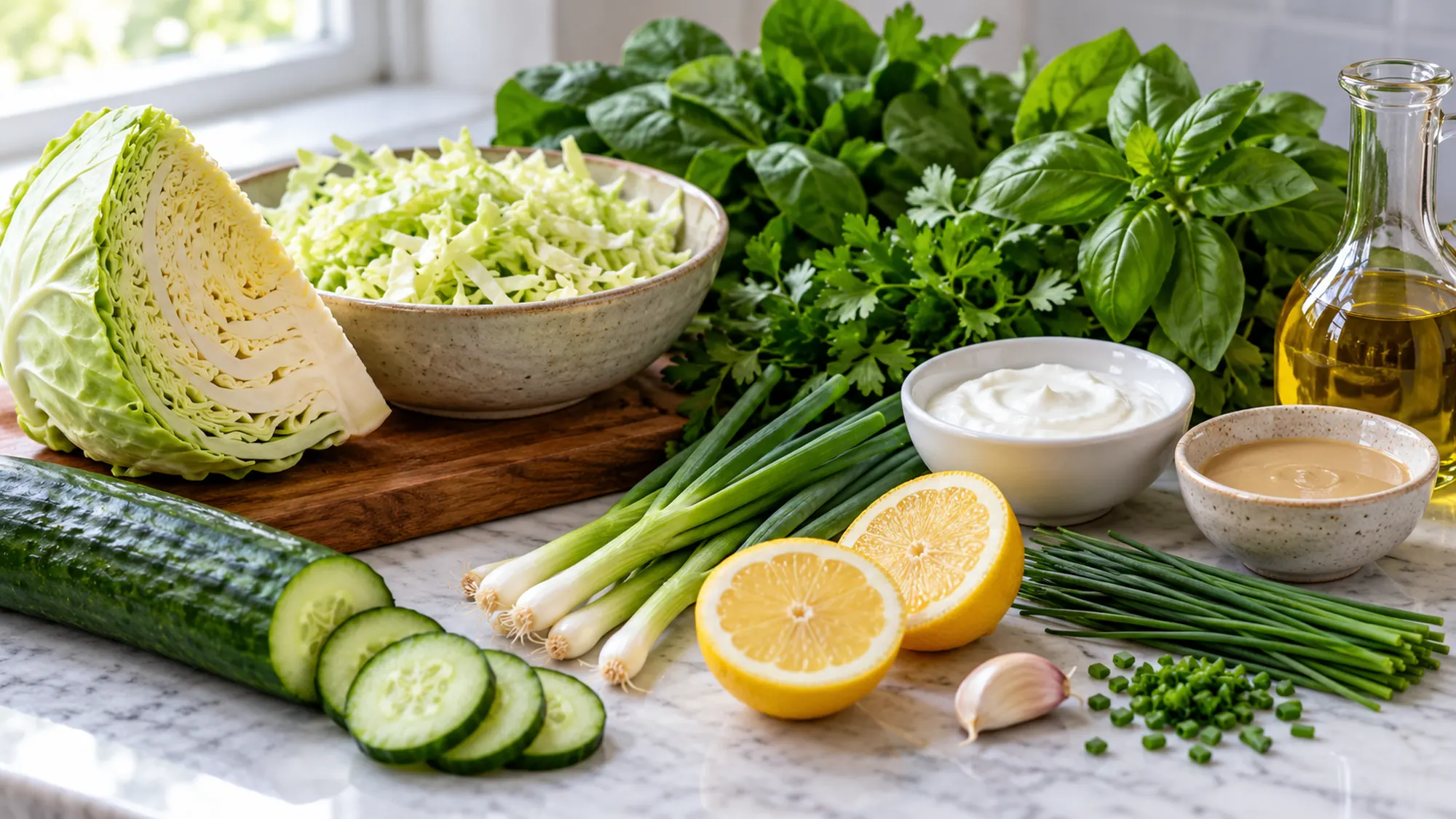
Making green goddess cabbage salad
Remove damaged cabbage leaves and cut away the dense core before chopping. A sharp knife gives better control than repeatedly pulsing a full food processor, which can leave wet scraps beside large chunks. Dice the cucumber to a similar size. If its center is particularly watery, scrape out the loose seeds and pat the cut pieces dry.
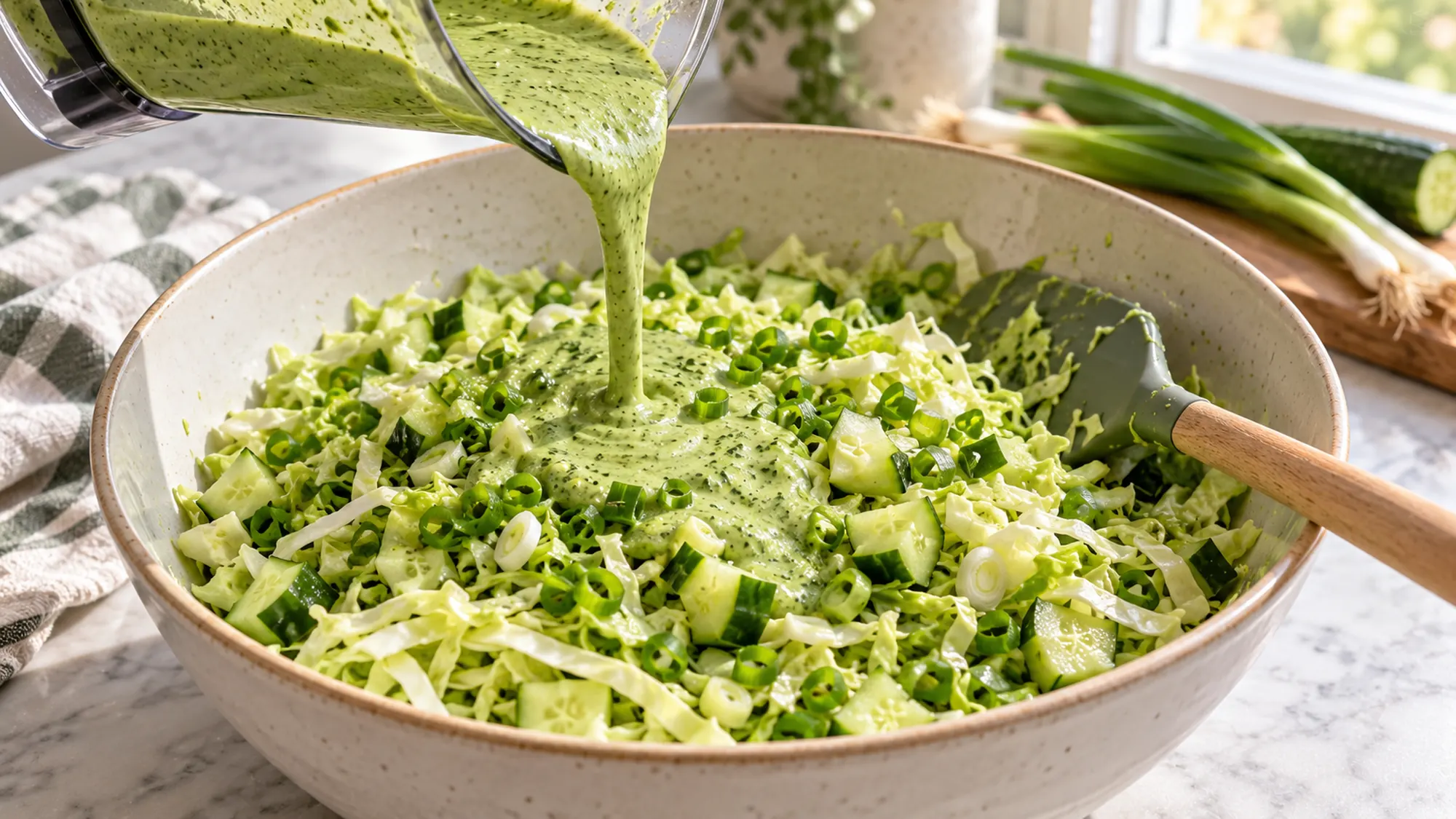
Blend the yogurt, tahini, olive oil and lemon first, then add the herbs, spinach, garlic, salt and pepper. Begin with no extra water; add a tablespoon at a time only when the blades need help. The dressing should pour slowly and cling to a spoon. Taste it before tossing, because herb intensity and lemon acidity vary.
| Ingredient | What it contributes | Preparation cue |
|---|---|---|
| Green cabbage | Firm crunch | Core, finely chop and dry well |
| Cucumber | Freshness and juiciness | Dice small; remove a watery seed center |
| Basil, parsley and chives | Fresh green flavor | Use tender leaves and rinse carefully |
| Yogurt and tahini | Creaminess and body | Blend smooth before thinning |
| Lemon juice | Acidity | Add gradually when adjusting the finished dressing |
Dry vegetables and a thick dressing prevent a puddle at the bottom of the bowl. Thin the dressing only as much as needed.
Serving suggestions
Serve six side portions alongside grilled fish, roast chicken or a simple bean dish. Tortilla chips are optional and are excluded from the nutrition estimate. Their salt can make the salad taste more seasoned, so sample a spoonful with the intended accompaniment before adding extra salt. The small pieces also fit neatly into a pita or lettuce cup.
- Spoon into a shallow serving bowl so the dressing stays evenly distributed.
- Set out chips separately to preserve their crispness.
- Pair with the site’s baked cod tacos for a fresh vegetable side.
Dress only the portion you plan to serve. Keep spare chopped vegetables and dressing chilled in separate containers.
Variations
For a looser herb profile, replace some parsley with extra basil rather than adding more garlic. Garlic becomes assertive in a raw dressing. A little dill can replace chives, but its stronger flavor changes the result. If you want extra protein, serve chickpeas beside the salad; adding a large amount directly can weigh down its finely chopped texture.
Melissa Ben-Ishay’s original viral salad provides the chopping inspiration. The TODAY Food video in the card shows her method. Her published version uses cashews and nutritional yeast; this original adaptation uses Greek yogurt, tahini and parsley instead. Those changes introduce milk and sesame allergens and produce a different dressing.
Keep the fine chop consistent when changing herbs or adding toppings. The salad’s texture matters as much as its green color.
Health benefits
Cabbage, cucumber and leafy herbs add vegetable variety without needing a large ingredient budget. The estimated 140 calories per side portion include all the yogurt, tahini and olive oil. It is an estimate from ingredient quantities, not a laboratory analysis. Adding chips, bread or a protein changes the meal’s total, and this side alone is not intended as a complete meal.
Follow the FDA’s produce guidance: rinse vegetables and herbs under running water, avoid soap, and dry them with a clean towel. Use pasteurized yogurt. Refrigerate the salad at 40°F or below within two hours, sooner in very hot conditions. For the best texture, plan to eat dressed leftovers within one to two days.
A green dressing does not replace safe handling. Clean produce, pasteurized dairy and prompt refrigeration are the useful safeguards.
Bottom Line
This version is deliberately creamy and herb-forward, with the cabbage remaining crisp beneath the dressing. Expect about US $6.50 for the batch, or $1.08 per side portion, using ingredient allowances rather than whole-package costs. Fresh herb prices are the biggest variable. For a warm cabbage meal on another day, try cabbage dumpling soup.
Chop finely, blend smoothly and toss close to serving. The result is a bright, practical side that makes good use of a small cabbage.
Green goddess cabbage salad recipe
Green Goddess Cabbage Salad Recipe

Ingredients
- 500 g green cabbage cored and finely chopped; about 6 cups
- 200 g cucumber finely diced; about 1½ cups
- 30 g scallions about 3 small, thinly sliced
- 1/2 cup plain whole-milk Greek yogurt 120 g; pasteurized
- 2 tbsp tahini 30 g, stirred smooth
- 2 tbsp olive oil 30 ml
- 1/4 cup fresh lemon juice 60 ml
- 1 cup fresh basil leaves 20 g, loosely packed
- 1/2 cup fresh parsley leaves 20 g, loosely packed
- 1 cup baby spinach 30 g, loosely packed
- 3 tbsp fresh chives 10 g, chopped
- 1 small clove garlic 3 g, peeled
- 1/2 tsp fine salt adjust to taste
- 1/4 tsp ground black pepper
- 0–2 tbsp cold water up to 30 ml, only as needed
Equipment
- 1 Blender
- 1 Large mixing bowl
- 1 Chef’s knife
Instructions
- Rinse cabbage, cucumber, scallions and herbs under running water and dry well. Remove the cabbage core, then finely chop the leaves. Dice cucumber to a similar small size; remove loose watery seeds if needed. Thinly slice scallions.
- Put yogurt, tahini, olive oil and lemon juice in a blender. Add basil, parsley, spinach, chives, garlic, salt and pepper. Blend until smooth, stopping to scrape the sides with the blender switched off.
- If the blades struggle or the dressing is too thick to pour, add cold water 1 tablespoon at a time, up to 2 tablespoons. Aim for a thick dressing that coats a spoon. Taste and adjust salt or lemon before tossing.
- Combine cabbage, cucumber and scallions in a large bowl. Add the dressing and toss thoroughly just before serving. Divide into six side portions. Optional tortilla chips are served separately and are not included in the estimates.
- Refrigerate spare dressing and chopped vegetables separately in covered containers at 40°F (4°C) or below. Refrigerate promptly within two hours. For best texture, eat dressed leftovers within 1–2 days.
Nutrition
Video
Notes
Tried this recipe?
Let us know how it turned out!Hi, I’m Emily Pocker! I share recipes and food guides here at Recipes360 to help you find everyday meal inspiration and feel more confident in the kitchen. My goal is to make cooking approachable, enjoyable, and full of flavor.